Very Potter, A Lyrics – All Songs from the Musical
Very Potter, A Lyrics: Song List
- Act 1
- Goin' Back to Hogwarts
- Different As Can Be
- Ginny's Song
- Harry
- Different As Can Be (Reprise)
- Hey Dragon / The Dragon Song
- Ginny's Song Reprise (Cho's Song)
- Granger Danger
- To Dance Again!
- Act 2
- Pigfarts, Pigfarts Here I Come...
- Missing You
- Not Alone
- Voldemort is Goin' Down
- Not Alone / Goin' Back to Hogwarts (Reprise)
About the "Very Potter, A" Stage Show
Songs for the show wrote A. J. Holmes & D. Criss. The script created Matt & Nick Lang & B. Holden. The theatrical’s try-outs began in early April 2009, in the campus of University of Michigan. The show was designed by StarKid Productions. Director of the staging was M. Lang. A. J. Holmes & E. Stromberg were also engaged in the production. Costumes were designed by M. Woodward. Musical accompaniment was carried out by A. J. Holmes, C. Valdez & J. Carroll. D. Criss played the main role. His friends were played by J. Richter & B. Gruesen. The following actors were involved in the musical: J. L. Beatty, L. Lopez, B. Rosenthal, J. Walker, D. Saunders, J. Moses, B. Coleman, T. Brunsman, D. Lytle, R. Campbell, J. Albain, S. Tajima, J. Povolo & L. Marks. In June 2009, being on YouTube, show has received millions of views. This allowed creating a continuation of the musical: in 2010 – ‘A Very Potter Sequel’ & in August 2012 – ‘A Very Potter 3D: A Very Potter Senior Year’. At the end of July 2009, album with compositions from the show was released.Release date: 2010
"A Very Potter Musical" – The Musical Guide & Song Meanings
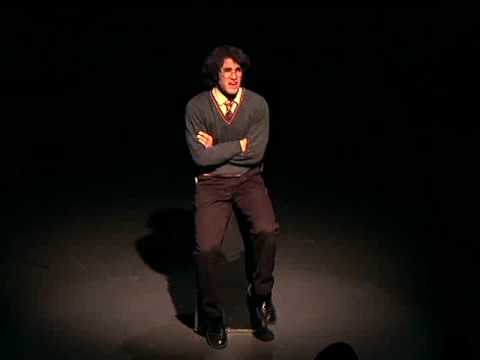
Review
How do you make parody songs feel like plot, not punchlines wearing melody? “A Very Potter Musical” does it by treating fandom as a dramatic condition. Everyone is over-informed, over-emotional, and performing a version of themselves that fits the story they think they’re in. The lyrics move like a group chat: fast, specific, and allergic to silence. Yet the show’s most effective writing is the moment it stops chasing jokes and lets longing sit in the room.
Criss and Holmes write with an iPod-brain attention span and a theatre-kid ear for the hook. That’s not an insult, it’s the aesthetic. The score jumps between pep-rally anthem, faux-romantic ballad, patter comedy, and villain cabaret, often within a single act. The lyrical themes repeat with purpose: “coolness” as protection, friendship as emergency oxygen, and masculinity as a shaky performance (especially when the characters are trapped in a school that never stops grading them).
The best lyric trick in the show is tonal misdirection. A song will start as a joke about a trope (the “chosen one,” the shipping war, the pathetic henchman), then slide into an unguarded line that makes the trope feel personal. That’s how “Not Alone” earns its reputation. It works because the show has already spent an hour making sincerity feel risky. When it finally commits, it lands.
How It Was Made
The production began at the University of Michigan and was performed April 9–11, 2009. It hit YouTube later that year, became a viral phenomenon, and ended up living primarily as a filmed stage show, not a licensable stage property. The legal reality matters for lyric culture: StarKid can host the videos and release the music, but it can’t simply turn “Very Potter” into a touring brand in the usual commercial way, because the characters belong to someone else. That limitation helped shape the art form: the “official” version became the recorded version. :contentReference[oaicite:0]{index=0}
The album story is the part that aligns with your “2010” note. The cast recording was initially released through StarKid’s site in 2009, then re-released on Bandcamp on July 29, 2010, with an explicitly fan-friendly model. It is a cast album that behaves like a community artifact: easy to access, designed to travel, and happy to be played like a playlist. :contentReference[oaicite:1]{index=1}
Criss has described himself as a “lover of genre,” which is basically the mission statement for the score’s stylistic hopscotch. The writing is comfortable stealing its own spotlight. A song can be a parody of a Disney moment and still function as a character scene. That’s why these lyrics stuck around: they’re not just references, they’re decisions. :contentReference[oaicite:2]{index=2}
Key Tracks & Scenes
"Goin' Back to Hogwarts" (Company)
- The Scene:
- Back under the stairs at Privet Drive, then a snap into school-year momentum. The staging in the filmed production plays like a rush of bodies and backpacks, with a big group front that sells “we’re back” as a civic holiday.
- Lyrical Meaning:
- It’s a thesis statement disguised as a sing-along: Hogwarts is identity, not just a place. The lyric sells “cool” as survival and friendship as status, which becomes important once the plot starts punishing people for wanting those things too badly.
"Different As Can Be (When I Rule the World)" (Voldemort & Quirrell)
- The Scene:
- A villain planning session that turns into domestic comedy. Two bodies share one agenda, and the choreography leans into the odd-couple rhythm: bickering, syncing up, bickering again.
- Lyrical Meaning:
- The lyric makes evil small on purpose. “World domination” becomes a roommate argument, which is funnier than it should be, and also clarifies the show’s view of power: it’s insecure, needy, and desperate to be admired.
"Granger Danger" (Ron & Draco)
- The Scene:
- A school crush detonates in public. Ron and Draco end up in the same emotional crisis, sung as escalation: first denial, then shock, then fully committed obsession.
- Lyrical Meaning:
- It’s a parody of adolescent lust, but the lyric is also about identity slippage. They can’t keep their “types” stable. That’s the comedy and the point: the story forces bullies and best friends to admit they don’t control their own narratives.
"To Dance Again!" (Voldemort, Quirrell & Death Eaters)
- The Scene:
- A villain nightclub fantasy as a recruitment pitch. The staging turns threat into choreography, with Voldemort treating rhythm like proof of legitimacy.
- Lyrical Meaning:
- The lyric frames violence as entertainment, which is the show’s sharpest satirical edge. It mocks the seductive packaging of darkness in the franchise ecosystem, then uses a catchy hook to demonstrate how easily that packaging works.
"Pigfarts" (Draco)
- The Scene:
- An alternate-school daydream delivered with maximum swagger. Draco sells “Pigfarts” like it’s both a prank and a personal manifesto, usually played with a bright, ridiculous confidence that dares the room to object.
- Lyrical Meaning:
- On paper, it’s nonsense. In context, it’s Draco’s coping mechanism. The lyric is a child inventing a better world where he is the star. It’s funny because it’s petty. It’s also funny because it’s real.
"Missing You" (Harry & Quirrell)
- The Scene:
- A quiet duet that the show almost doesn’t “deserve,” which is why it lands. The staging tends to reduce motion and let the voices do the scene, with the humor softened rather than erased.
- Lyrical Meaning:
- The lyric turns a running gag into an emotional statement. It’s the score admitting that attachment in this story is messy, and that loneliness is the one thing the jokes can’t fully cover.
"Not Alone" (Ginny, Harry, Ron & Hermione)
- The Scene:
- A group promise in the middle of crisis logic. Characters cluster close, and the staging often reads like a protective circle rather than a Broadway “stand and sing.”
- Lyrical Meaning:
- This is the score’s emotional center. The lyric takes the franchise’s big stakes and drags them back to human scale: you survive because someone stays. It’s also the song that proves the writers understand why people love these stories in the first place.
"Voldemort Is Goin' Down" (Ron, Hermione & Students)
- The Scene:
- The rallying anthem that turns school spirit into resistance. It’s staged like a pep rally with a target, usually played with bold fronts, quick exits, and a “we’re doing this” simplicity.
- Lyrical Meaning:
- The lyric weaponizes repetition. It’s not subtle, and it shouldn’t be. The point is communal clarity: the students stop narrating the story and start acting in it.
Live Updates
Current as of February 2, 2026. “A Very Potter Musical” remains primarily a watch-online title. The “live” StarKid energy today is centered on new work and event-style concerts, plus the company’s increasing UK presence. Playbill framed StarKid as an early internet-native theatre company and tied that arc back to “Very Potter” as the viral catalyst. :contentReference[oaicite:3]{index=3}
In the UK specifically, recent reporting points to StarKid’s momentum beyond nostalgia: a West End season for “The Guy Who Didn’t Like Musicals” was announced for May 14–30, 2026 at the Apollo Theatre, and StarKid’s own site has been promoting that London run prominently. That does not mean a “Very Potter” remount is imminent. It suggests the opposite: StarKid is investing its scale-up resources in owned-IP titles they can fully monetize and stage internationally. :contentReference[oaicite:4]{index=4}
If you’re searching for the “2010” album angle: the Bandcamp availability remains the cleanest official listening path, and it functions as a practical archive of the show’s song order, track lengths, and credits. :contentReference[oaicite:5]{index=5}
Notes & Trivia
- The original production ran April 9–11, 2009 at the University of Michigan, and the YouTube version appeared later (after edits) under the “A Very Potter Musical” title. :contentReference[oaicite:6]{index=6}
- The cast recording was released in 2009 through StarKid’s site and later on Bandcamp on July 29, 2010. :contentReference[oaicite:7]{index=7}
- Because StarKid does not control the Harry Potter character rights, the University of Michigan version is treated as the only “official” production in standard documentation, even though unauthorized productions exist. :contentReference[oaicite:8]{index=8}
- Bandcamp’s listing presents the album as free/“name your price,” with a request to donate so free downloads remain available. :contentReference[oaicite:9]{index=9}
- The show’s musical-number list is commonly documented by act, and the filmed production follows that structure tightly. :contentReference[oaicite:10]{index=10}
- StarKid’s larger career arc, including national tours and later projects, is frequently traced back to “Very Potter” as the breakout. :contentReference[oaicite:11]{index=11}
Reception
“A Very Potter Musical” did not enter the world through traditional critics’ nights; it entered through share buttons. Its reception is therefore best measured in cultural uptake. The show was cited by Entertainment Weekly in its year-end viral-video framing, and mainstream profiles quickly positioned Darren Criss and the troupe as sudden web-era theatre celebrities. That attention matters to lyric legacy: jokes became quotable lines, and choruses became social signals. :contentReference[oaicite:12]{index=12}
“A Very Potter Musical … went viral.” Entertainment Weekly
“One of the first to harness the power of the internet.” Playbill
“Entertainment Weekly named the musical one of the 10 Best Viral Videos of 2009.” Wikipedia (citing Entertainment Weekly)
Quick Facts
- Title: A Very Potter Musical
- Year (your reference point): 2010 (Bandcamp album release date)
- Original stage run: April 9–11, 2009 (University of Michigan)
- Type: Parody musical; filmed stage production distributed online
- Book: Matt Lang, Nick Lang, Brian Holden
- Music & Lyrics: Darren Criss, A. J. Holmes
- Producer / Company: StarKid Productions
- Selected notable placements: “Goin’ Back to Hogwarts” (opening ensemble), “Not Alone” (core group ballad), “Voldemort Is Goin’ Down” (rally anthem)
- Release context: Digital-first distribution; viral YouTube presence; album available via Bandcamp
- Album status: Official cast recording; Bandcamp re-release July 29, 2010
Frequently Asked Questions
- Who wrote the lyrics for “A Very Potter Musical”?
- Darren Criss and A. J. Holmes are credited with music and lyrics, with book by Matt Lang, Nick Lang, and Brian Holden.
- Is there an official cast recording?
- Yes. The cast recording was released digitally in 2009 and later released on Bandcamp on July 29, 2010.
- Why do people associate it with 2010 if it premiered in 2009?
- Because the album’s Bandcamp release date is July 29, 2010, and that platform has been a major discovery path ever since.
- Can theatres license and perform it?
- Not in the normal way. Standard documentation notes that StarKid can’t license the show broadly because it doesn’t own the rights to the Harry Potter characters.
- What song best represents the show’s lyric style?
- “Different As Can Be” for its fast joke density, or “Not Alone” for the emotional honesty that keeps the parody from floating away.
Key Contributors
| Name | Role | Contribution |
|---|---|---|
| Darren Criss | Composer / Lyricist / Performer | Co-wrote music and lyrics; originated Harry Potter; wrote pop-theatre hooks built for fast jokes and real feeling. |
| A. J. Holmes | Composer / Lyricist / Musician | Co-wrote music and lyrics; shaped the score’s rhythmic snap and accompaniment-driven comedy timing. |
| Matt Lang | Book / Director | Co-wrote the book; directed the original production and set the staged-comedy pacing. |
| Nick Lang | Book | Co-wrote the book; helped define the show’s parody focus across multiple Potter-era plotlines. |
| Brian Holden | Book / Performer | Co-wrote the book; performer; key part of the early StarKid creative core. |
| StarKid Productions | Production company | Produced and distributed the filmed stage version online, shaping the show’s afterlife. |
Sources: StarKid Bandcamp; YouTube (official playlist/episodes); Playbill; Entertainment Weekly; StarKid Productions official site; Wikipedia.