Urinetown Lyrics – All Songs from the Musical
Urinetown Lyrics: Song List
- Act 1
- Overture
- Too Much Exposition
- Urinetown
- It's A Privelege To Pee
- Mr. Cladwell
- Cop Song
- Follow Your Heart
- Look At The Sky
- Don't Be The Bunny
- Act One Finale
- Act 2
- What Is Urinetown?
- Snuff That Girl
- Run, Freedom, Run!
- Why Did I Listen To That Man?
- Tell Her I Love Her
- We're Not Sorry
- We're Not Sorry (reprise)
- I See A River
About the "Urinetown" Stage Show
Social dystopia originated in the mind of the writer Greg Kotis, when in his student years he traveled around Europe. Visiting public toilets of varying degrees of grooming, he realized that they hold a brilliant idea of an apocalyptic scene: a person cannot control the need for using them.Composer and lyricist Mark Hollmann, familiarized with the idea, was inspired by the unusual opportunity of use of satire and parody on the structure of society through urban public toilets. He immediately wrote one of the songs. Soon, his pen gave birth to a musical comedy, extravaganza parody on bureaucratic authorities, social irresponsibility and populist ideas with an unhappy ending of those.
Initially, all self-respecting theater stages bypassed play with a dubious title ‘Urinetown’ aside. Neo Futurists Studio took up the production, the musical entered season 1999/2000. But the show did not have enough success. The year before that, screenwriter David Auburn saw the play as part of the New York Festival. Thanks to his efforts, histrionics came out first in American Theatre of Actors, and already in 2001 came on Broadway. It was directed by J. Rando, costume designer was J. Bixby. In connection with the events of 9/11, show was shifted and creators tried to make it more politically correct, but thanks to efforts of the producers, redrawing the plot was avoided.
Altogether with 25 preliminaries on Broadway, the play lasted from 2001 to 2004, exhibiting 965 shows. In 2003, ‘Urinetown’ went on the USA tour. In 2001-2002, theatrical earned many awards: Theatre World, Tony, Drama Desk in the categories of best direction, best libretto, an outstanding new musical. It is opted for youth productions to this day – it has simple scenery, small number of actors’ troupe and songs. It is vivid and memorable.
Release date: 2001
"Urinetown" – The Musical Guide & Song Meanings
Review
Why does “Urinetown” keep working, even on people who swear they hate musicals? Because it weaponizes the form. The lyrics are built like a lecture delivered by comedians: you laugh, you nod, and then you realize you’ve agreed to something ugly. Mark Hollmann and Greg Kotis write lines that announce their own mechanics, then dare you to enjoy them anyway. It is a show about privatized bodily function that behaves like a civics class with a drumline.
The lyric strategy is meta, but not lazy. Officer Lockstock and Little Sally talk to us as if we are complicit, which is the point: the audience becomes a town council that keeps voting for the fee hikes. The show’s recurring language has a corporate shine, slogans, policy talk, HR cheer. It clashes with the poor characters’ blunt needs, and the friction makes the satire legible. You never have to guess what the system is. You have to admit you recognize it.
Musically, the score likes its references loud. The rhythms often march, the choruses snap into group discipline, and the pastiche leans into Brecht and Weill without turning into homework. The lyrics keep the moral argument moving through jokes, repetition, and intentional over-explanation. The show’s smartest trick is that it tells you it is over-explaining, then uses that confession as cover to smuggle in the real thesis: people accept cruelty when it is formatted as normal.
Listener tip for first-timers: do not start with the finale. Start with “Too Much Exposition” and “It’s a Privilege to Pee.” Those songs teach you how to listen. Once your ear catches the way the lyric undercuts its own sentimentality, everything else clicks.
Seat-and-sight tip for live viewing: this is a text show. If you are choosing between closer seats and a centered view, take the closer seats. You want to see the narrators’ faces when they sell you the story.
How It Was Made
Kotis has been candid about the spark: a broke student in Europe confronted by pay-per-use toilets, and the idea metastasized from nuisance into dystopia. That origin matters because it explains the show’s texture. The writing is not abstract theory. It starts as irritation, becomes a system, then becomes a joke you cannot unhear.
From there, the collaboration with Hollmann produced a score that behaves like a parody and a sincere musical at the same time. That balance was always the gamble. “Urinetown” premiered in scrappier contexts before it moved through Off-Broadway and then to Broadway, where it opened in September 2001 and ran until January 2004. The lyric voice stayed consistent across the climb: self-aware, argumentative, allergic to comfort.
For an E-E-A-T reality check, this is the part critics often miss when they summarize it as “a toilet musical.” The craft is in how the lyric keeps switching who gets to narrate, who gets to moralize, and who gets to pretend they are not moralizing. It is written like a debate team that discovered choreography.
Key Tracks & Scenes
"Too Much Exposition" (Lockstock, Little Sally, Company)
- The Scene:
- We open at the poorest public amenity in town. Lockstock enters like a tour guide with a badge, Sally at his side. The staging is typically harsh and utilitarian, bodies in lines, rules in the air, a city that looks like it forgot how to breathe.
- Lyrical Meaning:
- This song is the show’s contract with the audience. The lyric admits it is dumping information, then turns the dump into comedy. It also teaches the core grammar of the piece: narration is a power grab.
"It’s a Privilege to Pee" (Pennywise, The Poor)
- The Scene:
- Public Amenity #9. Pennywise runs it like a bartender and a warden, collecting fees as the crowd pleads and bargains. Old Man Strong’s desperation turns the scene from funny to sharp in seconds.
- Lyrical Meaning:
- The lyric is corporate logic dressed as a jingle. The word “privilege” is the whole joke and the whole crime. It reframes a human need as a luxury good, and the tune makes the lie catchy.
"Cop Song" (Lockstock, Barrel, Cops)
- The Scene:
- After an arrest, Lockstock and Barrel talk about what it means to “enforce.” Often staged with bright authority lighting and geometric blocking, the cops become a cheerful machine.
- Lyrical Meaning:
- In lesser shows, this would be a comic detour. Here, the lyric makes violence sound like job satisfaction. The theme is normalization, sung in harmony.
"Follow Your Heart" (Hope, Bobby)
- The Scene:
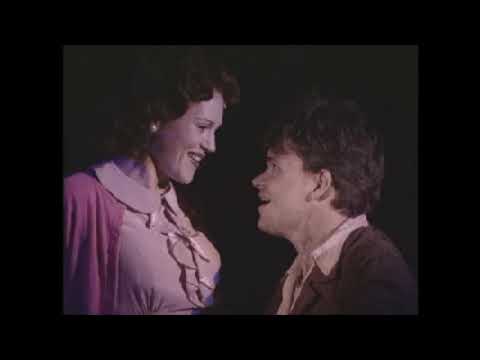
- A sudden pocket of romance, usually staged simply, so the sincerity can land without scenic distraction. Hope offers Bobby a hopeful cliché, and the show dares you to want it to be true.
- Lyrical Meaning:
- This is the lyric that “Urinetown” later interrogates. It is intentionally sweet, intentionally familiar, and that familiarity is a trap the plot will spring.
"Don’t Be the Bunny" (Cladwell, UGC Staff)
- The Scene:
- At Urine Good Company headquarters, Cladwell runs a morality seminar that is really a threat. The staging often feels like a glossy corporate pep talk with teeth.
- Lyrical Meaning:
- The lyric sells cruelty as “realism.” It is predator pedagogy: the rich teaching the staff how to stop having empathy. The title metaphor is a nursery rhyme turned into policy.
"What Is Urinetown?" (Company)
- The Scene:
- Act II begins by answering the question the show has been teasing. The reveal is staged as a tour into the consequences of the system, with the narrators guiding the audience through the horror like docents.
- Lyrical Meaning:
- The lyric is blunt by design. It is the show dropping the wink long enough to say: you funded this. Then it resumes the wink, because guilt is easier to swallow with a rhyme.
"Run, Freedom, Run!" (Bobby, The Poor)
- The Scene:
- A revolutionary rally that looks, on purpose, like other musical revolutions. Fists rise, bodies surge, the ensemble becomes a single organism. You can feel the show setting you up.
- Lyrical Meaning:
- The lyric borrows the language of liberation and lets it swell, then questions what the swell accomplishes. It is both a thrill and a critique of the thrill.
"I See a River" (Company)
- The Scene:
- The ending lands with a moral that refuses to comfort. Many stagings strip the moment down, fewer jokes, more direct address, a final look at the cost of “solutions.”
- Lyrical Meaning:
- The lyric tries to widen the frame from toilets to resources to human cycles. It is the score’s last argument: systems do not care about your intentions, only your outcomes.
Live Updates
Information current as of February 2, 2026. The most visible recent New York moment was New York City Center’s Encores! staging in February 2025, which put the show back in the conversation with an all-star cast and a wave of fresh reviews. If you are tracking lyric interpretation trends, this matters: reviewers in 2025 heard less “quirky satire” and more “resource panic,” with the score’s self-aware narration reading like a warning label, not a punchline.
Outside New York, “Urinetown” remains a licensing workhorse. You see it in universities, regional houses, and community seasons because the piece is practical: medium-sized cast, flexible staging vocabulary, and big chorus payoffs. Recent season listings include fall 2025 at the University at Buffalo Department of Theatre and Dance, plus 2025-2026 scheduling on at least one presenting organization’s season page. Check the specific edition and any content advisories, because houses vary widely in how dark they play the ending.
Recording note: the original cast album has long been a gateway listen, and it is still the best way to hear how cleanly the lyric jokes are meant to scan at speed. If you are prepping to see it live, listen to “Too Much Exposition” first and read the synopsis once. You will catch more of the lyric feints in real time.
Notes & Trivia
- Broadway opened September 20, 2001 at Henry Miller’s Theatre and closed January 18, 2004, after 965 performances.
- At the 2002 Tony Awards, it won three: Best Book, Best Original Score, and Best Direction of a Musical.
- Greg Kotis has described the initial idea arriving during budget travel in Europe, after encountering pay-to-use toilets.
- The original cast recording was reported as released August 7, 2001, issued by RCA Victor.
- Music Theatre International’s synopsis openly bakes in the show’s joke about exposition, which is rare for a licensing house and very on-brand for this title.
- In 2025, Encores! revived the piece at New York City Center with a high-profile cast that helped recast the show as sharper social satire for the moment.
Reception
When it hit, the surprise was not that it was rude. The surprise was how formally constructed it was while being rude. Critics kept circling the same contradiction: a musical that mocks musicals, yet knows exactly how to operate one. Over time, the reception story has shifted. Later reviews focus less on the title shock and more on the show’s political argument and its stylistic debt to earlier satirical theater.
“Skewers the kind of shows in which good triumphs over evil.” Variety
“Original, high-spirited fun.” TIME
“Deliberate and gleefully sophomoric.” The New Yorker
Quick Facts
- Title: Urinetown: The Musical
- Year: 2001 (Broadway opening)
- Type: Satirical comedy, book musical
- Music: Mark Hollmann
- Lyrics: Mark Hollmann and Greg Kotis
- Book: Greg Kotis
- Original Broadway venue: Henry Miller’s Theatre
- Run (Broadway): 25 previews; 965 performances; September 20, 2001 to January 18, 2004
- Notable placements (story locations): Public Amenity #9; Urine Good Company offices; secret hideout; Act II reveal of “Urinetown”
- Cast album: Original cast recording released 2001 (reported August 7), issued by RCA Victor
- Availability: Streaming and digital retailers widely list the original cast recording and track timings.
Frequently Asked Questions
- Who wrote the lyrics for “Urinetown”?
- The lyrics are credited to Mark Hollmann and Greg Kotis, with Hollmann also composing the music and Kotis writing the book.
- Is the show actually political, or is it mostly jokes?
- It is political because of how the jokes are built. The lyrics keep reframing policy as entertainment, then make the audience notice they laughed at the framing.
- Where do the biggest songs land in the plot?
- Act I is anchored at Public Amenity #9 and the corporate offices of Urine Good Company. Act II opens by explaining what “Urinetown” really is, then drives toward the revolt and its consequences.
- Is there a recent major revival?
- Yes. New York City Center’s Encores! staged the show in February 2025, prompting a new round of reviews and renewed attention.
- What should I listen for in the lyrics?
- Listen for narration as a tactic. The lyric voice constantly tells you what it is doing, which is how it gets away with saying what it means.
- What is the best entry-point track if I only sample one?
- “Too Much Exposition.” It contains the show’s style guide, its comic pace, and its moral posture in one tight opening statement.
Key Contributors
| Name | Role | Contribution |
|---|---|---|
| Mark Hollmann | Composer, Lyricist | Wrote the score’s musical architecture and co-wrote lyrics that balance parody with plot propulsion. |
| Greg Kotis | Book writer, Lyricist | Created the story, the narrators’ direct-address voice, and co-wrote lyrics that argue with the audience. |
| John Rando | Director (original Broadway) | Shaped the staging language that helped the satire read clearly at Broadway scale. |
| John Carrafa | Choreographer (original Broadway) | Built choreography that turns civic machinery into dance, especially for the cops and ensemble rallies. |
| Music Theatre International | Licensing | Licenses the show for professional and amateur productions and provides official synopsis and show history notes. |
| RCA Victor | Record label | Issued the original cast recording, an essential reference for tempo, diction, and lyric pacing. |
Sources: IBDB; Playbill; Music Theatre International; Masterworks Broadway; Variety; TIME; The New Yorker; Broadway.com; TheaterMania; Playbill reviews roundup; University at Buffalo Theatre & Dance; Palace Theatre season listing; StageAgent; Wikipedia; YouTube.