Triumph Of Love Lyrics – All Songs from the Musical
Triumph Of Love Lyrics: Song List
- Act 1
-
This Day of Days
- Anything
- The Bond That Can't Be Broken
- Mr. Right
- You May Call Me Phonicon
- Mr. Right (Reprise)
- Emotions
- The Sad and Sordid Saga of Cecile
- Serenity
- Issue in Question
- Teach Me Not to Love You
- Act 2
- Have a Little Faith
- The Tree
- What Have I Done?
- Henchmen Are Forgotten
- Love Won't Take No for an Answer
- Finale
About the "Triumph Of Love" Stage Show
This spectacle took as the basis a comedy in three acts, written in 1732. The premiere of this histrionics was held in October 1997 in Broadway. It withstood more than 80 main shows and thirty preliminaries. Directed by M. Mayer, choreographed by D. Varone. The actors were: S. Egan, R. Bart, C. Sieber, K. Chamberlin, F. M. Abraham, N. Opel & B. Buckley. Due to creative discrepancies, E. Boosler, initially selected to perform the role of maid, has been replaced.Company Jay Records produced the original record of the spectacular with all the music parts. A solo of Buckley ‘If I Cannot Love’ was added as an extra track to this record.
Critics have mentioned this play as wit and daring, able taking the very special place amongst the hottest contemporary productions. This theatrical has been nominated for a Tony Award for Best Actor, Best Costume Design & Best Lyrics.
Release date: 1997
"Triumph of Love" – The Musical Guide & Song Meanings
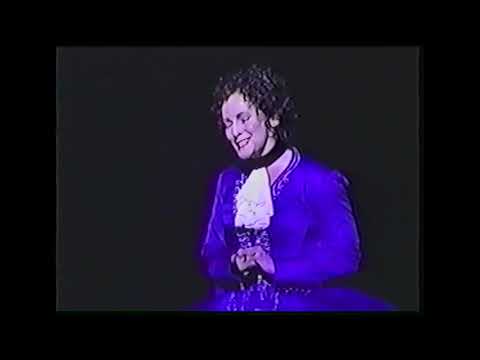
Review: what the lyrics are really doing
Can a romance built on lies still be honest? "Triumph of Love" bets yes, then keeps raising the stakes until honesty becomes its own kind of disguise. Susan Birkenhead’s lyrics treat flirtation like a logic puzzle: every line has a goal, every rhyme has an alibi, and every confession arrives one beat too late to prevent collateral damage. The show is a chamber musical with the temperament of a farce. Its wit is tidy. Its feelings are not.
The lyrical spine is a fight between head and heart, staged as a series of seductions that feel like arguments. Leonide does not sing about longing in abstract. She sings about tactics: who must be convinced, what story must be told, which identity will move the room. Meanwhile, the philosophers sing the pleasures of restraint, then betray themselves with language that keeps slipping from principle into appetite. That slip is the plot. A garden maze is not subtle, but the writing makes it specific: the maze is where reason gets lost, politely, in full sentences.
Jeffrey Stock’s score supports that verbal precision with quick stylistic pivots. The sound can nod toward Sondheim-style intellect, then snap into lighter popular idioms for a joke or a chase. When the show lands, it does so because the songs are not decorative. They are decisions. Even the comedy numbers advance the central question: if love is a form of persuasion, who is manipulating whom?
How it was made
The show’s origin story is unusually clean, and unusually theatrical. James Magruder’s non-musical translation played at Baltimore’s Center Stage in 1993. Jeffrey Stock saw it the next year at New York’s Classical Stage Company, floated the idea of musicalizing it to producer Margo Lion, and got the kind of encouragement composers pray for and rarely receive. Michael Mayer and Susan Birkenhead joined the team, a 1995 workshop followed at Manhattan Theater Club, and the piece grew back at Center Stage before making its Broadway transfer. If the finished show feels like a small object engineered with care, that development path explains why.
The best backstage detail is also a lesson in stagecraft. MTI’s production history notes that Broadway audiences first saw a huge gold cloth covering the set, flown out during the opening music to reveal a stylized topiary maze garden. It is a gimmick with purpose: a literal unveiling of the maze everyone is about to wander into, emotionally and rhetorically.
Key tracks & scenes
"This Day of Days" (Company)
- The Scene:
- In an 18th-century Greco-French topiary labyrinth, Hesione, Hermocrates, Agis, Harlequin, and Dimas gear up for Agis’s mission to kill Princess Leonide. In the original staging lore, this is also where the gold cloth reveal can turn the garden into a punchline and a promise.
- Lyrical Meaning:
- The lyric celebrates vengeance with ceremonial cheer, which is exactly the joke. It tells you these “rational” people are already intoxicated. The rhyme scheme does the marching for them.
"Anything" (Princess Leonide)
- The Scene:
- Leonide enters unseen, with Corine at her side, and admits she will do anything to get Agis, not yet knowing he has vowed to kill her. She and Corine dress as men, practicing “manly poises” before they step into the forbidden garden.
- Lyrical Meaning:
- This is desire as agenda. The lyric is not romance-first. It is mission-first, romance as the prize. That candor keeps Leonide from becoming a stock schemer. She is reckless, but she is direct about it.
"The Bond That Can't Be Broken" (Leonide, Agis)
- The Scene:
- Agis is drawn to “Phocion,” and they vow fidelity as friends. In the same sequence, he reveals his secret: he is the true prince of Sparta and demands a life ruled by logic, including an oath to kill Leonide.
- Lyrical Meaning:
- The song sells friendship as safety, then weaponizes it. The “bond” is real, and also a trap. Birkenhead’s writing makes the vow sound noble so the later betrayal actually hurts.
"You May Call Me Phocion" (Leonide, Hesione)
- The Scene:
- When Hesione refuses to grant an audience with Hermocrates, Leonide feigns romantic love for Hesione. Hesione, flustered and intrigued, agrees to help.
- Lyrical Meaning:
- The lyric is an acting exercise in public. It performs sincerity while remaining strategic, which is the show’s central vice. The number also establishes how quickly identity can become persuasion, and how lonely the philosophers have been.
"Emotions" (Hermocrates, Leonide)
- The Scene:
- Leonide asks Hermocrates to tutor her in the life of the mind. He warns her about the “unsavory nature of the heart,” while realizing she is a woman and feeling his own passion swell despite himself.
- Lyrical Meaning:
- The lyric is a manifesto that collapses in real time. Hermocrates sings against feeling while demonstrating it, turning philosophy into foreplay. The joke lands because the language stays elegant even as the character loses control.
"Serenity" (Hesione)
- The Scene:
- Touched by Phocion’s portrait trick, Hesione recalls her youth and the pain of fickle affection, explaining she escaped into philosophy. She kisses “him” and vows to win permission for Phocion to stay.
- Lyrical Meaning:
- This is the show’s quiet trapdoor. The lyric reframes Hesione as someone who chose reason for survival, not superiority. It also makes the later reveal crueler: serenity was a defense, and love breaks it open.
"Teach Me Not to Love You" (Leonide, Company)
- The Scene:
- After Agis storms off, angry at betrayal, Leonide fears the game has gone too far and begs for forgetfulness. The garden becomes a confession booth with witnesses.
- Lyrical Meaning:
- A classic musical-theatre contradiction: she wants to stop feeling by singing. The lyric’s ache comes from its clarity. Leonide finally tells the truth, and the truth is that she cannot control the outcome anymore.
"The Tree" (Hesione, Hermocrates)
- The Scene:
- Act II slows down as the siblings consider a miniature topiary tree, its truncated shape mirroring their own lives. They wonder if they, too, might be “better off in bloom.”
- Lyrical Meaning:
- Metaphor with teeth. The lyric gives the philosophers a shared image that is gentle, then uses it to indict their chosen isolation. It is the rare moment where the show stops scoring points and starts keeping score.
"What Have I Done?" (Leonide)
- The Scene:
- Hesione declares love. Hermocrates declares love. Agis declares love. Leonide’s response is guilt, because she can see the crash coming before anyone else does.
- Lyrical Meaning:
- This is the cost-of-strategy song. The lyric pivots from victory to consequence, showing Leonide’s intelligence turning inward. The show’s moral argument sharpens here: persuasion works, and that is the problem.
Live updates (2025–2026)
The healthiest sign of a “small” 1990s musical is not a glossy revival. It is consistent licensing and conservatory uptake. MTI continues to license the title, and recent listings show the piece actively circulating in training and regional ecosystems. A concrete example: San Francisco Conservatory of Music scheduled performances in February 2025, explicitly crediting Birkenhead and Stock in the event listing. Another: a Boston-area run was scheduled across multiple weekends in September 2025, marketed as the musical with book by Magruder and songs by Stock and Birkenhead. And Arlington Friends of Drama publicized "Triumph of Love" as part of its 2025–2026 season.
On the recording side, the original cast album remains easy to verify and, in practice, easy to hear. Jay Records maintains the release page and track list, and at least some tracks have been distributed digitally in recent storefront ecosystems, which helps the show stay discoverable for performers hunting audition material.
Practical staging note, based on how the show is written: pick a production where the garden reads. When the topiary maze is legible, the jokes land faster and the seductions feel less like plot mechanics and more like danger.
Notes & trivia
- The musical’s development began with Magruder’s non-musical translation (Baltimore’s Center Stage, 1993), then moved toward musicalization after Stock saw the work in New York and producer Margo Lion pushed the idea forward.
- MTI’s production history notes a Broadway staging image: a huge gold cloth covered the set, flown out to reveal the topiary maze as the show began.
- The score includes featured contributions: IBDB lists "Mr. Right" as music by Van Dyke Parks and "Have A Little Faith" as music by Michael Kosarin.
- The original cast recording was released by Jay Records, and the label’s page documents a bonus track, "If I Cannot Love," associated with Betty Buckley.
- IBDB credits Bruce Coughlin for orchestration and lists Patrick Brady as musical director for the Broadway production.
- MTI classifies the piece as an anachronistic adaptation and notes its small cast profile, a big part of why the show plays well in non-commercial settings.
Reception
Back in 1997, reviewers who liked the show tended to praise the balance: high sentiment meeting low comedy, brainy banter sharing space with blunt jokes. The most consistent compliment was about craft. Even skeptics often admitted the talent density was real. The commercial problem was scale. This is a chamber musical opening in a Broadway season that rewards large gestures. In later years, the show’s reputation has improved in the places it was always best built for: regional companies, conservatories, and audiences who enjoy wordplay with their romance.
High sentiment and low comedy harmonize splendidly. The story is a deliberate push and pull between head and heart, between elevated wit and below-the-belt jokes. The Washington Post (excerpted in MTI show history)
Modest in everything but talent and charm, this chamber-size comedy just might have the sass to take its place alongside the season’s big-budget lions. Greg Evans, Variety (1997)
Birkenhead began as an actress, and she sees songwriting very much like an acting exercise. John Lahr, The New Yorker (1997)
Awards
- Tony Awards (1998): Best Actress in a Musical (Betty Buckley), nominated
- Drama Desk Awards (1998): Outstanding Featured Actress in a Musical (Betty Buckley), nominated
- Drama Desk Awards (1998): Outstanding Lyrics (Susan Birkenhead), nominated
- Drama Desk Awards (1998): Outstanding Costume Design (Catherine Zuber), nominated
Quick facts
- Title: Triumph of Love
- Broadway year: 1997 (Royale Theatre opening October 23, 1997)
- Type: Chamber musical comedy
- Book: James Magruder
- Music: Jeffrey Stock
- Lyrics: Susan Birkenhead
- Based on: Pierre de Marivaux’s "Le Triomphe de l’Amour" (1732)
- Orchestration: Bruce Coughlin
- Featured song credits: "Mr. Right" (music by Van Dyke Parks); "Have A Little Faith" (music by Michael Kosarin)
- Original Broadway cast album: Jay Records (published 1998; track list and bonus track documented by the label and library cataloging)
- Licensing: Available through MTI
- Selected notable placements: "This Day of Days" as the Act I opening; "Anything" as Leonide’s mission statement; "Teach Me Not to Love You" as an Act I crisis point; all supported by the published synopsis
Frequently asked questions
- Who wrote the lyrics and music?
- Susan Birkenhead wrote the lyrics and Jeffrey Stock wrote the music, with book by James Magruder.
- Is there an original cast recording?
- Yes. Jay Records released the Original Broadway Cast album, with an additional bonus track, and the full track list is published by the label.
- Where do the biggest songs sit in the story?
- The published synopsis places "This Day of Days" at the opening in the garden maze, "Anything" as Leonide enters and commits to the plan, "You May Call Me Phocion" as she seduces Hesione in disguise, and "What Have I Done?" after her deceptions trigger multiple love declarations.
- Why is it often called a chamber musical?
- It is built with a small cast and a focused setting, emphasizing text-driven scenes and songs that function like dramatic arguments rather than big spectacle sequences.
- Is the show being produced now?
- Yes, primarily through licensed productions and conservatory performances. Recent listings include conservatory and regional runs scheduled in 2025, and the title remains in MTI’s catalog.
- Is this the same as the play "The Triumph of Love"?
- They share the Marivaux source and plot engine, but the musical is a specific adaptation with Stock and Birkenhead’s score and Magruder’s book.
Key contributors
| Name | Role | Contribution |
|---|---|---|
| Susan Birkenhead | Lyricist | Character-driven lyric writing praised as “actable” by peers and profiled by The New Yorker. |
| Jeffrey Stock | Composer | Score built for rapid tonal pivots; conceived musicalization after seeing Magruder’s translation. |
| James Magruder | Book writer | Anachronistic adaptation style noted in MTI production history; structured the deception engine. |
| Michael Mayer | Director (Broadway) | Joined the team during development; guided the show to Broadway per MTI history and IBDB. |
| Margo Lion | Producer | Encouraged Stock to musicalize the property; produced the Broadway run. |
| Bruce Coughlin | Orchestrator | Orchestration credited in MTI materials and IBDB production record. |
| Van Dyke Parks | Composer (featured song) | Music credited for "Mr. Right" in IBDB’s song listing. |
| Michael Kosarin | Composer/arranger (featured song) | Music credited for "Have A Little Faith" in IBDB’s song listing; also listed for music arrangements. |
References & Verification: MTI (song list, show history, critical reaction excerpts, licensing); MTI Europe (full synopsis with song-to-scene mapping); IBDB (official Broadway credits, songs, awards nominations); Variety (1997 review); The New Yorker (Susan Birkenhead profile); Jay Records (cast album page and track list); New York Public Library catalog record (album cataloging); SFCM performance listing (Feb 2025); Bostix event listing (Sep 2025 run); AFD season announcement (2025–2026); YouTube archival B-roll (1997 footage).