Tootsie Lyrics – All Songs from the Musical
Tootsie Lyrics: Song List
- Act 1
- Overture
- Opening Number
- Whaddya Do
- What's Gonna Happen
- Whaddya Do (Reprise)
- I Won't Let You Down
- I'm Alive
- There Was John
- I Like What She's Doing
- Who Are You?
- What's Gonna Happen (Reprise)
- Unstoppable
- Act 2
- Entr'acte
- Jeff Sums It Up
- Gone, Gone, Gone
- Who Are You? (Reprise)
- This Thing
- Whaddya Do (Reprise 2)
- The Most Important Night of My Life
- Talk to Me Dorothy
- Arrivederci!
- What's Gonna Happen (Reprise)
- Thank You
About the "Tootsie" Stage Show
Tootsie is the New York Times Critic's Pick that has audiences rolling in the aisles in what is being hailed as "Broadway's funniest new musical!" (The New York Post). With music and lyrics by Tony Award-winning David Yazbek (The Band's Visit, Dirty Rotten Scoundrels) and a laugh-out-loud book by Robert Horn (13 the Musical), it comes as no surprise that Tootsie won Best Book of a Musical and received a staggering 11 Tony Award Nominations, including Best Musical and Best Score.Michael Dorsey is a skilled actor with a talent for not keeping a job. Desperate and out-of-work, Michael makes a last-ditch effort at making his dreams come true...by disguising himself as actress Dorothy Michaels. In a meteoric rise to Broadway stardom, Dorothy soon has audiences falling at her feet while Michael (disguised as Dorothy) is falling for his co-star, Julie. It isn't long before Michael realizes that maintaining his greatest acting success is going to be much harder than he expected.
Release date: 2019
"Tootsie" – The Musical Guide & Song Meanings
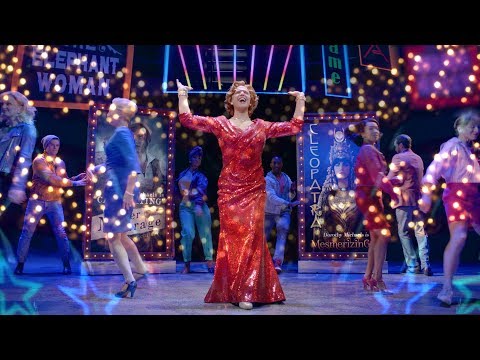
Review: when a comedy score gets serious about power
Why does a show built on disguise keep sounding so blunt? Because the lyrics are a running inventory of who gets interrupted, who gets believed, and who has to smile through it. Tootsie wants to be a high-speed farce with an ethical conscience. It mostly lands. The best numbers treat show business as an obstacle course where the hazards are social, not scenic.
David Yazbek writes like he’s allergic to dead air. He favors patter, internal rhyme, and conversational stress patterns that feel spoken before they feel sung. That matters here: Michael’s chatter and Sandy’s spirals are character psychology, not decorative comedy. When the score relaxes into longer melodic lines, it often signals a character briefly stepping out of performance and into feeling. That is the show’s cleanest dramatic trick.
Musically, the album leans brassy and jazz-adjacent, with Broadway belt energy but a bandstand bite. The sound supports the central tension: Michael can “act” his way through anything, until the lyrics keep handing him receipts. If you are listening for motifs, listen for how frequently the score uses fast verbal momentum to disguise shame, then yanks the tempo down when the consequences catch up.
Practical tip for first-timers: if you are seeing a live production, sit close enough to read the facial calibration. The comedy often happens in the micro-delay between a line and a reaction, especially once “Dorothy” starts controlling the room.
How it was made: updating the premise without sanding it flat
The adaptation makes a surgical change from the 1982 film: instead of a soap opera workplace, the musical drops its characters into the vanity and panic of a Broadway rehearsal process. That choice is not cosmetic. It lets Yazbek and book writer Robert Horn build songs out of audition nerves, rehearsal politics, and the culture of “notes.” The show can comment on gendered power dynamics while still being, stubbornly, a commercial musical comedy.
The songwriting trail leaves clues. Years before the Broadway opening, Yazbek talked about trying to write a punishing patter song “for a woman” that was hard to sing. That ambition eventually reads like a clear ancestor of Sandy’s anxiety tornado. In other words: some of the lyric architecture was being designed early, before the final shape of the show was even locked.
There is also a performance-origin detail that shaped the text’s flavor. Santino Fontana’s take on Dorothy included a specific vocal choice for her speaking voice, and he pushed for the iconic red dress moment. Those decisions are not trivia. They frame Dorothy as a “constructed” persona in a way the lyrics can then interrogate, especially when Michael forgets he is inside a costume and starts behaving like the costume is armor.
One myth worth retiring: the creative team has repeatedly argued that the comedy is not meant to come from “man in a dress,” but from the writing and timing around identity, ego, and workplace behavior. When the show is funniest, it is because the lyrics treat self-justification as a clown car.
Key tracks & scenes: the lyrical hinge points
"Opening Number" (Michael, Ron, ensemble)
- The Scene:
- Backstage hustle and New York grind. Bright, worklight realism. Michael barrels through the day as if speed can replace stability.
- Lyrical Meaning:
- This is the thesis in motion: Michael believes talent entitles him to outcomes. The lyric density is character evidence. He talks faster than he listens, and the show makes that a musical motif.
"What's Gonna Happen" (Sandy, with Michael hovering in the orbit)
- The Scene:
- An audition waiting area that feels like purgatory with headshots. Fluorescent stress lighting. Sandy spirals while the room pretends not to hear her.
- Lyrical Meaning:
- A patter number that turns self-loathing into a checklist. The lyric jokes land because the fear underneath is specific: rejection is not abstract here, it is routine. It also functions as social proof for the show’s worldview: women are trained to pre-apologize.
"I Won't Let You Down" (Dorothy at the audition)
- The Scene:
- The audition room flips from dismissive to attentive the second Dorothy walks in. A simple special isolates her, as if the room has finally decided to focus.
- Lyrical Meaning:
- Michael’s bravado learns a new costume. The lyric is a promise, but also a con. It sells reliability as performance, and the show later demands payment on that claim.
"There Was John" (Julie and Michael)
- The Scene:
- Rehearsal-room intimacy. Softer light, fewer bodies. The atmosphere shifts into confession rather than banter.
- Lyrical Meaning:
- The show briefly stops sprinting. The lyric is about history and longing, but it also widens the moral frame: Julie is not a comic type, she has a past and boundaries. Michael’s presence in the duet creates an ethical friction the score does not fully soothe.
"Unstoppable" (Dorothy, Jeff, Julie)
- The Scene:
- Momentum montage. Rehearsal success, applause implied, bodies moving in clean patterns. Lighting becomes theatrical, not utilitarian.
- Lyrical Meaning:
- This is the high of control. The lyric sells invincibility, which is exactly why it is dangerous: Michael starts confusing “winning” with “being right.” It is also a musical flex, where Yazbek lets comedy ride on propulsion rather than punch lines.
"Jeff Sums It Up" (Jeff, with Michael)
- The Scene:
- A side-space in the city. Neon, late-night energy. Jeff finally says out loud what the audience has been muttering.
- Lyrical Meaning:
- In a smart comedy, the best friend is the accountability department. The lyric is blunt, structured like a report, and it forces Michael’s selfishness into plain language. It is funny because it is accurate.
"Gone, Gone, Gone" (Julie and the women of the company)
- The Scene:
- A collective moment that feels like a dressing-room tribunal. Warmer, saturated light. The ensemble becomes a chorus of lived experience.
- Lyrical Meaning:
- The score stops flattering Michael. The lyric centers women comparing notes, and the tone is not coy. It is the show’s sharpest pivot from farce into consequence, and it lands because it is shared, not solo.
"Talk to Me Dorothy" (Michael)
- The Scene:
- Private breakdown. A single spot or a tight pool of light. The costume becomes heavy rather than helpful.
- Lyrical Meaning:
- The lyric is literally a conversation with a persona. That is the psychological core of the show: Michael built Dorothy to escape his reputation, then Dorothy becomes the only version of himself he trusts.
Live updates: where "Tootsie" sits in 2026
Information current as of February 2026.
Broadway is the short chapter. The show opened at the Marquis Theatre in April 2019 and posted a closing notice for early January 2020. That means the cast album functions as both souvenir and sales tool: it preserves the original performances, but it also sells the property beyond the Broadway run.
Since then, the center of gravity has shifted to touring and licensing. The first national tour played the 2021-2022 season, and the title is now broadly available for licensed productions through Music Theatre International. If you are tracking the show in 2025-2026, the most reliable signal is not a single marquee, it is the steady appearance of regional and community bookings in MTI’s listings and presenter calendars.
Ticket trend note for buyers: because the show is a comedy with a famous title, it tends to sell in waves around recognizable marketing beats (subscription season announcements, holiday weeks, and “fun night out” programming). If you want the sharpest lyric comprehension in a big room, prioritize seats with clear sightlines to faces over pure center alignment.
Notes & trivia
- Sandy’s big patter number was talked about as an early songwriting challenge years before Broadway, a clue that its technical difficulty was part of the plan.
- The musical shifts the workplace from a TV soap (film) to a Broadway production, which changes the lyric targets: auditions, notes, rehearsal etiquette, and industry hypocrisy.
- Costuming was not an afterthought. Dorothy’s wardrobe was built as a narrative device, with multiple looks designed to support quick identity shifts.
- The cast album release rollout split formats: digital arrived first, with physical formats following later.
- “Unstoppable” doubled as a showcase piece beyond the theatre, including televised performance moments that helped sell the show’s velocity.
- The album’s track list includes an overture and an entr’acte, a reminder that the show’s comedy still respects old-school musical architecture.
Reception: the praise came fast, the caveats did too
Critics largely agreed on the show’s craft: jokes per minute, smart structure, and Yazbek’s verbal agility. The dispute was about cultural comfort. Some reviewers heard a score that could out-write its own premise; others heard a premise that the score could not fully rescue.
“The lyrics are so smart, the music can’t always catch up with them.” Marilyn Stasio, Variety
“At their best, David Yazbek’s songs are densely wordy and nervy.” Time Out New York review
“Witty, pattery lyrics are its crowning delight.” Vulture
One especially useful angle came from critics who focused on Sandy’s number: it is funny, yes, but it is also the show quietly admitting that the cost of “trying” is often borne by the least powerful person in the room.
Awards
- Tony Awards (2019): Best Performance by an Actor in a Leading Role in a Musical (Santino Fontana)
- Tony Awards (2019): Best Book of a Musical (Robert Horn)
- Tony Awards (2019): Best Musical (nomination), Best Original Score (nomination), plus multiple performance and design nominations
- Drama Desk Awards (2019): multiple nominations across major categories
Quick facts
- Title: Tootsie
- Broadway year: 2019 (opened April 23, 2019)
- Type: musical comedy
- Music and lyrics: David Yazbek
- Book: Robert Horn
- Broadway venue: Marquis Theatre (New York)
- Original Broadway cast recording: Decca Broadway / Verve Decca Broadway (digital-first rollout in 2019)
- Album length: 22 tracks, about 1 hour
- Music supervision and vocal/dance arrangements (Broadway production): Andrea Grody (with additional arrangement roles credited in production listings)
- Selected notable placements: “Unstoppable” featured in major promotional performances around awards season
- Current availability: widely licensed for productions via MTI; touring history concentrated in the 2021-2022 season
Frequently asked questions
- Who wrote the lyrics for Tootsie?
- David Yazbek wrote both the music and the lyrics, with a book by Robert Horn.
- Is the cast album the complete score?
- It is a robust representation (including overture and entr’acte), but like many cast recordings, it is a curated audio version of a full stage experience.
- Where does “What’s Gonna Happen” happen in the story?
- Early, in the audition ecosystem, when Sandy’s anxiety becomes the show’s first major character diagnosis.
- Why is “Unstoppable” such a centerpiece?
- It compresses the show’s fantasy of success into four minutes, then dares the plot to keep up with that confidence.
- Is Tootsie still running on Broadway?
- No. The Broadway run ended in early 2020. The title lives on through licensing and regional productions.
- Is there a movie musical version of this stage adaptation?
- There is the original 1982 film, but any screen version of the stage adaptation would be a separate production announcement.
Key contributors
| Name | Role | Contribution |
|---|---|---|
| David Yazbek | Composer and lyricist | Wrote the score’s verbal velocity and character-specific rhyme logic. |
| Robert Horn | Book writer | Rebuilt the premise around a Broadway rehearsal room, enabling lyric targets about power and etiquette. |
| Scott Ellis | Director | Staged the farce so the humor plays as behavior, not costume. |
| Denis Jones | Choreographer | Gave the comedy physical punctuation, especially in ensemble momentum sequences. |
| Andrea Grody | Music supervisor / musical director | Helped translate lyric stress and comedic timing into playable, repeatable musical structure. |
| Dean Sharenow | Music supervision / producer (recording) | Key hand in the cast album’s studio capture and commercial polish. |
| Santino Fontana | Original Broadway leading performer | Created the dual-role performance that makes the lyric point-of-view work in real time. |
References & Verification: IBDB production record; Tony Awards official winners pages; Playbill (cast album release and licensing news); Apple Music album metadata; MTI licensing and production listings; major reviews from Variety, Time Out, Vulture, WNYC, and The New Yorker; tour-history aggregations and presenter calendars; Vanity Fair feature on performance choices. Production dates cross-checked against multiple theatre databases.