Titanique Lyrics – All Songs from the Musical
Titanique Lyrics: Song List
About the "Titanique" Stage Show
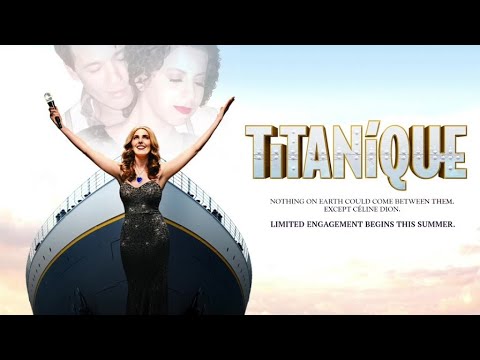
Our story begins when Céline Dion hijacks a Titanic Museum tour and enchants the audience with her totally wild take, recharting the course of Titanic’s beloved moments and characters with her iconic song catalog.Featuring powerhouse voices and show-stopping numbers (plus, contemporary pop culture and punchy odes to the 90s film), TITANIQUE is a one-of-a-kind musical voyage bursting with nostalgia and heart.
Release date: 2022
"Titanique" – The Musical Guide & Song Meanings
Information current as of February 2, 2026.
Review: What the lyrics are really doing
"Titanique" sells you a familiar shipwreck and then rewrites the wreckage. The core joke is structural: Céline Dion hijacks the narrative and turns every emotional decision into a pop-ballad argument. That matters for the lyrics, because the show is not trying to make Céline songs “fit” the film. It’s trying to prove they already contain a whole melodrama. The book lets the songs do what they were born to do: overstate.
In most jukebox musicals, lyrics become plot glue. Here, lyrics become plot weapons. “If you asked me to” is not background romance; it is a thesis about consent and impulse, dropped into the moment Jack and Rose meet. “All By Myself” is not a cry for sympathy; it’s survival-as-performance, sung by a character who refuses to be reduced to a victim. Even the show’s non-Dion interruptions are telling: when “Who Let the Dogs Out” barges in, it is the production admitting it will do anything for a laugh, including vandalizing tone on purpose.
Musically, the palette is adult-contemporary power pop, pushed through musical-theatre timing: big held notes, clean rhyme shapes, and choruses built for communal shouting. The show’s lyrical intelligence is in its re-framing. A line that read as earnest on radio becomes a punchline under stage light. Then, one scene later, the same kind of line lands sincerely because the staging stops winking for ten seconds. That whiplash is the engine.
Viewer tip (experience, not theory): if you care about lyric jokes, sit close enough to see faces. The biggest laughs are often on the last word of a line, when an actor “tags” it with a look, not a note.
How it was made
The show’s origin story is refreshingly unglamorous: it began life as a one-night-only concert in Los Angeles in 2017, then bounced through New York cabaret space (Green Room 42) before graduating into a fully staged Off-Broadway production in 2022. That timeline explains the writing. The jokes are built to land fast, like a room above a bar where the audience came to be dared.
By the time it hit Off-Broadway, the piece had a clear creative spine: co-authors Marla Mindelle, Constantine Rousouli, and Tye Blue (also the director) building a parody that insists it is affectionate. The public messaging has stayed consistent: a celebration of Dion’s persona, not a takedown. Even press coverage around the London opening described the production as a “joy machine,” which is an annoyingly accurate description of the craft goal.
Key tracks & scenes
This is not a full song list. These are the lyrical moments that best explain how the show works.
"I’m Alive" (Céline Dion)
- The Scene:
- After the overture, Céline rises, literally, like a pop deity returning from the deep. The lighting sells resurrection. The audience is told, immediately, who owns the room.
- Lyrical Meaning:
- The lyric is a mission statement: survival as spectacle. It announces that tragedy will be processed through performance, not realism. In other words, nobody is allowed to underreact.
"Taking Chances" (Company, then Rose)
- The Scene:
- The first big group number frames the ship as a floating room of lonely people pretending they are fine. The song then snaps into a solo reprise for Rose, tightening the focus.
- Lyrical Meaning:
- On radio, “taking chances” reads like self-help. In the show, it becomes a warning label for romantic decision-making. Rose is not “brave.” She is negotiating escape, and the lyric makes risk sound glamorous enough to try.
"If You Asked Me To" (Jack, Rose, with Céline as matchmaker)
- The Scene:
- Jack and Rose meet, both claiming they are disillusioned about love. Céline hovers like a meddling narrator who refuses to let the scene stay small.
- Lyrical Meaning:
- The lyric turns consent into a dare: what would you do if someone asked, sincerely? It’s the show teaching you its method, right away: take a recognizably earnest lyric and let it expose character contradiction.
"To Love You More" (Jack and Rose)
- The Scene:
- The romance goes full sail. The staging typically softens here: fewer gags, more silhouette, a sincere pocket in the middle of the clowning.
- Lyrical Meaning:
- The lyric is devotion with a competitive edge: “more” is both romance and ego. In "Titanique," that slight excess is the point. The show treats love as something you audition for.
"River Deep, Mountain High" (The Iceberg)
- The Scene:
- The Iceberg makes an entrance like a headliner. The number is engineered as a character reveal: the disaster has charisma. It’s a grotesque idea, played as a party trick.
- Lyrical Meaning:
- By giving the antagonist a big, declarative love song, the show converts fate into intention. The lyric becomes satire about how musicals romanticize power, even when power is literally destructive.
"All By Myself" (Molly Brown)
- The Scene:
- Out of the wreckage, Molly does not quietly grieve. She plants her feet and claims the spotlight. The number reads as a victory lap over catastrophe.
- Lyrical Meaning:
- The lyric is usually lonely. Here, it becomes defiant: solitude as proof of endurance. The show’s trick is to reassign meaning by reassigning who gets to sing it, and with what posture.
"The Prayer" (Rose)
- The Scene:
- After losing Jack, Rose gets a moment that behaves like an actual musical-theatre ballad, not a parody. The sound drops into something cleaner and less sarcastic.
- Lyrical Meaning:
- This is where the show admits it understands why "Titanic" still works: longing and loss are simple, and they do not need irony to hurt. The lyric functions as a palate cleanser from punchlines.
"My Heart Will Go On" (Céline and Company)
- The Scene:
- The inevitable arrival. The show treats the song like a coronation, then brings it back for a curtain-finale reprise that asks the room to sing along.
- Lyrical Meaning:
- The lyric is memory as obsession. In this production, it also becomes a joke about cultural permanence: you can parody the song all night, but the chorus will still land because the audience carries it in already.
About the “soundtrack album” problem: as of February 2026, there is no official cast recording. If you want the listening experience, build a playlist from the featured songs (mostly Dion, plus a few chaotic outsiders). The show itself points audiences to official performance videos rather than an audio album.
Live updates (2025–2026)
The show is no longer just an Off-Broadway in-joke. In London, "Titanique" extended booking at the Criterion Theatre through June 7, 2026, with cast updates announced during 2025. In New York, the production is set for a Broadway limited engagement at the St. James Theatre: first preview March 26, 2026, opening April 12, 2026, and currently announced to run through July 12, 2026. Ticket sales for the Broadway run were reported as opening to the public on January 12, 2026.
One more modern wrinkle: the brand has started behaving like a pop act. In 2025, a club-style remix release tied directly to the show’s identity (“Taking Chances”) was used as marketing and as proof of concept: this title can sell beyond the theatre audience.
Notes & trivia
- As of February 2026, the London production’s FAQ states there is no cast recording, steering fans to official performance videos instead.
- The show’s staging history includes a one-night-only 2017 concert origin before the 2022 Off-Broadway run.
- "All By Myself" is used as a post-disaster flex for Molly Brown, flipping the song’s usual self-pity into survival swagger.
- The Iceberg is not a metaphor in this show. It is a credited character with a showy entrance number.
- The Broadway transfer uses the same core creative team, with hair and wig design credited for the Broadway production.
- The show won major Off-Broadway awards in 2023 and picked up Olivier recognition in 2025, which is the cleanest explanation for its international spread.
- If you want to “get” the lyric jokes quickly, listen to the featured songs in order of how the show deploys them: opener ("I’m Alive"), romance setup ("If You Asked Me To"), mid-show vow ("To Love You More"), disruption ("River Deep, Mountain High"), aftermath ("All By Myself"), then anthem ("My Heart Will Go On").
Reception: critics then vs. now
The initial critical story in New York was essentially: a stupid premise executed with craft. Later criticism, especially around larger commercial runs, tends to focus on whether the show sustains one big joke for a full evening, even when the performances are excellent. That split is the show’s real review arc: admiration for precision, debate about stamina.
“The real object of mockery here is not ‘Titanic’ but Broadway in 2022.”
Robert Hofler, TheWrap
“It goes on and on but this madcap spoof ... has a sparkling cast.”
Arifa Akbar, The Guardian
“‘Titanique’ comes into its own as it revs up into increasing absurdity ...”
Variety, reporting a New York Times pull-quote
Awards
- Lucille Lortel Awards (2023): Outstanding Musical; Lead Performer in a Musical (Marla Mindelle); Costume Design (Alejo Vietti).
- Off-Broadway Alliance Awards (2023): Best New Musical.
- Obie Awards (67th / 2024): Performance (Marla Mindelle).
- Laurence Olivier Awards (2025): Best Entertainment or Comedy Play ("Titanique"); Best Actor in a Supporting Role in a Musical (Layton Williams).
Quick facts
- Title: Titanique
- Year (major New York premiere): 2022 (Off-Broadway)
- Type: Jukebox musical parody (Céline Dion catalogue plus select non-Dion tracks)
- Book / creators: Marla Mindelle, Constantine Rousouli, Tye Blue (with Nicholas James Connell also credited as co-author in some production materials)
- Director: Tye Blue
- Choreography: Ellenore Scott
- Music supervision / arrangements / orchestrations: Nicholas James Connell
- Selected notable placements: opener “I’m Alive”; Iceberg entrance “River Deep, Mountain High”; aftermath “All By Myself”; finale “My Heart Will Go On”
- Soundtrack album status: No official cast recording as of February 2026; listening experience is via original recordings (and selected official performance videos).
- Broadway (limited run): First preview March 26, 2026; opening April 12, 2026; scheduled through July 12, 2026.
- West End: Booking reported through June 7, 2026 (Criterion Theatre).
Frequently asked questions
- Is there a "Titanique" cast recording?
- No. As of February 2026, the London production FAQ states there is currently no cast recording, and it points audiences to official performance videos instead.
- Who wrote the lyrics in "Titanique"?
- It is a jukebox musical, so the lyrics are from the original songwriters of the featured tracks. The stage show’s book is by Marla Mindelle, Constantine Rousouli, and Tye Blue.
- Where do the songs happen in the story?
- The show uses songs as scene architecture: “I’m Alive” functions as Céline’s entrance and thesis, “If You Asked Me To” frames Jack and Rose meeting, “All By Myself” lands after the wreckage, and “My Heart Will Go On” is treated as a ritual finale.
- Is it appropriate for teens?
- Expect strong language and sexual references. Several official ticketing and FAQ pages recommend it for older teens and adults, with stricter limits for younger audiences.
- Is "Titanique" on Broadway now?
- It is scheduled as a limited Broadway engagement at the St. James Theatre beginning March 26, 2026, opening April 12, 2026.
- What should I listen to before going?
- If you want the cleanest on-ramp, queue “I’m Alive,” “Taking Chances,” “If You Asked Me To,” “To Love You More,” “River Deep, Mountain High,” “All By Myself,” and “My Heart Will Go On.” You will recognize the show’s emotional map immediately.
Key contributors
| Name | Role | Contribution |
|---|---|---|
| Marla Mindelle | Co-author; performer (Céline Dion in multiple productions) | Comic vocal persona driving the show’s narration-first structure |
| Constantine Rousouli | Co-author; performer (Jack in multiple productions) | Romance arc built to be interrupted by jokes, then briefly played straight |
| Tye Blue | Director; co-author | Stage language that treats parody as pacing, not as an extra layer |
| Nicholas James Connell | Music supervisor; arranger; orchestrator | Turns pop catalog material into theatre-forward structure and transitions |
| Ellenore Scott | Choreographer | Physical comedy plus concert-style punctuation for chorus numbers |
| Gabriel Hainer Evansohn & Grace Laubacher | Scenic design | Flexible ship-and-nightclub environment built for speed and sight gags |
| Alejo Vietti | Costume design | Costuming that signals character archetypes instantly, then exaggerates them |
| Paige Seber | Lighting design | Hard switches between sincerity and satire, often within a single chorus |
| Lawrence Schober | Sound design | Concert clarity that keeps punchlines intelligible at high volume |
References & Verification: LondonTheatre.co.uk (song-by-song guide; West End booking/cast pages); Playbill (Broadway transfer dates and creative team); IBDB (Broadway production credits); Reuters (London launch context); TheWrap, The Guardian, Financial Times, Variety (critical reception); Obie Awards (67th winners); OfficialLondonTheatre.com and LondonTheatre.co.uk (Olivier results); Titaníque official FAQ (cast recording status); Off-Broadway Alliance Awards coverage (American Theatre); Lucille Lortel winners list (Playbill).