Tick, Tick... Boom Lyrics – All Songs from the Musical
Tick, Tick... Boom Lyrics: Song List
About the "Tick, Tick... Boom" Stage Show
The premiere of the theatrical was held as the Off-Broadway in 1990, during the life of its author – composer J. Larson. After the death – in May 2001 – an upgraded version of the play was produced Off-Broadway in Jane Street Theater. It closed after six months of run. Director was S. Schwartz, choreographer – C. Gatelli. The list of actors was: R. Esparza, J. Dixon, A. Spanger.After a Broadway run in 2003, was the US national tour. In California, the play went from Nov. to Dec. 2005. From May to August 2005, the theatrical was exhibited in London at the Menier Chocolate Factory. Also in 2005 was the Canadian premiere in P. Alex Theatre. In West End it was running in May 2009 and in 2011 once again. The play visited the following countries: Hungary – in 2003-2004; Denmark – in 2007; Mexico – 2008, the Philippines, in Manila – in 2009. Germany in 2010 hosted it with the songs sung in English, and libretto was adopted to German. Show in Argentina was in 2012. From March to May 2014, Germany hosted another play.
Release date: 2001
"Tick, Tick... BOOM!" – The Musical Guide & Song Meanings
Review: the lyrics weaponize the calendar
What makes Tick, Tick... BOOM! sting is that it refuses to treat “turning 30” like a sitcom premise. The lyric writing treats time like a debt collector. It counts. It nags. It starts to sound like the inside of your skull. Even in the funniest numbers, the language keeps circling the same fear: if you do not make something that matters soon, you might never.
Because the show is semi-autobiographical, the text has two jobs at once. It confesses, then it edits the confession for an audience. That tension is the engine. Jon narrates himself with the swagger of a frontman and the self-critique of a diarist rereading old entries at 3 a.m. The score’s pop-rock vocabulary helps, because rock lets him be dramatic without apologizing for it. That is also the trap. The more the music amps up, the more the lyrics expose what he is trying to drown out: love requires time, friendships require time, and time is the one resource he believes he cannot spare.
Listen for how often Larson uses lists, tallies, and quick pivots in perspective. The words behave like a mind switching tabs. It feels contemporary because it is. It is not about one artist. It is about the cognitive noise of wanting a life and a legacy at the same time.
How it was made: from rock monologue to three-actor pressure cooker
The show began as a solo “rock monologue” under the title Boho Days. Library of Congress material charts how Larson premiered it at Second Stage in September 1990, then kept rewriting, retitling, and reshaping it before performing a revised tick, tick…BOOM! at the Village Gate in November 1991. That origin matters because you can still hear the piece thinking like a solo act: direct address, nervous jokes, sudden honesty, then a song to cover the bruise.
After Larson’s death, the piece did not automatically become a stage staple. It needed a structure that could live without its author in the room. The Off-Broadway version was reconceived as a three-actor show, with David Auburn credited as script consultant. Auburn has described his goal as making the work play as a complete dramatic experience, not just an artifact from a brilliant composer’s desk drawer. That is the quiet miracle here. The show is intimate, but it is not precious.
The cast recording preserves an additional layer of history. One track, “Boho Days,” is drawn from Larson’s own demo, which means the album becomes a time capsule as well as a score. For lyric readers, that is invaluable: you get the finished theatrical machine and a trace of the earlier blueprint in the same listen.
Key tracks & scenes: where the lyrics twist the knife
"30/90" (Jon, Michael, Susan)
- The Scene:
- Opening blast. 1990, on the edge of Soho. Jon is turning 30 and treating it like an emergency broadcast. Productions often keep the light exposed and rehearsal-like at first, so the panic reads as real, not “opening number energy.”
- Lyrical Meaning:
- Larson writes ambition as arithmetic. The lyric counts years like an insult, then tries to laugh it off. It is funny because it is true, and it is scary because he cannot stop counting.
"Green Green Dress" (Jon, Susan)
- The Scene:
- A small apartment moment that turns into a seduction and a negotiation. Many stagings soften here: warmer light, slower breath, the city receding so the relationship can speak.
- Lyrical Meaning:
- On the surface, it is flirtation. Underneath, it is two people trying to synchronize their timelines. The lyric is desire with an asterisk: what happens to “us” when the work takes over?
"Sunday" (Jon and diner patrons)
- The Scene:
- Jon at a diner, watching people and arranging them in his mind. The staging often turns into a controlled tableau, as if he is composing the room into harmony. The program history for the show explicitly frames it as Jon’s diner song and a homage to Sondheim.
- Lyrical Meaning:
- This is Larson admitting his influences out loud, then teasing them. The lyric is about control. Jon wants to place people like notes so the chaos behaves. The joke is that life keeps refusing his orchestration.
"No More" (Michael, Jon)
- The Scene:
- A friendship argument with no safe exit. The temperature drops. Blocking tightens. This is where “sellout” stops being an insult and becomes an actual question about survival.
- Lyrical Meaning:
- The lyric is a moral audit. Michael is not asking for permission to change. He is demanding respect for the costs he has already paid. Larson writes the pain plainly, which makes it land harder than a clever rhyme would.
"Therapy" (Jon, Susan)
- The Scene:
- A couple’s fight performed as a bit, sometimes staged with chairs and a “session” frame, sometimes staged like a vaudeville sparring match. In the film version, the number is explicitly conceived as a Fosse-tinged satire of therapist language.
- Lyrical Meaning:
- The lyric is weaponized communication. They use the vocabulary of healing to win. It is hilarious until you hear the despair underneath: both of them want to be seen, and both of them keep changing the subject.
"Come to Your Senses" (Karessa)
- The Scene:
- The workshop singer steps into the spotlight and suddenly the show stops clowning. Often staged as a clean, centered performance moment, with minimal movement so the line can travel.
- Lyrical Meaning:
- This ballad is the show’s emotional mirror. It is written as a plea, but it also reads as Jon talking to himself through someone else’s mouth. The lyric asks for adulthood without calling it that.
"Why" (Jon)
- The Scene:
- Late in the show, when the noise thins out. A solitary number where the performer has to hold the room without tricks. Lighting is often spare here, because the text is doing the work.
- Lyrical Meaning:
- Larson writes his artistic purpose as a collage: references, fragments, memories, and a stubborn insistence that music can make meaning. The lyric does not solve the fear. It names it and keeps going anyway.
"Louder Than Words" (Company)
- The Scene:
- Final statement. The world returns, the band feels bigger, and Jon’s private crisis becomes communal. Many productions brighten the stage gradually, as if the room is letting him rejoin humanity.
- Lyrical Meaning:
- The lyric lands on a credo: do the work, tell the truth, show up for people. It is not a cure for anxiety. It is a decision about how to live with it.
Notes & trivia
- Library of Congress research places the first version, Boho Days, at Second Stage in September 1990, with a revised tick, tick…BOOM! performed at the Village Gate in November 1991.
- The Off-Broadway premiere opened May 23, 2001 at the Jane Street Theatre and ran 215 performances, per Masterworks Broadway’s album page.
- David Auburn is credited as “script consultant” on the three-actor version and has discussed reshaping the piece so it plays as a complete show in its own right.
- “Boho Days” appears as a bonus track on the 2001 cast album and is one of the few publicly available recordings of Larson’s own voice.
- In the licensed stage score, “Boho Days” is typically not included, even though it exists on the cast recording as a historical artifact.
- “Sunday” is an overt homage to Sondheim, including an intentional parody framework that MTI itself has unpacked in a dedicated piece.
- MTI’s production map shows the show continuing to thrive globally in 2026, a sign that the piece now lives most strongly through licensing rather than one flagship commercial run.
Reception: then vs. now
In 2001, the critical story was urgency. Reviewers framed the piece as a snapshot of a young composer’s fear of failing on schedule. Since then, the show’s reputation has tilted toward craft appreciation. The lyrics read like a manual for turning personal panic into structure. The film era added a second lens: archival significance. What used to feel like “one guy’s problem” now reads as a cultural document of downtown ambition and the era’s looming grief.
“An aspiring young musical theater composer’s considerable angst at the prospect of turning 30 without having made it big.”
“The sound, whether audible or technically silent, is deafening throughout the 90 blissful minutes.”
“His heady score is richly varied, from introspective ballad to shimmering Sondheim homage.”
Live updates (2025/2026): where the show is right now
Information current as of February 2026. The stage title is in active circulation through licensing, with MTI’s production map listing multiple upcoming runs across the U.S. and internationally in spring 2026. That pattern is the show’s present tense: it is a compact, musician-friendly piece that companies can mount without waiting for a major tour to roll through town.
Internationally, a high-visibility example is the Greek National Opera’s Alternative Stage, scheduled from early December 2025 into January 2026. That kind of institutional programming signals the show’s flexibility. It can play as a rock chamber piece, not just as a nostalgia item attached to Rent.
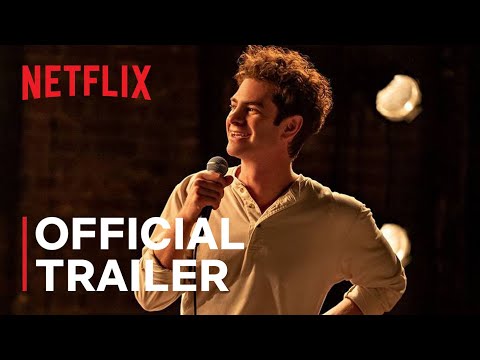
Meanwhile, the 2021 film continues to shape how new listeners meet the songs. Netflix keeps the narrative crisp: 1990 pressure, workshop stakes, and the feeling that every creative choice is also a personal gamble. If you are tracking lyrics and album listening, it is worth knowing that the film soundtrack (produced by Alex Lacamoire, Bill Sherman, and Kurt Crowley, among others) is a distinct listening experience with different vocal colors and some additional contextual framing.
Quick facts (album + production)
- Title: Tick, Tick... BOOM!
- Year (stage breakthrough): 2001 (Off-Broadway premiere at Jane Street Theatre)
- Setting: 1990, New York City, on the edge of Soho (commonly cited in production records)
- Book, music, lyrics: Jonathan Larson
- Script consultant (3-actor version): David Auburn
- Licensed scale: 3 actors, 10 roles, 1 act (MTI essentials)
- Original Off-Broadway cast recording: 2001 album widely available on streaming; commonly listed as 14 tracks (including “Boho Days” and a playout)
- Stage recording label context: Commonly associated with RCA Victor Broadway (metadata varies by platform and reissue)
- Film soundtrack: Released November 12, 2021; a separate album tied to the Netflix film, with its own production team and tracklist
- Selected notable placements: “Sunday” as the diner homage; “Therapy” as the couple’s argument number; “Louder Than Words” as the closing credo
Frequently asked questions
- Who wrote the lyrics for Tick, Tick... BOOM!?
- Jonathan Larson wrote the book, music, and lyrics. The three-actor stage version credits David Auburn as script consultant.
- Is “Boho Days” part of the show?
- Historically, yes. It was the earlier title and material for Larson’s rock monologue. On the 2001 cast album, “Boho Days” appears as a bonus track using Larson’s demo voice, but it is typically not part of the licensed stage score.
- Is this the same as the Netflix film?
- The film adapts the stage piece and expands its world through cinematic settings, cameos, and additional contextual storytelling. It also has its own soundtrack album with different performers and production choices.
- How many actors are in the stage version?
- Most licensed productions use three performers who cover multiple roles, backed by a band. That small cast is part of the show’s intimacy and speed.
- What is Superbia and why does it matter?
- Within the story, Superbia is Jon’s big, years-in-the-making project and the reason time feels like an enemy. Dramatically, it is the show’s pressure valve: every relationship scene is haunted by the unfinished work.
- Where should I start if I only have time for four songs?
- Try “30/90,” “Sunday,” “Therapy,” and “Louder Than Words.” You get the panic, the ambition, the relationship fracture, and the final resolve.
Key contributors
| Name | Role | Contribution |
|---|---|---|
| Jonathan Larson | Book / Music / Lyrics | Wrote an autobiographical score that turns deadline anxiety into pop-rock storytelling. |
| David Auburn | Script consultant (stage) | Helped shape the posthumous three-actor version into a playable dramatic structure. |
| Stephen Oremus | Vocal arrangements / orchestrations (stage lineage) | Key musical architect of the three-actor staging and its playable band framework. |
| Raúl Esparza | Original Off-Broadway cast (Jon) | Lead voice on the 2001 cast recording and a defining interpreter of the role’s lyrical velocity. |
| Lin-Manuel Miranda | Film director | Translated the stage piece to cinema while pulling from Larson archives and downtown context. |
| Steven Levenson | Film screenwriter | Adapted the material for film structure, expanding the world around the songs. |
| Alex Lacamoire | Film music producer | Led production of Larson’s songs for the 2021 soundtrack album, shaping its contemporary polish. |
Sources: Netflix (official trailer page), Library of Congress (Music Division blog and finding aid), Masterworks Broadway, MTI (show page and productions map), Playbill, TheaterMania, Variety, Talkin’ Broadway, The Guardian, Greek National Opera ticketing pages, Spotify, Amazon, Discogs.