Threepenny Opera Lyrics – All Songs from the Musical
Threepenny Opera Lyrics: Song List
- Prologue
- Overture
- The Ballad of Mack the Knife
- Morning Anthem
- Instead Of Song
- Wedding Song
- Pirate Jenny
- Army Song
- Love Song
- Ballad of Dependency
- Melodrama/Polly’s Song
- Ballad of the Easy Life
- The World Is Mean
- Barbara Song
- Tango Ballad
- Jealousy Duet
- How to Survive
- Useless Song
- Solomon Song
- Call from the Grave
- Death Message
- Finale: The Mounted Messenger
About the "Threepenny Opera" Stage Show
The Threepenny Opera adapted from a translation by Elisabeth Hauptmann of John Gay's 18th-century English ballad opera, The Beggar's Opera, and four ballads by François Villon, with music by Kurt Weill. Although there is debate as to how much, if any, contribution Hauptmann might have made to the text, Brecht is usually listed as sole author.The work offers a socialist critique of the capitalist world. With influences from jazz and German dance music, songs from The Threepenny Opera have been widely covered and become standards, most notably "The Ballad of Mack the Knife" and "Pirate Jenny".
Release date: 1954
"The Threepenny Opera" – The Musical Guide & Song Meanings
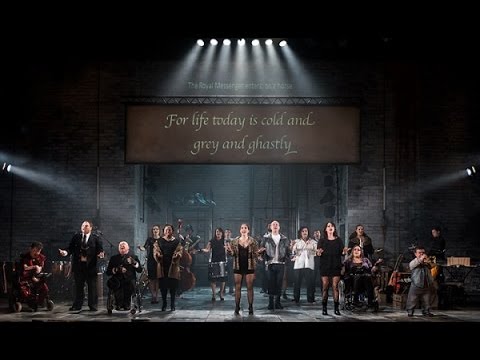
Review: a musical that smiles while it picks your pocket
Why does this show open by singing about a murderer like he’s the headliner? Because The Threepenny Opera is built to make you complicit. The lyrics do not court your sympathy. They court your attention. Brecht’s language, especially in English, has a blunt, transactional rhythm: who profits, who pays, who gets to pretend it was fate. Weill’s score sweetens the pitch, then pulls the floorboards. The songs are designed to interrupt the story at the moment you are getting comfortable, which is the point of the form.
The 1954 Off-Broadway breakthrough, in Marc Blitzstein’s English adaptation, is where the lyrics became a New York currency. Blitzstein’s choices land like street talk and sermon. He keeps the rhymes and the nastiness, but aims them at an American ear that likes its cynicism in a melody you can hum. That is why “Mack the Knife” escaped the show and became a standard. The lyric is a sales pitch for horror, delivered with a grin so bright you almost miss the blood on the cuff.
Listen for the recurring technique: a character steps out of the plot, sings a “lesson,” and the lesson is usually a rationalization. Polly makes romance sound like a deal. Mrs. Peachum makes morality sound like a luxury. Jenny makes revenge sound like justice. The lyrics do not just reflect the story, they argue with it in public.
Viewer tip: sit where you can see faces. This piece is full of direct address and sudden stillness. The best “cabaret” moments are not loud. They are precise.
How it was made: the work’s chaos is part of its sound
The original 1928 Berlin production came together under real pressure. Program materials connected to the Kurt Weill Foundation describe how producer Ernst Josef Aufricht approached Brecht in early 1928, at a moment when money was tight and time was tighter. The show’s identity, half opera, half street song, is not an academic blend. It is a practical one, built for a specific venue and a public that did not necessarily want “opera” at all.
The 1954 New York story has its own backroom drama. The Theatre de Lys staging by Carmen Capalbo and Stanley Chase put Blitzstein’s English text in front of a downtown audience, and it stuck. Then the cast album fight broke out. According to Ovrtur’s recording history, MGM’s CEO arrived with a list of songs to delete and lyrics to change, handed over at the recording session itself. Blitzstein and Lotte Lenya argued hard enough to keep the musical numbers, with censorship battles still hanging over specific lines. It is a perfect Threepenny anecdote: art negotiating with power in real time.
Experience note: if you know the show only through “Mack the Knife,” the full score can feel colder, less romantic, more like a ledger. That is intentional. The point is not catharsis. The point is exposure.
Key tracks & scenes: where the lyrics do the damage
"The Ballad of Mack the Knife" (Street Singer)
- The Scene:
- Prologue, on the street. A single performer steps forward like an emcee. Many stagings keep the light clean and frontal, almost “house lights” honest, as if the show is refusing to hide behind scenery.
- Lyrical Meaning:
- A murder list delivered as entertainment. The lyric tells you exactly what kind of night this is: we will sing, and we will not sanitize what we are singing about. The charm is part of the indictment.
"Morning Anthem" (Peachum)
- The Scene:
- Peachum’s beggar outfitting shop. Work begins. The lighting often turns practical and gray, commerce replacing romance.
- Lyrical Meaning:
- It frames poverty as a business model. The lyric puts “morality” in quotation marks without needing to say it out loud.
"Wedding Song" (The Gang)
- The Scene:
- An empty stable dressed up with stolen goods for Macheath and Polly’s wedding feast. Directors frequently stage it as a grotesque party, warm light on ugly behavior.
- Lyrical Meaning:
- The lyrics treat marriage as another hustle. It is a chorus of men explaining why love is optional and leverage is not.
"Pirate Jenny" (Jenny, sometimes Polly)
- The Scene:
- Often presented during the wedding feast as “entertainment,” with the room going still while the fantasy grows. The Kurt Weill Foundation synopsis describes Polly singing it in the stable banquet in the original structure, though productions often reassign or relocate it.
- Lyrical Meaning:
- A revenge dream that starts as humiliation and ends as apocalypse. The lyric is social rage made theatrical. It is also the show’s warning: the meek are not harmless, they are waiting.
"Cannon Song" (Macheath and Brown)
- The Scene:
- Two old comrades, a gangster and a police chief, singing like they are in a private club. Many stagings shift into a harsher side light, a confession booth with a beat.
- Lyrical Meaning:
- The lyric turns friendship into a corrupt contract. It normalizes violence by treating it as shared history, which is exactly how institutions excuse themselves.
"Ballad of Dependency" (Mrs. Peachum)
- The Scene:
- Domestic strategy as a solo. Often staged with minimal movement, letting the words land like a verdict.
- Lyrical Meaning:
- Love is described as addiction, and addiction as weakness you can exploit. The lyric is funny, then it keeps being true.
"Barbara Song" (Polly)
- The Scene:
- Polly tries on a “good girl” story and then punctures it. Lighting frequently softens at the start, then sharpens as the confession turns candid.
- Lyrical Meaning:
- It is a morality tale that refuses to reward morality. The lyric is Polly declaring authorship over her own appetite and her own compromises.
"Jealousy Duet" (Polly and Lucy)
- The Scene:
- Two women confronting each other over the same man. Many productions stage it like a polite tea that turns into a knife fight, with bright light and crisp blocking.
- Lyrical Meaning:
- The lyric is a contest of narratives. Each woman attempts to define what “wife” means, as if definition will produce victory.
"Second Threepenny Finale" (Company)
- The Scene:
- The world closes in. Depending on staging, this can feel like a rally, a sermon, or a cabaret sting. Some prompt books and scene lists show weather and signage cues escalating the pressure in the brothel and prison sequences.
- Lyrical Meaning:
- This is the show’s survival thesis. The lyric asks what sustains people when society is built to discard them, and it refuses sentimental answers.
Live updates (2025/2026): what is happening now
Information current as of February 2026. In the U.S., the most concrete near-term headline is a new Off-Broadway adaptation titled 3Penny Opera, running January 15 to 25, 2026 at Theatre at St. Jean’s. The production is adapted and directed by George Abud, with Katrina Lenk and Abud starring, produced by Off-Brand Opera. If you want to see how contemporary artists are rethinking the text, this is the cleanest “right now” data point.
In parallel, major critics continue to treat the piece as a stress test for directors. A recent Guardian review of Barrie Kosky’s take at the Adelaide Festival praised how a strong production can make Brecht’s theory feel like pure entertainment, without draining the politics. The conversation has shifted from “Is it relevant?” to “Can you stage it without smoothing its edges?”
Practical tip: if you are coming in through recordings, try the 1954 New York cast version for Blitzstein’s English, then sample a modern staged production clip. The same lyric can read as satire, threat, or confession depending on how directly the actor addresses the house.
Notes & trivia
- The 1954 Off-Broadway revival opened March 10, 1954 at the Theatre de Lys and played an initial run commonly listed as 96 performances.
- The Kurt Weill Foundation notes the Theatre de Lys production ultimately reached 2,707 performances, making it a defining Off-Broadway phenomenon.
- IBDB records Lotte Lenya winning the 1956 Tony Award for Featured Actress in a Musical for her Off-Broadway performance as Jenny, an unusual awards-history wrinkle.
- One of the most famous “song placement” arguments is “Pirate Jenny.” The Kurt Weill Foundation synopsis places it as wedding entertainment in the stable, though later productions often relocate it or reassign the singer.
- The 1954 cast recording is widely described as “complete score without spoken dialogue,” conducted by Samuel Matlowsky, which makes it unusually useful for lyric study.
- Ovrtur’s recording history reports MGM tried to delete numbers and demand lyric changes at the recording session, and Blitzstein and Lenya fought to keep the musical content intact.
- Myth-check: the coin reference in “threepenny” often gets treated like a cute title flourish, but the work’s central joke is economic, not quaint. The title keeps dragging you back to money.
Reception: then vs. now
The piece has always divided audiences by design. In 1954 New York, the downtown breakthrough proved that a hard-edged European “play with music” could run like a commercial hit, if the translation and the venue matched the moment. Later revivals tend to be judged on whether they preserve the abrasion. When the sound gets too pretty, the satire can look like decor.
“The Threepenny Opera revival is now five years old and practically a city park.”
“Threepenny’s impudent spirit is evergreen.”
“A song about a killer, seductive and savage, announcing the show’s intentions.”
Quick facts (album + production)
- Title: The Threepenny Opera (Die Dreigroschenoper)
- Year: 1954 (New York breakthrough revival at Theatre de Lys)
- Type: “Play with music” in three acts, satirical underworld story after John Gay’s The Beggar’s Opera
- Book and lyrics (original): Bertolt Brecht, in collaboration with Elisabeth Hauptmann
- Music: Kurt Weill
- English adaptation (1954): Marc Blitzstein
- 1954 production setting (IBDB): 19th-century London, including Peachum’s shop, a brothel in Wapping, Newgate Prison, a street, an empty stable
- 1954 cast recording identity: English lyrics (Blitzstein), conducted by Samuel Matlowsky, issued as a cast recording associated with the Theatre de Lys production
- Digital availability: Streaming services carry reissues commonly branded “1954 Original Broadway Cast,” often with expanded track counts and a later release date in metadata
- Why the album matters for lyric study: It preserves the show’s song-to-song argument structure without dialogue padding, so the lyrics have to do the connective work themselves
Frequently asked questions
- Who wrote the lyrics to The Threepenny Opera?
- The original German lyrics are credited to Bertolt Brecht, with documented collaboration and translation work involving Elisabeth Hauptmann. The 1954 English lyrics and adaptation are by Marc Blitzstein.
- Is it an opera or a musical?
- It is a “play with music” built to borrow opera’s authority and then undercut it. Weill’s score uses popular idioms and small-band textures to keep the sound street-level.
- Where does “Pirate Jenny” happen in the story?
- In the original structure described by the Kurt Weill Foundation synopsis, it appears during the wedding feast in the stable as entertainment. Many later productions move it or reassign the singer.
- Why does “Mack the Knife” come first?
- Because it frames the night as a moral trap. The audience is invited to enjoy the tune while being told, immediately, what kind of man is at the center of the story.
- What is the most important difference in the 1954 English version?
- Blitzstein’s language aims for an American cadence while preserving the bite, which helped the piece land Off-Broadway at scale in the 1950s and shaped how English-speaking audiences quote the show.
- Is The Threepenny Opera still being produced today?
- Yes. A new adaptation titled 3Penny Opera is scheduled Off-Broadway in January 2026, and international festivals and companies continue to mount major reinterpretations.
Key contributors
| Name | Role | Contribution |
|---|---|---|
| Bertolt Brecht | Book and lyrics (original) | Wrote the satirical text that treats morality as economics and economics as violence. |
| Kurt Weill | Composer | Built a score that uses popular idioms as a delivery system for political critique. |
| Elisabeth Hauptmann | Translator/collaborator | Key figure in the adaptation chain from John Gay’s ballad opera into Brecht’s libretto tradition. |
| Marc Blitzstein | English adaptation (1954) | Crafted the English-language version that powered the Off-Broadway breakthrough. |
| Lotte Lenya | Performer (Jenny) and advocate | Central interpreter of the work, Tony-winning Off-Broadway performer, and a decisive voice in protecting the score’s identity. |
| Carmen Capalbo | Director (1954 Theatre de Lys) | Directed the staging that helped turn the piece into an Off-Broadway institution. |
| Samuel Matlowsky | Conductor/music director | Conducted the 1954 production and is credited on the associated cast recording lineage. |
| George Abud | Adaptor/director (2026) | Adapted and directed the 2026 Off-Broadway rethinking titled 3Penny Opera. |
| Katrina Lenk | Actor (2026) | Announced star for the 2026 Off-Broadway adaptation. |
Sources: IBDB, Kurt Weill Foundation for Music, Playbill, Off-Brand Opera, Ovrtur, Time, The Washington Post, The Guardian, EAMDC (Kurt Weill Music / publisher catalog).