
Thoroughly Modern Millie Lyrics: Song List
- Act 1
- Overture
- Not for the Life of Me
- Thoroughly Modern Millie
- Not for the Life of Me (Tag)
- How the Other Half Lives
- Not for the Life of Me (reprise)
- The Speed Test
- They Don't Know
- The Nuttycracker Suite (Orchestra)
- What Do I Need with Love?
- Only in New York
- Jimmy
- Act 2
- Back at Work
- Forget About the Boy
- Ah! Sweet Mystery of Life
- I Turned the Corner
- Muqin
- Long as I'm Here with You
- Gimme Gimme
- Finale
About the "Thoroughly Modern Millie" Stage Show
La Jolla Playhouse hosted try-outs (California, San Diego). The spectacle was exhibited three last months in 2000. On the Broadway, it was shown in Marquis Theatre from 2002 till 2004. There were shown 32 preliminaries & 900+ main exhibitions. Director was M. Mayer, music by J. Tesori. D. Scanlan was responsible for libretto, choreography was done by R. Ashford. Costumer was M. Pakledinaz, scenery manager was D. Gallo. Light design was D. Holder’s area of responsibility. The show involved actors: A. Nathan, S. Foster, F. Jue, M. Kudisch, K. Leung, A. Christian, S. Lee Ralphas, G. Creel & H. Harris. After positive impression from histrionics on Broadway, it toured across the country.
West End’s production had been hosted by Shaftesbury Theatre. When preliminaries were over, the main exhibitions started in Oct. 2003 & ended in June 2004. Having received positive reviews, this theatrical haven’t had much success. The UK tour has been much more successful. It was held in the main theaters of the country from March to November 2005.
In Canada & the Toronto, performance took place in the mid of 2006. It was demonstrated for Randolph Academy’s graduates. In Hong Kong, show was exhibited in late months of 2009.
Release date of the musical: 2002
"Thoroughly Modern Millie" – The Musical Guide & Song Meanings
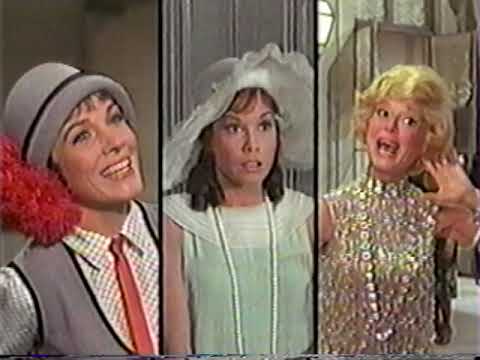
Review: a Jazz Age fairy tale that runs on punchlines and pressure
Can a musical be both a valentine to old showbiz and a critique of its habits? Thoroughly Modern Millie tries, and mostly pulls it off by keeping its smile just sharp enough to cut. The plot is screwball. The pacing is not. The lyrics move like a stenographer on a deadline: tidy, fast, and quietly ruthless about what people really want. Dick Scanlan writes in bright, legible sentences, then slips in a twist of self-awareness that turns a “cute” moment into a character tell.
Jeanine Tesori’s score plays a deliberate game of dress-up. It borrows the silhouette of 1920s pop, then snaps it into modern musical-theatre structure. The result is pastiche with purpose: the music keeps reminding you that Millie is performing “modernity” as a role, not a personality. That idea is the show’s real motif. Everyone is acting like someone else, even when they think they are being honest.
The best lyrical trick is how songs argue with each other. Millie’s early declarations are clean and ambitious. Jimmy’s material pushes back, less with romance than with skepticism. And when the show shifts into the “Hotel Priscilla” world, the lyrics become communal: a chorus of young women narrating survival strategies with enough pep to make the cynicism singable.
How it was made: integrating a movie’s DNA into a stage score
The show started with an adaptation problem. The 1967 film is a star vehicle with a glossy, episodic charm. A stage musical needs propulsion. Early on, the writers envisioned a piece built from period songs and numbers from the film, and Tesori was brought in to make the score feel like one cohesive musical voice, even while it jumps between “new” material and borrowed classics. That integration is the hidden craft: the show wants you to hear a single world, not a playlist.
One useful behind-the-scenes detail is how openly the creators talked about construction. The whole thing is engineered to move. The comedy looks airy, but it is load-bearing. When it works, it works because the lyrics keep the story’s traffic flowing: setup, payoff, pivot, repeat.
Key tracks & scenes: where the lyrics turn the plot
"Not for the Life of Me" (Millie)
- The Scene:
- Manhattan, 1922. Millie steps off the train from Kansas and commits in public. Many productions light this like a fresh start: bright, open, a city that looks like possibility. The return ticket becomes a prop you can feel her tearing up.
- Lyrical Meaning:
- It is an “I want” song with a résumé attached. The lyric sells ambition as a plan, not a dream, and that matters because the show keeps testing the plan against reality. The clean phrasing is the point. Millie believes clarity equals control.
"Thoroughly Modern Millie" (Millie & Company)
- The Scene:
- Millie’s makeover becomes a parade. Hair bobbed, hemline raised, confidence installed. The best stagings treat it like a fashion montage with footlights: hot, public, and a little dangerous for someone new to the city.
- Lyrical Meaning:
- The title is an act of self-branding. The lyric functions as a mask she chooses and dares the world to accept. Under the sparkle is a quiet fear: if she cannot become “modern,” she might disappear.
"How the Other Half Lives" (Millie & Miss Dorothy)
- The Scene:
- A rich-girl fantasy filtered through two very different kinds of hunger. Often staged as a comic duet with parallel blocking: one woman trying on wealth like a costume, the other trying to pass as carefree.
- Lyrical Meaning:
- The lyric is a social-climbing manual disguised as friendship. Every “wow” has a subtext. For Millie, it is aspiration. For Dorothy, it is camouflage. That tension is the show’s sweetest kind of irony.
"The Speed Test" (Trevor, Millie & Office)
- The Scene:
- In the office, the musical becomes a machine. Typewriters, tap rhythms, and corporate choreography. Lighting typically shifts cooler here: work-world clarity, no romance glow.
- Lyrical Meaning:
- This is the show’s thesis in miniature: modern women entering the workforce, and the workforce treating them like replaceable parts. The lyrics are brisk on purpose. Efficiency becomes a character.
"They Don't Know" (Mrs. Meers)
- The Scene:
- Backstage villainy with a showbiz grin. Meers often gets a tight spotlight and a conspiratorial angle, like she is performing for us, not the room. The comedy is broad, the intent is not.
- Lyrical Meaning:
- The lyric is an actor’s autobiography turned into menace. It is funny, then it isn’t. Scanlan writes her as someone who confuses performance with permission, which is exactly why the song still sparks debate.
"What Do I Need with Love?" (Jimmy)
- The Scene:
- Jimmy tries to act above it all. Many stagings isolate him from the city bustle: a pool of light, a street-corner stillness, a guy pretending he is immune.
- Lyrical Meaning:
- A classic protest song against commitment, except the lyric is already losing the argument. The best readings let the rhyme betray him. He is not rejecting love. He is negotiating its terms.
"Forget About the Boy" (Millie & Office Women)
- The Scene:
- Act II, back at work. Millie tries to compartmentalize heartbreak like it is filing. The staging often goes full pep-squad: lines, kicks, sharp gestures that look like confidence and feel like defense.
- Lyrical Meaning:
- The lyric is self-talk that turns into a public anthem. It is advice and denial in the same breath. What makes it hit is how hard she is trying to believe her own rhymes.
"Gimme Gimme" (Millie)
- The Scene:
- Millie stops asking nicely. Directors often stage this as a breakthrough number: bolder light, bolder movement, the character finally matching the city’s volume.
- Lyrical Meaning:
- This is desire with the gloves off. Earlier songs framed ambition as strategy. Here it becomes appetite. The lyric’s repetition is the point. She is insisting on her right to want more.
"Only in New York" (Muzzy)
- The Scene:
- Big-band glamour, the show’s nightclub heartbeat. Muzzy arrives as a celebrity lesson in charisma. The lighting usually goes warm and theatrical, as if the city itself is a spotlight operator.
- Lyrical Meaning:
- The lyric sells New York as myth, then winks at the sales pitch. It is not just civic pride. It is permission for Millie to keep reinventing herself until she lands on something true.
Live updates (2025/2026): where Millie lives now
Information current as of February 2026. Millie is not functioning as a single, centralized commercial tour right now. Its present-tense life is the licensing circuit: schools, youth companies, and regional theatres that want a large ensemble, tap-heavy choreography, and a title audiences recognize.
Two useful signals from the last couple of years. In early 2025, The Muny scheduled a two-week reading, with Sam Pinkleton attached as director, which reads like a “does this piece want a new version?” temperature check. Separately, listings show youth and local productions continuing to book dates into late 2025, a reminder that the show’s demand is real even when Broadway is quiet.
The bigger conversation around the title remains revision. The show has faced sustained scrutiny over its Asian caricature subplot, and creators and producers have publicly discussed rethinking it. There was also a high-profile plan for a revised Encores! staging with Ashley Park and book work by Lauren Yee, which never reached the stage because the 2020 season was disrupted. That context matters for lyrics readers: certain jokes and accents land differently now, and many productions adjust choices accordingly.
Ticket trend footnote, because it is part of the story: a past U.K. tour was publicly canceled citing lower ticket sales. It is a reminder that the show’s commercial fate depends on timing, marketing, and local appetite for vintage-style comedy, not just the Tony history.
Notes & trivia
- The Broadway run opened April 18, 2002 and closed June 20, 2004 at the Marquis Theatre.
- The show’s score is intentionally hybrid: new Tesori-Scanlan material sits alongside older songs associated with the film and period sound, with Tesori brought in to unify the musical voice.
- The original cast recording is commonly listed as 21 tracks and about 58 minutes on major streaming services.
- “The Speed Test” is built like a musical-theatre relay race, incorporating nods to earlier operetta comic language in some versions.
- Variety singled out “They Don’t Know” for its punchy Scanlan lyric writing, which is a polite way of saying the villain gets the best jokes.
- Contemporary production practice increasingly treats the show’s satire-versus-stereotype issue as a directing problem to solve, not a shrug to ignore.
- Myth-check: some databases cite different labels for the cast album (RCA Victor, BMG, Decca/Masterworks). The cleanest approach is to cite the platform you are linking to and note that reissues and metadata vary.
Reception: then vs. now
In 2002, the critical story was craft and crowd-pleasing pace. The score was often praised for its savvy imitation of older musical styles, and Scanlan’s lyrics were described as smooth and sophisticated. Later commentary tends to split into two lanes: affection for the tap-and-trouble fun, and discomfort with how the show handles race comedy. Both lanes can be true at once. That tension is now part of the show’s performance history.
“Tesori’s energetic, purposefully derivative score and Scanlan’s impressively smooth and sophisticated lyrics.”
“ ‘They Don't Know,’ boasts some delicious lyrics by Scanlan.”
“The most inspired musical interludes are those using pre-existing music, freshened with Dick Scanlan's amusing lyrics.”
Quick facts (album + production)
- Title: Thoroughly Modern Millie
- Year: 2002 (Broadway opening year)
- Type: Musical comedy set in New York City, 1922
- Book: Richard Morris and Dick Scanlan
- Music: Jeanine Tesori
- Lyrics: Dick Scanlan
- Broadway venue: Marquis Theatre
- Cast album: Original Broadway Cast Recording (streaming listings commonly show 21 tracks, ~58 minutes)
- Album context: The recording functions as a plot guide because the score is story-forward and reprised motifs do structural work.
- Notable stylistic markers: Jazz Age pastiche, tap-driven ensemble writing, and “character argument” duets.
- Licensing note: Widely produced via Music Theatre International, including full synopsis and educational materials.
- Selected notable placements: “Not for the Life of Me” as the opening commitment; “Forget About the Boy” as the Act II self-reprogramming attempt.
Frequently asked questions
- Who wrote the lyrics for Thoroughly Modern Millie?
- Dick Scanlan wrote the lyrics and co-wrote the book with Richard Morris, with music by Jeanine Tesori.
- Is the musical the same as the 1967 movie?
- It shares the title and a core setup, but the stage version is reshaped for theatre pacing, adds new songs, and reframes several characters and plot mechanics.
- What songs should I hear first to understand the story fast?
- Start with “Not for the Life of Me,” “How the Other Half Lives,” “What Do I Need with Love?,” and “Forget About the Boy.” That run gives you ambition, social contrast, romantic resistance, and Act II resolve.
- Why is “Forget About the Boy” such a big audition song?
- It is a stamina test with a personality requirement. You need clean comic intent, rhythmic precision, and a believable emotional engine under the pep.
- Has the show been revised because of controversy?
- Public discussion around revisions has been ongoing, and planned work on a revised Encores! staging was announced before it was derailed by the 2020 shutdown. Many productions now make deliberate staging and characterization choices to avoid harmful caricature.
Key contributors
| Name | Role | Contribution |
|---|---|---|
| Jeanine Tesori | Composer | Built a modern musical-theatre score that intentionally wears a 1920s costume. |
| Dick Scanlan | Lyricist / Co-book writer | Wrote bright, efficient lyrics that land jokes while advancing plot. |
| Richard Morris | Co-book writer | Co-shaped the stage narrative from the original story/screenplay roots. |
| Michael Mayer | Director (original Broadway) | Set the tone: glossy comedy with real momentum. |
| Rob Ashford | Choreographer (original Broadway) | Made tap and ensemble movement a storytelling device, not just decoration. |
| Doug Besterman | Orchestrator | Helped frame the score’s period references in a Broadway-sized sound. |
| Ralph Burns | Orchestrator | Co-orchestrated the original production’s Jazz Age color and swing. |
| Lauren Yee | Playwright (planned revisions) | Announced as book reviser for a planned Encores! rethinking of the piece. |
| Ashley Park | Actor (planned Encores! lead) | Announced to play Millie in the planned Encores! staging that did not proceed. |
Sources: IBDB, Music Theatre International, Playbill, Variety, CurtainUp, Wikipedia, Apple Music, Spotify, Masterworks Broadway, Discogs, TheaterMania, Pittsburgh Post-Gazette, BroadwayWorld.