They're Playing Our Song Lyrics – All Songs from the Musical
They're Playing Our Song Lyrics: Song List
About the "They're Playing Our Song" Stage Show
The musical is staged based on the script of the American playwright N. Simon, music by M. Hamlisch, libretto by C. Sager. The premiere was held at the Ahmanson Theatre in LA in 1978. After 11 preliminaries, the histrionics opened on Broadway in the Imperial Theatre in February 1979. 1082 performances were shown. Director was R. Moore, choreographer – P. Birch. Involved actors: R. Klein, L. Arnaz, T. Roberts, S. Channing, V. Garber, A. Gillette & T. Wass. In 1979 started the national tour on the US.The play has been showed abroad for many times. The London’s West End hosted in October 1980 the first show in Shaftesbury Theatre with the main actors T. Conti & G. Craven. The musical was very popular and did not go off the stage for two years. It was closed in May 1982. Australian exhibitions began in August 1980 in the Sydney’s Theatre Royal. Actors were: J. Waters, J. Weaver & R. Burchmore. Performance in Argentina was in 1980 with actors V. Lynch & V. Laplace.
In 1990, there was a new production with the same actors. In the Philippines, show was in Singapore Repertory Theater in 2000 with actors L. Salonga & A. Pang. The Brazilian performance was shown in 2009. Actors were T. Aguiar & A. Acosta. After every major play – Broadway, West End, Australia – record companies made recordings of its songs.
Release date: 1979
"They're Playing Our Song" – The Musical Guide & Song Meanings
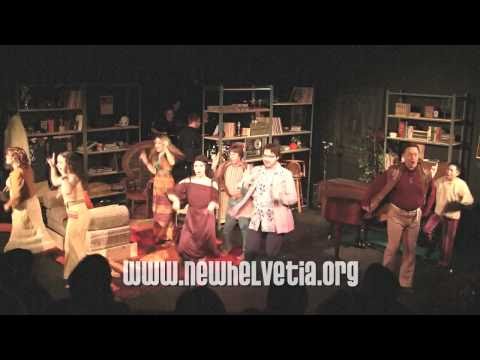
Review: the show is a love story written in revision marks
What if the romantic problem is not “Will they stay together?” but “Can they agree on the same sentence?” That’s the engine of They’re Playing Our Song. The show watches a composer and a lyricist do what every couple does: negotiate tone, subtext, and who gets the last word. Neil Simon’s book makes the writing process the plot, and the lyrics keep score. Each song is a draft, a rebuttal, or a late-night voice memo you regret sending in the morning.
Carole Bayer Sager’s lyric approach here is conversational, but it comes with trapdoors. Her characters talk like they’re being reasonable, right up until the rhyme reveals the real agenda. Marvin Hamlisch answers with melodies that feel polished and radio-ready, which is the point. The tunes sound like certainty, while the scenes keep proving certainty is a performance. Add the six “inner voices” and the musical becomes a live annotation layer: desire on one channel, panic on another, and the official couple story attempting to keep up.
Musically, it sits in smart, accessible late-1970s Broadway pop. No grand operatic ambitions. The score likes a tight hook and an even tighter emotional turn. That restraint can read as light entertainment, or as a very specific kind of honesty: these two are not singing because fate has struck, they’re singing because they cannot stop editing each other.
How it was made: when your collaborators become your subject
The piece is openly inspired by the real-life relationship between its composer and lyricist, which gives it a slightly dangerous charge: the show is about the thing it’s doing. Even Marvin Hamlisch, looking back, framed its longevity in simple terms: it’s “about relationships” and it carries “a happy message.” That sounds modest. It is also a mission statement for why audiences keep licensing it when flashier titles are available.
Production lore matches the show’s own theme of excess meeting practicality. One of the most specific, wonderfully unglamorous details: producer Emanuel Azenberg reportedly chartered a 747 to move sets and costumes from the Los Angeles tryout to New York. That is the kind of decision you make when you believe in the material and fear the calendar.
Also, the cast album hides a little performance fingerprint. Ovrtur notes that the first sixteen bars of “When You’re in My Arms” are played on piano by Hamlisch himself, and that the final line of that same song is sung by Eydie Gormé, both uncredited. The show is about credit and collaboration, so of course the record has a secret handshake.
Key tracks & scenes: where the lyrics turn the plot
"Fallin’" (Vernon)
- The Scene:
- Early on, in Vernon’s Manhattan workspace, the piano is home base. The inner voices hover like studio chatter given bodies. Lighting is typically clean and practical, the kind of stage picture that says “work is happening” even when the heart is spiraling.
- Lyrical Meaning:
- This is not a swoon, it’s a diagnosis. The lyric structure tends to move like a man trying to sound in control while admitting the opposite. It sets up the show’s recurring gag: his emotions arrive before his consent.
"Workin’ It Out" (Vernon, Sonia, Voices)
- The Scene:
- The first real collaboration session. The “voices” interrupt like competing browser tabs. Blocking often keeps the two principals near the piano but never fully aligned, bodies angled away while the song insists on togetherness.
- Lyrical Meaning:
- The title is a double meaning. They are working out a song, and working out a power structure. The lyric lets you hear how creative language becomes romantic foreplay, and also a subtle negotiation over whose taste wins.
"If He Really Knew Me" (Sonia, Vernon)
- The Scene:
- Usually staged as a moment where Sonia’s bravado drops. The world narrows, often into a warmer spotlight that isolates her from the “busy” comedy. Vernon’s presence is felt as pressure, even when he is physically still.
- Lyrical Meaning:
- It’s the show’s central vulnerability claim. The lyric circles the idea that intimacy is not attention, it’s comprehension. Her words flirt, then plead. It is a confession wrapped in timing.
"They’re Playing Our Song" (Sonia, Vernon)
- The Scene:
- Mid-Act I, when their private work spills into public space. Many productions stage this as a restaurant or club moment where the couple hears their own material as if the room is conspiring. Lighting often shifts into “night out” glow, which makes everything feel riskier.
- Lyrical Meaning:
- The lyric is a shared hallucination: the world is confirming the relationship, so the relationship must be real. It is also the first time they treat the collaboration as a third character with its own romance arc.
"Right" (Sonia, Vernon, Voices)
- The Scene:
- A comic argument song where the inner voices become a courtroom gallery. The staging often gets sharper here: side lights, quick pivots, the sense of a debate with musical underscoring.
- Lyrical Meaning:
- “Right” is less about correctness than control. The lyric weaponizes agreement. You hear how “fine” and “okay” can mean “I’m furious,” and how couples use language to win without resolving anything.
"Just for Tonight" (Sonia)
- The Scene:
- Late Act I, a decision disguised as a temporary exception. Staging often clears the room. The voices may soften into a halo of commentary rather than a heckle line.
- Lyrical Meaning:
- The lyric is bargaining with consequences. “Tonight” is a loophole, but the subtext is commitment. It’s a classic Sager move: make the character sound breezy while the rhyme scheme locks the promise in place.
"When You’re in My Arms" (Vernon, Sonia, Voices)
- The Scene:
- Act II, when the romance is real enough to have routine, and therefore real enough to crack. Many productions stage it with a more intimate palette, softer lighting, less “performance” and more exposure.
- Lyrical Meaning:
- This is the show’s clearest statement that love is a physical state that doesn’t automatically solve mental habits. The lyric tries to hold a feeling still. The arrangement keeps nudging it forward anyway.
"Fill in the Words" (Vernon, Voices)
- The Scene:
- Near the break, often tied to a studio or “making the record” environment. The voices become production staff, conscience, and heckling brain all at once. Lighting can turn colder, more fluorescent, a working room instead of a romantic one.
- Lyrical Meaning:
- The title is craft and crisis. He can write music all day. The lyric admits that the hard part is naming what he feels without hiding behind the melody. It’s the songwriter version of “Say it out loud.”
Live updates (2025/2026): where the show is showing up now
Evergreen reality check: this is not currently a fixed Broadway or West End booking. Its modern life is licensing-friendly, small-cast, and highly portable, which means it tends to appear in community and regional pockets rather than as a single headline run.
Internationally, the title got a fresh visibility bump when Antonio Banderas flagged it as a planned Teatro del Soho CaixaBank production for 2024, continuing his Malaga pipeline of English-language musicals presented in Spanish. A Malaga run was also promoted as opening in June 2024, with local reporting naming the leads.
In 2025, productions continued to surface at the grassroots level, including a May 2025 staging by Bankstown Theatre Company in Australia. The best way to track the show in 2025 and 2026 is usually not a single tour page, but the licensor’s listing plus regional theatre calendars.
Listener tip: if you are auditioning or going in cold, start with “Workin’ It Out,” “If He Really Knew Me,” and “Fill in the Words.” They teach you the show’s language fast: collaboration as flirtation, and flirtation as combat.
Staging tip: sit where you can read faces. This is a close-range musical. The jokes land in the micro-pauses, and the inner voices only work when you can see who is winning the argument at any given second.
Notes & trivia
- The Broadway synopsis explicitly calls out the device that defines the piece: each principal is backed by three “alter egos” who externalize their inner monologue.
- Ovrtur reports that the production recouped its reported $1.1 million cost less than four months after opening, and that a 747 was chartered to move the show from the Los Angeles tryout to New York.
- On the original cast album, Ovrtur notes that Marvin Hamlisch plays the first sixteen bars of “When You’re in My Arms” on piano, and that the last line is sung by Eydie Gormé, both uncredited.
- Concord’s licensor listing pegs the show at roughly 105 minutes, with settings spanning New York City, Long Island, and Los Angeles.
- AllMusic lists the cast recording’s duration at about 39 minutes and notes it was recorded at Record Plant in Los Angeles.
- A 40th anniversary benefit concert reunited the original Broadway stars Lucie Arnaz and Robert Klein at the Music Box Theatre in 2019.
- StageAgent’s song list confirms how compact the score is: the main narrative runs on a small number of numbers, with reprises doing a lot of storytelling work.
Reception: then vs. now
Critically, the show has always lived in a specific lane: warm, efficient, and knowingly commercial, with the book often cited as the sharpest tool in the kit. In later revivals, reviewers tend to praise performers while side-eyeing the material’s lightweight feel. That split is part of its identity. It’s a relationship comedy that refuses to pretend it’s rewriting the art form.
“This show simply offers an amiable variation on the boy-meets-girl formula.”
“Although we want to fall for the show, we keep getting tripped up.”
“It doesn’t hurt that it was written by Neil Simon, and it’s a show about relationships and it’s a happy message.”
Quick facts (album + production)
- Title: They’re Playing Our Song
- Year: 1979 (Broadway opening year)
- Type: Musical romantic comedy with a small principal cast plus “inner voice” ensemble
- Book: Neil Simon
- Music: Marvin Hamlisch
- Lyrics: Carole Bayer Sager
- Licensor: Concord Theatricals
- Original Broadway venue: Imperial Theatre (Playbill Vault listing)
- Typical settings: New York City, Long Island, Los Angeles
- Original cast recording: Commercial studio cast album; track list and performance trivia documented by Ovrtur
- Streaming availability: Apple Music lists a 1979 “Original Cast Recording” release with 13 songs and 39 minutes, crediting Casablanca Record & Filmworks and listing Verve as label
- Recording details: AllMusic lists Record Plant (Los Angeles) as recording location and a 39-minute runtime
- Selected notable later production moments: Menier Chocolate Factory revival reviewed in 2008; Reprise Theatre Company production in Los Angeles (2010); Actors Fund concert (2019); Malaga Spanish-language production promoted for June 2024; community productions continuing in 2025
Frequently asked questions
- Is the show autobiographical?
- It’s explicitly inspired by the real-life relationship between Marvin Hamlisch and Carole Bayer Sager, filtered through fictional characters and Neil Simon’s comic structure.
- How many people are actually onstage?
- At its core it’s two leads, plus three “voices” for each lead and a small additional voice role, depending on the edition and staging.
- Is there a film version?
- There is no completed feature film adaptation. The show’s best-known screen life is through cast albums, clips, and concert presentations.
- What should I listen to first if I only have 15 minutes?
- Try “Workin’ It Out,” “If He Really Knew Me,” and “Fill in the Words.” You’ll hear the collaboration theme, the intimacy theme, and the show’s craft obsession in one quick loop.
- Why do productions love the “inner voices” device?
- Because it makes subtext playable. The audience gets the joke and the ache at the same time, and directors can stage thought as movement instead of narration.
Key contributors
| Name | Role | Contribution |
|---|---|---|
| Neil Simon | Book | Built the relationship comedy engine and the “collaboration as conflict” structure. |
| Marvin Hamlisch | Composer | Wrote a pop-forward score that treats hooks as character psychology. |
| Carole Bayer Sager | Lyricist | Wrote conversational, agenda-revealing lyrics that turn arguments into melodies. |
| Emanuel Azenberg | Producer | Produced the original Broadway run; associated with the show’s early transfer logistics. |
| Larry Blank | Conductor / Music Director | Credited conductor on the original cast recording; later associated with the 2019 concert. |
| Lucie Arnaz | Original Broadway cast | Originated Sonia Walsk on Broadway; returned for the 2019 concert. |
| Robert Klein | Original Broadway cast | Originated Vernon Gersch on Broadway; returned for the 2019 concert. |
| Antonio Banderas | Director / Producer (later staging) | Publicly linked the title to Teatro del Soho CaixaBank’s planned 2024 repertory expansion in Malaga. |
Sources: Playbill Vault, Playbill (news/features), Concord Theatricals, Ovrtur, StageAgent, The Guardian, Los Angeles Times, TheaterMania, AllMusic, Apple Music, Euro Weekly News, Bankstown Theatre Company, YouTube (production trailer).