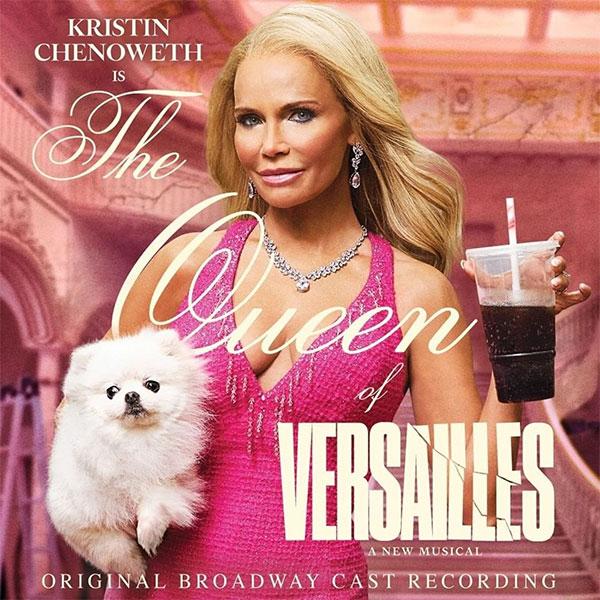
The Queen of Versailles Lyrics: Song List
- ACT I
- Because I Can
- Because We Can
- Caviar Dreams
- Keep on Thrustin'
- Mrs. Florida
- Each and Every Day
- The Ballad of the Timeshare King
- Trust Me
- The Golden Hour
- Pretty Wins
- I Could Get Used to This
- Crash
- This Is Not the Way
- Act II
- The Royal We
- Show 'Em You're the Queen
- Pavane For a Dead Lizard
- Watch
- The Book of Random
- Little Houses
- Higher Than Ever
- Grow the Light
- Crash Reprise (1793)
- This Time Next Year
About the "The Queen of Versailles" Stage Show
Release date of the musical: 2025
"The Queen of Versailles" – The Musical Guide & Song Meanings

Review
What is this show trying to sell you: satire, sympathy, or a souvenir cup? “The Queen of Versailles” is built like a luxury mall with a chapel in the food court. It wants the audience to laugh at American excess, then feel for the people living inside it. The lyric writing is at its sharpest when it admits those impulses can coexist in one character, sometimes within one verse. It is at its weakest when it tries to tidy the mess into a moral.
Schwartz writes with two engines running. One is Broadway pop precision: clear rhymes, quick character tells, and a melodic line that knows how to land on an emotional keyword. The other is a stylized French-court frame that comments on the modern story like a glittery conscience. That device gives the lyrics room for irony, but it also competes with the central relationship, Jackie and her daughter Victoria, which is where the show’s most human language lives.
Lyrically, the score circles three big ideas. First: aspiration as a learned behavior, taught by television and reinforced by attention. Second: money as a performance, where spending is proof you belong. Third: grief as the one thing you cannot unbox. Several reviewers noted the musical’s tug-of-war between critique and celebration of its subjects, and you can hear that fight in how often songs begin with jokes and end with an open wound.
How it was made
The show comes with a very Broadway origin story: a star, a marquee composer, and a real-life headline with built-in recognition. Music and lyrics are by Stephen Schwartz, with a book by Lindsey Ferrentino, adapting Lauren Greenfield’s documentary about Jackie and David Siegel and their sprawling, Versailles-inspired Florida mansion project. The piece premiered as a pre-Broadway tryout at Boston’s Emerson Colonial Theatre in summer 2024, then moved to Broadway’s St. James Theatre in fall 2025.
Its creative alignment is also its risk. Schwartz has a gift for turning public narratives into private, singable ones. Here, the material keeps pulling back toward the public spectacle. Review coverage of the Boston run emphasized “Caviar Dreams” as the key that unlocks Jackie’s interior life, and that choice is telling. The show needs one big lyric door into her past, because the present-day Jackie is often written in sound bites, by design and occasionally by habit.
There is also a practical, contemporary reality behind the soundtrack conversation. A Broadway cast recording was announced by Sony Masterworks Broadway in September 2025, with at least two tracks released ahead of the full album. The score’s afterlife is, for many listeners, going to be defined by what gets captured on record and when.
Key tracks & scenes
"Because We Can" (Company)
- The Scene:
- Early Act I. The French court glitters in a prologue frame, then the modern world snaps into focus with the same hunger for ornament. Lighting tends to go bright and ceremonial, like a coronation you did not vote for.
- Lyrical Meaning:
- It is a mission statement disguised as a shrug. The lyric treats wealth as permission, not responsibility, which sets up the show’s central tension: what happens when permission runs out.
"Caviar Dreams" (Jackie)
- The Scene:
- Act I origin story. Jackie’s childhood world is small, practical, and ringed with televised fantasy. Many stagings isolate her with a soft spot while the ensemble becomes a living channel-surf of aspirations.
- Lyrical Meaning:
- This song earns its reputation because it writes Jackie as a person before it writes her as a punchline. The lyric frames longing as labor: she studies, works, and wills her way toward a life she has only seen on screens.
"Mrs. Florida" (Pageant Host and Company)
- The Scene:
- Act I, the pageant sequence. Bright bulbs, cheap glamour, and a competitive smile that reads as survival. It is often staged with deliberately synthetic cheer, like the music is applying lipstick in real time.
- Lyrical Meaning:
- The lyric is about branding, before that word became a reflex. Jackie learns that winning is a costume you can wear out of a bad situation, even if it does not solve the situation.
"The Ballad of the Timeshare King" (Gary, David, and Company)
- The Scene:
- Act I, David’s empire explained at theatrical speed. The ensemble becomes sales staff, investors, and customers, with sharp shifts in lighting that mimic a pitch deck: bright promise, sudden shadow.
- Lyrical Meaning:
- Schwartz’s lyric craft shows in how it turns business mechanics into character psychology. The song sells David as a man who confuses scale with safety. That misunderstanding drives the house, the marriage, and the eventual crash.
"The Golden Hour" (Louis XIV, The French Court, and Jackie)
- The Scene:
- Act I, Jackie’s falling-in-love-with-the-idea sequence. The stage tends to glow in warm amber, with court figures orbiting her like a fantasy filter she cannot turn off.
- Lyrical Meaning:
- The lyric links Jackie’s mansion obsession to an older royal obsession with permanence. It is about chasing light, literally and metaphorically, and refusing to accept that time moves forward without asking.
"Crash" (Louis XIV and The French Court)
- The Scene:
- End of Act I. A market collapse becomes a theatrical collapse, with movement turning angular and the stage picture tightening. Some productions lean into a sudden drop in warmth, as if the lights themselves lost credit.
- Lyrical Meaning:
- It is the score’s pivot from spree to consequence. The lyric is less about numbers and more about denial: the belief that if you keep moving, the floor will not notice you are standing on it.
"Little Houses" (John, Debbie, Jackie, Sofia, Victoria, and Jonquil)
- The Scene:
- Act II, a quieter group number that often plays in softer light, with the set feeling suddenly intimate. The staging tends to reduce the mansion to the idea of shelter, then to the idea of family, then to the idea of loss.
- Lyrical Meaning:
- The lyric is the show’s best argument for empathy. It contrasts the giant house with the small spaces that actually hold memory. It also shifts attention to the people who serve, live beside, and get swept up in the Siegels’ dream.
"Grow the Light" (Jackie)
- The Scene:
- Late Act II. Jackie confronts what she has been using the house to avoid. This is usually staged with a single, steady lighting state, less spectacle, more exposure.
- Lyrical Meaning:
- The lyric tries to turn aspiration into something mature: not acquisition, but illumination. It is the closest the score gets to a spiritual thesis, and it matters because it reframes Jackie’s hunger as a form of fear.
Live updates
Information current as of February 2, 2026.
The Broadway production began previews on October 8, 2025, opened on November 9, 2025, and played its final performance on December 21, 2025 at the St. James Theatre. Public reporting and production pages tracked the early closing and performance counts in real time, with Playbill listing 32 previews and 49 regular performances as of the closing date.
The cast recording situation is unusual in a very 2025 way: the album was announced, singles arrived, and the full release date stayed vague. Sony Masterworks Broadway announced a forthcoming Original Broadway Cast Recording in September 2025, and Playbill noted that the first single “Caviar Dreams” was available while the full drop date was still unannounced. A second track, “Pretty Wins,” followed in October 2025, also framed as an advance release ahead of a date “to be announced.”
For listeners, that means your “soundtrack album” experience is currently a partial view of the score’s architecture. The two released tracks sketch the show’s emotional map: Jackie’s origin longing (“Caviar Dreams”) and Victoria’s sharp self-mythology (“Pretty Wins”). If the full album lands, it will determine whether the score reads as a cohesive narrative or as a highlight reel of competing tones.
Notes & trivia
- The Broadway run opened November 9, 2025 at the St. James Theatre, after previews began October 8, 2025, and it closed on December 21, 2025.
- The musical’s official song list (as published in widely cited reference and database materials) includes a French-court framing with numbers like “Because I Can,” “Because We Can,” and “Crash (Reprise 1793).”
- Two songs from the planned cast recording were released ahead of the full album: “Caviar Dreams” (September 19, 2025 announcement) and “Pretty Wins” (October 10, 2025).
- The creative credits publicly listed for Broadway included director Michael Arden, choreographers Lauren Yalango-Grant and Christopher Cree Grant, music supervisor Mary-Mitchell Campbell, scenic and video design by Dane Laffrey, costumes by Christian Cowan, lighting by Natasha Katz, sound by Peter Hylenski, and orchestrations by John Clancy.
- The score leans heavily on “dense” lyric delivery, a point made by critics who argued the show uses songs to push story details the book does not always dramatize cleanly.
- Several major reviews compared the production’s thematic intent to its physical metaphor: an extravagant structure that can feel unfinished.
Reception
Critics were broadly aligned on two things. Kristin Chenoweth’s performance was treated as the production’s primary asset. The show’s point of view was treated as its central problem. Reviews frequently described a musical split between mockery and admiration, with the French-court concept sometimes clarifying the satire and sometimes smothering the emotional spine.
“For much of the new Broadway show, the set is covered in tarps and slipcovers.”
“Rather than decide whether to romanticize or satirize its subjects, the musical ventures a gaudy and confused mix of both.”
“Lavish, unwieldy, pointless and seemingly unfinished.”
Quick facts
- Title: The Queen of Versailles
- Year (Broadway production): 2025
- Source material: Documentary film “The Queen of Versailles” (2012), directed by Lauren Greenfield
- Book: Lindsey Ferrentino
- Music & lyrics: Stephen Schwartz
- Broadway theatre: St. James Theatre (previews Oct 8, 2025; opening Nov 9, 2025; final performance Dec 21, 2025)
- Musical style: Broadway pop with a satirical French-court chorus layer; lyrical density prioritized for story delivery
- Selected notable placements: “Because We Can” (opening frame); “Caviar Dreams” (Jackie’s origin); “Mrs. Florida” (pageant); “Crash” (Act I curtain); “Little Houses” (Act II ensemble heart); “Grow the Light” (late Act II Jackie thesis)
- Cast recording status: Forthcoming Original Broadway Cast Recording announced by Sony Masterworks Broadway; at least two advance tracks released (“Caviar Dreams,” “Pretty Wins”) with full release date not publicly specified in major announcements
Frequently asked questions
- Who wrote the lyrics for The Queen of Versailles?
- Stephen Schwartz wrote the music and lyrics, with Lindsey Ferrentino writing the book for the stage.
- Is there an official cast recording?
- A Broadway cast recording was announced for release by Sony Masterworks Broadway, and two tracks were released in 2025. Major theatre outlets reported that the full release date was still unannounced in those updates.
- Which songs are the best entry points if I only sample a few tracks?
- Start with “Caviar Dreams” for Jackie’s inner life, then “Pretty Wins” for Victoria’s worldview. Add “Because We Can” to understand the show’s thesis about permission and excess.
- What is the French-court material doing in this musical?
- It acts like a commentary layer, drawing parallels between old-world aristocracy and modern American wealth performance. Some critics found it clarifying; others felt it distracted from the family story.
- Did the Broadway run last into 2026?
- No. The Broadway production’s final performance was December 21, 2025, after opening November 9, 2025.
Key contributors
| Name | Role | Contribution |
|---|---|---|
| Stephen Schwartz | Composer & Lyricist | Wrote a score that alternates satirical bite with confessionals, with lyrics often tasked to carry story detail at speed. |
| Lindsey Ferrentino | Book | Adapted the documentary narrative into a staged family drama with a historical chorus frame. |
| Michael Arden | Director | Staged the show with a multimedia, high-gloss sensibility that critics frequently compared to the mansion’s own spectacle. |
| Mary-Mitchell Campbell | Music supervision | Oversaw musical cohesion across pop-inflected numbers and the courtly framing material. |
| John Clancy | Orchestrations | Built the orchestral voice that supports both contemporary Broadway pop and stylized period commentary. |
| Dane Laffrey | Scenic & video design | Created the visual system that lets the mansion exist as both object and metaphor. |
| Christian Cowan | Costume design | Designed the fashion language of conspicuous consumption, plus the French-court excess layer. |
| Natasha Katz | Lighting design | Shaped the show’s shifts between glamour, sales-floor brightness, and late-act exposure. |
| Peter Hylenski | Sound design | Delivered clarity for lyric-heavy writing and big ensemble frames. |
Sources: Playbill; Associated Press; The Washington Post; The Guardian; WBUR; The official production site; Apple Music; Wikipedia (synopsis and song list reference); Broadway.com; Sony Masterworks Broadway press materials (via DKC/O&M).