The Queen of Versailles review
The Queen of Versailles Review - Broadway musical
Review
What does a musical about a half-finished mega–mansion, a reality-TV socialite, and the 2008 crash actually sound like? In The Queen of Versailles, Stephen Schwartz answers with a score that constantly toggles between glitter and grief. The opening one-two punch of “Because I Can” and “Because We Can” lays out the project’s DNA right away: baroque pomp, pop drive, and a knowing wink at how ridiculous this world is, all delivered at Broadway-sized volume. From there, Jackie’s story is told through songs that often sound aspirational and funny on the surface but are quietly about debt, denial, and damage underneath.
On stage, the music is inseparable from Kristin Chenoweth’s performance. Her first big solos — “Caviar Dreams” and “Each and Every Day” — frame Jackie as a small-town striver who really believes the American Dream jingle she’s been sold, and the melodies lean into that: clean, hooky pop-Broadway with a little country twang whenever Jackie is most herself. Family numbers like “The Ballad of the Timeshare King,” “Little Houses,” and “Grow the Light” broaden the palette into rock, gospel-ish uplift, and storytelling balladry. The teen material (Victoria’s “Pretty Wins,” the morbidly tender “Pavane for a Dead Lizard”) pushes into biting satire and emo-pop anxiety, while the French-court sequences (“The Royal We,” “Crash” and its reprise) give Schwartz room for mock-regal pastiche and choral drama. The result is a score that feels busy, sometimes overstuffed, but rarely dull; depending on whom you ask, that’s either its charm or its problem.
The way critics have received the music really depends on which version you’re talking about. In Boston, reviewers singled out the score’s emotional reach and its social-satire bite, treating the tryout as one of Schwartz’s richer late-career efforts. On Broadway, the reaction has been much frostier: several high-profile reviews praise individual moments — especially the eerie restraint of “Pavane for a Dead Lizard,” the melancholy build of “Little Houses,” and the sudden sincerity of “Grow the Light” — while calling the score as a whole unfocused, lyrically overstuffed, or just not sharp enough about its targets. Some critics roll their eyes at songs like “Keep on Thrustin’” and “Pretty Wins,” reading them as jokes that don’t quite land; others argue that those same numbers are exactly where the show admits how grotesque this universe really is.
Genre-wise, the album (or, for now, the singles from it) lives at the intersection of glossy Broadway pop and concept-album storytelling. Court numbers and choral passages borrow from classical grandeur to paint the Siegels’ fantasy of royalty — all chandeliers and string flourishes for a dream that’s empty inside. Jackie’s solos lean on radio-friendly pop and country-flavored balladry to sell her as both brand and believer; it’s the sound of self-mythology. Victoria’s material shifts toward teen-pop and rock textures, mirroring body-image pressure and online-age paranoia. And when the show pivots into garage-sale lament or post-overdose reflection, you hear the harmonies darken and the rhythm slow down, as if the score itself is asking whether all that sparkle was worth it. If you’re listening at home, that push-pull — banger versus ballad, satire versus sincerity — is the story.
Questions & Answers
- Do I need to see the documentary before listening to the score?
- No. The songs sketch the main beats — Jackie’s small-town roots, the Florida timeshare empire, the crash, and Victoria’s tragedy — clearly enough that the album works on its own, though knowing the film adds extra sting.
- What kind of music should I expect from The Queen of Versailles score?
- Think big Broadway pop with detours into mock-classical grandeur, country-tinged ballads, and sharp little satire numbers. It feels closer to a concept album about American excess than a traditional golden-age show tune set.
- Which songs from the musical are already available to stream?
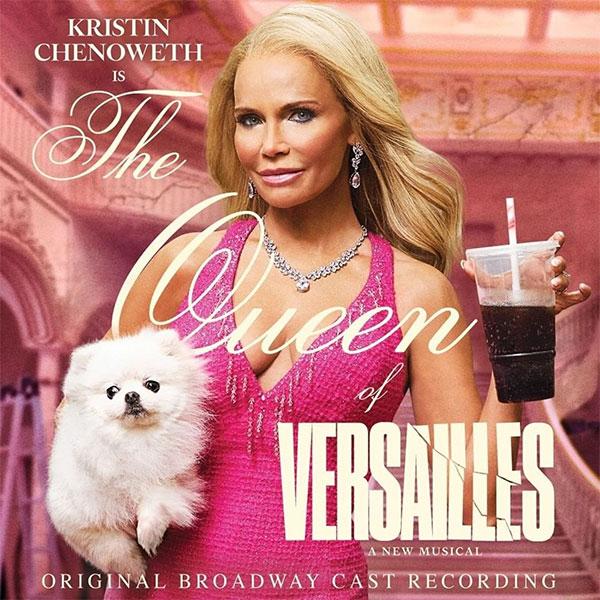
- Three key tracks — “Caviar Dreams,” “Pretty Wins,” and “Each and Every Day” — have been released as singles from the planned The Queen of Versailles – Original Broadway Cast Recording, all on the Masterworks Broadway label.
- Why has the score divided critics so much?
- Some reviewers love its variety and emotional reach, especially pieces like “Little Houses,” “Pavane for a Dead Lizard,” and “Grow the Light.” Others feel the songs are too scattered, with satire that blinks and lyrics that work overtime without landing a clear point of view.
- Is the cast recording a good entry point if I’ve never seen the show?
- If you’re curious about the story but not sure you’d sit through the full production, the singles are an easy way in: they showcase Chenoweth’s performance, give you Victoria’s perspective, and capture the show’s mix of glitter, guilt, and grief in under fifteen minutes.
Last Update:February, 02nd 2026