Tell Me On A Sunday Lyrics – All Songs from the Musical
Tell Me On A Sunday Lyrics: Song List
- Take That Look Off Your Face
- Let Me Finish
- It's Not the End of the World
- Letter Home To England
- Sheldon Bloom
- Capped Teeth And Caesar Salad
- You Made Me Think You Were In Love
- Second Letter Home
- Come Back With The Same Look In Your Eyes
- Let's Talk About You
- Tell Me On A Sunday
- I'm Very You, You're Very Me
- Nothing Like You've Ever Known
- Let Me Finish (Reprise)
- Capped Teeth And Caesar Salad
- Letter Home To England
About the "Tell Me On A Sunday" Stage Show
A. Lloyd Webber composed music in this histrionics. D. Black is the lyricist. In September 1979, histrionics was presented for the 1st time. M. Webb was a main star. At the beginning of 1980, recording for the BBC was made. In 1982, they added ballet to this production, created by Lloyd Webber in 1977. After these changes had been introduced, the play had been renamed onto ‘Song & Dance’ & renewed two-act musical was presented in London. Theatrical was produced from April 1982 to the mid of 1984. It had undergo 781 exhibitions. It was directed by J. Caird & choreographed by A. V. Laast. Actors were: S. Brightman, G. Craven, M. Webb & L. Robertson.Pre-Broadway demonstrations started in September 1985. The grand opening took place in the Sept. 1985. Since then and to Nov. 1986, it lived through 17 trials & 450+ main theatricals. Director of productions was R. Maltby, Jr. P. Martins was responsible for choreography. Libretto & lyrics wrote R. Maltby, Jr. Actors were: G. Burge, B. Peters, D. Faye, M. E. Stuart, C. Onrubia & C. d'Amboise.
In 2003, an updated version of this play was hosted by Gielgud Theatre located in London. Musical lasted for 10 months. After this, spectacular was re-thought by J. Clune. The staging was directed by C. Luscombe. In a play participated D. Van Outen in the head role. UK tour included: M. Webb, F. Tozer & P. Palmer. In 2008, a spectacle was hosted by NY’s L. Beechman Theatre with the participation of M. Linehan as the main hero. From August 2010 to autumn 2011, this piece was presented in Northampton's Royal Theatre. Director was T. Harvey. C. Sweeney played the main character. At the beginning of 2014, a new version of the British spectacle was presented in St. James Theatre. From February to March 2014, it was shown in the Duchess Theatre.
Release date: 1985
"Tell Me On a Sunday" – The Musical Guide & Song Meanings
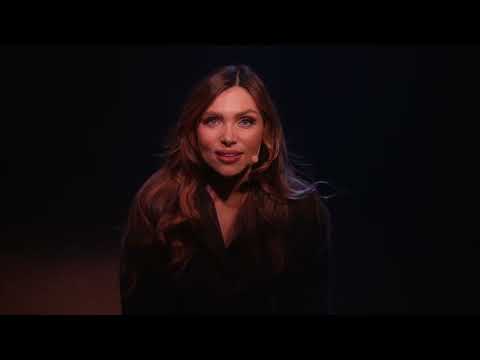
Review: What This Score Is Really Doing
Is this a romantic comedy, a cautionary tale, or a pop concept album wearing theatre clothes? “Tell Me On a Sunday” survives because it commits to a single, slightly vicious idea: love is a story you tell yourself in drafts, and the drafts get mailed home. The lyric writing (Don Black, with later additions in some versions) keeps pushing the heroine to narrate her own bad decisions with cheerful punctuation. That tension is the engine. You hear optimism first, then you hear the bill coming due.
In its 1985 Broadway life, the material sits inside “Song and Dance,” where the first act becomes a one-woman marathon and the second act turns into a ballet. That structural contrast quietly reframes the “Sunday” songs: the talky, confessional letters become the human mess that the dance act tries to abstract into pattern. Even when “Tell Me On a Sunday” is performed as the standalone one-act, the writing still behaves like a sequence of postcards. Each number is a new location, a new man, a new theory of happiness, and a new excuse for why this one will be different.
Musically, Lloyd Webber writes in late-70s pop and theatrical ballad language, scaled for a small combo but capable of orchestral swell when the character tries to convince herself that this time is the real thing. The recurring “letter home” framing gives the score a built-in motif: a return to narrative. When the character cannot control her life, she can still edit the paragraph.
How It Was Made
“Tell Me On a Sunday” began as a chamber-sized project and a pivot point for Lloyd Webber: smaller cast, tighter focus, and a singer’s showcase rather than a crowd-pleaser with armies. Early performances were built around the idea of one woman translating experience into correspondence, and the piece later became the entire “Song” half of “Song and Dance.” On Broadway in 1985, the show’s first act was reconceived for that setting, with additional lyric work attached to match the new framing and pace.
The most telling production fact is also the most practical: licensing materials still categorize it as a star vehicle with challenging vocal demands. That is not marketing fluff. The writing expects the performer to play editor, narrator, and leading lady simultaneously, while the score dares her to keep the pop sheen even as the character’s self-esteem thins out.
Key Tracks & Scenes
"Take That Look Off Your Face" (The Girl / Emma)
- The Scene:
- Early on, she is lit like her own pep talk: bright, direct, a little too confident. A phone call or a remembered remark lands. The air changes. The band stays crisp while her posture doesn’t.
- Lyrical Meaning:
- This is the piece’s mission statement: the world polices her expression, then punishes her for believing it. The lyric weaponizes everyday language, turning “don’t be upset” into an eviction notice from your own feelings.
"Let Me Finish" (The Girl / Emma)
- The Scene:
- She tries to control the room the way you control a story: by insisting on the last sentence. Lighting often narrows here, as if the stage is becoming a page.
- Lyrical Meaning:
- It is not just a plea to be heard. It is a plea to remain the author. The song’s urgency comes from knowing that once someone interrupts, they can rewrite you.
"Capped Teeth and Caesar Salad" (The Girl / Emma)
- The Scene:
- A social climb in miniature: a restaurant, a sheen, a man who feels like a shortcut. The delivery is comic, but the staging often lets the joke sit in a slightly lonely pool of light.
- Lyrical Meaning:
- Black’s lyric points at the class performance behind romance. Desire gets translated into menu choices and cosmetic upgrades. The punchline is that she knows exactly what she is doing and does it anyway.
"Come Back with the Same Look in Your Eyes" (The Girl / Emma)
- The Scene:
- A goodbye that pretends to be temporary. She holds still, as if moving would admit the truth. The accompaniment can feel like it is walking out before she does.
- Lyrical Meaning:
- The lyric is bargaining disguised as romance. She is not asking him to return. She is asking time to rewind to the moment she felt chosen.
"Tell Me On a Sunday" (The Girl / Emma)
- The Scene:
- The title number is the show’s cleanest image: distance, waiting, the ritual of a call or a letter. Productions often soften the stage picture here: a warmer wash, fewer distractions, the performer front and center.
- Lyrical Meaning:
- This is the loneliness anthem that refuses melodrama. The lyric is specific about timing because timing is all she can control. If love can be scheduled, it can be survived.
"Nothing Like You’ve Ever Known" (The Girl / Emma)
- The Scene:
- She is mid-flight emotionally: part intoxication, part alarm. The band leans in, and the staging often lets her drift physically, as if she is chasing a feeling around the room.
- Lyrical Meaning:
- The phrase sounds like seduction, but it is also self-hypnosis. When someone says “this is different,” the lyric lets you hear the risk: she needs it to be different more than it actually is.
"It’s Not the End of the World" (The Girl / Emma)
- The Scene:
- A reset button that keeps getting pressed. Each variant lands after a romantic disappointment, like a rehearsed speech delivered to a mirror that is starting to look skeptical.
- Lyrical Meaning:
- The song is denial with a pulse. The repeated premise exposes the pattern: she keeps treating emotional loss like a solvable inconvenience, until the chorus starts sounding like a warning.
"Dreams Never Run on Time" (The Girl / Emma)
- The Scene:
- Late in the sequence, the light cools. The letter-writing device feels less cute, more necessary. She looks like someone waiting for a train that never arrives.
- Lyrical Meaning:
- This is the show admitting its thesis out loud. The lyric swaps romantic fantasy for logistics: your life is late, your plan is late, and you are tired of pretending punctuality is a virtue you can sing into existence.
Live Updates (2025/2026)
Information current as of February 2026.
Recent and upcoming productions underline the piece’s current niche: it thrives as an intimate, performer-forward event rather than a giant commercial machine. In Sydney, Hayes Theatre Co hosted a 70-minute run in April to May 2024, with a six-piece band onstage and pricing publicized in the mid-range for the venue. In Chicago, Theo Ubique scheduled “Tell Me On a Sunday” for March through April 2025, alternating the lead for select dates. In Florida, freeFall Theatre programmed it for September to October 2025, notably expanding the usual solo format by adding dancers as the men in the heroine’s orbit.
For 2026, the story is less about one official tour and more about steady regional appetite. The licensing ecosystem remains active, and the show’s scale makes it attractive for companies that want a recognizable title with minimal casting footprint and maximum performer payoff.
Notes & Trivia
- The 1985 Broadway production of “Song and Dance” opened September 18, 1985 and ran 474 performances, placing this score in a high-visibility Broadway frame even when “Tell Me On a Sunday” is performed solo.
- Marti Webb’s “Take That Look Off Your Face” hit the UK Singles Chart Top 3, giving the song cycle a genuine pop-chart footprint.
- The Marti Webb album “Tell Me On a Sunday” reached the UK Albums Chart Top 2 and spent a long stretch on the chart, a reminder that this material was built to live on headphones as much as under stage lights.
- Licensing song lists commonly include an optional encore of “Unexpected Song,” a cross-pollination move that lets productions shape the ending’s emotional temperature.
- Later versions credit additional lyrics by Richard Maltby Jr., reflecting how the piece has been refitted for different production frames across decades.
- In at least one documented lyric tweak discussed by reference sources, a geographic direction in “Take That Look Off Your Face” was adjusted after a factual catch, the kind of tiny correction that exposes how conversational Black’s writing aims to sound.
Reception Then vs. Now
Critical reaction has always hinged on the same question: is the character study sharp enough to justify the minimal plot architecture? Some critics praise the individual songs while doubting the cumulative portrait. Others argue the piece works precisely because it admits it is a sketchbook. Modern reviews often add a new layer: the show reads differently through contemporary expectations about women’s agency, which can either deepen the tragedy or flatten the romance.
“Individually the songs are good… But collectively they present a hazy picture of a luckless dreamer.”
“This one-woman musical is considered some of Andrew Lloyd Webber’s best work, but even Erin Clare’s performance can’t totally overcome its misgivings.”
“With astute direction and a lovely performance by Erin Clare, Andrew Lloyd Webber's song cycle shines in the intimate Hayes Theatre.”
Quick Facts
- Title: Tell Me On a Sunday
- Broadway context (1985): Performed as the “Song” act within “Song and Dance” (opened 1985 at the Royale Theatre).
- Music: Andrew Lloyd Webber
- Lyrics: Don Black (with additional lyrics credited in later versions)
- Format: One-woman, one-act song cycle (often performed as a star vehicle; some productions add ensemble/dancers)
- Story engine: Letters home to England, framing romantic episodes across New York and beyond
- Orchestra: Small/Combo (commonly licensed)
- Key numbers commonly cited by licensors: “Tell Me On a Sunday,” “Come Back with the Same Look in Your Eyes,” “Nothing Like You’ve Ever Known”
- Album anchor (1980): Marti Webb’s “Tell Me On a Sunday” (Polydor) with major UK chart performance
- Cast recording anchor (1985): “Song & Dance (The Songs)” Original Broadway Cast Recording, documented as recorded in 1985
Frequently Asked Questions
- Is “Tell Me On a Sunday” a full musical or a song cycle?
- It is typically licensed as a one-act, one-woman song cycle, built around a narrative told through songs and letters home.
- Why does 1985 matter for this title?
- 1985 is the Broadway year of “Song and Dance,” where “Tell Me On a Sunday” functions as the entire first act, performed as a one-woman showcase within a two-part evening.
- Who wrote the lyrics?
- Don Black wrote the core lyric text; later versions may include additional lyric contributions credited to Richard Maltby Jr.
- What order do the songs appear in?
- Licensed materials commonly place the “Letters Home to England” sequences as structural pivots between relationship episodes, with “Take That Look Off Your Face” early and the title song as a late emotional summit.
- Is it usually staged with a band onstage?
- It varies. Some productions keep musicians visible to emphasize the concert-storytelling feel, while others tuck them away to heighten the character’s isolation.
- Does it connect to “Unexpected Song”?
- Some licensed versions list “Unexpected Song” as an optional bonus encore, which can soften the ending into something more reflective.
Key Contributors
| Name | Role | Contribution |
|---|---|---|
| Andrew Lloyd Webber | Composer | Score built for pop immediacy plus theatrical lift; designed to sustain a solo performer’s arc. |
| Don Black | Lyricist | Conversational, narrative-forward lyrics; recurring “letters home” framing device. |
| Richard Maltby Jr. | Additional lyrics (credited in later versions) | Text adaptations associated with later staging contexts, including Broadway reconception details. |
| Marti Webb | Original champion | Early performance identity and a landmark studio album presence for the material. |
| Bernadette Peters | Broadway lead (1985 “Song and Dance”) | Defined the Broadway performance profile of the first-act marathon. |
| The Broadway League / IBDB | Archival record | Documented opening, closing, and performance totals for the 1985 Broadway production context. |
| Concord Theatricals | Licensing | Published musical-number list and current production materials for the standalone one-act version. |
| ALW Show Licensing (Really Useful Group) | Official licensing portal | Official synopsis, performance requirements, and authorized reference framing for the show. |
Sources: ALW Show Licensing (Really Useful Group), Concord Theatricals, IBDB (Internet Broadway Database), Official Charts Company, Playbill, Hayes Theatre Co, Time Out, The Guardian, AllMusic, Masterworks Broadway.