Swing! Lyrics – All Songs from the Musical
Swing! Lyrics: Song List
- Act 1
- It Don't Mean a Thing (If It Ain't Got That Swing)
- Airmail Special
- Jersey Bounce
- Opus One
- Jumpin at the Woodside
- Bounce Me, Brother (with a Solid Four)
-
Two and Four
- Hit Me with a Hot Note and Watch Me Bounce
- Rhythm
-
Throw That Girl Around
- Show Me What You Got
- Bli-Blip
- Billy-A-Dick
- Harlem Nocturne
- Kitchen Mechanics' Night Out
- Shout and Feel It
- Boogie Woogie Bugle Boy (of Company B)
- G.I. Jive
- A String of Pearls
- I Got a Gal in Kalamazoo
- Candy
- I'm Gonna Love You Tonight
- I'll Be Seeing You
- In the Mood
- Don't Sit Under the Apple Tree
- Act 2
- Swing, Brother, Swing
- Caravan
- Dancers in Love
- Cry Me a River
- Blues in the Night
- Take Me Back To Tulsa
- Boogie Woogie Country Girl
- All of Me
- I Won't Dance
- Bill's Bounce
- Stay A Little Longer
- Stompin' at the Savoy
- Swing, Brother, Swing (Reprise)
- Sing, Sing, Sing
- It Don't Mean a Thing (If It Ain't Got That Swing) (Reprise)
About the "Swing!" Stage Show
The concept to create a revue belongs to P. Kelly. Songs composed by: H. Arlen, W. C. Basie, L. Berry, W. Bishop, E. Bradley, T. Bradshaw, L. Brown, C. Christian, M. David, E. DeLange, T. Duncan, D. Ellington, B. Elliott, S. Fain, B. Feyhe, D. Fields, B. Goodman, M. Gordon, J. Gray, E. H. Hagen, A. Hamilton, O. Hammerstein II, M. Heitzman, I. Kahal, P. Kelly, J. Kern, A. C. Kramer, J. McHugh, J. Mercer, I. Mills, J. R. Mundy, J. Murphy, L. Prima, D. Raye, L. Raymond, A. Razaf, I. Reid, E. M. Sampson, S. H. Sept, S. Simons, J. Smith, J. Tizol, H. Warren, C. Webb, J. Whitney, C. Williams & B. Wills. Try-out demonstrations began on Broadway in November 1999. Review was hosted by St. James Theatre from December 1999 to January 2001 with 43 preliminaries and 461 regular spectaculars. The histrionics undertook director and choreographer L. Taylor-Corbett. In the theatrical were these actors: A. H. Callaway, E. Bradley, L. Benanti, M. Gruber, C. MacGill, L. Baldovi, K. Bendul, C. Bentley, C. Carter, G. D. Corso, D. Duarte, B. Durand & E. East.In November 2000, in Los Angeles’ Ahmanson Theatre began first national tour. Production was prepared by director L. Steinberg and choreographer K. Craven. In 2008, the tour took this play to Japan. In June 2009, the show was held in Pittsburgh Benedum Center, developed by D. Solimando. The revue concluded of this cast: A. H. Green, D. Lyons, M. Scott, M. Jagger, E. Arce, J. Walden & A. Malia. In 2015, the show became regular on a cruise ship of Norwegian Cruise Line with this cast: B. Lawton, S. Siegel, M. Jagger & E. Arce. In July 2015, revue was presented at the Florida Maxwell C. King Center in the framework of Summer Musical Theatre Project.
Release date: 1999
"Swing!" – The Musical Guide & Song Meanings
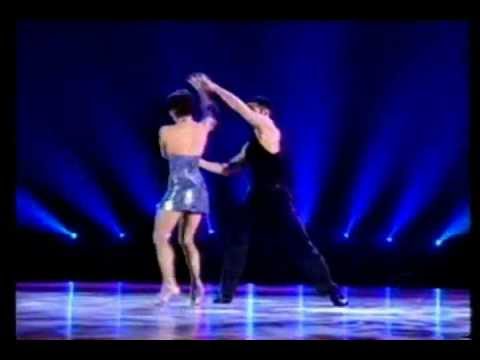
Thesis: Swing! is what happens when Broadway stops pretending plot is mandatory and just lets a band and a dance floor argue the case. “Lyrics,” here, mostly means standards you already know, recontextualized by choreography, era-hopping staging, and vocal arrangements that treat the singers as another horn section. The show wins when it lets the music stay sharp and the dancing stay legible. It drifts when nostalgia becomes the only narrative in the room.
Review: a show that uses lyrics as a dance cue, not a confession
Swing! (1999) is a dance revue with no dialogue and no conventional story, which means the “meaning” lives in placement and style. A lyric like “It don’t mean a thing” is not a philosophical thesis in this context. It is an instruction. Listen for the way the show turns familiar lines into social behavior: flirtation, rivalry, peacocking, loneliness, the quick calculation before you ask someone to dance.
The score is a collage of big band and swing-era material, and the lyrical throughline is appetite: for speed, for touch, for control, for attention. The difference from a book musical is technical and emotional. Characters do not sing to reveal their secret. Performers sing to rewire the room. When it works, the lyric becomes a rhythmic device. A repeated phrase is not redundant, it is the engine that keeps bodies in motion.
Musically, the revue leans on arrangements and vocal stylings to create contrast. Ballads arrive like air after sprinting. Patter-like jazz phrasing arrives like a dare. The show also uses dancers as narrative units: a couple can imply longing without a single spoken word, and that is the closest Swing! gets to “plot.”
Viewer tip: If you see a licensed production, sit far enough back to read footwork as geometry, not as blur. The choreography trades in pattern changes. If you sit too close, you will watch effort. If you sit at the right distance, you will watch music become architecture.
How it was made: conceived as a nostalgia machine, engineered as a dance test
Swing! was conceived by Paul Kelly and built as an all-music, all-dance Broadway event, with original direction and choreography by Lynne Taylor-Corbett and orchestrations credited to Harold Wheeler. It opened at the St. James Theatre on December 9, 1999 (after previews beginning November 2) and closed January 14, 2001, after 461 performances. The project’s commercial logic was simple: if Smokey Joe’s Cafe could prove a pop catalog could sell without a plot, why not swing?
The artistry is in how it refuses to be a museum piece. Reviews and licensing descriptions stress that the story is told through music and dance, and the Broadway album’s liner-style notes point to specific “mini-stories” embedded inside numbers, including a lovers-separated vignette set to “I’ll Be Seeing You” and an end-of-night handoff into “In the Mood.” That is the show’s real book: staging cues, tempo shifts, and who gets the spotlight when the lyric lands.
One more key “how it was made” detail lives in what has happened since: Swing! became a durable licensing title. That is not trivia. It means the show’s primary creative unit is the choreography, not a fixed script. Every new production is, in a way, a restaging challenge: how to keep the dance specific enough to honor Taylor-Corbett’s intent while adapting to local casts.
Key tracks & scenes: 7 lyrical moments that explain the revue
"It Don’t Mean a Thing (If It Ain’t Got That Swing)" (Company feature)
- The Scene:
- Early in the evening when the room is being taught how to listen. Bright stage light, band forward, dancers arriving like a crowd that suddenly agrees on the same heartbeat.
- Lyrical Meaning:
- The lyric is a manifesto with a grin. In a revue, it also functions as a quality standard: if the groove is not locked, nothing else matters.
"Stompin’ at the Savoy" (Vocal quartet and ensemble)
- The Scene:
- A ballroom fantasia with a wink to Harlem’s Savoy mythology. The number often reads like community, not romance: people finding their tribe through tempo.
- Lyrical Meaning:
- Here, the lyric is about place as identity. The words evoke a room where rules are joy-based and status is earned by swing feel, not by money.
"Sing, Sing, Sing" (Dance feature)
- The Scene:
- Percussion takes over. Lighting tightens into high-contrast snapshots, a controlled frenzy. Dancers attack the beat like it owes them rent.
- Lyrical Meaning:
- Minimal lyric content is the point. The “meaning” becomes endurance and escalation, like a musical pressure cooker that keeps asking: can you stay up here?
"Two and Four / Hit Me with a Hot Note and Watch Me Bounce" (Solo vocal)
- The Scene:
- A spotlight moment that flirts with vaudeville swagger. The singer is not confessing anything. They are selling precision.
- Lyrical Meaning:
- The lyric frames virtuosity as personality. “Watch me bounce” is not metaphor. It is choreography by sentence.
"Caravan" (Ensemble feature)
- The Scene:
- The revue pivots into an exotic-nightclub mood, with saturated lighting and sharper silhouettes. The band becomes cinematic.
- Lyrical Meaning:
- “Caravan” has always traded in atmosphere, and here it works as a palette cleanser: swing is not one color. It is a whole ecosystem.
"I’ll Be Seeing You" (Ballad feature)
- The Scene:
- The stage clears. A couple becomes the story. The album notes explicitly describe lovers separated by time and continent, which tells you how the revue wants the moment staged: intimate, narrative, and quietly devastating.
- Lyrical Meaning:
- The lyric supplies what the revue mostly avoids: consequence. After all the cleverness, a simple promise turns into ache.
"In the Mood" (Company)
- The Scene:
- The “last dance” feeling. The Broadway album commentary even calls out a “Last dance!” cue before the number, which is exactly how it tends to land in performance: a communal exhale with adrenaline still in the bloodstream.
- Lyrical Meaning:
- It is less about the literal words than the social contract: the night ends, the spell breaks, you want one more chorus anyway.
Note on “exact placements”: Because Swing! is a revue, song order can shift by production, and individual numbers can be reweighted based on available dancers and vocalists. The Broadway cast recording is your best “spine” for how the original production shaped the evening, but not a guarantee of identical sequencing in later stagings.
Live updates (2025/2026 status)
Current as of February 2, 2026. There is no newly announced Broadway revival run dominating the calendar. The show’s present-day life is primarily as a licensed title, with performance materials available through Concord Theatricals. That matters for audiences because Swing! now functions less like a fixed Broadway artifact and more like a durable dance vehicle that companies can scale up or down.
A second, bittersweet “current” note: director-choreographer Lynne Taylor-Corbett, whose staging logic shaped the revue’s identity, died on January 12, 2025. Her passing has already begun to reframe how dance communities talk about Swing! as part of her legacy, especially in pieces that revisit her Broadway choreography.
If you are tracking performances: do not rely on a single official tour brand the way you would for a book musical. Instead, check licensing houses, regional theatres, and university seasons. Swing! pops up in those ecosystems because it rewards strong dancers and a band that can actually swing, not because it needs star casting to sell a story.
Notes & trivia
- The Broadway production opened December 9, 1999 at the St. James Theatre and closed January 14, 2001, after 461 performances (plus 43 previews beginning November 2, 1999).
- There is no spoken dialogue. The “book” is essentially musical and choreographic structure.
- The revue received major nominations in 2000, including Best Musical and nominations for Lynne Taylor-Corbett’s direction and choreography.
- The original Broadway cast album was released January 18, 2000, and was recorded in December 1999, making it a near-real-time snapshot of the opening company’s sound.
- The album was nominated for a Grammy in the Musical Show category at the 43rd Annual Grammy Awards cycle.
- Licensing materials list a compact principal cast breakdown (2 women, 3 men) because the revue’s identity is carried by an ensemble and a band rather than character arcs.
- The Broadway production had a national tour that began November 20, 2000 at the Ahmanson Theatre in Los Angeles, overlapping with the Broadway run’s final months.
Reception: critics agreed on the craft, then argued about the need for “meaning”
The critical debate was predictable and revealing. Some reviewers judged it as a dance-and-music event and found it thrilling. Others wanted an emotional story and got restless. That split is baked into the form. A revue does not “develop character.” It develops velocity.
“Directed and choreographed by Lynne Taylor-Corbett, ‘Swing!’ moves along swiftly and with ample variety, and doesn't overstay its welcome.”
“It's a revue without pretensions towards a plot, unless you want to count a gossamer bit about a dating couple as a story.”
“Swing! succeeds brilliantly on its own terms, as a dazzling display of some of the best music and dancing styles to emerge this century.”
Read together, those lines tell you what the show actually is: a curated night out with a big band and elite movers, framed just enough to keep the evening from feeling like a random playlist.
Quick facts
- Title: Swing!
- Broadway year: 1999 (opened December 9, 1999)
- Format: Dance revue; no spoken dialogue
- Conceived by: Paul Kelly
- Original direction & choreography: Lynne Taylor-Corbett
- Orchestrations (credited): Harold Wheeler
- Broadway venue: St. James Theatre (New York)
- Run: 43 previews; 461 performances; closed January 14, 2001
- Album: Swing! (Original Broadway Cast Recording), released January 18, 2000
- Album notes highlight: “I’ll Be Seeing You” framed as a lovers-separated vignette; “In the Mood” signaled as the late-night “last dance” release
- Licensing: Available via Concord Theatricals (performance materials and rentals)
Frequently asked questions
- Who wrote the lyrics to Swing!?
- There is no single lyricist. The show uses swing-era standards by many songwriters, with the revue’s storytelling driven by arrangement, vocal styling, and choreography.
- Is Swing! a book musical?
- No. It is a dance revue with no spoken dialogue, designed to tell its “story” through music and dance sequencing.
- What should I listen to first?
- The Original Broadway Cast Recording is the clearest audio blueprint for how the Broadway production shaped the night. Start with the big ensemble swing numbers, then notice how the ballads change the room.
- Does every production use the same song order?
- Not necessarily. As a revue, Swing! can be rebalanced by production needs, though the Broadway recording provides a common reference point.
- Is Swing! still being performed in 2026?
- Yes, mostly through licensed productions rather than a single headline commercial run. Concord Theatricals continues to offer performance and rental materials.
- What is the show’s “message” if there is no plot?
- The closest thing to a message is formal: swing as social language. The numbers keep asking how people connect, compete, and recover through rhythm.
Key contributors
| Name | Role | Contribution |
|---|---|---|
| Paul Kelly | Conceiver | Built the revue framework: an evening of swing-era repertoire shaped as a Broadway dance event. |
| Lynne Taylor-Corbett | Original director & choreographer | Defined the staging logic and choreographic identity that subsequent productions restage and adapt. |
| Harold Wheeler | Orchestrations (credited) | Helped translate swing-era material into a theatre-forward big-band palette. |
| Ann Hampton Callaway | Original performer | Front-line vocalist on Broadway and the cast album; a key anchor for the revue’s vocal personality. |
| Laura Benanti | Original performer | Featured vocalist; received major awards attention connected to the Broadway run. |
| Everett Bradley | Original performer | Featured performer; part of the Broadway production’s awards footprint. |
| Concord Theatricals | Licensing | Current licensor providing performance and rental materials that keep the revue circulating. |
Sources: IBDB, Playbill, Tony Awards (official site), Variety, CurtainUp, Talkin’ Broadway, Masterworks Broadway, AllMusic, Concord Theatricals, Dance Magazine.