Sunday in the Park With George Lyrics – All Songs from the Musical
Sunday in the Park With George Lyrics: Song List
About the "Sunday in the Park With George" Stage Show
The histrionics opened in 1983. Initially they put on stage only one part, but after the positive reviews, it was decided to re-create the scene to stretch it to the second one & to enter the Broadway with a full musical.In May 1984, the official premiere of the theatrical was in Booth Theatre. Critics’ reviews were mixed, but that did not stop the musical to win 2 Tony Awards. The London premiere took place only in 1990 in the Royal National Theatre. Musical was staged more than 100 times, starring P. Quast & M. Friedmanas. This performance had receives 6 Laurence Olivier Awards & P. Quast was awarded as the Best Actor.
In 2000s, the show has undergone a renovation. In 2005, the spectacular “Sunday in the Park With George” was staged at London's Menier Chocolate Factory. Later, the action was transferred to the West End. In 2008, the histrionics was on Broadway again, as the producers were Roundabout Theatre Company. Starring: M. B. Peil, D. Evans, J. Russell, M. Cumpsty, E. Dixon, J. Molaskey & A. Gemignani.
The spectacle made an indelible impression on reviewers, positively spoken out about the updated version of the play. In The New York Times appeared laudatory review, where was noted that the animation, the actors, the overall picture, the music – everything was of very descent level. It is not surprising that the musical was nominated for several other awards.
As a result, overall productions can be called successful, because in addition to Broadway & the United Kingdom’s runs, the musical has been in Canada, Australia & Spain. & many songs from it could be heard in solo programs of contemporary artists.
Release date: 1984
"Sunday in the Park with George" – The Musical Guide & Song Meanings
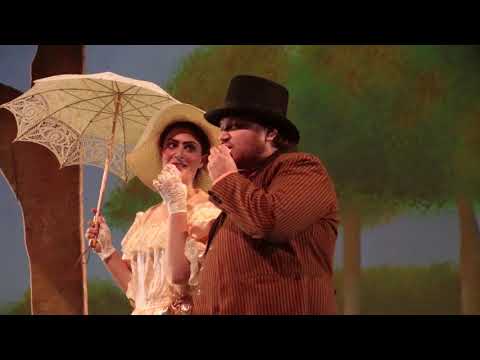
Viewer tip: If you are seeing this live, pick seats where you can read faces clearly (mid-orchestra, not too far under an overhang). This show’s big emotions are quiet ones. And if you are listening first: queue “Color and Light,” then “Finishing the Hat,” then “Move On.” That trio is basically the show’s operating system.
Info current as of 2 February 2026.
Review
What if the most romantic thing onstage is not a kiss, but a man choosing a line, a dot, a shade of white? “Sunday in the Park with George” is built on that unsettling wager. It wants you to feel how art-making can look like devotion and still function like abandonment, often in the same breath. The musical largely pulls it off, because it refuses to flatter its hero. George does not “learn to love” in a neat arc. He learns to look harder, then pays for it.
Sondheim’s lyrics behave like the painter’s technique: small units that accumulate into perspective. Characters speak in sharp, compressed observations, then suddenly stumble into confession. The writing loves paradox, but it keeps its feet on the ground: Dot is not a symbol, she is a person trying to be seen; George is not a monster, he is a worker who cannot stop working. Musically, the score’s pointillist detail (little patterns, repeated intervals, and flickering accompaniment figures) is not decoration. It is psychology. Even when a melody seems calm, the harmony is often subtly unsettled, like a smile held too long.
The slyest structural move is the century jump. Act I is the myth of the masterpiece: bodies arranged, light controlled, order imposed. Act II is the hangover: the commodified “art world,” the tech demo, the glad-handing, the fear that you have already said your best sentence. The show’s thesis is brutal and practical: connection is hard, and making anything worth keeping is harder.
How It Was Made
The origin story is unusually clean, which makes it even funnier. James Lapine brought Stephen Sondheim a postcard of Georges Seurat’s “A Sunday Afternoon on the Island of La Grande Jatte.” Lapine saw what theatre people always see: a stage full of characters. Then he noticed the central absence: the artist is not in his own picture. That missing body became the premise. One simple observation, then two years of hard labor trying to earn it.
Context matters. Sondheim had just been through “Merrily We Roll Along,” a notorious Broadway bruising. “Sunday” arrives as a recalibration: still formally daring, but emotionally more direct, with craft put on open display. Even Sondheim admitted a specific anxiety about hearing his own material out loud during previews, which is the most Sondheim fear imaginable: not failure, embarrassment.
Myth-checking, because this show invites it: the musical is inspired by Seurat and the painting, but it is not a biography. The script is upfront that its characters are inventions. That honesty is part of its confidence: it is not reporting history, it is arguing about process.
Key Tracks & Scenes
"Color and Light" (Dot, George)
- The Scene:
- George’s studio. A workroom that feels like a lab. Dot tries to keep herself entertained while George calibrates the canvas. The light looks “designed,” not natural, as if the room itself is a test pattern.
- Lyrical Meaning:
- This is flirtation turning into a diagnostic. Dot’s language slides between desire and self-protection. George’s obsession reads as admiration for Dot, until it doesn’t. The lyric’s quick pivots mirror the show’s central dilemma: intimacy is happening, but not evenly.
"Finishing the Hat" (George)
- The Scene:
- Late in Act I, after the park’s noise has thinned. George is alone with the work, lit in a tighter pool, the world reduced to task. He is both triumphant and stranded.
- Lyrical Meaning:
- A creation anthem that refuses to glamorize creation. The lyric is full of bargaining: with the audience, with Dot, with himself. It is also a quiet confession that the work can replace people, until it can’t.
"We Do Not Belong Together" (Dot, George)
- The Scene:
- Back in the studio, but now it feels smaller. Dot arrives pregnant, and the conversation becomes a cornering. By the end, George is left alone in a sharper, lonelier light cue that reads like judgment.
- Lyrical Meaning:
- Sondheim writes breakup logic like cross-examination. The lyric does not say “I hate you.” It says, essentially: we were right, and that is why we are wrong. Dot’s intelligence is the heartbreak. She can name the problem and still cannot fix it.
"Sunday" (Company)
- The Scene:
- The Act I finale builds a living reproduction of the painting. Bodies lock into positions. The stage becomes a frame. Light turns into pigment.
- Lyrical Meaning:
- The lyric is deceptively simple because the point is not verbal cleverness. It is communal focus. All the “separate” people George has been manipulating suddenly sound like a single image. Art as group project, even when the artist refuses to admit it.
"It's Hot Up Here" (Company)
- The Scene:
- Act II begins with the figures still trapped in the tableau, complaining. The joke lands because it is true: being “captured” by art is not always flattering. The lighting stays fixed, like a museum refusing to blink.
- Lyrical Meaning:
- A comic release that doubles as critique. The lyric punctures reverence and tells you the show knows what it’s doing. If Act I risks making the painting sacred, Act II starts by heckling it.
"Putting It Together" (George and patrons)
- The Scene:
- A reception around the modern “Chromolume.” People circulate with practiced warmth. George works the room like a man trying to be polite while his brain screams for silence.
- Lyrical Meaning:
- This is the business model of “serious art” sung as patter. The lyric’s speed is the point: connections become transactions, compliments become currency, and the artist becomes a brand manager without consent.
"Children and Art" (Marie, George)
- The Scene:
- A quieter pocket inside Act II. Marie, very old, tries to hand her grandson something sturdier than advice: a lineage. The staging often tightens here, letting the room breathe.
- Lyrical Meaning:
- The lyric is a thesis statement delivered as a family conversation: what survives is not only the work, but the people touched by it. The show gets braver here. It allows sentiment, then earns it.
"Move On" (George, Dot)
- The Scene:
- Near the end, on the island again. The past returns as a visitation. The scene often looks spare, like the stage has been wiped clean for one last attempt.
- Lyrical Meaning:
- Dot becomes the voice George could never hear in Act I: not “stop,” but “continue.” The lyric’s generosity is the shock. It argues that making things is not an excuse for harming people, but it is still worth doing, if you can keep your eyes open.
Live Updates (2025/2026)
The headline: the show is heading back to London in a major way. A new production is scheduled for summer 2027 at the Barbican, with Jonathan Bailey as George and Ariana Grande as Dot, directed by Marianne Elliott with design by Tom Scutt. Ticketing has been positioned as a 2026 event: the official production site says sales open in spring 2026, while multiple outlets report May 2026 timing.
Practical expectation-setting: no one can responsibly quote “average ticket prices” yet, because on-sale has not happened. What you can do right now is sign up for official ticketing information through the production’s site, and watch the Barbican listing for schedule specifics as they firm up.
If you want “Sunday” in the meantime, the work’s afterlife is unusually healthy: it is regularly revived by major regional theatres and institutions, and it remains licensable for professional and amateur productions. That matters because this score is not a casual weekend project. Companies program it when they want to prove something.
Notes & Trivia
- It is a Pulitzer winner. The show won the 1985 Pulitzer Prize for Drama, a rarity for musicals.
- It began as an Act I-only work-in-progress. Early development at Playwrights Horizons preceded the full Broadway version.
- The “missing artist” observation is the spark. Lapine’s note that the painter is absent from his own painting helped unlock the story engine.
- The show is openly fictionalized. Even when it borrows names and paintings, it insists it is not doing strict biography.
- The score is engineered around recurring musical cells. One documented example: the “moving thirds” idea threads through the score and reappears pointedly in “Finishing the Hat.”
- Cast recording provenance is unusually clear. Masterworks Broadway documents the first LP release date for the original cast album as 1 July 1984.
- London is already on the calendar. The Barbican has publicly listed the production for summer 2027.
Reception
The initial reaction in 1984 was complicated: admiration for the craft and the visuals, plus skepticism about emotional temperature. That split is part of the show’s identity now. “Sunday” does not chase your approval; it asks for your attention, then punishes you if you only half-watch. Over time, revivals have helped audiences hear its emotional argument more clearly, especially in Act II, where the modern art-world satire feels less like a detour and more like the bill coming due.
“Hats off to Jake Gyllenhaal, who leads a triumphant performance of Stephen Sondheim’s Pulitzer-winning musical about the very process of art-making.”
“A meditation on artistry, love, and loneliness.”
“When Lapine pointed out that the main character was missing – the artist – Sondheim responded: ‘Boing! All the lights went on… a great moment.’”
My mildly skeptical take: the show’s reputation sometimes scares people into treating it like homework. That is a mistake. Yes, it is engineered. But its best moments hit because they are nakedly human: a woman asking to be chosen, a man trying to finish a sentence, a grandson realizing he has inherited both a gift and a wound.
Quick Facts
- Title: Sunday in the Park with George
- Year: 1984 (Broadway opening)
- Type: Musical
- Music & Lyrics: Stephen Sondheim
- Book: James Lapine
- Source Artwork: “A Sunday Afternoon on the Island of La Grande Jatte” (Georges Seurat)
- Broadway premiere venue: Booth Theatre (opened 2 May 1984)
- Key onstage set-piece idea: Act I finale recreates the painting as a living tableau
- Major screen record: The original cast production was taped at the Booth Theatre in Oct 1985 and broadcast in 1986
- Original cast album: Released by RCA; Masterworks Broadway notes first LP release 1 July 1984
- Awards note: 1985 Pulitzer Prize for Drama
- 2027 London status: Barbican listing confirms a summer 2027 run; ticketing information points to spring/May 2026 on-sale
Frequently Asked Questions
- Is “Sunday in the Park with George” based on a true story?
- It is inspired by Seurat and his painting, but the characters and events are fictionalized. The show uses history as a launchpad to talk about the cost of making art.
- Why does the show jump to the 1980s in Act II?
- Because Act I is about building a masterpiece, and Act II is about living with what masterpieces do to the people around them, and what legacy does to the next artist in line.
- What is the best entry point if I only listen to a few songs?
- Try “Color and Light,” “Finishing the Hat,” and “Move On.” You will hear the thesis, the damage, and the repair attempt.
- Is there a recording I can watch?
- There is a taped version of the original cast production (filmed in 1985, broadcast in 1986). Availability varies by platform and region, but it has circulated widely over the years.
- What is the current status of the next major production?
- A new London production is scheduled for summer 2027 at the Barbican, with Jonathan Bailey and Ariana Grande announced in the leading roles. Official ticketing information points to spring 2026.
Key Contributors
| Name | Role | Contribution |
|---|---|---|
| Stephen Sondheim | Composer-Lyricist | Music and lyrics; signature rhythmic precision and psychologically exact text |
| James Lapine | Book writer / Director (original) | Concept, book, and original staging; co-architect of the Seurat frame and Act II pivot |
| Thomas Z. Shepard | Cast album producer (original) | Produced the 1984 original Broadway cast recording |
| Michael Starobin | Orchestrations | Orchestral color that supports the score’s “dot-by-dot” clarity |
| Barbican / Empire Street Productions (announced) | Presenter / Producer (2027 London) | Upcoming London production platform and commercial framework |
| Marianne Elliott (announced) | Director (2027 London) | Set to direct the 2027 Barbican production |
Sources: Barbican; official Sunday in the Park musical site; The Guardian; Deadline; Playbill; MTI Shows; Masterworks Broadway; IBDB; Pulitzer.org; Roundabout Theatre blog; Sondheim Guide; Sondheim Society; Entertainment Weekly.