State Fair Lyrics – All Songs from the Musical
State Fair Lyrics: Song List
- Act 1
- Opening
- It Might as Well Be Spring
- Driving at Night/Our State Fair
- That's for Me
- More Than Just a Friend
- Isn't It Kinda Fun?
- You Never Had It So Good
- When I Go Out Walking With My Baby
- So Far
- It's a Grand Night for Singing
- Act 2
- Man I Used to Be
- All I Owe Ioway
- That's the Way It Happens
- Boys and Girls Like You and Me
- Next Time It Happens
- Finale Ultimo
About the "State Fair" Stage Show
Lyrics composed by O. Hammerstein II. Music written by R. Rodgers. The scenario developed L. Mattioli and T. Briggs. Premiere of the musical took place in June 1969 in St. Louis Muny. Production carried out by director J. Hammerstein & choreographer T. Tune. The spectacular involved: O. Nelson, H. Nelson, R. Husmann, C. Richards, B. Schon, J. Lanning, J. Goode, B. Story & L. Drum. In 1992, was carried out the new adaptation of the show. The revised version of the histrionics was featured in the Stevens Center, located in Winston-Salem. Production took place from July to August 1992. The theatrical was designed, directed and choreographed by R. Skinner. The show had such cast: M. McCarty, L. Wolpe, E. Gunhus, J. Pessano, M. Hayden, S. Egan & M. Halpin. In October 1992, the show was represented in the Long Beach Civic Light Opera.In August 1995, simultaneously with the opening of the fair in the state of Iowa in the Civic Center, located in Peoria, began a national tour of revised version of the play. Upon its completion, production began to be on Broadway. The try-outs began in Music Box Theatre in mid-March 1996. The main exhibitions were shown from the end of March to June 1996, with 8 preliminaries and 110 regular performances. This production was realized by directors R. Skinner & J. Hammerstein. The choreography developed by R. Skinner. In the show were involved: J. Davidson, K. Crosby, A. McArdle, D. McKechnie, S. Wise & B. Wright. London’s Premiere was at the beginning of August 2010, hosted by Finborough Theatre. Then the histrionics moved to Trafalgar Studios 2. It was completed in September 2010, and was directed by T. Southerland & choreographed by S. Brooks. The staging had this cast: P. Rham, S. Travers, K. Clarkson & L. Main. The play was nominated for several awards.
Release date: 1996
"State Fair" (1996) – The Musical Guide & Song Meanings
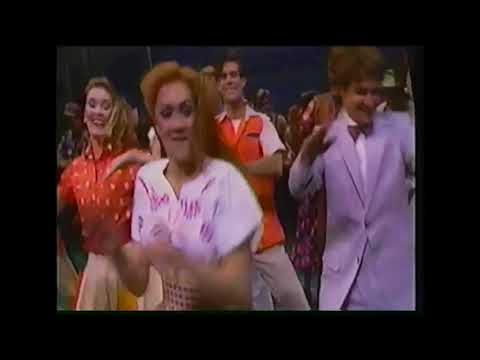
Review: why the lyrics work harder than the plot
"State Fair" is built on the most dangerous engine in American musical theatre: wholesome intentions. A farm family goes to the Iowa State Fair, hopes for blue ribbons, catches feelings, learns a lesson, drives home. That is the spine. The surprise is how much grit Richard Rodgers and Oscar Hammerstein II can hide inside that sunny outline. The 1996 Broadway version leans into the fairground glow, but the best moments happen when the lyrics admit what the characters cannot say out loud.
Hammerstein writes desire as confusion rather than fireworks. His young leads do not get love songs that sound like destiny; they get songs that sound like a person trying to name an itch. Rodgers, meanwhile, keeps the melodies deceptively simple. They sit comfortably in the voice, then turn at the exact moment a character realizes comfort is not the same as happiness. Onstage, that creates a useful tension: the audience is relaxing while the characters are quietly panicking.
The 1996 adaptation also has an identity crisis on purpose. It is Rodgers & Hammerstein’s only score written directly for film, later converted into a stage show by folding in songs from across the catalogue, including material cut long ago. That collage approach can feel like a greatest-hits basket. When it clicks, it also feels like history talking to itself: characters living one story while the songs carry echoes of others.
How it was made: from film-only experiment to Broadway retrofit
Rodgers & Hammerstein originally wrote "State Fair" for the screen in the mid-1940s, with Hammerstein also shaping the screenplay. Decades later, the stage version arrived by way of a deliberate scavenger hunt. According to the licensing publisher’s production history, book writer Louis Mattioli and collaborator Tom Briggs began with the film versions and then expanded the score using material Rodgers and Hammerstein had written (and sometimes discarded) elsewhere. Briggs describes pulling “More Than Just a Friend” from the 1962 remake and assigning “Boys and Girls Like You and Me,” a song cut out-of-town from "Oklahoma!" when it still carried its early title, to the parents. That is adaptation by pragmatism, and also by affection.
The path to Broadway was unusually literal: the national tour launched in Des Moines during the 1995 Iowa State Fair. The Broadway opening followed at the Music Box Theatre on March 27, 1996, in a production associated with producer David Merrick’s final Broadway credit and co-directed by James Hammerstein (Oscar’s son) and Randy Skinner. The cast album was released June 18, 1996, performed under the musical direction of Kay Cameron, and produced for records by Hugh Fordin.
Key tracks & scenes: 8 lyrical pressure points
"Opening (Our State Fair)" (Abel, Melissa, Wayne)
- The Scene:
- Tuesday afternoon on the Frake farm in late August 1946. Packing, prepping, talking too fast. Bright, practical light. The family is already halfway to the fair in their heads.
- Lyrical Meaning:
- The lyric sells community pride, but it also plants the show’s real stake: everyone wants proof their ordinary life counts. The fair is not a trip. It is an audit.
"It Might as Well Be Spring" (Margy)
- The Scene:
- Same farm, same day. Margy cannot explain her mood, which is the point. Is she restless, lonely, ambitious, bored, all of it? The staging usually isolates her in a busy environment, a soft spot in the light while chores keep moving.
- Lyrical Meaning:
- Hammerstein’s genius here is that the lyric is vague in exactly the honest way. She is not depressed; she is under-described. The song becomes a thesis about young women in tidy worlds: the longing arrives before the language.
"Driving at Night" (The Frakes / Ensemble)
- The Scene:
- The overnight journey to the fairgrounds. Motion, headlights, a sense of possibility that only exists on the road. The number often uses traveling light patterns and quick scene shifts to mimic the car’s rhythm.
- Lyrical Meaning:
- This is anticipation as a musical device. The lyric is less about scenery and more about permission: for a few days, the family gets to pretend they can be somebody else.
"That’s for Me" (Wayne)
- The Scene:
- Wayne meets Emily on the fairgrounds after a midway conflict, and she helps him get his money back. He walks her toward her shift and then, a beat later, realizes he is in trouble. The light shifts from carnival glare to a more personal focus.
- Lyrical Meaning:
- It is a crush song that doubles as a character reveal. Wayne’s desire is not abstract romance; it is specificity. He wants this woman, this moment, this new version of himself.
"More Than Just a Friend" (Abel, Lem, Clay)
- The Scene:
- Abel drinks beer with fellow farmers while they admire photos of their prized hogs with the tenderness of new parents. Played broadly, it is comic. Played straight, it is a little unsettling. Either way, it lands.
- Lyrical Meaning:
- The lyric is a joke about livestock devotion, but it also builds Abel’s stakes. Blue ribbons are not vanity; they are identity. If Blue Boy loses, Abel loses.
"Isn’t It Kinda Fun?" (Pat and Margy)
- The Scene:
- The Dairy Pavilion after a roller coaster. Pat, a worldly reporter, spars with Margy, who defends the fair as Iowa’s pride. The staging often keeps them moving through crowds while the conversation tightens.
- Lyrical Meaning:
- This is flirtation built out of worldview. The lyric keeps asking whether pleasure can be taken seriously. Margy says yes. Pat starts to believe her, and that shift is the romance.
"So Far" (Wayne and Emily)
- The Scene:
- A quiet hillside overlooking the midway. The noise is below them, and the sound design often lets the fair hum underneath the duet like a distant engine. It is the show’s most cinematic pause.
- Lyrical Meaning:
- The lyric is about momentum, but the subtext is fear. Wayne wants a future. Emily is protecting a past. The song’s tenderness is edged with restraint.
"The Man I Used to Be" (Pat)
- The Scene:
- Act II turns the temperature down. Pat’s bravado cracks. The lighting typically narrows to isolate him, stripping the fair’s sparkle until it becomes background noise.
- Lyrical Meaning:
- It is a confession song without self-pity. The lyric admits a gap between who Pat performs and who he actually is. In a show obsessed with public prizes, this is the private cost.
"All I Owe Ioway" (Abel and Ensemble)
- The Scene:
- A full-throttle anthem that plays like a hometown parade, and historically hit hardest when the production opened in Iowa. Big stage pictures, banner energy, the company moving as one.
- Lyrical Meaning:
- The lyric is gratitude and propaganda, lovingly delivered. It also answers the show’s central anxiety: if you root yourself in a place, you can call it meaning instead of limitation.
Live updates: 2025-2026 reality check
In 2026, "State Fair" is not a touring brand in the commercial sense, but it is alive where Rodgers & Hammerstein titles often live longest: licensing. Concord Theatricals continues to offer performance rights, and the Rodgers & Hammerstein organization still directs producers to Concord for staging permissions. That typically means schools, community theatres, and regional houses, which also happens to be where this show’s tone reads most naturally.
The cast recording remains the primary listening artifact of the 1996 Broadway run. It is widely indexed on major streaming platforms and catalogued as the Original Broadway Cast Recording, with Hugh Fordin credited as producer for the release. If you are looking for a “complete” score experience, keep expectations reasonable: this version is built from film songs plus adopted catalogue numbers, and the seams are part of the point.
One practical 2026 note: you will see fresh local announcements for the title in seasonal programming, which is a good barometer for its current footprint. "State Fair" is functioning as a repertoire choice, not a headline event.
Notes & trivia
- The 1996 Broadway production opened March 27, 1996 at the Music Box Theatre, and the cast album followed on June 18, 1996.
- The stage adaptation’s book is credited to Tom Briggs and Louis Mattioli, drawing on Hammerstein’s earlier screenplay and multiple film iterations.
- Tom Briggs (a director of the Rodgers & Hammerstein Theatre Library) is credited in production history as the person who pushed the idea of adapting "State Fair" to the stage.
- The stage score is a hybrid: core film songs plus numbers borrowed from other Rodgers & Hammerstein works, including a song cut from "Oklahoma!" in its out-of-town phase.
- “More Than Just a Friend” entered the stage score from the 1962 remake, written by Rodgers after Hammerstein’s death.
- The licensing publisher credits Kay Cameron’s vocal arrangements and Bruce Pomahac’s orchestrations as key to making the familiar melodies feel newly theatrical.
- The show’s 1995 tour famously launched at the real Iowa State Fair in Des Moines before heading toward Broadway.
Reception: the critics, the charm, the side-eye
Reviewers generally praised the tunes, the craft, and the crowd-pleasing warmth, while also admitting the story is basically a postcard with good harmony. That is not a fatal flaw. It is the product. The strongest notices tend to treat the show like an expertly run night out: a smart book, lush songs, and performers doing the heavy lifting of sincerity without slipping into parody.
“The crowd-pleasing charms of [this] ‘new’ musical are considerable and compelling.”
“This is a smart, sharp and refreshing show, bursting with wonderful songs.”
“Corny and quaint... But gosh darn it, [this] newly minted production is surprisingly hard to resist.”
Awards
- Tony Awards (1996): Best Original Score (nomination).
- Tony Awards (1996): Best Featured Actor in a Musical for Scott Wise (nomination).
- Drama Desk Awards (1996): Featured Actor nominations for Scott Wise and Ben Wright; Featured Actress nomination for Donna McKechnie.
Quick facts
- Title: State Fair
- Broadway production year: 1996
- Opened: March 27, 1996 (Music Box Theatre, New York)
- Cast recording release: June 18, 1996
- Type: Stage musical adapted from the Rodgers & Hammerstein film musical
- Music: Richard Rodgers
- Lyrics: Oscar Hammerstein II
- Book: Tom Briggs and Louis Mattioli
- Co-directors (1996 Broadway): James Hammerstein and Randy Skinner
- Musical direction (cast recording): Kay Cameron
- Orchestrations (stage): Bruce Pomahac
- Producer for records (cast album): Hugh Fordin
- Label (cast album): DRG Records / DRG Theatre
- Selected notable placements: “Opening (Our State Fair)” on the farm; “Driving at Night” on the road; “All I Owe Ioway” as the show’s public love letter.
Frequently asked questions
- Is “State Fair” (1996) a revival or a new musical?
- It is an adaptation: a stage version built from Rodgers & Hammerstein’s film score plus additional songs drawn from their catalogue, shaped into a Broadway book in the 1990s.
- Why does the score include songs I recognize from other Rodgers & Hammerstein shows?
- The stage version was constructed by selecting songs that fit the characters and situations, including material cut from earlier shows, alongside the original film songs.
- What is the best single track to understand Margy?
- “It Might as Well Be Spring.” The lyric is a portrait of restless longing before the character can even define what she wants.
- What is the best single track to understand the show’s “place” obsession?
- “All I Owe Ioway.” It treats Iowa as identity, not scenery, which is the show’s most consistent idea.
- Can I still license the show for a local production?
- Yes. Current performance licensing is handled through Concord Theatricals, which the Rodgers & Hammerstein organization also directs producers to use.
Key contributors
| Name | Role | Contribution |
|---|---|---|
| Richard Rodgers | Composer | Wrote the core musical language, balancing folk warmth with Broadway clarity. |
| Oscar Hammerstein II | Lyricist | Supplies character-first lyrics where longing is specific and often politely disguised. |
| Tom Briggs | Book | Co-adapted the stage book; credited in production history with championing the stage adaptation idea. |
| Louis Mattioli | Book | Co-adapted the stage book, shaping film material into a two-act structure. |
| James Hammerstein | Co-director | Co-directed the 1996 Broadway staging, continuing the Hammerstein family’s involvement. |
| Randy Skinner | Co-director / Choreographer | Co-directed and choreographed, giving the show its fairground kinetic energy. |
| Kay Cameron | Musical director / Vocal arrangements | Musical direction for the cast recording; credited for vocal arrangements in publisher notes. |
| Bruce Pomahac | Orchestrations | Orchestrations credited with keeping Rodgers’ melodies fresh while honoring classic intent. |
| Hugh Fordin | Producer (cast recording) | Produced for records; anchored the sound document of the 1996 run. |
References & Verification: Production dates, cast-album release timing, and musical-direction credit verified via the official Rodgers & Hammerstein production page. Song-by-song plot placement and adaptation history quoted from Concord Theatricals’ licensing materials. Broadway production details cross-checked via IBDB. Cast recording label and credit metadata cross-checked via Discogs and streaming catalog listings. Video embed sourced from a publicly posted Broadway-era commercial on YouTube.