Side Show Lyrics – All Songs from the Musical
Side Show Lyrics: Song List
- Act 1
- Come Look At The Freaks
- Like Everyone Else
- You Deserve a Better Life
- Crazy, Deaf and Blind
- The Devil You Know
- More Than We Bargained For
- Feelings You've Got To Hide
- When I'm By Your Side
- Say Goodbye To The Freak Show
- Overnight Sensation
- Leave Me Alone
- We Share Everything
- The Interview
- Who Will Love Me As I Am?
- Act 2
- Rare Songbirds On Display
- New Year's Day
- Private Conversation
- One Plus One Equals Three
- You Should Be Loved
- Tunnel Of Love
- Beautiful Day For A Wedding
- Marry Me, Terry
- I Will Never Leave You
- Finale
- Other Songs
- Happy Birthday To You And To You
- I'm Daisy, I'm Violet
- Buddy Kissed Me
- Buddy's Confession
About the "Side Show" Stage Show
Release date: 1997
"Side Show" – The Musical Guide & Song Meanings
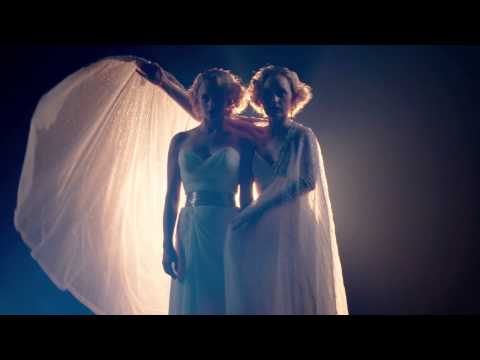
Review: What the Lyrics Are Really Arguing About
How do you write a musical where the central couple is also a single body? "Side Show" answers with a blunt, almost stubborn lyrical agenda: identity is a negotiation, and love is paperwork. That sounds chilly. The score refuses to be. Bill Russell’s lyrics keep returning to public language (barkers, reporters, contracts, press lines) because the Hilton twins’ life is lived in quotation marks. Even the love songs carry an audience in the room, real or imagined. It is a musical about being looked at, and the lyrics keep asking who gets to do the looking.
Musically, Henry Krieger works in Broadway-pop and power-ballad architecture, but he’s not writing a museum piece. The carnival numbers have a steelier edge than their period costumes suggest, while the sisters’ duets lean into close harmony as a narrative device: two voices, one breath, a single argument heard in stereo. The best writing doesn’t sentimentalize their bond; it treats it as physics. When the text turns literal, it is usually because the characters have run out of safer metaphors.
One useful way to hear the 1997 version versus the later revision is to track what the show chooses to romanticize. The original leans harder on showbiz dazzle as escape. The revision pushes biography forward and makes the negotiations uglier. Either way, the lyrical throughline is the same: the world keeps offering the twins “opportunity,” and the songs keep translating that word into its real synonyms: control, access, and price.
Listener tip: If you are new to the story, listen to the opening number, then skip ahead to the two major duets ("Who Will Love Me as I Am?" and "I Will Never Leave You"). You will understand the full emotional map in under fifteen minutes, and the intervening tracks become context instead of confusion.
How It Was Made
"Side Show" began as an attempt to dramatize Daisy and Violet Hilton without turning them into an inspirational poster. That tension never goes away, and it is why the writing process keeps reappearing in the show’s history. The original Broadway production opened in 1997 at the Richard Rodgers Theatre, with a creative team built for classic Broadway storytelling, right down to the kind of orchestration that makes a ballad land like a headline.
Then came the second life: the 2014 rethink under director Bill Condon. Interviews around that revision make the goal sound almost technical: keep the emotional sincerity, but remove the easy leaps. Condon has described “culling” more from the twins’ real story and complicating the romantic motivations that once read as instant, fairy-tale certainty. A good rewrite does not erase the old show. It exposes what the old show was afraid to say out loud.
There is also a tiny lyric-level window into the craft: Russell has talked about cutting a couplet from “Who Will Love Me as I Am?” because the rhyme forced a pronunciation no human would naturally use. That is the kind of micro-decision that changes how honest a song feels in the mouth.
| Version | What Changed | Why It Matters for the Lyrics |
|---|---|---|
| 1997 Broadway | More traditional showbiz framing and romance momentum | The lyrics often translate longing into performance language: applause, press, “making it.” |
| 2014 revision | More biography and restructured Act II | The text has less patience for fantasy. Desire sounds more conditional, and more expensive. |
| Song-level edits | Selective cuts, reassignments, and new material | Small lyric trims can remove “writerly” phrasing and make a duet feel like speech. |
Key Tracks & Scenes
"Come Look at the Freaks" (The Boss)
- The Scene:
- Act I opens on the midway. Lights behave like bait: quick flashes, hard spot, bodies arranged as product. The barker’s rhythm is the first drumbeat of the show.
- Lyrical Meaning:
- This is the thesis in carnival diction. The lyric sells “wonder,” but every line is really about ownership and permission. The word “look” becomes a verb that hurts.
"Like Everyone Else" (Daisy & Violet)
- The Scene:
- Still early, before fame can varnish anything. The twins are framed more simply, often with less stage clutter, so the audience has nowhere to hide from the intimacy.
- Lyrical Meaning:
- The song doesn’t ask for special treatment. It asks for ordinary life, which the lyric treats as the most exotic fantasy of all. The repeated phrasing reads like a spell that keeps failing.
"The Devil You Know" (Jake)
- The Scene:
- Jake, the protector inside the machinery of exploitation, steps forward under a tighter, more isolating light. The carnival atmosphere thins into something like confession.
- Lyrical Meaning:
- The lyric argues for survival over romance. It is a warning song that doubles as self-indictment: he knows the rules because he has helped enforce them.
"Who Will Love Me as I Am?" (Violet & Daisy)
- The Scene:
- After public scrutiny ramps up, the space turns private without truly becoming safe. The feeling is backstage, but the sound of the outside world still leaks in.
- Lyrical Meaning:
- One question, two answers, one wound. The lyric isn’t asking “am I lovable?” It is asking whether love can exist without demanding that someone become smaller, simpler, or easier to explain.
"Private Conversation" (Terry & Daisy)
- The Scene:
- A rare pocket of near-silence in a show about spectators. The staging often reads like a hallway scene: angled bodies, half-light, choices made in the margins.
- Lyrical Meaning:
- The lyric is negotiation disguised as tenderness. It is also where the show’s central ethical question sharpens: when someone’s life has always been public, what counts as private?
"Tunnel of Love" (Terry, Buddy, Daisy, Violet & Company)
- The Scene:
- Act II, on a literal ride built for manufactured romance. The lighting is carnival-neon, the mood is forced-celebratory, and the subtext is panic.
- Lyrical Meaning:
- The song weaponizes a cliché. It is a place designed to make couples, and the lyric lets that design show. The more the world insists on a tidy pairing, the messier the emotions get.
"I Will Never Leave You" (Daisy & Violet)
- The Scene:
- Late Act II, after the plot’s public promises start collapsing. Staging typically strips back to the essentials. The sisters become the set.
- Lyrical Meaning:
- The lyric lands because it refuses to pretend the bond is purely comforting. It is vow, resignation, and fierce love in one breath. A duet that functions like a last will.
"Leave Me Alone" (Daisy & Violet)
- The Scene:
- When the push-and-pull between the sisters becomes unavoidable. The blocking usually emphasizes mismatch: one leaning in, one pulling away, yet neither can exit.
- Lyrical Meaning:
- It is the least “pretty” lyric in the score, and that is the point. The song insists that intimacy includes friction, and that being inseparable does not mean being identical.
Live Updates 2025/2026
Information current as of February 2026. "Side Show" is not running on Broadway right now, but it is very much alive as a licensed title and as a concert piece. Recent activity shows two patterns: international revivals that localize the tone, and stripped-back concerts that foreground the twin duets.
In 2025, The Sandbox Collective mounted a production in Manila, with director commentary emphasizing the piece’s emotional and cultural resonance for its audience. In early 2026, Brief Cameo Productions presented "Side Show: In Concert" in Centerbrook, Connecticut, using the revised script and announcing a full cast and creative team for the run. In 2024, a London Palladium concert performance released promotional video featuring "I Will Never Leave You," a reminder that the score travels well when you put two singers front and center and let the lyric do the work.
Notes & Trivia
- The original Broadway production opened October 16, 1997 and closed January 3, 1998 after 91 performances (plus 31 previews).
- At the 1998 Tony Awards, Daisy and Violet’s actresses received an unusual joint nomination for Best Actress in a Musical.
- The show is told almost entirely in song, which is why the cast album can feel like a narrative document rather than a souvenir.
- For the 2014 revision, Bill Russell described changing the lineup of “curiosities” in the opening to match a different directorial concept, and he outlined multiple song swaps and reassignments.
- Russell also cited a micro-cut in “Who Will Love Me as I Am?” driven by spoken pronunciation rather than poetry, a rare public admission that mouth-feel beats cleverness.
- The Original Broadway Cast Recording was recorded at Clinton Recording Studios in New York City in November 1997 (per its release documentation).
- Myth check: people sometimes describe "Side Show" as a “freak show musical.” The point of the writing is the opposite. The carnival is the frame; the songs are an argument against the frame.
Reception: Then vs. Now
The 1997 response was split: critics were intrigued by the subject and often impressed by the performances, while the material was sometimes judged as too conventional for such an offbeat premise. Over time, the show’s reputation has shifted into “cult” territory, partly because the score holds up on recording and partly because the central question of public consumption versus private self has only gotten louder in modern life.
The 2014 revision was received as a smart repair job even by skeptics, with multiple critics noting that the new version played more cleanly as biography and less as a fanciful showbiz romance. That did not guarantee commercial longevity, but it clarified what the show wanted to be when it grew up.
“A surprisingly conventional showbiz musical with only one twist.”
Critics praised the leads’ “crackerjack Broadway teamwork.”
“The new, improved ‘Side Show’ smells like a hit.”
Quick Facts
- Title: Side Show
- Broadway opening: October 16, 1997
- Type: Full-length musical, drama; largely sung-through
- Book & lyrics: Bill Russell
- Music: Henry Krieger
- Orchestrations (1997 Broadway): Harold Wheeler
- Musical direction (1997 Broadway): David Chase
- Notable placements (story beats): Midway opener (“Come Look at the Freaks”); press scrutiny leading to the central Act I duet (“Who Will Love Me as I Am?”); Act II romance-as-ride irony (“Tunnel of Love”); final sisterhood vow (“I Will Never Leave You”).
- Album: Side Show – Original Broadway Cast Recording (1997)
- Availability: Widely available via major digital platforms and reissue catalogs (label catalog hosted by Masterworks Broadway).
Frequently Asked Questions
- Is "Side Show" based on a true story?
- Yes. It is based on the lives of Daisy and Violet Hilton, conjoined twins who performed in vaudeville and later intersected with early Hollywood.
- Is the 1997 version the same as the later revision?
- No. The later revision restructured story emphasis and introduced new material, aiming for more biography and more complicated motivations.
- What songs should I start with if I only have ten minutes?
- Start with “Come Look at the Freaks,” then jump to “Who Will Love Me as I Am?” and “I Will Never Leave You.” You will hear the show’s frame, question, and answer.
- Does the show have a movie adaptation?
- There is no widely released feature film adaptation of the musical. The Hilton sisters’ story exists in older films and documentaries, which the musical references in its setting and themes.
- Why do the lyrics keep returning to publicity and performance language?
- Because the characters are negotiating agency in a world that turns their bodies into business. The lyric keeps reminding you that “fame” is also a contract.
Key Contributors
| Name | Role | Contribution |
|---|---|---|
| Bill Russell | Book, Lyrics | Built the sung-through narrative voice and the sisters’ central lyrical questions. |
| Henry Krieger | Composer | Wrote a pop-forward Broadway score designed to let two voices operate as plot. |
| Harold Wheeler | Orchestrator | Orchestrations for the 1997 Broadway production; crucial to the album’s sweep. |
| Robert Longbottom | Director, Choreographer (1997) | Shaped the original Broadway staging and its showbiz-forward frame. |
| David Chase | Musical Director (1997) | Music direction and vocal/dance arrangements for the original production. |
| Bill Condon | Director (2014 revision) | Led a major rework emphasizing biography and more complicated romantic stakes. |
| Anthony Van Laast | Choreographer (2014) | Choreography for the revised staging; helped modernize the physical vocabulary. |
| Emily Skinner | Original Daisy Hilton | Co-originated the sister sound that defines the show’s emotional signature. |
| Alice Ripley | Original Violet Hilton | Co-originated the central duets; joint Tony-nominated performance pairing. |
Sources: IBDB; Concord Theatricals; Masterworks Broadway; Playbill; American Theatre; Vanity Fair; Variety; Slate; ABS-CBN Entertainment; BroadwayWorld; Patch; Musical Theatre Review; Discogs.