Show Boat Lyrics – All Songs from the Musical
Show Boat Lyrics: Song List
- Act 1
- Overture
- Cotton Blossom
- Cap'n Andy's Ballyhoo
- Where's the Mate for Me?
- Make Believe
- Ol' Man River
- Can't Help Lovin' Dat Man
- Life Upon the Wicked Stage
- Till Good Luck Comes My Way
- I Might Fall Back on You
- Queenie's Ballyhoo
- You Are Love
- Act 2
- Why Do I Love You?
- In Dahomey
- Bill
- Can't Help Lovin' Dat Man (reprise)
- Nuns' Processional
- Make Believe (reprise)
- Goodbye, My Lady Love
- After the Ball
- Other Songs
- Nobody Else but Me
- Dance Away the Night
- I Still Suits Me
About the "Show Boat" Stage Show
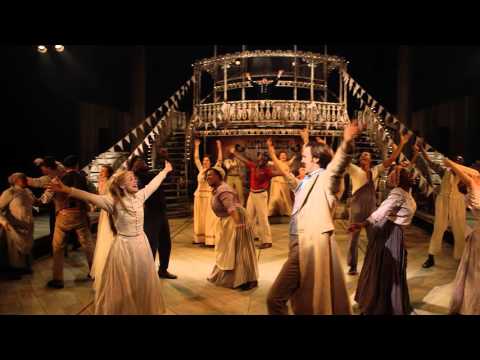
Music wrote J. Kern, the script and the lyrics belong to the legendary O. Hammerstein II. Musical is performed in two acts and is based on the eponymous bestseller of E. Ferber. The latter in an original manner tells about the life of the artists, stage workers and members of the crew of the vessel Vessel, which is floating on the Mississippi River for more than forty years. In addition to this, the spectacle raises a number of sensitive issues, including racial prejudices and loving relationship of unequal on the status people.Broadway premiere of the musical took place on December 27, 1927 in the Ziegfeld Theatre. Prior to this, the creators managed to hold previews, which were from November to December, to gain producers. Among the places of its demonstration, it is right to highlight the following ones: National Theatre in Washington, Nixon Theatre in Pittsburgh & Erlanger Theatre in Philadelphia. It is worth noting that the critics were not restrained in enthusiasm to this spectacle. Incredible excitement around performance held throughout the year and a half. During this time, to the audience have been demonstrated 572 performances. Hammerstein directed and choreography managed S. Lee. As for the cast, it included: N. Terris, H. Marsh, H. Morgan, and C. Winninger amongst others.
Histrionics remained without awards only for one simple reason – they had not yet been established in that time. There is no doubt that the production would take up to 10 figurines of Tony or Drama Desk in modern days. B. Atkinson in his review in The New York Times described the opening night of the show as the perfect celebration of skill and taste. He called acting of Charles Winninger more than convincing, and J. Bledsoe was honored with very impressive estimation.
Release date: 1927
"Show Boat" – The Musical Guide & Song Meanings
Information current as of February 2026. This is a lyrics-and-album analysis guide. It does not reproduce full song lyrics.
Review: why the lyrics still feel dangerous
“Show Boat” (1927) is the moment Broadway stopped pretending it was only here to flirt. It sells romance, yes, but it also sells time, labor, and the cost of being told who you are allowed to be. Oscar Hammerstein II’s lyrics move like a camera. They zoom out to the river and the levee, then snap into private confession, then swing back to a public crowd that has its own ugly vocabulary. The show’s success depends on that friction. Sand it down and you get a pretty antique. Let it bite and you get a living argument.
The score’s trick is that it uses different lyric “dialects” for different social realities. The show-within-the-show numbers trade in performative sparkle. The love songs insist on fantasy as a coping tool. The river songs refuse fantasy entirely. That tension is not accidental. Rodgers & Hammerstein’s own materials underline how pivotal “Can’t Help Lovin’ Dat Man” is, because the lyric becomes plot evidence: who should know that song, and what does that knowledge expose. When the show is staged with any intelligence, the lyric is both a melody and a tell.
For listening: the 1994 Harold Prince recording is the modern reference because it treats the piece as an epic and leans into original orchestral muscle. If you want a different angle, compare it with a more “operetta” sounding version like the 1966 Lincoln Center era, where vocal polish can make the story’s roughness feel even sharper by contrast. The best approach is not to hunt for a single definitive “Show Boat.” The material itself keeps insisting on multiple truths.
How it was made: Kern and Hammerstein bet against Broadway comfort
Start with the audacity: Kern and Hammerstein adapted Edna Ferber’s bestselling novel, which was not designed to behave like a cheerful musical. It spans decades, centers a marriage that curdles, includes racial violence in the background noise of American life, and asks the audience to hold more than one kind of love story at once. That was the gamble, and it required a producer willing to risk scandal. Florenz Ziegfeld did, then wavered, then came back around, a pattern echoed in later reminiscences about the show’s painful development swings.
Two origin details matter for lyric analysis. First, the character Joe and “Ol’ Man River” were expanded to carry the show’s moral weight, turning the Mississippi into a repeated lyrical motif: indifferent nature versus human suffering. Second, “Bill” arrived with a complicated lyric history: P. G. Wodehouse wrote the original lyric for an earlier Kern project, and Hammerstein revised it for “Show Boat,” a move that makes the song feel like a found object repurposed into a confession. That repurposing is the show in miniature: entertainment material transformed into drama.
The show’s public-domain shift is the newest chapter in its origin story. As of January 1, 2023, the 1927 text entered the public domain in the U.S., and industry coverage immediately framed what that means for new adaptations and remixes. The result is predictable and fascinating: artists are no longer only reviving “Show Boat.” They’re arguing with it in public, onstage.
Key tracks & scenes: 8 lyrical moments that steer the boat
"Cotton Blossom" (Ensemble)
- The Scene:
- Act I, the Natchez levee. Heat, dust, morning bustle. The riverfront is a workplace before it is a postcard, and the chorus feels like bodies moving cargo, not tourists admiring scenery.
- Lyrical Meaning:
- The lyric establishes the show’s central perspective shift: America seen from the deck and the dock, not the parlor. It’s also a tonal trap. The tune bounces, but the words keep pointing toward labor and hierarchy.
"Only Make Believe" (Gaylord Ravenal, Magnolia)
- The Scene:
- Act I, backstage or on deck as the troupe rehearses. Soft light, a private pocket inside the public machinery. They flirt by rehearsing, and rehearsing becomes flirting.
- Lyrical Meaning:
- This is fantasy as foreplay and as self-defense. The lyric frames love as a performance choice, which becomes devastating later when Ravenal chooses disappearance instead of responsibility.
"Ol’ Man River" (Joe)
- The Scene:
- Act I, early, often staged with the river as a visual force: shifting light, slow movement, the boat looming like a floating theatre and a floating factory at once.
- Lyrical Meaning:
- Hammerstein writes the river as an uncaring witness. The lyric’s repeated motion becomes the show’s conscience. It keeps returning, not as a reprise gimmick, but as a reminder that the river outlasts every romance and every lie.
"Can’t Help Lovin’ Dat Man" (Julie, Magnolia, Queenie, Joe)
- The Scene:
- Act I, the kitchen pantry on the Cotton Blossom. The space is domestic and cramped. Magnolia asks for advice. Julie answers with a song she should not, socially speaking, “know.”
- Lyrical Meaning:
- The lyric is plot evidence disguised as tenderness. Rodgers & Hammerstein’s synopsis makes the point cleanly: Queenie is surprised Julie knows a song she associates with Black singers. The show turns a love lyric into a fault line about race and identity.
"Life Upon the Wicked Stage" (Ellie, Ensemble)
- The Scene:
- Act I, onstage performance mode. Brighter lights, broader gesture, the company selling “show business” as a lifestyle brand, with cynicism tucked behind rhinestones.
- Lyrical Meaning:
- This lyric is Broadway commenting on Broadway. It sounds like comedy, but it also teaches you to distrust surfaces, which is handy preparation for Julie’s story.
"Why Do I Love You?" (Magnolia, Ravenal, Company)
- The Scene:
- Act II, Chicago, in the glow of early success. The staging often feels like money: faster tempo, sharper costumes, a city that flatters you until it doesn’t.
- Lyrical Meaning:
- Hammerstein turns a love song into a philosophical question with a smile. The lyric is less about certainty than about compulsion, which is why it plays as romantic and ominous depending on how hard the production leans on Ravenal’s flaws.
"Bill" (Julie)
- The Scene:
- Act II, the Trocadero in Chicago. Late-night rehearsal energy: half-lit, smoky, tired. Julie sings like she’s trying to convince herself, not the room.
- Lyrical Meaning:
- The lyric is a brutal inventory of loving the wrong person. Rodgers & Hammerstein’s essay on the show’s relevance points directly to how “Bill” and the Act II reprise of “Can’t Help Lovin’ Dat Man” lock together around Julie’s gifts and sacrifices.
"After the Ball" (Magnolia, Company)
- The Scene:
- Act II, Chicago, a performance crisis. The crowd turns. The stage manager panic is visible. Captain Andy, old showman that he is, engineers a rescue with a communal sing-along.
- Lyrical Meaning:
- It’s the show’s sharpest lesson about performance as survival. The lyric itself is sentimental, but the dramatic function is practical: art as crowd control, and family as an emergency response unit.
Live updates (2025/2026): public domain, new versions, and where it’s playing
The headline is not a Broadway revival. It’s ownership. Playbill reported that “Show Boat” entered the public domain as of January 1, 2023, and the ripple effects have been immediate: more artists feel licensed, legally and artistically, to tinker with the original 1927 material.
The most visible 2025 example is Target Margin Theater’s “Show/Boat: A River,” presented with NYU Skirball as part of the 2025 Under the Radar Festival. It ran January 9 to 26, 2025, with an opening on January 15, and Playbill announced cast details in fall 2024. Critical response has split along familiar lines: admiration for the ambition, impatience when concept overwhelms story, and renewed focus on what “Ol’ Man River” means when sung as commentary rather than tradition.
For 2026, the surest “calendar proof” is continental: Operabase lists “Show Boat” at Staatsoperette Dresden with performances across June and early July 2026, including ticketed dates and pricing. That tells you what’s quietly true worldwide: “Show Boat” remains programmable as either a classic or a provocation, depending on the director’s appetite for discomfort.
If you are producing it now, you are also choosing a version. TheaterMania’s 2025 review notes that Concord Theatricals licenses multiple editions, including the Harold Prince 1994 version and a chamber revision associated with Goodspeed, while the original 1927 text is no-fee in the U.S. post-2023. Those options are not cosmetic. They change pacing, orchestral scale, and how the show handles its most sensitive material.
Notes & trivia
- The original Broadway opening was December 27, 1927 at the Ziegfeld Theatre (Jerome Kern; book and lyrics by Oscar Hammerstein II).
- There is no full 1927 Broadway cast album in the modern sense. A 1928 original London cast recording exists, while several original cast members recorded individual numbers separately.
- Concord’s “Show Boat (1927)” song list foregrounds the core spine: “Cotton Blossom,” “Only Make Believe,” “Ol’ Man River,” “Can’t Help Lovin’ Dat Man,” “Bill,” and “After the Ball.”
- “Bill” credits P. G. Wodehouse for the lyric origin, with Hammerstein revising it for “Show Boat,” an unusual authorship trail for a signature ballad.
- Rodgers & Hammerstein’s synopsis places “Can’t Help Lovin’ Dat Man” in the kitchen pantry, and highlights Queenie’s shock at Julie’s familiarity with the song.
- Playbill reported that the 1927 text entered the U.S. public domain as of January 1, 2023, accelerating new adaptations and reframings.
- The Rodgers & Hammerstein record page describes the 1994 Harold Prince recording as featuring original orchestrations by Robert Russell Bennett with additions by William David Brohn, under musical direction of Jeffrey Huard.
Reception: praise, recoil, and revision
Critics have praised “Show Boat” for nearly a century, and they have also been warning audiences about it for nearly as long, which is a healthy sign. The show is an American milestone with American blind spots. Its reception story is a long negotiation between craft and content: how to keep the score’s power while facing the material that modern ears and ethics cannot shrug off.
Modern criticism tends to reward productions that do not pretend the problems are charming. When directors frame the racial politics as central rather than incidental, the lyrics land as theatre, not nostalgia. When they avoid the question, the same words can sound like complacency, even when the intentions are “historical.”
“After ‘Show Boat,’ Hammerstein’s integrated song-dance-and-story musical…”
“Through intelligent handling of its racial themes… [it] has steered… into the modern age.”
“Elaine Stritch gets ‘Why Do I Love You’…”
Quick facts: show + album metadata
- Title: Show Boat
- Year: 1927 (Broadway premiere)
- Type: Full-length musical drama
- Music: Jerome Kern
- Book & lyrics: Oscar Hammerstein II
- Based on: “Show Boat” (1926 novel) by Edna Ferber
- Premiere: December 27, 1927, Ziegfeld Theatre (New York City)
- Selected notable placements: “Cotton Blossom” (Natchez levee opening); “Ol’ Man River” (early Act I river meditation with reprises); “Can’t Help Lovin’ Dat Man” (kitchen pantry revelation); “Bill” (Chicago rehearsal confession); “After the Ball” (performance rescue)
- Soundtrack/cast album reality: No complete 1927 Broadway cast album; notable recordings include the 1928 London cast and major revival recordings
- Recommended modern listening anchor: Show Boat (1994 World Premiere Cast Recording), associated with Harold Prince’s production, listed on major streaming platforms with 22 tracks
- Rights note (U.S.): The 1927 text entered public domain in 2023; later versions and revisions may still differ in rights and materials
Frequently asked questions
- Is “Show Boat” really the first “integrated” musical?
- It is widely treated as a foundational integrated musical because it binds song, character, and plot with unusual seriousness for its era, a point echoed in modern critical essays on Hammerstein’s legacy.
- Why does “Ol’ Man River” keep returning in reprises?
- Because the lyric is the show’s moral meter. The river motif is built to outlast the love plot and keep reasserting a larger view of labor, time, and endurance.
- Which recording should I start with?
- If you want a modern, big-theatre treatment, start with the 1994 Harold Prince-associated cast recording described by Rodgers & Hammerstein as using original orchestrations by Robert Russell Bennett with additions by William David Brohn. If you want history, the 1928 London cast is the closest early full cast document.
- What is the “Can’t Help Lovin’ Dat Man” plot twist actually doing?
- It uses lyric knowledge as evidence. Rodgers & Hammerstein’s synopsis makes clear that Queenie’s reaction is the clue: the song’s cultural association exposes Julie’s hidden identity and raises the stakes instantly.
- Is the show being produced in 2025/2026?
- Yes, though not as a single blockbuster tour. A prominent 2025 reimagining is Target Margin Theater’s “Show/Boat: A River” at NYU Skirball (Under the Radar Festival). A listed 2026 run appears at Staatsoperette Dresden, indicating ongoing international programming.
- How do modern productions handle the show’s racial language and imagery?
- They make version choices, editorial choices, and staging choices. Some productions foreground the critique. Others soften language. The conversation has intensified since the 1927 text entered the public domain in the U.S., making new adaptations easier to mount.
Key contributors
| Name | Role | Contribution |
|---|---|---|
| Jerome Kern | Composer | Wrote the score that bridges operetta romance and American popular song |
| Oscar Hammerstein II | Book; lyricist | Built the dramatic structure and wrote lyrics that turn song into plot evidence |
| Edna Ferber | Source author | Wrote the novel that supplied the multi-decade narrative and social scope |
| P. G. Wodehouse | Lyricist (source credit) | Credited for the original lyric of “Bill,” later revised for “Show Boat” |
| Harold Prince | Director (1994 major revival) | Reframed the piece as an American epic and generated a key modern cast recording |
| Robert Russell Bennett | Orchestrations (credited for 1994 recording) | Original orchestrations highlighted in Rodgers & Hammerstein’s recording notes |
| William David Brohn | Orchestrations (credited for 1994 recording additions) | New orchestral additions for the 1994 recording package |
| Jeffrey Huard | Musical direction (credited for 1994 recording) | Conducted the orchestra for the Harold Prince production’s recording documentation |
| David Herskovits | Director (Show/Boat: A River) | Led a 2025 public-domain reimagining that foregrounds commentary and recontextualization |
Sources: Rodgers & Hammerstein official site (synopsis, essays, recordings); Concord Theatricals; Playbill; NYU Skirball; The New Yorker; The Guardian; Variety; Operabase; Ovrtur.