
Seesaw Lyrics: Song List
- Act 1
- Seesaw
- My City
- Nobody Does It Like Me
- In Tune
- Spanglish
- Welcome To Holiday Inn
- You're A Lovable Lunatic
- He's Good For Me
- Ride Out The Storm
- Act 2
- We've Got It
- Poor Everybody Else
- Chapter 54, Number 1909
- Seesaw Ballet
- It's Not Where You Start
- Finale: I'm Way Ahead / Seesaw (Reprise)
About the "Seesaw" Stage Show
The script for the musical wrote M. Stewart, music belongs to Cy Coleman, lyrics – to D. Fields. Production is based partially on the original production of W. Gibson, having the name ‘Two For the Seasaw’. It was published in 1958 and after its fantastic success served as an excellent foundation for the project.
Initial exhibitions of the histrionics started in February 1973. They lasted for one and a half months and ultimately counted 25 demonstrations. As for the official premiere, it took place on March of the same year, in the Uris Theatre, NYC. After some time, the staging has moved to a new location – Mark Hellinger Theatre. It stayed there right up to the moment of the closure in December 1973. During its time, 296 performances in less than a year were demonstrated to the audience.
Direction of the play was by M. Bennet. In addition to his regular duties, he also acted as a leading choreographer. The team also included: stage designer R. Wagner, costume designer A. Roth, light designer J. Fisher and conductor L. Fallon. Starring M. Lee & K. Howard. For their work, they received positive reviews from critics. The spectacular was not without attention of representatives of theater awards. In particular, it received seven nominations for Tony, winning two (Best Choreography & Best Performance). In addition to this, performance was marked by Drama Desk, which gave it one for the Outstanding Performance.
Release date of the musical: 1973
"Seesaw" – The Musical Guide & Song Meanings
Review
How do you turn a two-hander about adult loneliness into a Broadway musical with a chorus and brass? “Seesaw” tries by treating New York City as a third lead: the street noise, the hustle, the social whirl, the constant interruptions. Sometimes that choice feels like an emotional dodge. Often, it reads as the point. Jerry and Gittel can barely hear themselves think, so of course the score keeps barging in with opinions.
Dorothy Fields writes in vernacular jabs and self-corrections, the kind of lyrics that sound like a person arguing with their own better judgment. Gittel’s language is full of defensive punchlines that land a beat before the pain does. Jerry’s lines are tidier, more lawyerly, and that neatness becomes its own tell. When the romance warms, the lyric writing doesn’t suddenly get poetic. It gets specific. That’s the craft: feelings arrive disguised as everyday talk.
Musically, Cy Coleman builds the evening on classic Broadway snap with a brassy spine, but the score keeps slipping into intimate pockets where the couple can finally breathe. That tension between “big city show” and “private conversation” is the show’s real seesaw. When it works, the sound itself becomes character: public swagger outside, nervous sincerity inside.
How It Was Made
“Seesaw” has one of those origin stories that reads like a cautionary tale for producers who believe “out of town” is a gentle phrase. The musical was in serious trouble during tryouts, and the fix was radical: Michael Bennett was brought in, major elements were reworked, and the show changed shape on the way to Broadway. There are multiple versions of the “what happened in Detroit” saga, but the consistent headline is the same: it took a top-to-bottom rescue operation to get the piece to opening night.
The human cost shows up in the footnotes. In one widely repeated account, Lainie Kazan was replaced in the lead role during that turnaround, a decision that became part of musical-theatre lore. Another recurring detail: Neil Simon contributed uncredited “doctoring” to the book, an invisible hand that helps explain why some dialogue crackles like a stand-up set.
One of the more brutal Broadway truths is embedded in this history: the production problems are famous, yet the show’s most durable cultural artifact is a single dance number. Bennett and company essentially built a commercial skyscraper around a very small emotional apartment. Whether you find that savvy or suspicious depends on how much you like your romance served with a marching band.
Key Tracks & Scenes
"Seesaw" (Company)
- The Scene:
- New York announces itself before the couple does. A stylized city montage floods the stage: street corners, stoops, passing bodies. Bright, busy lighting. Motion everywhere, like the sidewalks are conducting the orchestra.
- Lyrical Meaning:
- The title is the thesis. The lyric keeps toggling between up and down because the relationship will. It’s less a love song than a warning label, sung with a grin.
"Nobody Does It Like Me" (Gittel)
- The Scene:
- After a romantic stumble, Gittel is alone with her own running commentary. The stage tightens. The light drops into something harsher and more personal, like a bathroom mirror you can’t turn away from.
- Lyrical Meaning:
- Fields gives Gittel the kind of self-accusation that’s funny until it isn’t. The hook is a punchline; the subtext is fear of being too much, too needy, too available. It’s the show’s best argument for why comedy is often just armor.
"In Tune" (Gittel & Jerry)
- The Scene:
- They find a rhythm that feels accidental: conversation landing, silences not panicking. The lighting softens without going romantic-postcard. The city is still there, but it stops heckling for a few minutes.
- Lyrical Meaning:
- The lyric’s modesty is the emotional move. Nobody declares destiny. They just admit the rare relief of being understood. In a show built on contrast, this duet is the truce.
"You're a Lovable Lunatic" (Jerry)
- The Scene:
- Jerry tries to name what he’s falling for. The staging typically isolates him from the street crowd. One pool of light, one man discovering that affection makes him less in control, not more.
- Lyrical Meaning:
- It’s a compliment with a flinch inside it. “Lovable” is the reach; “lunatic” is the retreat. Fields lets Jerry love Gittel while still translating her into something manageable. That tension is the romance and the problem.
"He's Good for Me" (Gittel)
- The Scene:
- Gittel talks herself into hope, then tests it for weak spots. The light warms, then cools again. A couple of steps forward, a half-step back, choreography as psychology.
- Lyrical Meaning:
- This is Fields at her sharpest: a character persuading herself in real time. The lyric keeps balancing desire against self-protection, which is the show’s actual plot engine.
"Chapter 54, Number 1909" (David, Jerry, Gittel & Ensemble)
- The Scene:
- David turns the city into a catalog: people as listings, romance as a classifieds page. The stage becomes a kinetic bulletin board. Bright, comic lighting and fast movement, with the couple swept into the joke.
- Lyrical Meaning:
- It’s a brilliant way of externalizing anxiety. When commitment is scary, you pretend love is just another option you could select, reorder, or return. The lyric satirizes that fantasy while enjoying it.
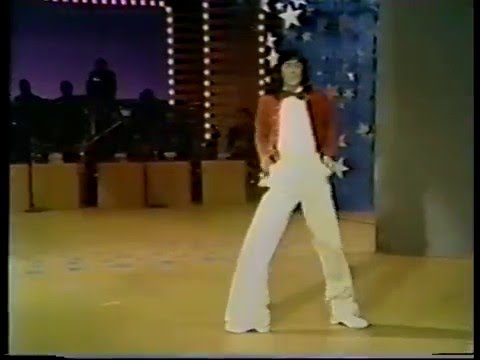
"It's Not Where You Start" (David & Company)
- The Scene:
- The showstopper arrives like a sugar rush with choreographic IQ. Big stairs, big angles, big brass. The lighting goes full-performance mode, unapologetically theatrical, because subtlety is off the clock.
- Lyrical Meaning:
- On paper it’s motivational. In context it’s strategic: a moral that distracts from how messy the romance has become. The lyric is a pep talk that doubles as an escape hatch, and that doubleness is why the number lasts.
"I'm Way Ahead" (Gittel)
- The Scene:
- Late-show clarity hits with a brittle smile. The staging often strips away the city clutter. Cooler light. Gittel holding her ground because it’s the only way to keep from collapsing.
- Lyrical Meaning:
- The title is self-deception spoken fluently. Fields writes confidence as performance, which is exactly what a dancer would do when her heart is wobbling.
Live Updates
Information current as of January 2026. There is no widely announced Broadway or large-scale commercial revival of “Seesaw” on the public calendar right now, and the show’s modern life is mostly driven by licensing and occasional revivals. Concord Theatricals continues to license the title, which is where most new productions originate.
The most visible recent New York revival was J2 Spotlight Musical Theater Company’s Off-Broadway run at Theatre Row in 2020, which drew reviews noting how the piece plays when reduced to a tighter, more intimate staging. That production also highlights a practical truth about “Seesaw” in 2026: it tends to resurface in companies with a mission for under-produced scores rather than in blockbuster houses.
The show does keep generating fresh conversation through archival clips and new storytelling around its troubled gestation, including a 2024 Playbill piece that re-tells the backstage shakeups with the kind of detail fans trade like baseball cards. If you’re tracking “Seesaw” for a possible local production, watch licensing announcements and gala-style concerts; that’s where the title most often pops back up.
Notes & Trivia
- “Seesaw” opened on Broadway in 1973 and ran for 296 performances (plus previews), with a mid-run theatre transfer that added cost and complication.
- Tommy Tune won the Tony Award for Best Featured Actor in a Musical for his performance, largely powered by two major Act II moments.
- Michael Bennett won the Tony Award for choreography for “Seesaw,” a prelude to the artistic authority he’d wield again soon after.
- The production’s out-of-town crisis led to major creative changes, including high-profile recasting and structural rewrites.
- Neil Simon is frequently cited as an uncredited “doctor” on the book, helping explain why certain scenes spark with comic bite.
- Contemporary accounts emphasize the original orchestrations’ prominent brass, reinforcing the score’s “big city” personality.
- The licensing listing’s instrumentation notes a medium-size pit with multiple reeds and substantial brass, reflecting the show’s sonic ambitions.
Reception
Critically, “Seesaw” has always been a split decision: a score and staging admired for craft, attached to a story some reviewers found inherently resistant to musical expansion. That divide has only sharpened over time as modern audiences bring different expectations about integration and character psychology.
“Seesaw is a love of a musical.”
That line, attributed in advertising to Walter Kerr, captures the show’s best-case reading: affectionate, charismatic, and more fun than its premise should allow.
“the treatment of the story” was “tiresome.”
A harsher view, associated with Clive Barnes in later scholarship, is essentially an integration complaint: the romance is intimate, the musical frame is huge, and the gears can show.
“the vibrant star of Coleman’s ‘Seesaw,’ a show that framed the last lyrics of Dorothy Fields.”
Later commentary tends to place “Seesaw” as an important late-career marker: a Coleman score with Fields’s final Broadway lyric work, even for writers who don’t claim it’s the team’s peak.
Quick Facts
- Title: Seesaw
- Year: 1973
- Type: Broadway musical adaptation of “Two for the Seesaw”
- Book: Michael Bennett
- Music: Cy Coleman
- Lyrics: Dorothy Fields
- Original Broadway theatres: Uris Theatre (later known as Gershwin Theatre); Mark Hellinger Theatre
- Broadway run: 296 performances; 25 previews
- Setting: New York City, early 1970s
- Selected notable numbers: “Nobody Does It Like Me,” “You’re a Lovable Lunatic,” “It’s Not Where You Start”
- Album status: Original Broadway Cast Recording (widely available on major streaming platforms; notable DRG reissue metadata appears in digital listings)
- Awards snapshot: Tommy Tune won the Tony for Featured Actor; Bennett won for Choreography; the show earned multiple nominations
- Licensing: Available through Concord Theatricals
Frequently Asked Questions
- Who wrote the lyrics for “Seesaw”?
- Dorothy Fields, writing in her late-career idiom of conversational punch and emotional precision.
- What kind of musical is it?
- A romantic comedy with a two-person core (Jerry and Gittel) framed by New York “street life” ensemble numbers and a brassy, classic-Broadway sound.
- Is “It’s Not Where You Start” actually in the show, or did it escape into cabaret life?
- It is in the show as a major Act II production number led by David. Its afterlife in concerts is a bonus, not an accident.
- Was there a recent revival?
- Yes. A notable Off-Broadway revival ran at Theatre Row in 2020 with J2 Spotlight Musical Theater Company.
- Is there a movie of the musical?
- No major film adaptation of the musical. The source material is a play, and its earlier screen presence is tied to that play’s film history rather than this score.
- Where can I listen to the cast recording?
- The Original Broadway Cast Recording is available on major streaming services, and clips of signature numbers circulate widely online.
Key Contributors
| Name | Role | Contribution |
|---|---|---|
| Cy Coleman | Composer | Brassy, rhythm-forward score that toggles between city spectacle and intimate romance. |
| Dorothy Fields | Lyricist | Conversational lyrics that sharpen character through humor, defensiveness, and specificity. |
| Michael Bennett | Book / Director / Choreography | Reshaped the show during its troubled development; staged the dance language that became its legacy. |
| William Gibson | Source author | Wrote the play “Two for the Seesaw,” the intimate dramatic engine beneath the musical frame. |
| Tommy Tune | Original featured performer (David) | Created the star-making featured role and led the signature Act II dance number. |
| Grover Dale | Co-choreographer | Shared choreography credit on the original Broadway production. |
| Robin Wagner | Scenic design | Helped define the show’s stylized city vocabulary in its Broadway incarnation. |
| Ann Roth | Costume design | Period-anchored costumes supporting fast location shifts and dance demands. |
| Jules Fisher | Lighting / Projections | Lighting that supports both “street” spectacle and the couple’s private emotional space. |
Sources: IBDB, Concord Theatricals, Playbill, Theater Pizzazz, BroadwayWorld, Oxford Academic, Smithsonian Transcription Center, TIME, Variety.