Scarlet Pimpernel, The Lyrics – All Songs from the Musical
Scarlet Pimpernel, The Lyrics: Song List
- Act 1
- Overture
- Madame Guillotine
- Believe
- Vivez
- Prayer
- Into The Fire
- Falcon In The Dive
- When I Look At You
- The Scarlet Pimpernel
- Where's The Girl
- When I Look At You (reprise)
- The Creation Of Man
- Marguerite's Dilemma
- The Riddle
- Act 2
- Entr'acte
- They Seek Him Here
- Only Love
- She Was There
- Storybook
- Where's The Girl (reprise)
- Lullaby
- You Are My Home
- The Duel
- Believe (reprise)
- Into The Fire (reprise)
About the "Scarlet Pimpernel, The" Stage Show
Musical was composed by F. Wildhorn & written by N. Knighton. In early October 1997, the Minskoff Theatre hosted the try-outs of the performance. Production took place on Broadway from November 1997 to October 1998, when have been shown 39 preliminaries and 373 regular performances. Production was directed by P. Hunt & choreographed by A. Pelty. In the show were involved: C. Andreas, T. Mann, D. Sills, E. Bennyhoff, B. Bowers, P. Burrell & G. Chiasson. The second Broadway production took place in the Minskoff Theatre in mid-October 1998 to the end of May 1999 with 239 appearances. The director and choreographer of this show was R. Longbottom. The musical had such cast: R. York, R. Smith, D. Sills, J. Bohanek & P. Hoffman. The third version of the Broadway spectacular was featured in Neil Simon Theatre in mid-September 1999 and early January 2000 with 129 performances. Staging was directed and choreographed by R. Longbottom and had following cast: C. Carmello, M. Kudisch, R. Bohmer, E. W. Land, K. McDonald & D. Masenheimer.In February 2000, began a national US tour, which lasted until April 2001. Production has been undertaken by R. Longbottom. In this histrionics participated: A. Bodnar, W. Michals, D. Sills, E. W. Land, D. Cromwell & B. Sharpe. From June to early September 2002, the play was in New Restaurant Theatre, under the direction of R. Carrothers, choreographed by T. Farrell. The cast was: S. Joseph, T. Noland, R. Bohmer, L. Blalock, J. Morrison, J. Staniunas & J. McEvoy. The musical have experienced many American productions. Also, it was staged in 12 countries of the globe. The play was nominated for Tony, Drama League, Drama Desk and Outer Critics Circle Awards and it actually won only one – from Theatre World.
Release date: 1997
"The Scarlet Pimpernel" – The Musical Guide & Song Meanings
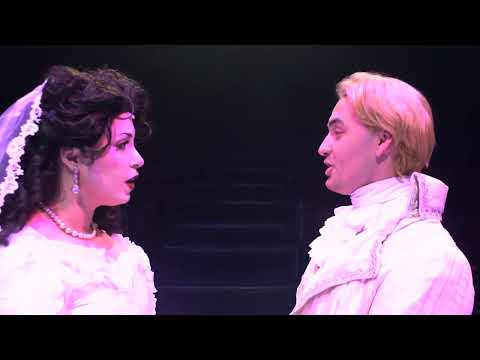
Review: the rhymes wear a mask, too
The Scarlet Pimpernel is built on a pleasingly theatrical paradox: the hero survives by acting like an idiot in public. That is also the show’s lyric problem and its lyric pleasure. Nan Knighton’s words often play “clear first, clever second.” They push plot. They label feeling. They make sure the audience never gets lost in the wigs. The tradeoff is that sometimes the text declines the sharper question the material invites, which is how much of Percy’s persona is strategy, and how much of it is a coping mechanism for a man living two lives in one body.
When the lyrics click, they do it through contrast. England sings in manners. France sings in threat. Percy’s public lines lean airy and performative, while his private lines turn plain, direct, and slightly astonished that love can still exist in a world this brutal. Frank Wildhorn’s score wraps that split in Adult Contemporary gloss, which critics noticed at the time. That style can soften the Terror into a theme park. It also gives the central trio a radio-ready emotional language. In this show, the swordplay is decorative; the real action is the constant rewriting of identity in front of witnesses.
And yes, the show’s Broadway history matters for how the lyrics land. This musical famously lived through multiple major revisions, which means its most quoted songs became emotional anchors in an evolving plot machine. The words had to be sturdy enough to survive rebuilds, and catchy enough to justify them.
How it was made
There is a practical, very Broadway origin story at the center of Pimpernel: a composer gets excited by a lyricist’s voice, pushes producers to take a chance, and a single breaks through as proof of concept. Knighton told Playbill that Frank Wildhorn saw her lyrics, loved them, and persuaded producers to hire an unknown writer. She also described the research grind that followed, including a key decision to set the musical in 1794, aligning the story with the height of the Reign of Terror rather than the novel’s earlier dating. That single choice shaped the lyric temperature of the whole show: more urgency, more public peril, less drawing-room safety.
Wildhorn and Knighton later described an early recording that helped recruit producers, including “You Are My Home” as a contemporary hit vehicle. That is the show in miniature. It is swashbuckling theatre funded and marketed like pop, then forced to behave like a commercial Broadway musical under pressure. The pressure did not stop after opening night. Playbill’s oral history lays out the unusual reality: three distinct Broadway versions across two theatres, with re-mountings that changed pacing, structure, and emphasis while keeping signature songs as audience lighthouses. The lyric writing had to stay legible while the ship was being rebuilt at sea.
Key tracks & scenes
"Storybook" (Marguerite)
- The Scene:
- La Comédie Française. A stage within the stage. Warm footlights and theatrical framing as Marguerite performs, then turns the evening into an announcement. The theatre is interrupted, and the show teaches you its main rule: art can be stopped by power.
- Lyrical Meaning:
- “Story” is not decoration here. The lyric establishes Marguerite as a professional narrator of emotion, which later becomes her curse. Everyone assumes she is acting, even when she is telling the truth.
"Madame Guillotine" (Chauvelin, St. Cyr, Ensemble)
- The Scene:
- Paris in full public frenzy. The blade drops. The mood is celebratory in the worst way. A documented staging detail from early coverage: the number snaps into an immediate transition to the English countryside and the wedding, like a hard cut from horror to pastoral.
- Lyrical Meaning:
- The lyric uses chant-like repetition to normalize violence as civic ritual. It is also the show’s thesis for Chauvelin: a man who hears ideology as music and treats mercy like treason.
"You Are My Home" (Percy, Marguerite)
- The Scene:
- England, post-theatre glow. The couple’s romantic center is drawn in clean lines before secrets poison it. In some versions, the wedding material expands and shifts around the song, but the intent stays stable: intimacy as shelter.
- Lyrical Meaning:
- This is Wildhorn and Knighton playing the long game. The lyric frames love as a place rather than a feeling, which makes Percy’s later estrangement read as exile, not sulking.
"Prayer" (Percy)
- The Scene:
- Night. A private room after public celebration. Percy learns what he believes Marguerite did, and the lighting narrows to isolate him from the world he just hosted. The “fop” disappears.
- Lyrical Meaning:
- The lyric is blunt by design. It treats faith as moral arithmetic: what does a good man do when love and justice stop agreeing. It is also the moment Percy stops performing for others and starts performing for himself.
"Into the Fire" (Percy, The League)
- The Scene:
- A travel montage that critics singled out for sheer stagecraft: library to ship to French street, with scenery shifting seamlessly as the men move in disguise. It plays like a caper assembled in real time.
- Lyrical Meaning:
- The lyric is recruitment and vow. It turns bravery into group identity. The repeated forward motion matters, because the show’s moral claim is that heroism is not a trait, it is a choice made again and again.
"Falcon in the Dive" (Chauvelin)
- The Scene:
- Chauvelin alone, or near-alone, in the kind of spotlight reserved for villains who want applause. The atmosphere is colder, more controlled. He is not screaming; he is sharpening.
- Lyrical Meaning:
- This lyric is power with a metaphor. It defines him as predatory patience, which is more frightening than moustache-twirling. It also gives him a self-image that justifies cruelty as precision.
"The Riddle" (Percy, Marguerite, Chauvelin, Ensemble)
- The Scene:
- The palace. A tense triangulation in public space where everyone must keep their face. Marguerite is squeezed by threats and marriage at the same time, and Percy watches, calculating.
- Lyrical Meaning:
- The lyric is suspicion set to music. It keeps asking “who are you” without using those words. In a show about masks, this is the number where the mask becomes a weapon.
"They Seek Him Here" (Company)
- The Scene:
- Act II’s chase energy. The stage becomes a map. Characters report sightings, rumors, near-misses. The tempo is breathless and slightly smug, because the hero is winning and everyone knows it.
- Lyrical Meaning:
- This is the show’s most SEO-friendly earworm for a reason. The lyric converts the Pimpernel into a legend, and legends are harder to execute than people. It is propaganda for goodness, with a wink.
Live updates (2025/2026)
Current as of February 1, 2026. The Scarlet Pimpernel is not sitting still. It is living the way a licensing-friendly musical lives: in regional runs, concerts, and one-off events that treat the score as a crowd-pleaser with built-in spectacle.
Recent and upcoming examples include a one-night concert fundraiser in Chicago in October 2025 (The Beautiful City Project at the Athenaeum Center), positioned explicitly as a benefit event with a large ensemble. There is also a developmental workshop reading in Brooklyn in October 2025 by Next Life Theatre Company, described as a fresh adaptation that relocates the premise into a modernized frame. For 2026, Ogden Musical Theatre lists The Scarlet Pimpernel for February 2026, and Hale Center Theater lists a substantial summer 2026 run in Pleasant Grove, Utah. If you want a practical takeaway: this title is functioning as a reliable community and regional tentpole, not as a Broadway revival candidate in the immediate calendar.
Ticket pricing and availability vary wildly by producing organization, venue size, and whether you are seeing a full staging or a concert. The more useful trend is artistic: many newer presentations foreground Percy’s double identity as proto-superhero, leaning into speed, capers, and the “legend” numbers, while trimming anything that slows Act II into romantic pause.
Notes & trivia
- The musical played on Broadway in a progressive series of three different versions across the Minskoff Theatre and the Neil Simon Theatre, totaling 772 performances and 39 previews.
- Playbill’s oral history calls the revision cycle “unprecedented,” describing major re-mountings in 1998 and 1999 that effectively created Version 2.0 and Version 3.0.
- Nan Knighton told Playbill she re-set the story in 1794 to align it with the most intense period of the Reign of Terror, rather than the novel’s earlier dating.
- “You Are My Home” existed as a pop-facing calling card before Broadway. Wildhorn and Knighton have described an early recording that helped attract producers, and Playbill notes its chart visibility in that era.
- Concord Theatricals notes that the third and final Broadway version is the authorized licensing edition.
- Contemporary staging notes from early press describe “Madame Guillotine” slamming into an immediate visual shift to an English garden wedding, an intentionally jarring contrast.
- Orchestration vendors note that licensed materials often track the original Broadway production and the national tour, which explains why certain underscoring and transitions feel engineered for momentum.
Reception
Critics mostly agreed on the show’s strengths: big theatrical gesture, clear storytelling in Act I, and a score that knows how to sell a hook. They also agreed on the weakness: the material sometimes behaves like a glossy melodrama that wants applause more than it wants consequence. Reviews often framed the writing as pop-fluent and craft-heavy, with emotional stops that could feel pre-programmed.
“B-movie melodrama set to an Adult Contemporary format.”
“In the glorious Act 1 number ‘Into the Fire,’ Percy and his men travel … seamlessly … This is solid Broadway showmanship.”
“Mechanically manufactured … hardly a first-class musical.”
Quick facts
- Title: The Scarlet Pimpernel (The New Musical Adventure)
- Broadway opening: November 9, 1997
- Type: Swashbuckling adventure musical
- Music: Frank Wildhorn
- Book & lyrics: Nan Knighton
- Original Broadway director: Peter H. Hunt
- Setting: May into July, 1794. England and France.
- Broadway run structure: Three distinct Broadway versions across two theatres; total 772 performances and 39 previews.
- Authorized licensing edition: Version 3.0 is identified as the licensed version by the rights holder.
- Selected notable placements: “Madame Guillotine” early Paris execution; “Into the Fire” Act I travel-rescue montage; “The Riddle” palace confrontation; “They Seek Him Here” Act II pursuit.
- Soundtrack album status: Original Broadway Cast Recording released in 1998 (25 tracks; 1 hour 7 minutes listed on major streaming services).
- Availability: Widely available on streaming and digital storefronts; physical CD release associated with the 1998 launch.
Frequently asked questions
- Which version of The Scarlet Pimpernel do most theatres license?
- Concord Theatricals identifies the third and final Broadway version as the authorized licensing edition, often referred to as Version 3.0.
- Is the cast recording the same as what played on Broadway in 1997?
- The Original Broadway Cast Recording reflects the Broadway material as recorded for release, but the show itself changed meaningfully during its Broadway life. Songs and structure shifted across the revision cycle.
- Why does the score feel “pop” for an 18th-century story?
- That is part of the creative bet: emotional directness and radio-shaped hooks in a period setting. Reviewers at the time explicitly described the musical language in Adult Contemporary terms.
- What is the key lyric idea that drives Percy’s arc?
- Percy repeatedly reframes heroism as deliberate action rather than inherited nobility. The lyric writing supports the mask concept: public foolishness, private moral clarity.
- Is the show being produced now?
- Yes, primarily via regional theatres, concerts, and special events. Listings in 2025 and 2026 show activity in concert form and in full productions, depending on the producing organization.
Key contributors
| Name | Role | Contribution |
|---|---|---|
| Frank Wildhorn | Composer | Wrote a pop-forward score built for anthems, villain spotlights, and momentum-driven ensemble writing. |
| Nan Knighton | Book and lyricist | Adapted the novel, set the action in 1794, and built lyrics that clarify identity shifts and political threat. |
| Peter H. Hunt | Original Broadway director | Staged the initial Broadway production’s scale and pacing, establishing the show’s big visual contrasts. |
| Douglas Sills | Original Broadway Percy | Originated the role’s tonal double act: charming fool in public, committed rescuer in private. |
| Christine Andreas | Original Broadway Marguerite | Created the central moral question in vocal form: when is a woman “performing,” and when is she pleading. |
| Terrence Mann | Original Broadway Chauvelin | Anchored the antagonist’s lyrical intensity, making ideology sound personal. |
| Concord Theatricals | Licensing representative | Distributes the authorized licensing edition and production materials for current stagings. |
Sources: Playbill, IBDB (Internet Broadway Database), Concord Theatricals, Los Angeles Times, Variety, CurtainUp, BroadwayWorld, The Beautiful City Project, Next Life Theatre Company, Ogden Musical Theatre, Hale Center Theater, Apple Music, KeyboardTEK.