
Salad Days Lyrics: Song List
- Act 1
- Opening
-
The Things That Are Done By A Don

- We Said We Wouldn't Look Back
-
Find Yourself Something To Do
- I Sit In The Sun
-
Oh Look at Me, I'm Dancing Due
-
Hush-Hush
-
Out Of Breath
- Act 2
-
Cleopatra
- Sand in My Eyes
-
It's Easy To Sing
-
We're Looking For A Piano
- The Time Of My Life
-
The Saucer Song
-
We Don't Understand Our Children
- Oh, Look at Me! (Reprise)
- We Said we Couldn't Look Back (Reprise)
- Other Songs
- Medley From 'Salad Days' 1
- Medley From 'Salad Days' 2
- Vocal Gems From 'Salad Days' 1
- Vocal Gems From 'Salad Days' 2
- Fandango
- He Vowed He Came To Save You
- Tho' Cause For Suspicion Appears
- I Loved Him For Himself Alone
- Never May'st Thou Happy Be
- Let's Take A Stroll Through London
- We Smile
About the "Salad Days" Stage Show
Lyrics composed by J. Slade & D. Reynolds. Music for the play wrote J. Slade. The premiere of the musical was in June 1954 in Bristol’s Theatre Royal. Then the production moved to London's Vaudeville Theatre, where the show began in August 1954. Musical stayed on the scene for almost 6 years, becoming at that time the most long-running staging in West End. The last performance took place in August 1960, after 2283 exhibitions. Choreographer of show was E. West. In the play participated: M. Aldridge, N. Blick, P. Clark, E. Drew & C. Finn. The Canadian premiere of the histrionics took place in the summer of 1956 in the Hart House Theatre. Production carried out the director B. Morse & choreographer A. Lund. Then the theatrical was transferred to the Royal Alexandra Theatre & after – in Her Majesty's Theatre.
In 1958, the musical moved to New York's Barbizon Plaza Theatre, where in November it had a US premiere. In January 1959, the show was closed after 80 performances. The play had such cast: R. Easton, J. Creley, E. Christmas & H. Burns. In April 1976 was the second staging in London, in Duke of York's Theatre. It survived for 133 productions. The director was N. Rhoden & the cast consisted of: E. Seal, S. Steafel, A. Bareham, M. Rennie & O. Bullock. In 1996, the next production was in the Vaudeville Theatre. The spectacular was directed by N. Sherrin & had such cast: S. Connolly, N. Fulljames, R. Sisson, E. Counsell & G. Soper. In November 2009, in London's Riverside Studios has been shown a new version of the musical. Director was B. Bankes-Jones, choreographer – Q. Sacks. It survived for only 12 performances. The cast was: A. Ahern, L. Boggess, E. Burford, S.-L. Dann & M. Francis. In 1955, the show was marked by Evening Standard Award.
Release date of the musical: 1954
"Salad Days" – The Musical Guide & Song Meanings
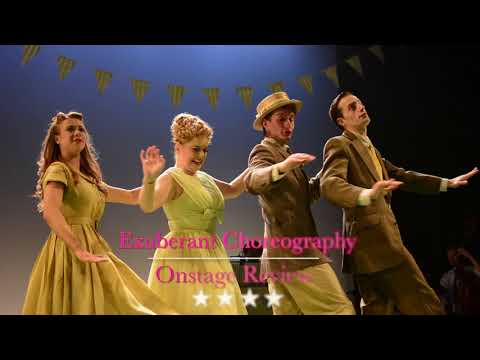
Review: the pitch is innocence, the trick is control
“Salad Days” runs on a deceptively sharp idea: what if youth had a soundtrack so persuasive it could make adults dance on command. The plot is featherlight by design, but the writing is not as naïve as its gingham reputation. Dorothy Reynolds and Julian Slade build a world where politeness is a social uniform, and the songs are the moments the uniform loosens. The show aims for postwar cheer. It mostly gets there. But it also smuggles in a quiet warning about how easily a crowd can be choreographed, especially when the music sounds like comfort.
The lyric voice is breezy, tidy, and angled toward punchlines that land cleanly on the beat. That “clean” is the craft. Reynolds and Slade write with the confidence of people who know exactly how much sense this story can stand before it collapses. The text keeps the show moving, and it treats nonsense as a feature, not a bug. When characters sing about not looking back, or about being seen, the show is not chasing realism. It’s selling a feeling: the fantasy of being young, cute, and unbothered in a world that usually refuses all three.
Musically, Slade is closer to chamber-scale musical comedy than Broadway’s “symphonic” tradition. That scale matters. The score’s lightness is the point, because the magic piano has to feel plausible in the same way a fairy tale feels plausible: the music invites you to agree before your logic shows up.
How it was made
The origin story is unusually practical. “Salad Days” was written as a “summer musical” for the Bristol Old Vic’s resident company, then transferred to London and became a phenomenon. The title comes from Shakespeare’s Antony and Cleopatra, and the show leans into that idea of youth as a season, brief and bright and slightly embarrassing in hindsight.
Later revivals revealed a second origin story, the one that theatre people whisper about: the show’s sound was never meant to be over-engineered. A Guardian feature on the 2009–2010-era revival work describes how the original score functions more like a prompt than a fixed document, and how “playing what’s written down” can drain the spark. That story matches what Tête à Tête’s programme notes underline: the “original instrument” is not a full pit. It’s a small band world, built around pianos and playful timing, which helps explain why “Salad Days” has survived in regional and amateur circuits for decades.
The show’s most famous piece of backstage mythology belongs to its audience. A Guardian profile quotes Cameron Mackintosh crediting the magic piano, and a backstage meeting with Slade, as an early jolt that taught him theatrical “magic” is made by humans. That is the show’s sneakiest legacy: it’s a musical about a magic object that created real producers.
Key tracks & scenes
"We Said We Wouldn’t Look Back" (Jane & Timothy)
- The Scene:
- Two new graduates in a park, drawing up a future like it’s a sensible spreadsheet. The light is open, daytime, optimistic. The world feels wide because they haven’t tested it yet.
- Lyrical Meaning:
- The lyric is a vow with a built-in flaw. It sounds like confidence, but it’s really denial. The show keeps returning to this idea: youth announces it will not be sentimental, then immediately becomes sentimental on the next chorus.
"Find Yourself Something to Do" (Company)
- The Scene:
- Parents and relatives swarm with advice disguised as affection. Play it in bright social lighting, like a family gathering where nobody can admit they’re anxious.
- Lyrical Meaning:
- This is the score’s first real pressure song. The lyric makes “purpose” sound like a moral obligation. It’s also the moment the show tells you adulthood will be a chorus that will not stop harmonizing over your choices.
"I Sit in the Sun" (Jane)
- The Scene:
- Jane steps slightly aside from the bustle and claims a pocket of quiet. The staging wants stillness and warmth, even if the set is nothing more than a suggestion of grass.
- Lyrical Meaning:
- Jane’s lyric language is the show’s soft spine. It’s less joke-driven than the ensemble material. It sells the central fantasy: that contentment can be simple, and simple can be enough.
"Oh, Look at Me, I’m Dancing" (Jane & Timothy, then Company)
- The Scene:
- The magic piano reveals itself. People start dancing as if the air changed composition. Directors often stage this like a polite society losing its grip, smiling while the body betrays the rules.
- Lyrical Meaning:
- This is the show’s signature gag and its thesis: joy is contagious, and also coercive. The lyric’s surprise is the emotional point. The melody makes the audience want to join in, which is the same “spell” the plot is using.
"Hush-Hush" (Uncle Clam, Fosdyke & Timothy)
- The Scene:
- A comic spy detour, best played in a tighter, shadowier pocket of the stage. A change of tone without changing the show’s basic cheer.
- Lyrical Meaning:
- The song is light, but it hints at secrets as a national hobby. The lyric treats concealment as normal, which makes the show’s “innocence” feel less like truth and more like performance.
"We’re Looking for a Piano" (Company)
- The Scene:
- The piano is missing, the town is mobilized, and the search becomes a community dance. It’s staging catnip: entrances, exits, and a sense that the whole world is chasing a tune.
- Lyrical Meaning:
- This is the show’s chase sequence in musical form. The lyric turns a plot device into a civic event. It also underlines how quickly a crowd will organize around a shared obsession, especially one with a melody attached.
"The Time of My Life" (Jane)
- The Scene:
- A reflective moment that lands after the whirl. Keep the light softer and the tempo honest. Jane holds the room without needing to “sell” it.
- Lyrical Meaning:
- The song is nostalgia in real time. Jane is already narrating her present as memory. That’s the show’s emotional trick: it makes you feel the end before the end arrives.
"We Don’t Understand Our Children" (Mothers)
- The Scene:
- The adults regroup, confused by the young people’s choices and the piano’s chaos. Play it as a comic lament that still carries real bafflement.
- Lyrical Meaning:
- This is the generational punchline that keeps landing because it’s always true. The lyric makes misunderstanding sound like a permanent state, not a temporary phase.
Live updates (2025/2026)
Information current as of February 2026. “Salad Days” is not behaving like a commercial mega-revival title. It’s behaving like a repertoire comfort-food musical, which is exactly how it stays alive. Licensing remains active, and the show’s small-band scale makes it attractive for societies and regional companies that want a classic with movement built into the premise.
A clear example: Winchester Musicals and Opera Society scheduled an outdoor run 15–19 July 2025 at Wolvesey Palace Gardens/Playing Fields, with ticketing and local coverage emphasizing the open-air “English summer” fit. That kind of production is the show’s current ecosystem: community-facing, high-charm, and built for audiences who want to leave humming rather than debating.
For professional touring context, Regan De Wynter Williams Productions continues to be a recognizable modern steward of the title, with the company’s site documenting touring iterations and marketing materials that frame the show as a tonic: “smile on your face and a tap in your toes.” If you see aggregator pages promising a 2026 tour route without named venues or producers, treat them as placeholders until an official presenting chain is visible.
Notes & trivia
- The show premiered in Bristol in 1954 and transferred to London’s Vaudeville Theatre, where it ran 2,283 performances, a West End record for its era.
- The title phrase comes from Shakespeare’s Antony and Cleopatra, and it is used as shorthand for youthful inexperience.
- Original authorship is split cleanly: music by Julian Slade; book and lyrics by Dorothy Reynolds with Slade also credited on lyrics.
- A Guardian feature quotes Cameron Mackintosh describing the “magic piano” idea as a childhood spark, plus a backstage meeting with Slade that taught him theatre is “made.”
- A Tête à Tête programme essay describes the original sound-world as small-band and improvisation-friendly, and it argues later “literal” readings of the score can feel stiff.
- The Original London Cast recording is widely documented as an Oriole Records release, with later reissues making the score easy to find on modern platforms.
- The show’s durability is partly mechanical: dancing is not optional, it is the plot device. Directors do not need to invent a dance reason. The piano does it for them.
Reception: critics then vs. now
In 1954, the show landed as relief: bright, tidy, and buoyant in a Britain still shaking off ration-book memory. Later critics tend to frame it as escapism that has aged into fantasy. That’s not an insult. It’s the function. “Salad Days” has always been a controlled daydream, and it asks you to accept the control as part of the fun.
“One of the strongest theatrical survivors of the mid-1950s.”
“The fact that a magical piano could make people sing and dance – that awakened something inside me.”
“Salad Days wears its 64 years lightly.”
Quick facts
- Title: Salad Days
- Year: 1954
- Type: British musical comedy
- Music: Julian Slade
- Book & Lyrics: Dorothy Reynolds (with Slade also credited on lyrics)
- Premiere: Theatre Royal, Bristol (Bristol Old Vic), June 1954
- West End transfer: Vaudeville Theatre, London, 5 August 1954
- Signature device: A magic piano that compels dancing
- Selected notable numbers: “We Said We Wouldn’t Look Back,” “Oh, Look at Me, I’m Dancing,” “We’re Looking for a Piano,” “The Time of My Life”
- Recording context: Original London Cast recording is documented as an Oriole Records release, with track-listing and reissue info available through Masterworks Broadway listings
- 2025–2026 activity examples: Outdoor society production (Winchester, July 2025); ongoing licensing for new stagings
Frequently asked questions
- Who wrote the lyrics?
- Dorothy Reynolds is credited for book and lyrics, with Julian Slade also credited on lyrics in standard production documentation.
- What’s the “magic piano” actually for, dramatically?
- It’s a plot engine that turns private desire into public movement. It makes the town dance, but it also makes the audience admit how easy joy can be to follow.
- Is “Salad Days” a good first classic British musical for beginners?
- Yes, because the story is simple and the score is direct. If you’re new, listen to “We Said We Wouldn’t Look Back” and “Oh, Look at Me, I’m Dancing” first, then the rest clicks.
- How do modern productions keep it from feeling antique?
- By leaning into clarity and pace rather than irony. When the performers play the stakes straight, the whimsy reads as style, not dust.
- Is it family-friendly?
- Generally yes. The tone is comic and light, though any staging choice can shift the emphasis. Check local listings for effects if you are sensitive to loud music or outdoor acoustics.
- Where can theatres license it?
- In many territories, licensing and synopsis information is available via Concord Theatricals’ catalogue page for the title.
Key contributors
| Name | Role | Contribution |
|---|---|---|
| Julian Slade | Composer; co-lyricist (credited) | Wrote the score’s light-footed musical language and is credited on lyrics in standard documentation. |
| Dorothy Reynolds | Book & lyrics | Built the show’s social comedy voice and its deceptively sharp “innocence” tone. |
| Denis Carey | Producer (original West End production) | Produced the 1954 London transfer that turned the piece into a long-run hit. |
| Elizabeth West | Dance arranger (original production) | Shaped dance material for a show where dancing is a literal plot consequence. |
| Bill Bankes-Jones | Director (Tête à Tête revival era) | Directed a notable London revival discussed in major press coverage and programme materials. |
| Concord Theatricals | Licensing catalogue | Provides synopsis and licensing access for new productions in supported territories. |
Sources: The Guardian, Bristol Old Vic archive, Concord Theatricals, Tête à Tête (programme PDF), Masterworks Broadway (recording listing), StageAgent, Musical Theatre Review, TicketSource, Southern Arts Reviews, Regan De Wynter Williams Productions.