Rooms: A Rock Romance Lyrics – All Songs from the Musical
Rooms: A Rock Romance Lyrics: Song List
- Rooms
- Steps 1
- The Music
- Bring The Future Faster
- Steps 2
- Friday Night Dress
- Pacing In A Room
- Scottish Jewish Princess
- I Love You For All Time
- Let's Go To London
- All I Want Is Everything
- Let's Leave London
- NYC Forever!
- The Diabolical
- Little Bit Of Love
- Fear Of Flying
- Happiness
- Clean
- Rooms 2
- Steps 3
- My Choice
- New Song For Scotland
- Finale
- Bows
- Click (Bonus Track)
About the "Rooms: A Rock Romance" Stage Show
At the heart of the musical is a story written by M. Gordon, the music and the lyrics belong to the famous composer P. S. Goodman. The plot tells about the relationship of the ambitious singer Monica and her eccentric rocker Ian. Heroes are quite different, but they share high ambitions to achieve glory. Over time, the constant race for success depletes their relationship. Only giving it up, young people could find personal happiness. But is it so simple? Of course, not. The main feature of this histrionics is that it contains only one act. This is very rare in the modern theater.In the USA, the project started in March 2009. The venue was chosen New World Stages, located on Broadway. Guidance was done by B. Brownson. His team included: producers S. Davis & C. Bauer, sound designer A. Cook, light designers M. Vaughey, music designer R. Godard & costume designer R. Parent. To make the show the most dynamic, creators decided to bring to it qualified musicians. In particular, guitarist S. Brownson and bassist C. Zayas took parts there. Live support met all expectations and won the hearts of as mere spectators and critics. The main roles in the creation went to little-known actors M. Deitchman & H. Marren. They had doubles S. Johnston & R. Morgan.
Production has received a number of nominations from the Outer Critics Circle, including the category Best Off-Broadway Musical. Representatives of the Helen Hayes Awards gave it as much as 5 nominations. Unfortunately, creation did not succeed to win at least one figurine. K. Walsh from Chicago Theater Beat’s publishers’ team has provided the most appropriate response. According to her, it induced vivid memories of own ambitions in the life of every human being. The production has an excellent soundtrack, where special attention deserves the vocal performers of the main roles.
Release date: 2010
"Rooms: A Rock Romance" – The Musical Guide & Song Meanings
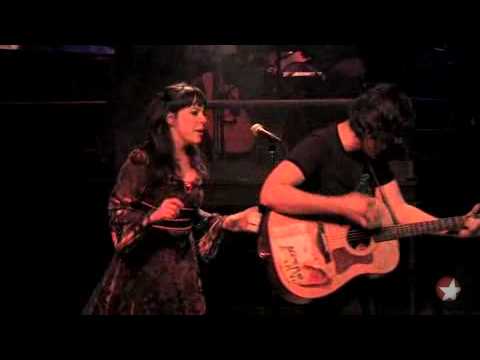
Review: the hook, the thesis, the verdict
Can a love story survive when both lovers treat “home” like a temporary sublet? That’s the central dare of Rooms: A Rock Romance. It tracks Monica and Ian from late-1970s Glasgow punk heat through London ambition and New York aftershocks, mostly in short scenes that behave like tracks on a record. The show succeeds when it lets the lyrics do what dialogue usually does: pick fights, make up, rewrite history, and then pretend it was always the plan. It stumbles when momentum becomes a substitute for consequence, because speed is not the same thing as change.
Paul Scott Goodman writes text that lives in the mouth, not the encyclopedia. Monica’s language is kinetic, self-mythologizing, always one bright metaphor away from a bad decision. Ian’s is guarded and dry, and when it cracks open, it tends to land as confession rather than poetry. The result is a lyrical engine built on contrast: her forward-motion slogans vs. his defensive minimalism. The “rooms” idea is more than staging shorthand. It becomes a structural argument about intimacy: every new space is a new set of rules, and the rules keep shifting faster than the relationship can renegotiate them.
Musically, Goodman treats punk not as a costume but as a pressure system. He can write punchy, chantable rock phrases, then pivot into pop ballad clarity without sounding like the band changed mid-song. That flexibility matters because the characters keep changing genres as they change selves. Monica is the kind of artist who will take any mic offered. Ian is the kind who only trusts the one in his own room. The score makes that clash audible.
How it was made
The show’s timeline is unusually tidy for something this restless. It was originally presented at the 2005 New York Musical Theatre Festival, then developed through early productions (including MetroStage and Geva Theatre Center) before Van Hill Entertainment brought it Off-Broadway to New World Stages in 2009. The Off-Broadway run opened March 16, 2009 after previews began February 27, and it closed May 10, 2009. The creative authorship is equally clear: music and lyrics by Paul Scott Goodman, with a book credited to Goodman and Miriam Gordon.
The aesthetic problem was always the point: a two-character musical that claims dozens of locations, multiple cities, and years of emotional weather. Productions solve it by letting lighting and sound do the traveling. You do not “build” Glasgow, London, and New York. You suggest them, then let the lyric specificity fill in the walls. The Off-Broadway staging leaned on the performers’ ability to switch temperature instantly, because the show cuts like an edited album.
The cast recording became the show’s long-tail business card. A digital release arrived in late 2009, followed by a Time Life CD release in early 2010. If you only know Rooms from the album, you can still follow the relationship’s rise and fracture because the track order is basically the plot in miniature.
Key tracks & scenes
"Bring The Future Faster" (Monica)
- The Scene:
- Glasgow, late 1970s. Monica is boxed into a small room that feels too quiet for her ambitions. The lighting tends to isolate her like a performer already auditioning for a larger life.
- Lyrical Meaning:
- This is Monica’s mission statement and her warning label. The lyric velocity is the character. It is desire as impatience, aspiration as compulsion. When she later hurts people, you can trace the path back to this refrain: she values motion over maintenance.
"Scottish Jewish Princess" (Monica)
- The Scene:
- Glasgow class lines, drawn with jokes. Monica sketches her own background with a mix of pride and defensiveness, often played under bright, pop-forward lighting that makes the satire feel like a shield.
- Lyrical Meaning:
- It’s comic, but it is also taxonomy. She names the stereotypes before anyone else can weaponize them. The lyric is self-definition as preemptive strike, and it sets up the show’s recurring question: who gets to narrate the relationship, and at what cost?
"The Music" (Monica & Ian)
- The Scene:
- A rehearsal-room spark. Their creative chemistry clicks before their romance knows what to do with it. In many productions, the stage picture tightens, as if the room itself just got smaller.
- Lyrical Meaning:
- This is the show’s purest articulation of collaboration as flirtation. They are not singing about love yet. They are singing about the thing that makes love possible for them: the third entity in the room, the work.
"Let’s Go To London" (Monica & Ian)
- The Scene:
- A decision dressed up as destiny. The setting shifts from local club grit to the idea of “somewhere bigger,” usually with harder edges in the sound and quicker lighting transitions.
- Lyrical Meaning:
- Travel becomes metaphor: the relationship moves because they move. The lyric sells ambition as romance, which is thrilling until it becomes a habit. The show will later indict this exact logic.
"NYC Forever!" (Monica)
- The Scene:
- New York as projection screen. Monica hears a city that promises reinvention on demand. The staging often feels more “performance” than “private moment,” because that’s the point.
- Lyrical Meaning:
- This is Monica choosing mythology over biography. The lyric is not really about New York. It is about a version of herself that cannot exist in Glasgow, and barely survives anywhere.
"Little Bit Of Love" (Monica & Ian)
- The Scene:
- Late-night truth-telling, after the high fades. The room feels close, the sound softens, and the emotional focus lands on what they are willing to ask for without apologizing.
- Lyrical Meaning:
- The title undersells it. The lyric is bargaining over basic tenderness, which is always a bad sign. It is also one of the score’s best examples of Goodman’s craft: conversational phrasing that still sings.
"Fear Of Flying" (Ian)
- The Scene:
- An airplane becomes a metal room in the sky, a forced intimacy with strangers. Ian’s anxiety is played straight, often with stark lighting and a tightened sonic palette.
- Lyrical Meaning:
- It is nominally about travel, but it functions as Ian’s thesis on vulnerability. He is afraid of motion because motion removes control. In a relationship with Monica, that fear becomes a daily condition.
"Clean" (Ian)
- The Scene:
- A recovery moment framed without sentimentality. The room is spare. The silence around the vocal line matters as much as the words.
- Lyrical Meaning:
- The lyric is accountability without theatrics. In a show full of big swings, this is restraint as character development. It forces the audience to consider whether love can survive when the drama stops paying rent.
Live updates (2025/2026)
Information current as of January 2026. Rooms: A Rock Romance is not a standard “touring brand” musical. Its life is in licensing and regional programming, which makes sense: it is lean, cast-light, and musically flexible (often done with a small rock band). The show is available for licensing through Theatrical Rights Worldwide, and theaters keep picking it up as a smart slot for cabaret spaces and tight seasons.
One visible example: Millbrook Playhouse announced a 2025 production (with listed June performance dates) as part of its season programming. That kind of booking is the show’s current ecosystem: not a single headline revival, but steady reappearances where two performers can carry a room and a band can punch up the stakes.
If you are watching ticket-trend sites claiming a “2026-2027 tour schedule,” treat that as marketing scaffolding until an official presenter, venue, or producer is named. For Rooms, the reliable indicator is always the producing theater or the licensing pipeline, not a speculative national itinerary.
Notes & trivia
- The Off-Broadway production began previews February 27, 2009, officially opened March 16, and closed May 10, 2009.
- It played 20 previews and 64 regular performances by closing, a short run that still earned Outer Critics Circle attention.
- The story spans Glasgow, London, and New York, yet it is typically performed as a two-character piece with rapid scene changes driven by design rather than scenery.
- The cast recording track list runs 25 tracks and includes “Click [Bonus Track]” at the end.
- Release timing matters for collectors: a digital release preceded the Time Life CD release in early 2010.
- The show’s development path includes NYMF (2005) and early runs at MetroStage and Geva Theatre Center before Off-Broadway.
- A 2013 UK production history (Finborough Theatre) explicitly frames the show as a punk-era romance that “hurtles” from Scotland to London to New York, which is about as accurate a one-sentence summary as you’ll find.
Reception: then vs. now
“There are times when it feels more like a showcase for Goodman's substantial songwriting talents than a fully fledged show.”
The Guardian’s critique nails the central tension: the writing is strong enough to tempt you into treating plot as optional. Rooms works best when the songs do not merely decorate the story, they force it forward.
“the stars of this modest musical at New World Stages need to be very good for the thing to stand a chance of holding your attention. Fortunately, they are.”
This is the fairest warning label for any production: casting is the special effect. Without two performers who can turn on a dime, the show’s album-like structure can feel like emotional channel-surfing.
“Off Broadway has a potential hit in ‘Rooms.’”
Variety’s early optimism reads differently now. The “hit” version of Rooms is not a long sit-down run. It is a show that travels well through licensing, because its best asset is the score and the format is scalable.
Quick facts
- Title: Rooms: A Rock Romance
- Year (recording focus): 2010 (Original Off-Broadway Cast Recording release)
- Type: Two-character rock musical
- Music & Lyrics: Paul Scott Goodman
- Book: Paul Scott Goodman and Miriam Gordon
- Off-Broadway venue: New World Stages (Stage 2), New York City
- Off-Broadway dates: Previews Feb 27, 2009; opening Mar 16, 2009; closing May 10, 2009
- Original Off-Broadway cast (2009): Leslie Kritzer (Monica), Doug Kreeger (Ian)
- Album: Rooms: A Rock Romance (Original Off-Broadway Cast Recording)
- Album release (digital listing): January 12, 2010
- Album release (CD): Time Life CD release dated February 2, 2010
- Label/rights notes: Time Life Records is cited for the cast album release; digital listings carry a 2009 phonographic notice
- Availability: Major digital platforms; track list commonly published as 25 tracks
- Licensing: Theatrical Rights Worldwide
- Selected notable placements (story locations): Glasgow, London, New York City
Frequently asked questions
- Is Rooms: A Rock Romance sung-through?
- Mostly, yes. The structure is track-driven, with short transitions that behave like the connective tissue between songs on an album.
- Who wrote the lyrics?
- Paul Scott Goodman wrote the music and lyrics. The book is credited to Goodman and Miriam Gordon.
- Is there a movie version?
- No widely released feature film adaptation exists. The show’s most accessible “version” is the cast recording.
- Why is it called “Rooms”?
- Because the relationship is told through the spaces it occupies. Rooms become emotional containers: safe, claustrophobic, performative, or abandoned, depending on where Monica and Ian are in the story.
- Where can I license the show for a production?
- Licensing is handled through Theatrical Rights Worldwide. Most current productions you hear about will be regional or community theaters working through that channel.
- What’s the best way to listen if I don’t know the plot?
- Listen in track order. The album sequencing is intentionally narrative, and the city-jumps (Glasgow to London to New York) are baked into the titles and pacing.
Key contributors
| Name | Role | Contribution |
|---|---|---|
| Paul Scott Goodman | Composer, lyricist, co-book writer | Wrote the score and lyrics; shaped the show’s album-like structure and the Monica/Ian dialectic. |
| Miriam Gordon | Co-book writer | Co-authored the book, clarifying the narrative spine beneath the rapid scene shifts. |
| Scott Schwartz | Director (Off-Broadway) | Staged the two-hander for New World Stages with fast transitions and performance-led storytelling. |
| Leslie Kritzer | Original Off-Broadway cast | Originated Monica in the 2009 Off-Broadway production and on the cast recording. |
| Doug Kreeger | Original Off-Broadway cast | Originated Ian in the 2009 Off-Broadway production and on the cast recording. |
| Van Hill Entertainment | Producer (Off-Broadway) | Produced the 2009 Off-Broadway run at New World Stages. |
| Time Life Records | Label | Released the original cast recording on CD in early 2010 and supported its distribution. |
| Theatrical Rights Worldwide | Licensing | Handles licensing for productions, supporting the show’s ongoing regional life. |
Sources: Playbill, The Guardian, Variety, New York Theatre Guide (NYT excerpt), Finborough Theatre, TheaterMania, BroadwayWorld, OTOTOY, Millbrook Playhouse.