Redhead Lyrics – All Songs from the Musical
Redhead Lyrics: Song List
- Overture
- The Simpson Sisters
- The Right Finger of My Left Hand
- Just For Once
- I Feel Merely Marvelous
- The Uncle Sam Rag
- Erbie Fitch's Twitch
- She's Not Enough Woman for Me
- Behave Yourself
- Look Who's in Love
- My Girl Is Just Enough Woman for Me
- Dream Dance (Essie's Vision)
- Two Faces in the Dark
- I'm Back in Circulation
- We Loves Ya, Jimey
- Pick-Pocket Tango
- I'll Try
- Chase and Finale
- The Right Finger of My Left Hand
About the "Redhead" Stage Show
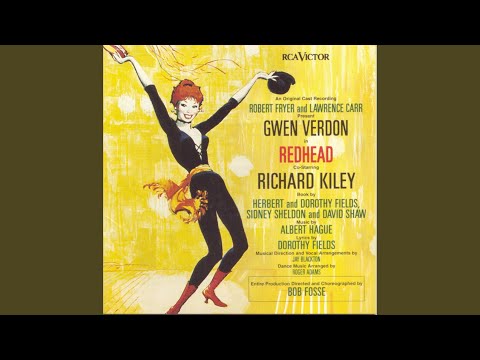
The play was originally written especially for a Canadian actress & singer B. Lillie. The authors were H. & D. Fields. The idea came to them after visiting Madame Tussaud’s Wax Museum. Herbert died soon after they started their work. The work on the book was continued by S. Sheldon & D. Shaw, who changed in for the other actress – G. Verdon. She has already become successful on Broadway by the time she has been invited to play in the performance.A. Hague & D. Fields created music & lyrics for the spectacle. B. Fosse was chosen to be a director for the first time in his career. He was also a choreographer for the production. Broadway premier took place at 46th Street Theatre in 1959. The displays lasted for a year & 452 performances were shown to the public. R. Ter-Arutunian was responsible for production design of the staging & J. Rosenthal made lighting design. The original cast included G. Verdon & R. Kiley.
In 1959, the musical was nominated for seven Tony Awards. It obtained five of them, including one for the Best Musical. When the Broadway displays were closed, there was a tour across the USA. It began at Shubert Theatre in 1960. In 1981, the spectacle was also presented at Costa Mesa Playhouse. In 1998, there was another revival, made by 42nd Street Moon group. The same year, the performance was opened at Goodspeed Opera House. For this version, C. Ashley became a director. The following actors took part in the production: V. Wright, T. Warmen, M. Cooper & C. Morley. The latest concert performances were in Hollywood in 2015.
Release date: 1959
"Redhead" – The Musical Guide & Song Meanings
Review
“Redhead” is a Broadway Best Musical winner that behaves like a cult object. It is famous, then oddly absent. A Victorian murder mystery set in a waxworks museum, built as a star vehicle for Gwen Verdon, staged by Bob Fosse at the point when his style still looked dangerous rather than canonical. The show’s problem is also its hook: mysteries want clockwork, musicals want detours. “Redhead” tries to do both, and the seams show.
Dorothy Fields’ lyrics are the reason the evening stays personable even when the plot gets busy. Her writing makes character sound like conversation that suddenly realizes it has a melody. There is a dry, adult sadness in Essie’s material, especially “The Right Finger of My Left Hand,” which frames romantic defeat as a daily fact, not a tragedy. That lyric tone is crucial because the story keeps putting bodies in peril. Fields counters the threat with wit, and the score survives because it keeps its sense of humor under pressure.
Albert Hague’s music leans into period-flavored pastiche without going museum-stiff. The show toggles between music-hall brass, romantic balladry, and Fosse-friendly rhythmic snap. The standout effect is structural: Verdon’s big numbers often arrive right when the plot wants to sprint. The songs slow time, not because the show is lazy, but because Essie needs room to think. If you listen to the cast album straight through, you can hear that tug-of-war: suspense pushes forward, lyrics pull inward.
Listener tip: if you want the story quickly, start with the opening “Simpson Sisters,” then jump to “The Right Finger of My Left Hand,” “Just for Once,” and “Two Faces in the Dark.” You will catch the show’s three engines: the waxworks world, Essie’s romantic logic, and the creeping shadow of the killer.
How it was made
The origin story has an appropriately gothic time lag. The New York Public Library notes that Dorothy and Herbert Fields had been chewing on the wax-museum mystery idea since visiting Madame Tussaud’s in the 1940s. The project drifted, Herbert Fields died, and Sidney Sheldon and David Shaw stepped in on the book. It was also floated past star names before it finally landed where it belonged: with Verdon, and with Fosse attached as the non-negotiable condition.
That last detail is the whole manufacturing story in one clause. Verdon did not just want a role. She wanted the machine that would frame it. “Redhead” became Fosse’s directing debut on Broadway and a template for how a dancer-star could control narrative emphasis through staging. The plot says “who did it.” The production says “watch her do it.”
Myth-checking, because this show invites it: Verdon’s hair was not the title clue. The “redhead” is the murderer, not Essie, which is exactly the kind of joke a mystery musical thinks it can get away with in 1959, and somehow does.
Key tracks & scenes
"Simpson Sisters" (Ensemble)
- The Scene:
- Act I, early. The waxworks museum introduces itself like a carnival barker with a ledger. Bright footlights, quick patter, visitors drifting past displays as if the dead are part of the entertainment budget.
- Lyrical Meaning:
- The number sells the show’s central irony: murder is bad, but it is also publicity. The lyrics make commerce sound cheerful, which is the first chill in the evening.
"The Right Finger of My Left Hand" (Essie)
- The Scene:
- Act I, early-mid. Essie works alone on the wax tableau of Ruth’s strangling. The light narrows to a work-lamp pool. Tools on a table. The room feels quiet enough to hear glue drying.
- Lyrical Meaning:
- Fields turns a ring finger into a character bio. Essie’s loneliness is practical, almost managerial. The lyric is funny, then suddenly strict: she expects nothing, and that expectation is the wound.
"Just for Once" (Essie)
- The Scene:
- Act I, mid. Tom arrives furious about the museum exploiting Ruth’s death. Essie clocks him and falls hard. The staging plays like a meet-cute inside a crime scene, with the tableau hovering nearby.
- Lyrical Meaning:
- The lyric is Essie asking for a single exception to her own life pattern. It is optimism as a dare. That makes later danger feel personal, not generic.
"Uncle Sam Rag" (Music Hall Performers)
- The Scene:
- Act I, later. A music-hall turn explodes the palette: red and gold light, audience claps, performers play patriotism like a hustle.
- Lyrical Meaning:
- This is the show admitting it likes showbiz more than detection. The lyric winks at nationalism as entertainment, and it keeps the evening buoyant before the plot tightens again.
"’Erbie Fitch’s Twitch" (Essie, Company)
- The Scene:
- Act I into Act II territory, depending on production. Essie is pushed into performance, adopting an exaggerated Cockney persona. Lighting becomes brash, almost vulgar. The choreography goes all angles and snap.
- Lyrical Meaning:
- Essie tries on a self that the world will notice. The lyric is comic camouflage, and it also teaches you how this show handles identity: disguise is both plot device and survival tactic.
"Look Who’s in Love" (Essie, Tom)
- The Scene:
- Act II, early. After layers of suspicion and flirtation, the romance admits itself. Warmer light, less museum, more street. The danger feels temporarily parked outside the door.
- Lyrical Meaning:
- Fields writes mutual attraction as embarrassment rather than fireworks. That restraint keeps the relationship believable inside a story that is otherwise addicted to theatrical tricks.
"Two Faces in the Dark" (Featured Singer)
- The Scene:
- Act II, mid. A shadowy interlude where the killer myth grows. The stage goes low-light and high-contrast. Figures appear as silhouettes more than people.
- Lyrical Meaning:
- The lyric reframes the mystery as psychological. The real fear is not the weapon. It is the fact that the face you trust can change when the lights do.
"I’m Back in Circulation" (Tom)
- The Scene:
- Act II, late. Tom re-enters the social machine after emotional upheaval. The scene often plays in public space, with onlookers and bustle returning as if the city never pauses for your trauma.
- Lyrical Meaning:
- It is a jaunty denial song. The lyric insists everything is fine, which signals, loudly, that everything is not.
Live updates
Information current as of February 1, 2026.
There is no announced Broadway revival, national tour, or major commercial run on the books right now. The show’s most reliable “live” presence is licensing: “Redhead” remains available through Music Theatre International, which is usually the clearest signal that the title is circulating in regional and amateur pipelines even when Broadway is not calling.
The modern narrative around “Redhead” is scarcity. A 2025 Masterworks Broadway essay points out that it remains the Best Musical Tony winner with the longest stretch without a Broadway revival. That piece also tracks how rarely it shows up at all, with notable later visibility including Goodspeed Opera House in 1998 and a Theatre West benefit concert in 2015. If you want “Redhead” in 2026, odds are you will find it as a curated oddity, not a mainstream event.
On the listening side, the original cast recording is easy to stream, and that matters because this score is full of character math you can hear even without the staging. If you are curious about what Fosse contributed, listen for the dance-music tracks and the rhythmic bite in the ensemble writing, then picture bodies doing dangerous geometry.
Notes & trivia
- “Redhead” opened on Broadway on February 5, 1959 at the 46th Street Theatre (now the Richard Rodgers Theatre) and ran for 452 performances.
- The show won the 1959 Tony Award for Best Musical, with credits naming Herbert and Dorothy Fields, Sidney Sheldon, and David Shaw, plus Albert Hague (music) and Dorothy Fields (lyrics).
- The title is a misdirection: the “redhead” is the killer, not Essie.
- The NYPL traces the wax-museum concept back to the Fields siblings’ visit to Madame Tussaud’s in the 1940s.
- The MTI licensing page spotlights the show as Bob Fosse’s directing debut on Broadway.
- The Masterworks Broadway album page lists the first LP release date as February 13, 1959.
- AllMusic lists the cast album’s recording date as February 8, 1959 at RCA Victor’s Studio A in New York City.
Reception
Critically, “Redhead” has lived two lives: celebrated in its moment, then filed away as an artifact people reference more than they produce. The tension is baked in. The show is a murder mystery, but its energy belongs to star performance and choreography. When those elements dominate, “Redhead” feels like a party in a crime scene. When the plot asserts itself, the party gets interrupted.
“It’s never revived, none of the songs became hits, and there wasn’t a film adaptation.”
“Now we have four really tip-top musicals in town: WEST SIDE STORY, THE MUSIC MAN, MY FAIR LADY and REDHEAD.”
“While the book was at times cumbersome and ill-conceived, it was Verdon… who audiences came to see.”
Quick facts
- Title: Redhead
- Year: 1959
- Type: Book musical; murder mystery; period comedy
- Book: Herbert Fields, Dorothy Fields, Sidney Sheldon, David Shaw
- Music: Albert Hague
- Lyrics: Dorothy Fields
- Original Broadway theatre: 46th Street Theatre (now the Richard Rodgers Theatre)
- Opening: February 5, 1959
- Original run: 452 performances
- Director and choreographer: Bob Fosse
- Music director: Jay Blackton
- Orchestrations: Philip J. Lang, Robert Russell Bennett
- Selected notable placements: “The Right Finger of My Left Hand” (Essie’s early character statement); “Just for Once” (romance ignition); “Two Faces in the Dark” (mystery deepens)
- Cast album: Original Broadway Cast Recording (first LP release listed as February 13, 1959)
- Album availability: Streaming via Masterworks Broadway and major platforms
Frequently asked questions
- Who wrote the lyrics for “Redhead”?
- Dorothy Fields wrote the lyrics, with Albert Hague composing the music.
- Is “Redhead” about Gwen Verdon’s hair?
- No. The “redhead” is the murderer in the story, a deliberate misdirection.
- What is the fastest way to understand the plot from the album?
- Use the museum setup (“Simpson Sisters”), Essie’s viewpoint (“The Right Finger of My Left Hand,” “Just for Once”), then the darker pivot (“Two Faces in the Dark”).
- Is “Redhead” currently running anywhere?
- There is no major commercial run publicly announced as of early 2026. The show is primarily encountered through licensing and occasional special productions.
- Is there a film version?
- No. Despite its mystery premise, it was never adapted as a feature film.
Key contributors
| Name | Role | Contribution |
|---|---|---|
| Dorothy Fields | Lyricist; co-book writer | Wrote lyrics with conversational bite and gave Essie’s longing a comic spine. |
| Albert Hague | Composer | Composed a period-leaning score built for music-hall turns and character songs. |
| Herbert Fields | Co-book writer | Developed the wax-museum mystery concept with Dorothy Fields. |
| Sidney Sheldon | Co-book writer | Helped shape the murder-mystery mechanics and comic scaffolding. |
| David Shaw | Co-book writer | Co-wrote the libretto; supported the show’s plot machinery and pacing. |
| Bob Fosse | Director; choreographer | Made his Broadway directing debut; staged the show as a dancer-star showcase. |
| Jay Blackton | Musical director | Led the original production’s musical execution and cast-recording sound. |
| Philip J. Lang | Orchestrator | Co-orchestrated the score for Broadway’s full pit and dance demands. |
| Robert Russell Bennett | Orchestrator | Co-orchestrated; shaped the show’s punchy musical-theatre orchestral profile. |
| Jean Rosenthal | Lighting designer | Lit the original production, balancing music-hall showiness with noir shadow. |
| Rouben Ter-Arutunian | Designer | Designed the original production’s visual world, including period flavor and spectacle. |
Sources: The Tony Awards (American Theatre Wing); New York Public Library; Masterworks Broadway; Music Theatre International; Wikipedia; Playbill; AllMusic; Apple Music; YouTube (Masterworks Broadway upload).