
Raisin Lyrics: Song List
- Act 1
- Prologue
- Man Say
- Whose Little Angry Men
- Runnin' to Meet The Man
-
A Whole Lotta Sunlight

- Booze
- Alaiyo
- African Dance
-
Sweet Time
- You Done Right
- Act 2
- He Come Down This Morning
- It's A Deal
- Sweet Time (Reprise)
- Sidewalk Tree
- Not Anymore
- Alaiyo (Reprise)
- It's A Deal (Reprise)
- Measure The Valleys
- Finale
About the "Raisin" Stage Show
This musical became an adaptation of a play for theatres, created by a famous American writer L. Hansberry. It was made by her former husband R. Nemiroff and Ch. Zaltzberg. Music and lyrics for the show were written by J. Woldin & R. Brittan.
The first tryout of this spectacle happened in 1973 in May. It was pre-Broadway display, which took place at Arena Stage. An actual premiere on Broadway was in October the same year. The displays started at 46th Street Theatre. After 1.5 year of performances, the show moved to Lunt-Fontanne Theatre. Displays there lasted for another year and gave 847 of them. For this version, D. McKayle became both a director and a choreographer. The leading roles were played by V. Capers, J. Morton, E. Jackson, D. Allen, R. Carter, H. Martin and T. Ross. The actress, acting as a mother of main hero, took part in national tour of this production.
In 2003, the staging was presented in California at Long Beach Performing Center of Arts. In 2006, there was another revival, which happened at Court Theatre. During that time, the crew included E. Jackson, who received a leading role. During the previous display, she acted as Ruth.
The original Broadway production was nominated for 9 Tony Awards in 1974. It managed to receive two of them – the first for Best Musical and the second for Best Performance by Leading Actress. The spectacle also obtained Theatre World Award the same year. In 1975, this musical became a winner of Grammy in category of the Best Score From the Original Cast Show Album.
Release date of the musical: 1973
"Raisin" – The Musical Guide & Song Meanings
Review
How did “Raisin” win Best Musical and still become a faint memory? The answer sits in the writing itself. This is a Tony-winning musical that behaves like a play with musical pressure valves. The lyrics do not chase constant punchlines or showy internal rhyme. They chase the argument underneath a family’s day, the one nobody can afford to lose: what does a “dream” cost when rent is already overdue?
Robert Brittan’s lyric voice is notably plainspoken. That is not a diss. It is a strategy. When Walter Lee sings about manhood, money, and being seen, the text lands like kitchen-table testimony, not cabaret wit. Judd Woldin’s score frames that realism with early-1970s R&B and gospel coloration, then lets it fray into street ballet, barroom blur, and church release. The motif is not a melody you hum for weeks. It is a social environment you recognize: the neighborhood as chorus, the family as soloists, and the future as a recurring offstage character with terrible timing.
The show’s best lyrical moments are small, specific, and unglamorous. A child’s request for fifty cents becomes a moral referendum. A farewell to a sidewalk tree becomes a relocation elegy. A mother’s plea to “measure him right” becomes the show’s ethical thesis statement. If you come expecting a belt-per-song architecture, you will miss what “Raisin” is doing. Listen for the seams where dialogue turns into music because speech can no longer carry the weight.
One caution for modern ears: the score’s period fingerprint is strong. Some recent criticism has argued that the book drives harder than the songs, and that the music can feel dated next to the material’s still-live themes. That complaint is real, and also a little unfair. “Raisin” is intentionally of its moment. It is trying to translate the domestic realism of Lorraine Hansberry into musical language without sanding down the grit.
How it was made
“Raisin” began as a workshop-born idea and grew into a producer-driven commission. The project is closely tied to Lehman Engel’s BMI Musical Theatre Workshop, where Woldin and Brittan developed the piece and found champions before it ever reached the people who controlled the rights. Lorraine Hansberry never heard the early work, and the team ultimately reached Robert Nemiroff, Hansberry’s literary executor, who chose to produce and co-write the book with Charlotte Zaltzberg.
The title is the show’s first lyrical footnote. “Raisin” does not exist because the characters love dried fruit. It exists because the parent text, “A Raisin in the Sun,” borrows its name from Langston Hughes’s “Harlem,” and the musical wanted that echo. It is branding, yes, but it is also thematic shorthand: deferred dreams, dehydrated by time, still taking up space.
From there, the show’s creative engine was Donald McKayle. His direction and choreography push the storytelling out of the apartment and into the neighborhood. The opening “Prologue” is not decoration. It is dramaturgy: a community scored as motion, with the Youngers placed inside a larger social machine that keeps moving whether they do or not.
Key tracks & scenes
"Prologue" (Company)
- The Scene:
- South Side tenement exteriors. Fire escapes, stoops, blank windows. A street ballet blooms: workers, party dancers, a drunk, then the violence of a pusher finding a victim. Lighting snaps between everyday haze and hard spotlight as the neighborhood becomes the frame for everything that follows.
- Lyrical Meaning:
- This is the show’s thesis without a speech. The “lyrics” are mostly bodies. Community is not background. It is the percussion section of the plot.
"Man Say" (Walter Lee Younger)
- The Scene:
- Early morning in the cramped apartment. Breakfast, routine, friction. Walter’s frustration spikes in the narrow space where big dreams keep hitting furniture. The light feels practical: morning realism with no flattering angles.
- Lyrical Meaning:
- Walter’s language makes masculinity transactional. He is not only asking for support. He is arguing that support is the only currency he can still access. The lyric’s power comes from how ordinary the phrasing is.
"Whose Little Angry Man" (Ruth Younger)
- The Scene:
- Travis needs fifty cents for school. Ruth refuses, then softens. The apartment’s tightness turns intimate, and the lighting narrows into a small pool that makes mother and child look briefly protected.
- Lyrical Meaning:
- The lyric makes tenderness a survival tactic. Ruth cannot fix the system. She can fix one moment of shame for her son.
"Runnin' To Meet The Man" (Walter Lee Younger & Company)
- The Scene:
- On the way to work, then in the city as Walter drives his employer. He finally bolts from the car, and the staging turns kinetic, like a chase scene where the target is a mirage. Streetlights slice the stage into lanes.
- Lyrical Meaning:
- “The Man” is both boss and myth. The lyric weaponizes hustle language to show how hustle becomes a trap.
"Alaiyo" (Joseph Asagai & Beneatha Younger)
- The Scene:
- Beneatha and Asagai flirt, then talk sincerely. The room feels warmer. Light takes on a soft, aspirational glow as Asagai paints images of home and heritage.
- Lyrical Meaning:
- These lyrics give Beneatha an exit ramp from the apartment’s arguments: identity, imagination, and choice. The song’s meaning is less “romance” than “possibility with a passport.”
"Sweet Time" (Ruth Younger & Walter Lee Younger)
- The Scene:
- Walter heads for the streets after clashing with Ruth. She blocks him, physically and emotionally. The light feels late-day tired: amber, worn, as if love itself has been working overtime.
- Lyrical Meaning:
- The lyric refuses nostalgia as a cute memory. It is a demand: remember when we were aligned. The subtext is brutal: if we cannot find that, we cannot survive the next decision.
"Sidewalk Tree" (Travis Younger)
- The Scene:
- Travis alone, a last look at the neighborhood. The staging isolates him with a single, simple object outside the apartment. Lighting becomes moonlit and modest, like a child’s private ritual the world is not invited to mock.
- Lyrical Meaning:
- This is relocation written as grief. The lyric gives a kid adult knowledge in kid language: “good things” and “bad” can share the same home. The show’s politics arrive quietly and hit harder for it.
"Not Anymore" (Walter Lee Younger, Ruth Younger & Beneatha Younger)
- The Scene:
- Mr. Lindner offers to buy the Youngers out. Later, the family reenacts the visit as a fake “welcoming committee,” weaponizing satire to keep from breaking. Bright, almost sitcom lighting underlines the performance-within-the-play, then drops when reality rushes back in.
- Lyrical Meaning:
- The lyric finds humor in a dark place: the updated language of segregation. The threats have become negotiations. The goal has not changed.
"Measure the Valleys" (Mama Lena Younger)
- The Scene:
- After betrayal and loss, Beneatha condemns Walter. Mama intervenes. The apartment feels suddenly larger because judgment has consequences. Lighting tightens to Mama’s face, then opens to the family as if she is forcing them to look at the whole map of his life.
- Lyrical Meaning:
- This is the show’s moral center. The lyric argues that a person is not a single failure. It is a landscape. The line about “hills and valleys” is the rare phrase in “Raisin” that feels built to be remembered.
Live updates
Information current as of February 1, 2026. “Raisin” is not in a steady commercial revival cycle, but it is alive in regional and repertory spaces. A notable recent signal: The Black Rep in St. Louis mounted “Raisin” at Washington University’s Edison Theatre in September 2025, running through September 21. The production was directed by Ron Himes, with choreography by Kirven Douthit-Boyd, and it drew fresh local critical attention to the score’s blend of jazz, gospel, blues, and soul alongside the story’s continuing relevance.
What this means for audiences right now: you are more likely to encounter “Raisin” as an event production than a long tour. If you want to see it, track licensing and calendars of companies with strong Black repertory commitments. If you want to do it, licensing is actively available, and the piece remains a practical choice for organizations that can cast and stage it with care rather than spectacle for spectacle’s sake.
Notes & trivia
- “Raisin” opened on Broadway on October 18, 1973, first at the 46th Street Theatre, later transferring to the Lunt-Fontanne.
- The musical won the Tony Award for Best Musical, and Virginia Capers won for Leading Actress in a Musical.
- The original cast recording’s first LP release date is listed as November 23, 1973.
- Composer Judd Woldin’s official GRAMMY profile credits “Raisin” with a win for Best Score From the Original Cast Show Album.
- Peter Filichia notes the show’s roots in Lehman Engel’s BMI Musical Theatre Workshop and describes how the writers reached Robert Nemiroff through workshop advocacy.
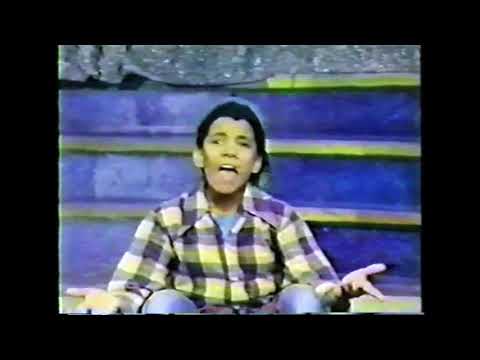
- Filichia also points out that “Sidewalk Tree” became a signature moment for young Ralph Carter, who soon moved to TV’s “Good Times.”
- The title traces back, indirectly, to Langston Hughes’s “Harlem” (the “dream deferred” poem) via Hansberry’s play.
Reception
“Raisin” has always been reviewed like two shows welded together: a tough-minded family drama, and a musical score that some critics wish hit harder. That split remains visible decades later, especially when productions lean into the book and the ensemble storytelling.
“A warm and loving work.”
“The strength of Raisin lies in the keen intelligence and restless invention of a musical underscoring... plucking the walls away, spilling the action onto the streets...”
“Carol Dennis' brilliant interpretation of Lena Younger... is on par with Virginia Capers' magnificent 1973 Tony-winning portrayal.”
Quick facts
- Title: Raisin
- Broadway year: 1973 (opened October 18, 1973)
- Type: Book musical adapted from a play
- Book: Robert Nemiroff, Charlotte Zaltzberg
- Music: Judd Woldin
- Lyrics: Robert Brittan
- Director / choreographer (original): Donald McKayle
- Setting: 1950s Chicago
- Original NYC run (venues): 46th Street Theatre; Lunt-Fontanne Theatre
- Cast recording: Original Broadway Cast Recording; first LP release listed as November 23, 1973
- Awards (highlights): Tony Award for Best Musical; GRAMMY win credited for Best Score From the Original Cast Show Album
- Licensing: Available via Concord Theatricals
- Selected notable placements: “Prologue” as street ballet; “Sidewalk Tree” as Travis’s farewell; “Measure the Valleys” as Mama’s moral argument
Frequently asked questions
- Who wrote the lyrics for “Raisin”?
- The lyrics are by Robert Brittan, working with composer Judd Woldin and book writers Robert Nemiroff and Charlotte Zaltzberg.
- Is “Raisin” the same story as “A Raisin in the Sun”?
- It is a close adaptation, structured to preserve Hansberry’s family drama while adding ensemble storytelling, dance language, and songs that externalize key arguments and emotional pivots.
- What song should I start with if I only know the title?
- Start with “Prologue,” then jump to “Man Say” and “Measure the Valleys.” That sequence shows the show’s range: community frame, Walter’s pressure, and Mama’s moral axis.
- Did “Raisin” win a GRAMMY?
- Yes. Judd Woldin’s official GRAMMY profile lists a win for “Raisin” in the category Best Score From The Original Cast Show Album (17th Annual GRAMMY Awards).
- Is “Raisin” touring in 2026?
- No major ongoing tour is consistently advertised as of February 1, 2026. The most visible recent activity has been regional and repertory productions, including a September 2025 run in St. Louis.
- Where can theatres get rights to produce it?
- Licensing information is available through Concord Theatricals.
Key contributors
| Name | Role | Contribution |
|---|---|---|
| Lorraine Hansberry | Source playwright | Wrote “A Raisin in the Sun,” the narrative and character foundation. |
| Robert Nemiroff | Book writer, producer | Co-wrote the musical’s book; produced the Broadway production; Hansberry’s literary executor. |
| Charlotte Zaltzberg | Book writer | Co-wrote the book, shaping the adaptation’s scene-to-song transitions. |
| Judd Woldin | Composer | Wrote the score; credited with a GRAMMY win tied to the original cast album. |
| Robert Brittan | Lyricist | Wrote lyrics built around direct speech, domestic detail, and moral argument. |
| Donald McKayle | Director, choreographer | Defined the show’s physical storytelling, especially the opening street ballet frame. |
| Virginia Capers | Original cast | Created Mama Lena on Broadway; won the Tony for Leading Actress in a Musical. |
| Joe Morton | Original cast | Originated Walter Lee Younger, anchoring the show’s central conflict. |
| Ernestine Jackson | Original cast | Originated Ruth Younger; a key voice for the show’s emotional realism. |
| Debbie Allen | Original cast | Originated Beneatha; links the show’s identity debate to its movement language. |
| Ralph Carter | Original cast | Originated Travis; delivered “Sidewalk Tree,” one of the show’s signature moments. |
| Ron Himes | Director (2025 St. Louis) | Directed The Black Rep’s 2025 staging at Washington University’s Edison Theatre. |
| Kirven Douthit-Boyd | Choreographer (2025 St. Louis) | Choreographed the 2025 production with a blend of jazz, contemporary, and African dance influences. |
Sources: IBDB; Concord Theatricals; Masterworks Broadway; GRAMMY.com; Variety; The Black Rep; Washington University Source; BroadwayWorld; Pop Life STL; Peter Filichia (Masterworks Broadway blog); Wikipedia (for historical quotes/song list cross-check).