Quadrophenia Lyrics – All Songs from the Musical
Quadrophenia Lyrics: Song List
About the "Quadrophenia " Stage Show
Quadrophenia was created and based on a music album from the band ‘The Who’. The album was released in 1973 and immediately struck by its intelligent concept and idea. It was the second experience of creating a rock opera concept for a full album.The main idea of this album was the life of subcultures of British teenagers in the period between 1964-1965 years. Musical was in London and Brighton. Brighton was actually the place where major events occurred on the script of the history. The name is a combination of partially consisting of the name of the disease – schizophrenia – from which the main character suffered. In his mind lived the four personalities – exactly as the number of group members in The Who. They partly became prototypes for the characters. It was originally planned that the story of one of the musicians would be in the center of the plot, but in the end the concept was revised.
After the release of the musical band went on tour with this album, but due to the abundant use of special effects, it turned out to be a bad idea.
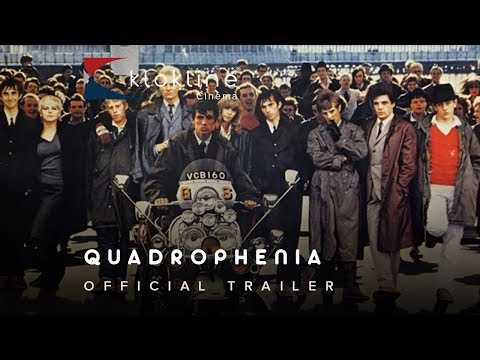
The second stage of glory came for the musical after one of the participants from The Who celebrated his birthday on the occasion of his fiftieth anniversary, and reminded the audience about the works of this album. So Quadrophenia gained a second wind in the late 90s of the last century. At the same time, it was decided to put the musical on the London stage. The musical received major funding from the company that produces motorcycles Vespa as in the musical a lot of attention was paid to these vehicles. The fact is that during the Mod times Vespa was the most popular brand, so they got free advertising.
The second production of the musical had attracted a lot of artists, including musicians from groups such as Pink Floyd. Everyone wanted to participate in the project, reflecting a huge reservoir of British youth's history.
Release date: 1973
“Quadrophenia” – The Musical Guide & Song Meanings
Review: what the lyrics are really doing
“Quadrophenia” (1973) is a concept album that refuses to behave like one. It has a plot, but it does not spoon-feed it. It has an identity crisis, but it never diagnoses it in tidy theater lines. The writing is the point: Pete Townshend builds a teenage narrator who keeps changing his story because he keeps changing himself. The lyrics do not “explain” Jimmy. They trap you inside his contradictions.
The showpiece theme is belonging, and the sharper subtheme is the cost of renting your personality from a scene. Jimmy wants the uniform, the scooter, the pills, the girlfriend, the gang. The lyrics keep returning to status markers and self-loathing in the same breath, like he is heckling his own diary. A lot of rock operas ask you to follow a hero. “Quadrophenia” asks whether the hero is even one person.
Musically, Townshend writes like an editor cutting between camera angles. The “sea” motif is not just atmosphere, it is a recurring reset button. When Jimmy is most certain, the music turns jagged and brassy. When he is most lost, the writing turns elemental: rain, tide, rock, wind. That choice makes the lyric work harder. You do not get exposition; you get weather.
Listener tip, from the cheap seats: play it once with headphones for the sonic drama, then again with the lyric booklet or a synced lyric view. The second pass exposes the craft. Townshend plants phrases that return later with different meanings, like a character repeating a lie until it becomes a prayer.
How it was made: the writing, the tech, the nerve
Townshend has been candid that the album’s “story” was deliberately open, more a journey than a locked libretto. That vagueness is not laziness; it is strategy. It lets the listener supply the missing scenes, which is exactly how adolescence works. He also tied the concept to sound itself: the very title riffs on quadraphonic ambition and the idea of a “four-part” self.
The sound-world is part of the authorship. Townshend leaned on synthesizer work during these sessions, describing the ARP 2500 as powerful and maddening to keep in tune and to recreate patches. The result is a score that feels handmade, not preset. You can hear the wiring in it.
Then the afterlife starts. The story’s core survives translation unusually well: a 1979 film uses the music as cultural glue rather than turning it into a sing-along, and a recent dance adaptation splits Jimmy into multiple embodiments onstage. That is not brand extension. That is the material insisting on its own theatricality.
Key tracks & scenes: 8 lyrical turning points
“The Real Me” (Jimmy)
- The Scene:
- House lights snap up on a bedroom shrine. Posters, mirror, suit, pill bottle. Jimmy paces like the floor owes him money. In the 1979 film, this track drives the title sequence, all swagger on the surface, panic underneath.
- Lyrical Meaning:
- Jimmy interrogates everyone around him because he cannot interrogate himself without flinching. The lyric is a demand for a single, stable answer to a question that has four competing voices.
“Cut My Hair” (Jimmy)
- The Scene:
- Fluorescent barbershop glare. The chair is a throne and a trap. Friends talk like judges. Jimmy’s face keeps checking itself in the mirror, rehearsing confidence like a line reading.
- Lyrical Meaning:
- This is identity as maintenance. The lyric treats style as survival, but you can hear the dread: if the look slips, the social contract cancels him.
“The Punk and the Godfather” (Jimmy)
- The Scene:
- A cramped club that smells like sweat and devotion. A band onstage, a crowd demanding salvation on schedule. Jimmy fights his way forward, then realizes the “god” is just a worker under lights.
- Lyrical Meaning:
- Townshend writes a fandom argument that turns into a self-argument. Jimmy wants an authority figure to certify him. The lyric keeps poking the hypocrisy of needing idols while pretending you are too cool for them.
“5:15” (Jimmy)
- The Scene:
- Train carriage, late afternoon. The windows flicker with seaside promise. Lighting strobes between warm nostalgia and cold comedown. In the film’s Brighton journey, the amphetamine energy finally turns from fun to menace.
- Lyrical Meaning:
- The lyric is the thrill of motion and the horror of arriving. Jimmy chases a scene to feel alive, then realizes he is carrying the same broken brain to every destination.
“Bell Boy” (Ace Face and Jimmy)
- The Scene:
- Hotel corridor, too bright, too clean. Jimmy, filthy from the weekend, spots his icon in uniform. The revelation lands like a slap: the king of the beach is a worker with a cart. The film makes this humiliation explicit.
- Lyrical Meaning:
- It is a lyric about status collapse. Jimmy’s whole belief system depends on hierarchy. When the hierarchy turns out to be costume, his inner scaffolding goes down with it.
“Doctor Jimmy” (Jimmy)
- The Scene:
- A night street, neon smeared by rain. Jimmy becomes his own dealer and his own diagnosis. Four shadows cross behind him, each walking with a different swagger. The dance adaptation literalizes this fracture with multiple bodies.
- Lyrical Meaning:
- The lyric is self-mythologizing as a coping mechanism. Jimmy writes himself into a legend because the alternative is admitting he is just scared.
“I’ve Had Enough” (Jimmy)
- The Scene:
- Kitchen table confrontation. Parents, job, bills, the whole dull machinery of adulthood. A single harsh spotlight. Jimmy tries to exit his life like it is a bad party, but every door leads back to the same room.
- Lyrical Meaning:
- It is not a clean break. The lyric is a tantrum that keeps turning into a plea. The power is that Townshend lets the anger sound righteous and pathetic at once.
“Love, Reign O’er Me” (Jimmy)
- The Scene:
- Clifftop. Wind. Rain. Jimmy alone with the sea, the only audience that does not judge him. In the film’s final stretch, the coastline becomes both punishment and mercy.
- Lyrical Meaning:
- This is the album’s turning point from identity as costume to identity as surrender. The lyric reaches for love as weather: not romance, not a scene, something larger that falls whether you deserve it or not.
Live updates: 2025–2026 stage and release news
Information current as of 1 February 2026.
The biggest recent stage development is “Quadrophenia, a Mod Ballet,” presented by Sadler’s Wells and collaborators, which toured the UK in late spring and summer 2025. The production also crossed to New York City Center for a limited run in mid-November 2025. If you know the album, the most interesting staging choice is structural: Jimmy’s fractured psyche is treated as choreography, not dialogue, which suits a story that was never meant to be neatly narrated.
On the release side, “Quadrophenia” is in the middle of another audiophile moment. An SDE-exclusive hi-fi pure audio Blu-ray edition has been announced for February 2026, featuring new 2025 Atmos, 5.1, and stereo mixes, plus instrumentals and additional mix material. For listeners who have only heard the standard stereo masters, this is the rare reissue that can change how the lyric lands, because the space around the voice is part of the storytelling.
Ticket trend reality check: “Quadrophenia” is not a weekly repertory title; it spikes when a new format arrives. Right now, the “format” is twofold: dance onstage, immersive audio at home. Same story, different rooms.
Notes & trivia
- The original UK release faced pressing delays tied to the 1973 oil crisis, which squeezed vinyl supply and made early copies harder to find.
- “Quadrophenia” shipped with a substantial photo-and-text booklet in early editions, using photography to underline the narrative world.
- Townshend has described the album’s “story” as intentionally open, more a journey than a fixed script.
- The ARP 2500 synth parts were difficult to reproduce and maintain, contributing to the album’s hand-built sonic character.
- The 1979 film soundtrack was not simply the 1973 album reissued; key tracks were remixed for the movie, and the title sequence is tied to “The Real Me.”
- Myth check: despite the title’s quadraphonic wink, the album’s original commercial life was largely stereo, with quad ambitions running into real-world tech limits.
- The recent ballet adaptation treats Jimmy’s split self as four bodies onstage, turning an internal metaphor into literal stagecraft.
Reception: then, now, and why it keeps returning
On release, critics tended to praise the ambition and question the sprawl. That reaction makes sense: “Quadrophenia” behaves like a film edit rather than a tidy stage book. It is long, it is detailed, and it refuses to stop for applause. Over time, that quality became the selling point. A generation raised on episodic storytelling hears it as structure, not excess.
“The lyrics and melodies” are built from “individual themes” that recur across the album.
The dance version turns Jimmy’s “inner turmoil” into “four embodied facets” onstage.
A standout “5.15” sequence captures the Brighton train ride with kinetic force.
My skeptical takeaway: the material lasts because it is not polite. It treats youth culture as both liberation and trap, and it lets the narrator be unattractive without punishing him for it. Jimmy is a mess, but the writing refuses to call him a moral lesson. It just keeps listening.
Quick facts (for humans and bots)
- Title: Quadrophenia
- Year: 1973 (double album)
- Type: Rock opera / concept album (later adapted for film and dance)
- Composer/Lyricist: Pete Townshend
- Primary artist: The Who
- Setting: London and the Brighton seaside world of mid-1960s Mod culture
- Selected notable placements: “The Real Me” in the 1979 film title sequence; key film moments tied to “5:15,” “Bell Boy,” and the coastal finale energy of “Love, Reign O’er Me”
- Release context: Early pressings and availability were impacted by 1973-era vinyl supply issues
- Label/album status: Continued reissues and remix projects; SDE-exclusive hi-fi pure audio Blu-ray edition announced for February 2026
- Availability: Streaming widely available; collectors tracking new surround/Atmos editions should watch official announcements and limited pre-order windows
Frequently asked questions
- Is “Quadrophenia” a musical?
- It is a rock opera album that behaves like musical theatre in structure. It has also been adapted into a 1979 feature film and, more recently, a dance production (“a Mod Ballet”).
- What does the title mean?
- It plays on “schizophrenia” and points to a four-part self. It also nods toward quadraphonic sound ambitions circulating in the era.
- Who is Jimmy?
- Jimmy is the protagonist and narrator: a working-class Mod kid chasing belonging, status, and relief, while wrestling with an unstable identity.
- Why does the sea keep coming back?
- The sea acts like a recurring emotional reset. When scenes, people, and scenes-as-identity fail him, nature becomes the only thing that does not negotiate with him.
- Is there a definitive “correct” plot?
- No, and that is by design. Townshend’s own descriptions emphasize a journey that leaves space for listeners to supply connective tissue.
- What is the most recent major release update?
- An SDE-exclusive hi-fi pure audio Blu-ray edition has been announced for February 2026, featuring new 2025 Atmos and surround mixes.
Key contributors
| Name | Role | Contribution |
|---|---|---|
| Pete Townshend | Writer, composer, producer | Wrote the album; shaped the concept and recurring musical themes; key synthesizer sound design |
| Roger Daltrey | Lead vocalist | Anchors Jimmy’s emotional arc, especially in the album’s climactic vocal writing |
| John Entwistle | Bassist | Signature bass work; involved in soundtrack remix work for the film-era releases |
| Keith Moon | Drummer | Propulsive, volatile rhythmic identity that mirrors the narrative’s instability |
| Rachel Fuller | Orchestrator (later projects) | Orchestration work associated with modern “Classic Quadrophenia” presentations and the dance adaptation’s musical approach |
| Rob Ashford | Director (dance adaptation) | Directed the Mod Ballet staging approach |
| Paul Roberts | Choreographer (dance adaptation) | Choreography that externalizes Jimmy’s fractured psyche |
Sources: TheWho.com (official), PeteTownshend.net, Sadler’s Wells, The Guardian, Financial Times, Billboard, LouderSound, Quadrophenia.net, SuperDeluxeEdition.