Pump Boys And Dinettes Lyrics – All Songs from the Musical
Pump Boys And Dinettes Lyrics: Song List
About the "Pump Boys And Dinettes" Stage Show
The musical was created by the group of artists of the same name as the performance. The members of the band included J. Foley, M. Hardwick, D. Monk, C. Morgan, J. Schimmel & J. Wann. The latest became the principal author of the show. He was also the one, who wrote the music for it. At the beginning, the staging was just a two-men act. But later, it was expanded.A Broadway premier of this musical took place at Princess Theatre in 1984. The displays lasted for a year. There were about 600 performances. There were also two premiers at Chelsea West Side Theatre of Arts & Colonnades Theatre in the year of 1981. The creators of the story have become the leading actors for this version.
A West End version was created in 1984 & showed at Piccadilly Theatre. Later, this staging moved to the Theatre of Albery. The cast included K. Dee, C. Rodgers, J. Brown & P. Jones. The spectacle has also become popular in Chicago, where it was played at Apollo Theatre. In 2014, this show received a revival. It was staged at NY City Center as a part of programme of Encores! Off-Center.
The staging was so famous that in 1983 there was announced a TV adaptation. There was a pilot episode aired, but no series followed. The original production on Broadway was nominated for several awards in 1982. Among them, there were one Tony Award nomination for Best Musical & four Drama Desk Award nominations for musical, lyrics, actor (M. Hardwick) & music.
Release date: 1982
"Pump Boys and Dinettes" – The Musical Guide & Song Meanings
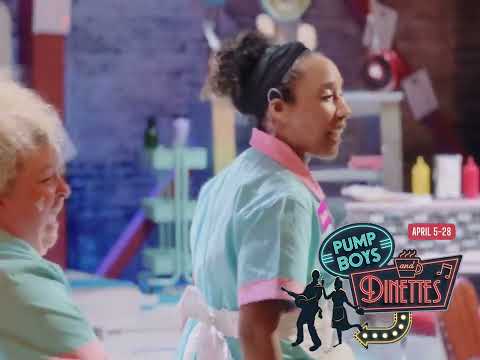
Review
“Pump Boys and Dinettes” is a musical that barely pretends to be a musical. It is a country-pop concert with a plotline that wanders in, orders pie, and stays for the riffs. That light framing is exactly why the lyrics matter: they do the character work in quick, friendly bursts. Nobody gives a twenty-minute monologue about regret. They sing three minutes about it, then hand you a spatula and keep moving.
The show’s writing team understood something most “small town charm” properties miss. Nostalgia is not the theme. Routine is. The Pump Boys are good at what they do, and the Dinettes know the menu by heart, but the lyrics keep showing the cost of that competence: dreams that shrink to fit the county line, romances that stall, family histories that sit in the corner booth and refuse to leave.
Musically, it behaves like a mixtape of Southern textures. Country ballad, rockabilly snap, barroom swing, then a sweet harmony turn that feels like a porch light coming on. The point is not style tourism. The point is how a community uses music as its local newspaper. Every song is a headline, with a punchline attached.
How It Was Made
The creators were also the performers, and that fact is not a charming footnote. It is the whole engine. The piece started as a smaller act, grew out of lived restaurant work, and expanded into the six-person revue that went Off-Broadway in 1981 and hit Broadway in 1982. The songwriting credit is a group credit for a reason: the show is built like a band deciding, in real time, what story to tell next.
There is also an unusually candid chapter in its history: a planned Broadway revival that was publicly described as “postponed,” then effectively didn’t happen in that form. The language was polite. The meaning was money. A year later, the show’s New York return came through the Encores! Off-Center series, a setting that suited it, because “Pump Boys” plays best when it feels like the room is in on the joke.
One more detail that reads like trivia until you watch it land: the intermission raffle and the lobby photo wall. That is not gimmickry. It is aesthetic. The show keeps insisting that an audience is not a crowd, it is a temporary town.
Key Tracks & Scenes
"Highway 57" (Company)
- The Scene:
- House lights fade into a warm, practical glow: gas station signage, diner windows, a strip of asphalt that might as well be a proscenium. The company greets the audience like regulars.
- Lyrical Meaning:
- This is the thesis statement. The lyric draws a map and a mindset. You are not “visiting” these people; you are parking beside them for the night.
"Menu Song" (Prudie & Rhetta)
- The Scene:
- The Double Cupp becomes a percussion pit. Pots, pans, and utensils get their own spotlight pops as the sisters sell the food like it is an anthem.
- Lyrical Meaning:
- It is a list song, yes, but it is also a love language. The lyric says: we do not have much, but what we have is made with pride and handed to you hot.
"Taking It Slow" (Jim)
- The Scene:
- At the pump station, a call comes in about a repair. Jim stalls with a grin, leaning into the rhythm of small-town time. The lighting stays bright and ordinary, which is the gag.
- Lyrical Meaning:
- The lyric turns procrastination into philosophy. It is funny, but it is also a portrait of a life built around avoiding the big leap.
"The Best Man" (Prudie)
- The Scene:
- Prudie steps forward as if the diner has become a confessional booth. The stage picture softens. The joke is that she is courting someone who might be sitting in the audience.
- Lyrical Meaning:
- This lyric is a dating ad and a defense mechanism. Prudie’s standards are punchy because vulnerability is harder to sing in public than a punchline.
"Catfish" (Jim)
- The Scene:
- A fishing story becomes a domestic argument. The lights can shift cooler, like late afternoon turning into “you forgot again.” Jim tries charm. Rhetta is not buying.
- Lyrical Meaning:
- The lyric treats a small betrayal as a big one, because in a routine-bound relationship, the “small” stuff is the relationship.
"Be Good or Be Gone" (Rhetta)
- The Scene:
- Rhetta plants herself behind the counter like it is a courthouse bench. The band locks in. The energy is playful, but the ultimatum is real.
- Lyrical Meaning:
- Rhetta’s lyric is boundary-setting with a backbeat. It is the show quietly insisting that charm does not get to outrun accountability.
"The Night Dolly Parton Was Almost Mine" (L.M.)
- The Scene:
- The room turns into backstage memory: a tight special on L.M., a little shimmer in the lighting, the rest of the company reacting like they have heard this story, and still love it.
- Lyrical Meaning:
- This lyric is tall tale and heartbreak at once. It is about proximity to fame, but more about how one extraordinary night can haunt an otherwise ordinary life.
"Sister" (Prudie & Rhetta)
- The Scene:
- The kitchen percussion quiets down. The sisters share space without competing for it. Lighting warms, then dims at the edges, as if the diner is remembering itself.
- Lyrical Meaning:
- The lyric makes sibling history sound casual, then lets the sadness seep in. It is a song about closeness that can still feel like distance.
"No Holds Barred" (Company)
- The Scene:
- A road trip breaks out. Instruments move, bodies move, the stage turns into motion. If your production is smart, you make the lighting feel like passing mile markers.
- Lyrical Meaning:
- This lyric is escape fantasy. It is also a reminder that even escape is a group project here, organized, communal, and still tethered to home.
"Closing Time" (Company)
- The Scene:
- The diner and station wind down. The light falls into a late-night glow. The last chord behaves like a door locking, gentle but final.
- Lyrical Meaning:
- The lyric is goodbye without melodrama. The show’s final move is to make leaving feel like finishing a shift with people you like.
Live Updates
Information current as of February 1, 2026. “Pump Boys and Dinettes” is not in an open-ended Broadway run, but it is very much alive in the contemporary ecosystem: licensing, regional revivals, and venue series bookings that want a crowd-pleaser with low cast count and high musician payoff. Concord Theatricals lists it as a 2w, 4m title with a stated running time around 105 minutes, and it remains an easy fit for companies that can cast actor-musicians.
If you want proof of life with dates attached, here are three recent and upcoming examples. Wetumpka Depot Players in Alabama has it scheduled February 12 to 28, 2026. Swift Creek Mill Theatre in Virginia lists the show in its 2025-2026 lineup with performances March 28 through April 25, 2026. Evergreen Cultural Centre in British Columbia books “Pump Boys & Dinettes” on September 23, 2025 as part of its theatre series. That spread tells you what the market thinks it is: a reliable night out that plays equally well as “musical” and “event.”
One modern note worth tracking: some productions add or swap material as the show travels, including at least one documented case of a new song written by co-creator Jim Wann for a 2021 Chicago-area production. The show’s loose revue structure makes that kind of updating easier than it would be in a plot-heavy book musical.
Notes & Trivia
- The Broadway production opened February 4, 1982 and played through June 18, 1983.
- The show’s setting is two adjacent landmarks on “Highway 57”: the Pump Boys’ station and the Double Cupp Diner.
- The official cast size is 2 women and 4 men, and the piece is commonly staged with the cast playing instruments, including kitchen utensils.
- “Caution: Men Cooking” was replaced by “Catfish” in productions after 1983, and many recordings and later stagings reflect the “Catfish” version.
- The original cast album’s first LP release is dated August 23, 1982 on the official Masterworks Broadway album page.
- The show has a documented tradition of intermission raffles and lobby photo walls in some productions, turning the audience into part of the scenery.
- “The Night Dolly Parton Was Almost Mine” charted on Billboard’s Hot Country Songs, an unusual crossover footnote for a Broadway cast recording.
Reception
Critically, “Pump Boys and Dinettes” has always been judged on a curve that it helped invent. If you want a tightly engineered plot, it will feel loose. If you want a night where craft and friendliness are the point, it can feel like a gift. The best criticism, pro or con, tends to circle the same question: is this “just” a concert, or is the concert the dramaturgy?
“Both musically and theatrically, it is a small triumph of ensemble playing.”
“As refreshing as an ice cold beer after a bowl of five-alarm chili.”
“Totally delightful.”
“Songs are connected by the flimsiest imaginable scraps of dialogue.”
Quick Facts
- Title: Pump Boys and Dinettes
- Broadway year: 1982 (with Off-Broadway origins in 1981)
- Type: Musical revue (country-pop concert format with light story connective tissue)
- Book, lyrics, music: John Foley; Mark Hardwick; Debra Monk; Cass Morgan; John Schimmel; Jim Wann
- Setting: Highway 57, between Frog Level and Smyrna, with the Pump Boys’ station and the Double Cupp Diner side by side
- Cast size: 2w, 4m
- Duration: About 105 minutes (varies by production)
- Selected notable placements: “Menu Song” at the diner; “The Night Dolly Parton Was Almost Mine” as L.M.’s backstage-brush-with-fame story; “Closing Time” as the communal final sign-off
- Original cast album: “Pump Boys and Dinettes – Original Broadway Cast 1982” (first LP release dated August 23, 1982 on the official album page)
- Availability: Licensed for production via Concord Theatricals; recordings widely available on major streaming platforms
Frequently Asked Questions
- Who wrote the lyrics for “Pump Boys and Dinettes”?
- The writers are also the performers: John Foley, Mark Hardwick, Debra Monk, Cass Morgan, John Schimmel, and Jim Wann share book, music, and lyric credit.
- Is it a book musical or a revue?
- It functions as a revue. There is a setting and recurring relationships, but the songs mostly work as character portraits and community snapshots rather than plot propulsion.
- Why do people talk about kitchen utensils in this show?
- Because the Dinettes often play percussion on kitchen gear, and many productions treat the diner tools as instruments. It is part of the show’s “we make music out of work” identity.
- What is the difference between “Caution: Men Cooking” and “Catfish”?
- “Catfish” replaced “Caution: Men Cooking” in productions after 1983, and “Catfish” is the more common version you will hear on later materials and many recordings.
- Is it running anywhere in 2026?
- Not as a Broadway run, but yes in regional and licensed productions. For example, Wetumpka Depot Players schedules it February 12 to 28, 2026, and Swift Creek Mill Theatre lists it March 28 through April 25, 2026.
- Where should I start if I want the key lyrical moments?
- Try “Menu Song” for the show’s tone, “Be Good or Be Gone” for its relationship spine, and “The Night Dolly Parton Was Almost Mine” for its best mix of humor and ache.
Key Contributors
| Name | Role | Contribution |
|---|---|---|
| John Foley | Co-writer / Original cast | Co-created the score and performance style; original Broadway company member. |
| Mark Hardwick | Co-writer / Original cast | Co-created music and lyrics; central actor-musician voice in the original production. |
| Debra Monk | Co-writer / Original cast | Co-created the material; originated Prudie Cupp in the Broadway company. |
| Cass Morgan | Co-writer / Original cast | Co-created the material; originated Rhetta Cupp and shaped the diner’s musical vocabulary. |
| John Schimmel | Co-writer / Original cast | Co-created the material; original Broadway company member as Eddie. |
| Jim Wann | Co-writer / Original cast | Principal composing voice in the group credit; continues to be associated with updates and legacy performances. |
| Concord Theatricals | Licensing | Current licensing home for productions, with published production specs (cast size, duration, setting). |
| Masterworks Broadway | Cast album publisher (official site) | Hosts the official album page and production synopsis, including dated first-LP release information. |
Sources: Concord Theatricals; Masterworks Broadway; IBDB; Wikipedia; Playbill; BroadwayWorld; Windy City Times; Cabaret Scenes; Wetumpka Depot Players (official site); Swift Creek Mill Theatre; Evergreen Cultural Centre; YouTube.