
Prom Lyrics: Song List
About the "Prom" Stage Show
Release date of the musical: 2018
"The Prom" – The Musical Guide & Song Meanings
Review
The central trick of “The Prom” is that it sells you sparkle while quietly writing a critique of sparkle. The plot begins in Manhattan theater-land, where self-anointed saviors sing about “changing lives,” then immediately scramble for a new cause when the reviews land. That opening irony is the show’s lyrical engine: language as branding, language as weapon, and finally language as confession.
Chad Beguelin’s lyrics keep returning to the same pressure point: performance. Dee Dee and Barry perform goodness because they are trained to perform everything. Emma and Alyssa perform normalcy because the town demands it. In between them sits a nervous question the show keeps poking: when everyone is “doing a number,” who is saying something true? The score answers by splitting its musical vocabulary. The Broadway crew gets big, knowing, old-school punchlines and showbiz rhyme heat. The teens get simpler shapes, more direct emotional lines, and fewer safety nets. The result is a musical comedy that uses style as characterization, with the sound shifting depending on who is lying to themselves in the moment.
If the show sometimes leans on familiar small-town caricature, the best lyric-writing refuses to let Emma become a symbol. It insists on her specificity: a teenager with a coping routine, a private vocabulary, and the exhausting math of measuring danger in everyday rooms. When “The Prom” hits, it is because the text does not over-explain her. It lets one small desire, dancing with your girlfriend at prom, stand there in plain sight and look everyone in the eye.
How It Was Made
“The Prom” started as a news-hook concept pitched by producer and theater consultant Jack Viertel, who contacted director-choreographer Casey Nicholaw after reading about real stories of LGBTQ+ students being excluded from prom. Viertel nudged Nicholaw toward a reunion with the “Elf” brain trust: composer Matthew Sklar, librettist Bob Martin, and lyricist Chad Beguelin. That collaborative shorthand matters here. The show’s comedy moves fast, and the score has to pivot on a dime from satire to sincerity without sounding like two different musicals fighting for the same stage.
Even in the songwriting lore, you can see the show’s craft decisions. A Playbill track-by-track breakdown notes that an early version opened with the leads in three separate fake musicals; the team condensed the structure so the story could “get off the ground” faster, then rebuilt the opening number to capture the self-importance and adrenaline of theater people on a big night. In the same breakdown, Beguelin describes writing the lyrics of “Dance With You” while jet-lagged on a trip to Paris, emailing the words to Sklar, and Sklar setting them immediately, without changing a word. That is not just a cute anecdote. It explains why the show’s emotional center lands: the lyric is deliberately plain, and the music works hard underneath it to express the tension the characters cannot afford to say out loud.
On the design side, the Broadway staging leaned on rapid transformations. Scenic designer Scott Pask has described Nicholaw’s push for periaktoi, rotating scenic units that flip the environment quickly and keep the storytelling moving. The physicality of that approach is part of the show’s comedic timing: it treats scene changes like punchlines.
Key Tracks & Scenes
"Changing Lives" (Dee Dee, Barry, Company)
- The Scene:
- Act I’s opening-night bubble. A glitzy Broadway event, all air-kisses and self-congratulation. Bright, warm stage light like a gala photo call. The mood curdles as the outside world (critics, relevance, public opinion) presses in.
- Lyrical Meaning:
- This is the thesis statement sung by unreliable narrators. The lyric is self-flattery disguised as altruism, setting up the show’s main comic device: people who confuse applause with virtue.
"Just Breathe" (Emma)
- The Scene:
- A private room, a private ritual. The staging often frames Emma alone, the light narrowing, the world reduced to breath and containment. It is the opposite of a Broadway entrance: small, tense, carefully controlled.
- Lyrical Meaning:
- “Just Breathe” is a survival manual set to music. The lyric makes Emma legible without making her a speech. It also plants the show’s arc: she starts by shrinking, then later takes up space.
"It's Not About Me" (Dee Dee)
- The Scene:
- Dee Dee arrives in Indiana and decides she is the solution. The lighting and blocking play the joke: she sings a “humble” anthem while the stage keeps rewarding her with the visual grammar of a star turn.
- Lyrical Meaning:
- The song is ego in denial, and the denial is the comedy. Beguelin’s lyric softens Dee Dee from pure monster to believable mess: passionate, uninformed, loud, and occasionally telling the truth by accident.
"Dance With You" (Emma, Alyssa)
- The Scene:
- A secret corner of a public world. The staging tends to keep them close and slightly hidden, with gentler light and less visual noise, as if the room itself is finally exhaling.
- Lyrical Meaning:
- This is the show’s plainspoken mission statement. The lyric refuses cleverness. That restraint is the point: the conflict is enormous, the ask is tiny, and the contrast indicts everyone else.
"Tonight Belongs to You" (Barry, Emma, Students, Company)
- The Scene:
- Act I finale, with the whole town’s argument packed into a single build. Party lighting, pep-rally energy, and choreography that feels like a community trying to decide whether it can stand being seen.
- Lyrical Meaning:
- The lyric reframes prom night as a battleground over ownership: whose celebration counts, whose body is allowed in the photo, whose “tradition” gets protected. It is also Barry’s first real attempt at mentoring instead of mugging.
"Zazz" (Angie, Emma)
- The Scene:
- Act II starts with a jolt. Angie drags Emma into dance as therapy: jazz hands as armor. The lighting shifts toward showbiz glare, like a club act invading a high school gym.
- Lyrical Meaning:
- On paper it is a comedy number. Underneath it is a strategy: borrow theatrical confidence until it becomes your own. The lyric is an acting lesson disguised as pep talk.
"The Lady's Improving" (Dee Dee)
- The Scene:
- Dee Dee narrates her self-mythology. The number is staged like a career highlight reel, with choreography and accompaniment that keep changing shape as if the song is auditioning for multiple eras at once.
- Lyrical Meaning:
- This is Dee Dee’s self-portrait, and it keeps exposing the cracks. The lyric sells “progress” while accidentally revealing insecurity, which later makes her capacity for empathy feel earned, not sudden.
"Unruly Heart" (Emma)
- The Scene:
- The late-show spotlight moment: a teenager finally taking the stage on her own terms. The visual language simplifies. Less comedy framing, more direct address, the kind of light that makes a gym feel like a confessional.
- Lyrical Meaning:
- Emma stops managing everyone else’s comfort. The lyric names desire as something with force, not apology. The show’s satire steps back and lets sincerity do the work.
Live Updates
Information current as of February 1, 2026. “The Prom” is no longer running on Broadway, and the U.S. national tour’s documented run concludes in 2022. The show’s current life is licensing-driven: professional regionals, universities, and a widely used School Edition. Theatrical Rights Worldwide lists multiple upcoming productions in March and April 2026, which is the clearest indicator of what “The Prom” is right now: a title that keeps resurfacing in community and educational theaters because its casting is flexible, its comedic roles pop, and its core conflict is instantly legible.
If you are tracking “current cast,” the meaningful answer in 2026 is not a single touring company. It is a moving target across local productions. Ticketing aggregators may describe these as “tour dates,” but the more reliable signal is the licensor’s production listings and university season calendars. For audiences, the practical advice is simple: check whether you are seeing the full professional version or the School Edition, since the School Edition is edited for producibility, adjusted keys, and language options.
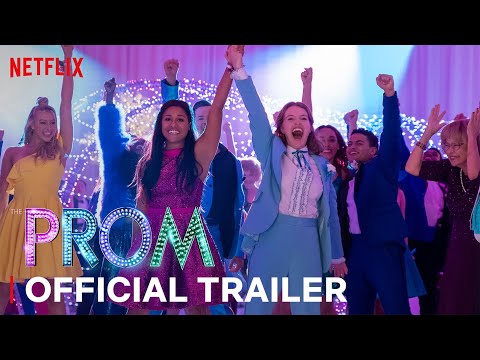
One more update that matters for how the lyrics land in the culture: the Netflix film version made “The Prom” many people’s first contact with these songs. That visibility has helped keep the score circulating even when there is no single flagship production anchoring it.
Notes & Trivia
- Early drafts reportedly began with the leads starring in three separate fake musicals; the team restructured to get to the main story faster.
- “Dance With You” began as a jet-lagged lyric draft written in Paris; Sklar set it immediately, keeping the words unchanged.
- The show’s Broadway design language used periaktoi (rotating scenic units) to keep transitions fast and “magical” without going fully digital.
- Emma’s bedroom design was built with hyper-specific contemporary detail; Scott Pask has discussed research choices and visual “Easter eggs” used to define her interior life.
- “Zazz” is written as a deliberate stylistic postcard from classic Broadway dance writing, matching Angie’s backstory as a long-time “Chicago” chorus performer.
- In development, “The Lady’s Improving” went through multiple accompaniment feels before landing on an approach inspired by 1970s Sondheim-style propulsion.
- The Original Broadway Cast Recording released digitally in December 2018, with a CD release following in January 2019 under Sony Masterworks Broadway.
Reception
The critical story of “The Prom” is less “Did critics like it?” and more “Which half did they like more?” Reviews often praised the craft and speed of the satire while debating whether the second-act sentiment fully integrates. Still, multiple major outlets converged on the same conclusion: even when the book wobbles, the show’s joy is persuasive, and the score knows how to build a room-wide release.
“There’s such genuine joy rolling off the stage in The Prom that you’re ready and willing to forgive it its minor misfires.”
“It is cheering to see a musical comedy that engages with modern questions, with a teenage lesbian romance at its center.”
“This original musical has laughs, tears, joy and dazzling star-turns in a clash-of-cultures hoot that earns a big Broadway corsage.”
Quick Facts
- Title: The Prom
- Broadway year: 2018 (opened November 2018)
- Type: Original book musical comedy
- Music: Matthew Sklar
- Lyrics: Chad Beguelin
- Book: Bob Martin and Chad Beguelin
- Original concept: Jack Viertel
- Director/Choreographer (Broadway): Casey Nicholaw
- Original Broadway Cast Recording: Digital release December 14, 2018; CD release January 11, 2019
- Label/album status: Sony Masterworks Broadway (Original Broadway Cast Recording)
- Selected notable placements: “Tonight Belongs to You,” “Dance With You,” and “Zazz” featured prominently across stage marketing and the later Netflix adaptation’s soundtrack presence
- Licensing: Available for professional/amateur productions; School Edition available with edits, adjusted keys, and director notes
Frequently Asked Questions
- Is “The Prom” based on a true story?
- It is not a single-case dramatization. The creators have described it as inspired by multiple real incidents of LGBTQ+ students facing exclusion around prom, including a widely reported 2010 Mississippi case.
- Is there a movie adaptation?
- Yes. A film adaptation directed by Ryan Murphy was released on Netflix, bringing the score to a much larger audience.
- What is the School Edition, and what changes?
- The School Edition is edited for high school producibility, with additional director notes, adjusted song keys for student ranges, and options for handling certain language.
- Which song best explains what Emma wants?
- “Dance With You.” The lyric stays deliberately simple, which is the point: the conflict is huge, the request is small.
- Why does the score sound like it shifts styles?
- Because it is written to. The Broadway characters sing in a knowingly theatrical idiom, while the teens are written with a more direct emotional language. The contrast is character work.
- Is “The Prom” still playing in 2026?
- Not as a Broadway run. In 2026, its main footprint is licensed productions (regional, university, and schools), with many dates varying by location.
Key Contributors
| Name | Role | Contribution |
|---|---|---|
| Matthew Sklar | Composer | Wrote the score; shaped distinct musical vocabularies for the Broadway “pros” and the teens. |
| Chad Beguelin | Lyricist / Co-book writer | Lyrics that pivot from showbiz parody to direct teen confession; co-wrote the book structure. |
| Bob Martin | Co-book writer | Co-authored the book; calibrated comedic pacing and character turns. |
| Jack Viertel | Original concept | Conceived and pitched the initial idea after reading exclusion-at-prom stories. |
| Casey Nicholaw | Director / Choreographer (Broadway) | Built the show’s high-velocity staging and dance-driven punchlines; guided score-and-book balance. |
| Scott Pask | Scenic design (Broadway) | Designed fast-transforming environments; used periaktoi and detailed teen realism (notably Emma’s room). |
| Natasha Katz | Lighting design (Broadway) | Supported the show’s shifts from brassy satire to intimate confession. |
| Mary-Mitchell Campbell | Music supervision (Broadway) | Supervised musical performance elements for the original production. |
| Sony Masterworks Broadway | Recording label | Released the Original Broadway Cast Recording (digital and CD releases). |
Sources: Playbill; Broadway Direct; TheaterMania; BroadwayBox; Vulture; Time Out New York; Broadway.com; TIME; Sony Music Masterworks; Theatrical Rights Worldwide; BroadwayWorld; Ticketmaster.