Princess and the Frog Lyrics – All Songs from the Musical
Princess and the Frog Lyrics: Song List
- Never Knew I Needed
- Down In New Orleans (Prologue)
- Down In New Orleans
- Almost There
- Friends On The Other Side
- When We're Human
- Gonna Take You There
- Ma Belle Evangeline
- Dig A Little Deeper
- Down In New Orleans (Finale)
- Fairy Tale/Going Home
- I Know This Story
- The Frog Hunters/Gator Down
- Tiana's Bad Dream
- Ray Laid Low
- Ray/Mama Odie
- This Is Gonna Be Good
About the "Princess and the Frog" Stage Show
This animated movie contains the features of musical, comedy and romantic film. It was created and released in 2009 by famous Walt Disney Pictures. This production is originally based upon the book by E. Baker. His novel also has its origin. It's based on fairy-tale by Brothers Grimm. The musical was co-directed by R. Clements and J. Musker, who were also creators of such masterpieces as ‘Aladdin’ & ‘The Little Mermaid’. Voice actors include such actors as A. N. Rose, O. Winfrey, B. Campos, J. Goodman, M. L. Wooley, J. Cummings, P. Bartlett, K. David, J. Lewis, T. Howard & J. Cody. The movie was a kind of return to classical animation. The creators used a traditional Broadway format for their show. The wonderful music was created by R. Newman, who is widely famous for his cooperation with Pixar. It is also revival of the traditions to take famous stories as basis for cartoons.The production was originally called ‘The Frog Princess’. But the critics didn’t like the title and ideas (including names and professions of characters). In 2007, the show was changed. O. Winfrey became a technical consultant for the production and the voice of the main heroine’s mother. The leading voice was also given to black actress – A. N. Rose. In 2009, in November, there was a limited display, taking place in New York and LA. Actual release of the musical happened in December. It immediately became successful. The staging obtained 3 nominations for Academy Awards – first for Best Animated Feature and other two for the Original Song. Many critics call this film a revival of Disney. There are also those, who are not content with the choice of the place of action, as there was a hurricane, which had taken lives of many black people. And the main character's black as well.
Release date: 2009
"The Princess and the Frog" (2009) – The Musical Guide & Song Meanings
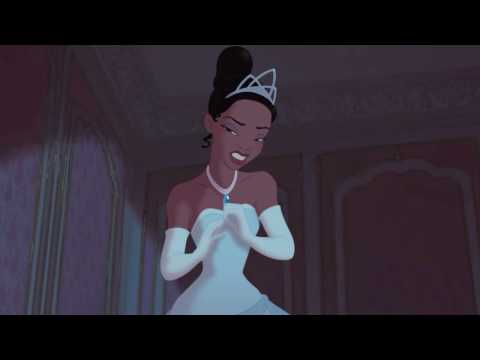
Review: what the lyrics are really doing
Most Disney musicals sell you a dream. "The Princess and the Frog" sells you a work schedule, then dares you to call it romantic. That’s the trick in Randy Newman’s lyric strategy: he plants the classic “I want” structure inside a story where wishing is treated as a tempting shortcut, not a virtue. Tiana’s language is full of verbs that do not sparkle: plan, save, grind, earn. The film’s happiest musical moments often arrive when characters stop bargaining with fate and start naming what they can actually change.
The lyric themes come in three overlapping threads. First, aspiration as labor. “Almost There” is structured like a finish line montage, but its text keeps dragging the fantasy back to the kitchen. Second, seduction as paperwork. The villain doesn’t just threaten; he negotiates. “Friends on the Other Side” is essentially a contract performed under stage lights. Third, identity as a costume that can be traded, stolen, or reclaimed. The “human” songs are about bodies, sure, but the subtext is status: who gets to be seen, heard, and believed in New Orleans.
Musically, Newman avoids the glossy Broadway belt profile of the 1990s Disney renaissance and leans into local styles: jazz, gospel, zydeco, blues. The result is character-first writing. Tiana’s melodies favor forward motion. Dr. Facilier’s material slithers in circles. Mama Odie’s number throws doctrine at you like confetti and still lands the moral.
Practical listening tip: play the album straight through once, then replay the “villain” and “mentor” songs back-to-back (“Friends on the Other Side” into “Dig a Little Deeper”). You’ll hear the movie’s argument in stereo: shortcuts versus self-knowledge.
How it was made: Randy Newman goes regional
Newman has said he mined his own New Orleans history when writing for the film, joking that he’d been “dredging” time he spent there for whatever it was worth. That matters because the score is not merely set dressing; it’s research turned into groove. The songs are pastiches, yes, but they are pointed pastiches: each style arrives with a narrative job to do, whether that’s selling the city (“Down in New Orleans”), selling a deal (“Friends on the Other Side”), or selling a philosophy (“Dig a Little Deeper”).
There’s also an aesthetic gamble baked into the most famous sequence. “Almost There” abruptly switches visual language into Art Deco abstraction, treating Tiana’s dream as a poster come alive. Accounts of the sequence’s development and craft highlight how deliberate that choice was, with key artists pushing the look that ultimately defined the number’s staying power.
One more piece of lore, offered with appropriate side-eye: early reporting and fan-industry chatter around the project’s development has long claimed a different songwriting team was once attached before Newman took over. Whether you treat that as inside baseball or mythmaking, the finished film sounds like a creative mandate: this princess gets a city, not a castle.
Key tracks & scenes: 8 lyrical turning points
"Down in New Orleans" (Prologue) (Tiana)
- The Scene:
- A bedtime-story frame that quickly gives way to street life. Warm lamplight, close harmonies, and the sense that the city itself is about to start singing back.
- Lyrical Meaning:
- The prologue plants the film’s thesis: place is destiny until you decide it isn’t. It sets New Orleans as a chorus with opinions, not a postcard.
"Down in New Orleans" (Dr. John)
- The Scene:
- The opening title sequence: parades, balconies, brass, and the camera moving like it’s following a second-line. The city feels crowded in a good way.
- Lyrical Meaning:
- It sells community as spectacle, but it also foreshadows the story’s shadow economy: in a town of rhythm and hustle, someone is always pitching something.
"Almost There" (Tiana)
- The Scene:
- Tiana finally sees her restaurant dream in reach and the movie detonates into Art Deco. Flat shapes, bold silhouettes, a dream-world kitchen where everything moves too cleanly to be real.
- Lyrical Meaning:
- This is aspiration without pleading. Even the triumph is practical. As Anika Noni Rose has described, it’s a princess song that refuses the “please come to me” posture and instead names the dream as imminent and earned.
"Friends on the Other Side" (Dr. Facilier)
- The Scene:
- A cramped parlor becomes a stage. Colors deepen, shadows dance, and the room feels like it’s breathing. Dr. Facilier performs intimacy like a trap.
- Lyrical Meaning:
- The language is persuasion as sorcery. The lyric’s core move is false specificity: promises that sound tailored, delivered fast enough that you forget to ask for terms.
"When We're Human" (Louis, Tiana, Naveen)
- The Scene:
- On the bayou, the trio fantasizes in motion. It’s daytime, it’s buoyant, and the choreography is basically a travel commercial for a version of yourself you haven’t earned yet.
- Lyrical Meaning:
- Each character’s lyric reveals their private definition of “human.” For Naveen it’s status. For Louis it’s recognition. For Tiana it’s access: a door that stays closed unless you look the part.
"Gonna Take You There" (Ray)
- The Scene:
- A night journey across the swamp. Fireflies read like footlights. Ray narrates with the confidence of someone who thinks romance is geography.
- Lyrical Meaning:
- Ray’s lyrics treat love as guidance, not possession. It’s a small song that does big structural work: it moves the plot while reframing the couple’s arc as a choice, not a spell.
"Dig a Little Deeper" (Mama Odie)
- The Scene:
- Mama Odie’s world is chaos with purpose: lantern glow, clutter that feels curated, a sermon that dances. Even the jokes feel like lessons in disguise.
- Lyrical Meaning:
- The lyric is a corrective to every transactional desire in the film. It argues that wants can be loud and still wrong. The “answer” isn’t a new dream; it’s better self-knowledge.
"Ma Belle Evangeline" (Ray)
- The Scene:
- A quiet, moonlit confession. The tempo softens, the visuals pull back, and the story briefly belongs to a character who has nothing to gain by lying.
- Lyrical Meaning:
- It’s love as projection, sung beautifully enough that the film lets the delusion breathe. The lyric matters because it mirrors Naveen’s earlier entitlement, but without cruelty.
"Never Knew I Needed" (Ne-Yo) (End Credits)
- The Scene:
- After the story resolves, the movie hands the mic to contemporary R&B. A glossy cool-down that plays like a radio single because it is one.
- Lyrical Meaning:
- It reframes the romance in plain language: not destiny, not a deal, not a lesson. Just recognition. After two hours of transformation metaphors, that simplicity is the point.
Live updates (2024–2026): reissues, covers, park music
Information current as of January 31, 2026.
The 2009 original soundtrack remains widely available on major streaming services, with the standard 17-track album listing and runtime stable across platforms. Physical-media collectors have had renewed reasons to care: Disney’s store has carried a colored-vinyl “Songs” edition with a curated track list, and Disney100-era retail listings confirm the commemorative framing and availability across multiple vendors.
The bigger modern development is that the film’s songbook has been actively refreshed. In 2024, Disney’s corporate announcement around its Disney Princess campaign confirmed a modern “Almost There” rendition by Coco Jones, positioned explicitly as a 15th anniversary release for the film. Around the same time, Disney-related coverage of the parks spotlighted new music connected to Tiana’s expanded story world, including a new original song written by PJ Morton and performed by Anika Noni Rose for “Tiana’s Bayou Adventure,” plus a broader album of New Orleans musicians reinterpreting material from the film.
Notes & trivia
- Two songs from the film, “Almost There” and “Down in New Orleans,” were nominated for the Academy Award for Best Original Song.
- “Almost There” is famous not only for its melody but for its Art Deco visual overhaul, a rare moment where the movie changes graphic grammar midstream.
- Dr. Facilier’s centerpiece number has remained a critics’ favorite because it marries lyrical manipulation to a full-blown visual hallucination.
- In 2024, Disney announced a new “Almost There” cover by Coco Jones tied to the film’s 15th anniversary and scheduled for streaming release.
- Also in 2024, a separate Disney-adjacent soundtrack release tied to “Tiana’s Bayou Adventure” introduced an original new song (“Special Spice”) and high-profile New Orleans collaborators.
- For collectors, Disney100-era “Songs” vinyl editions have circulated as limited colored pressings in multiple markets.
Reception: then vs. now
At release, the critical line on the music split into two camps: admiration for stylistic range, and doubts about whether any single number became an instant canon entry. Over time, the film’s reputation has shifted with culture: Tiana’s work-forward “I want” song reads sharper now, and the villain number has only grown in esteem as Disney’s last great theatrically staged seduction sequence.
“Making less of an impression are Randy Newman's score and songs, which, though they encompass an impressive range of Southern musical styles…”
“The graphic work is simple and exquisite, Randy Newman's songs are lilting and amusing…”
“You might not think Randy Newman and Voodoo would make a natural fit, but ‘Friends on the Other Side’ proves the songwriter is a man of many surprises.”
Quick facts (album + context)
- Title: The Princess and the Frog (Original Motion Picture Soundtrack)
- Year: 2009
- Type: Animated film soundtrack (songs + score cues)
- Primary songwriter/composer: Randy Newman
- Label: Walt Disney Records
- Release date: November 23, 2009
- Album length: 17 tracks, 55 minutes
- Selected notable placements: “Almost There” (Art Deco dream sequence); “Friends on the Other Side” (shadow-voodoo parlor set piece); “Dig a Little Deeper” (Mama Odie’s gospel lesson)
- UK chart note: Peaked at No. 12 on the Official Soundtrack Albums Chart (2010 run)
- Later ecosystem: Disney100-era vinyl “Songs” editions; 2024 anniversary cover of “Almost There”; 2024 park-related album featuring new song “Special Spice” for Tiana’s Bayou Adventure
Frequently asked questions
- Who wrote the songs for “The Princess and the Frog”?
- Randy Newman wrote the film’s core songbook and score, with the end-credits single “Never Knew I Needed” written and performed by Ne-Yo.
- What is the movie’s main “I want” song?
- “Almost There.” It’s unusual for a Disney heroine because it frames desire as near-term, earned, and practical rather than purely wish-driven.
- Why is “Almost There” visually different from the rest of the movie?
- The sequence switches into an Art Deco graphic style to represent Tiana’s dream as design: clean lines, poster-like abstraction, and forward momentum.
- What’s the villain song, and why do people remember it?
- “Friends on the Other Side.” The lyric is a sales pitch with teeth, and the staging turns persuasion into a theatrical event, making the manipulation feel entertaining and dangerous at once.
- Is there newer “Princess and the Frog” music after 2009?
- Yes. In 2024 Disney announced an anniversary cover of “Almost There” by Coco Jones, and Disney-related coverage around Tiana’s Bayou Adventure highlighted a new original song (“Special Spice”) performed by Anika Noni Rose plus a broader album of New Orleans reinterpretations.
- Is the soundtrack easy to find today?
- Yes. The original album remains on major streaming services, and collectors have had access to various vinyl editions, including Disney store listings for a colored-vinyl “Songs” release.
Key contributors
| Name | Role | Contribution |
|---|---|---|
| Randy Newman | Composer, lyricist, producer | Wrote the main songbook and score; built the soundtrack’s New Orleans style palette. |
| Anika Noni Rose | Lead vocalist (Tiana) | Performed “Almost There” and “Down in New Orleans” versions; anchors the film’s lyrical point of view. |
| Keith David | Vocalist (Dr. Facilier) | Performed “Friends on the Other Side,” the film’s central seduction-and-deal number. |
| Jenifer Lewis | Vocalist (Mama Odie) | Performed “Dig a Little Deeper,” the mentor song that reframes the story’s moral logic. |
| Dr. John | Vocalist | Performed the main “Down in New Orleans,” lending lived-in authenticity to the city’s musical introduction. |
| Michael-Leon Wooley | Vocalist (Louis) | Co-led “When We’re Human,” turning longing into upbeat ensemble comedy. |
| Bruno Campos | Vocalist (Prince Naveen) | Co-led “When We’re Human,” voicing status-hunger with charm and irony. |
| Jim Cummings | Vocalist (Ray) | Performed “Gonna Take You There” and “Ma Belle Evangeline,” giving the film its most tender romantic counterpoint. |
| Terence Blanchard | Musician | Featured trumpet contributions; associated with the soundtrack’s jazz identity on major platforms. |
| Ne-Yo | Songwriter, vocalist | Wrote and performed “Never Knew I Needed,” the contemporary end-credits single with its own music video. |
| PJ Morton | Songwriter (expanded universe) | Wrote “Special Spice” for Tiana’s Bayou Adventure, a post-film musical continuation highlighted in 2024 coverage. |
Sources: Variety, The Guardian, TIME, The Walt Disney Company (press release), Official Charts Company, Apple Music, Disney Music Emporium, Axios, Southern Living, YouTube (official clips/trailer), Animation Obsessive.