Pretty Woman Lyrics – All Songs from the Musical
Pretty Woman Lyrics: Song List
- Act 1
- Welcome to Hollywood
- Anywhere but Here
- Something About Her (Preamble)
- Welcome to Hollywood (Reprise)
- Something About Her
- I Could Get Used To This
- Luckiest Girl in the World
- Rodeo Drive
- Anywhere but Here (Reprise)
- On a Night like Tonight
- Don't Forget to Dance
- Freedom
- You're Beautiful
- Act 2
- Welcome to Our World (More Champagne)
- This Is My Life
- Never Give Up on a Dream
- You and I
- I Can't Go Back
- Freedom (Reprise)
- Long Way Home
- Together Forever
About the "Pretty Woman" Stage Show
Pretty Woman is a musical with music and lyrics by Bryan Adams and Jim Vallance, and a book by Garry Marshall and J. F. Lawton. The musical is based on the 1990 film of the same name written by Lawton. It centers around a down-on-her-luck Hollywood prostitute Vivian Ward, who is hired by Edward Lewis, a wealthy businessman, to be his escort for several business and social functions, and their developing relationship over the course of her week-long stay with him.Release date: 2018
"Pretty Woman: The Musical" – The Musical Guide & Song Meanings
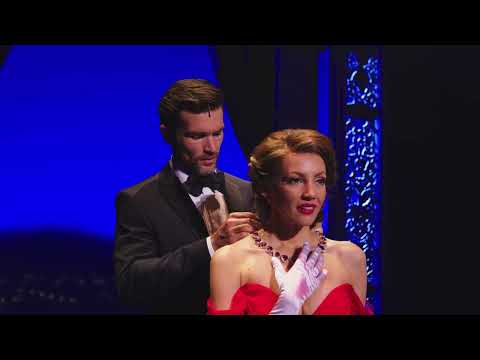
Review
Can a story built on a transactional fantasy survive the glare of a modern stage, where lyrics have to confess what a movie can simply imply? "Pretty Woman: The Musical" tries to solve that by giving everybody an interior monologue, then turning the volume up. Sometimes it works: the score understands that Vivian is not a makeover, she is a decision. Sometimes it blinks: the show still loves its postcard images of wealth, and the lyrics occasionally default to broad, radio-friendly generalities when the scene needs sharper teeth.
Adams and Vallance write in the grammar of late-80s and early-90s rock and power-pop: big choruses, clean hooks, emotional key changes right on schedule. That style choice matters. Edward’s musical language is the confident, corporate-facing anthem; Vivian’s is the restless "I want" song, built for motion. When the show hits, it is because the lyric line lands like a contract clause, changing what the character can plausibly do next. When it misses, it is because the lyric line merely restates what we already watched, and Broadway does not grade on completion.
What the lyrics do best is translate the story’s social friction into repeated motifs: "freedom" as Edward’s self-justification, "anywhere but here" as Vivian’s escape plan, and "long way home" as the shared admission that neither of them is actually from this world of penthouses and polo matches. These phrases are engineered to recur, so the show can feel emotionally cohesive even when it is sprinting through iconic movie moments.
How it was made
The most useful behind-the-scenes detail is also the most theatrical: the writers were literally talked through the opening number before they wrote it. Jim Vallance describes meeting director-choreographer Jerry Mitchell in a small pizza restaurant in London’s West End, where Mitchell effectively performed the staging concept in the booth. The phrase "Welcome to Hollywood" arrived later, back in Canada, as a seed line that became a full opener through long-distance back-and-forth writing with Bryan Adams.
That workflow never stopped being iterative. Vallance frames "Anywhere But Here" as a case study in musical-theatre craft: they were warned about the importance of the early Act I "I want" song, then spent roughly two years and three attempts getting the right one. That tells you something about the score’s priorities. The writers are pop craftsmen learning Broadway’s structural demands, and the show is built out of those negotiations.
Several numbers were redesigned or replaced late. "Luckiest Girl in the World" arrived during out-of-town previews after a previous song failed to fit the moment. Act II’s opener is also unusually specific: Vallance places "Welcome to Our World (More Champagne)" at a Hamptons polo match, using the setting to sharpen Vivian’s discomfort among the wealthy and to give the antagonist a musical showcase. Even the opera sequence is engineered with a brief: Mitchell asked for a love song that avoids the word "love," and "You and I" threads itself around Verdi’s "La Traviata" as the show slips between performance, gala, and hotel-suite intimacy.
If you want a practical listener’s roadmap before you press play, start with these three: "Welcome to Hollywood" (tone and social lens), "Anywhere But Here" (the engine), and "You and I" (how the show tries to dignify romance with structure). They explain the musical’s ambitions quickly, and they also expose its limits.
Key tracks & scenes
"Welcome to Hollywood" (Happy Man, Kit, Company)
- The Scene:
- Lights snap on like a neon sign. Streetlife assembles with choreographed confidence: smiles, hustles, small scams, big dreams. The narrator figure, Happy Man, sells the boulevard as if it were a theme park with better hair.
- Lyrical Meaning:
- This is the show’s mission statement: glamour as bait, cynicism as armor. The lyric is advertising copy, which is the point. It warns you that "Hollywood" is a product, and everybody is both customer and merchandise.
"Anywhere But Here" (Vivian)
- The Scene:
- Vivian breaks from the group energy into her own lane. The lighting tightens, the street noise fades, and her thoughts become the soundtrack. It is early, deliberate, and uncluttered.
- Lyrical Meaning:
- Classic "I want" writing with a very specific itch: escape without a map. The phrase is intentionally non-specific, because Vivian’s first act of agency is refusing to be pinned to one outcome. The lyric is aspiration, but it is also self-defense.
"Something About Her" (Edward)
- The Scene:
- In the hotel room aftermath, Edward is left holding the keys to his own confusion. The mood is clean, expensive, and slightly ridiculous. A laugh line breaks the tension; then he tries to explain himself to himself.
- Lyrical Meaning:
- Edward starts as an observer. The rewrites pushed the song toward feeling rather than description, which matters because his arc depends on becoming less managerial. The lyric tries to translate attraction into vulnerability, a language he does not naturally speak.
"Rodeo Drive" (Kit, Company)
- The Scene:
- A shopping montage with teeth. Bright storefront light, sharp poses, and a sense of performance inside performance. Kit drives the action like a hype captain with a grudge against anyone who thinks taste is moral superiority.
- Lyrical Meaning:
- Money is the costume department’s partner here, and the lyric leans into that bargain. Under the party energy is a warning: this world is polite until it is not. The song sets up the later humiliation beat with the "snooty sales girls," because class always has a bouncer.
"On a Night Like Tonight" (Mr. Thompson, Company)
- The Scene:
- The show pivots into tango. The stage picture gets sleek: angled light, deliberate silhouettes, bodies in close negotiation. It plays like a ballroom demonstration that has wandered into a rom-com by accident.
- Lyrical Meaning:
- Genre becomes subtext. Tango is desire with rules, a perfect metaphor for a relationship defined by contract and etiquette. The lyric seduces, but the dance structure reminds you that seduction is also choreography.
"Don't Forget to Dance" (Happy Man, Scarlett, Company)
- The Scene:
- A 1940s swing pivot in the Voltaire restaurant world. Scarlett sings as if she is scoring the room’s emotional temperature. There is a built-in dance break, because the show wants the body to speak when the men refuse to.
- Lyrical Meaning:
- The lyric is a warning shot at the top-floor mindset: status is isolating, and performance is the only honest currency in this room. It is also one of the score’s clearest "adult" moments: joy is offered as advice, not as décor.
"You and I" (Edward, Alfredo, Violetta, Company)
- The Scene:
- The opera sequence folds Broadway into Verdi, then back again. "La Traviata" bleeds into a gala dance and ends at the hotel suite, as if romance is being tested across social venues like a product rollout.
- Lyrical Meaning:
- Writing a love song without saying "love" forces specificity. The lyric sells wonder, not ownership. It tries to give Edward a way out of his own transactional instincts, by framing intimacy as seeing rather than buying.
"I Can't Go Back" (Vivian)
- The Scene:
- After the fantasy fractures, Vivian chooses motion. The beat is forward, driven, and modern in its pulse. The lighting shifts from glitter to clarity, and the staging favors exit routes.
- Lyrical Meaning:
- This is Vivian’s thesis statement, sharpened into refusal. The lyric is not begging to be saved; it is drawing a line around a future self. It is the moment the show most clearly argues that transformation is a decision, not a gift.
"Long Way Home" (Vivian, Edward)
- The Scene:
- Late in the story, the tone lowers. The stage clears, the sound opens into a ballad frame, and the show tries to earn sincerity after all the glitter-driven velocity.
- Lyrical Meaning:
- The lyric admits distance: emotional, class-based, and moral. "Home" is not just Georgia or a penthouse; it is the idea of a life you can live without apology. The ballad’s job is to make reconciliation feel like growth rather than purchase.
Live updates
In 2025–2026, "Pretty Woman: The Musical" is very much a working touring title, shifting between markets and scales. The official U.S. tour site lists a current touring cast led by Eva Gary as Vivian and Jack Rasmussen as Edward, with Devyn Trondson as Kit and Max Cervantes as the Happy Man among the principals. Internationally, Australia has hosted major engagements, including a season billed as "now playing" at Theatre Royal Sydney in 2025, with additional cities and extensions reported in Australian coverage into 2026.
If you are tracking dates, third-party ticket calendars show continued 2026 listings in multiple regions, including North America and South Africa. Treat those as availability signals rather than artistic signals: the show is in circulation, which is what matters for audiences who want to hear the score live rather than in headphones.
Two pragmatic listener notes for 2026 audiences: (1) tour orchestration often balances punch with portability, which can make the pop-rock numbers feel even more forward in the mix; (2) if you want maximum choreographic detail, prioritize seats that keep the full stage picture intact (center sections and slightly elevated sightlines usually beat extreme sides for big ensemble frames).
Notes & trivia
- The published musical-number list for the touring production places "Welcome to Hollywood" as the Act I opener and "Together Forever" as the closing number.
- Jim Vallance says "Anywhere But Here" took three different attempts over roughly two years to get right, specifically because Broadway expects an early "I want" song that defines the protagonist’s drive.
- "On a Night Like Tonight" is written as a tango with an extended dance sequence, a deliberate genre move inside a pop-rock score.
- "Don’t Forget to Dance" leans into 1940s swing, with a repeating verse-bridge structure and a prominent mid-number dance break.
- Act II’s opener, "Welcome to Our World (More Champagne)," is placed at a Hamptons polo match, using setting to underline Vivian’s outsider status.
- Vallance notes a cut song called "Money Makes the Man" (barbershop-quartet style) that was removed to streamline the antagonist’s material.
- Before the Broadway opening, the production reported a house record at the Nederlander Theatre for an eight-performance week gross.
Reception
The critical conversation has been remarkably consistent across Broadway and London: performers praised, production sheen acknowledged, and the writing (book and lyrics) interrogated for how carefully it updates the source material. Some critics object to the show’s glossy moral framing, arguing that the score’s pleasantness can feel like a smokescreen. Others find the entertainment value direct, especially in touring contexts where audiences arrive wanting the movie’s major beats plus a loud, hummable finish.
“Stubbornly inconsequential...”
“The score... often veers into the bland...”
“The songs explode loudly but never burn with feeling.”
Quick facts
- Title: Pretty Woman: The Musical
- Year: 2018 (Broadway opening year; cast recording released in 2018)
- Type: Book musical (screen-to-stage adaptation)
- Book: Garry Marshall and J. F. Lawton
- Music & Lyrics: Bryan Adams and Jim Vallance
- Director & Choreographer: Jerry Mitchell
- Music supervision, arrangements, orchestrations: Will Van Dyke
- Selected notable placements (within the show): "Welcome to Hollywood" (Act I opener), "You and I" (opera sequence weaving through Verdi), "Welcome to Our World (More Champagne)" (Act II opener at a polo match), "Together Forever" (finale)
- Original Broadway cast recording: Digital release Sept. 21, 2018; label Atlantic Records
- Availability: Major streaming platforms carry the 2018 cast album; additional songwriter re-recordings exist outside the cast album ecosystem
Frequently asked questions
- Who wrote the lyrics for "Pretty Woman: The Musical"?
- Bryan Adams and Jim Vallance wrote the music and lyrics, bringing a late-80s pop-rock sensibility into Broadway structure.
- Which song explains Vivian’s core motivation?
- "Anywhere But Here." It is built as the early Act I "I want" number, setting Vivian’s need to escape and redefining the story as a personal decision rather than a makeover.
- Where does the opera sequence happen, and why does it matter musically?
- During the opera night, the show threads "You and I" in and out of Verdi’s "La Traviata," using that formal setting to make Edward’s emotional shift feel earned through structure.
- Is the show touring in 2025–2026?
- Yes. Official tour materials list a current U.S. touring cast, and international engagements have been advertised in Australia and other regions across 2025 and 2026.
- Is there an official cast recording?
- Yes. The Original Broadway Cast Recording was released in 2018 via Atlantic Records, with the score credited to Adams and Vallance.
Key contributors
| Name | Role | Contribution |
|---|---|---|
| Bryan Adams | Composer, Lyricist | Pop-rock score; co-wrote the show’s central lyrical motifs and hooks. |
| Jim Vallance | Composer, Lyricist | Co-wrote music and lyrics; documented track-by-track intent and placements. |
| Garry Marshall | Book writer (with J. F. Lawton) | Stage adaptation framework rooted in the film’s story logic and comedy beats. |
| J. F. Lawton | Book writer | Adaptation and continuity from the original screenplay voice. |
| Jerry Mitchell | Director, Choreographer | Staging concepts, dance architecture, and tonal calibration of iconic scenes. |
| Will Van Dyke | Music supervision, arrangements, orchestrations | Translated pop songs into theatre storytelling and pit-friendly structures. |
| Atlantic Records | Label | Released the Original Broadway Cast Recording (2018). |
| David T. Nederlander Theatre | Broadway venue | Hosted the Broadway run and early box-office record weeks. |
Sources: Playbill (track-by-track breakdown; cast recording news; grosses analysis), IBDB, Variety, The Guardian, Exeunt NYC, official U.S. tour site, Theatre Royal Sydney, Broadway in Hollywood Playbill PDF, selected regional presenting organizations.