Porgy and Bess Lyrics – All Songs from the Musical
Porgy and Bess Lyrics: Song List
-
Introduction and Jasbo Brown Blues
- Summertime
-
Oh, Nobody Knows When de Lord Is Gonna Call
- A Woman is a Sometime Thing
-
Here Come de Honey Man; Porgy's Entrance
-
Here Comes Big Boy!
-
Oh Little Stars, Little Stars
-
Wake Up an' Hit It Out
-
Gone, Gone, Gone
-
Overflow
-
Well, Well, Well, a Saucer-Burying-Setup
- My Man's Gone Now
-
How de Saucer Stan' Now, My Sister?
- Leavin' for the Promise' Lan'
- It Takes a Long Pull to Get There
-
Mus' Be You Mens Forgot About de Picnic
- I Got Plenty o' Nuttin
-
Lissen There, What I Tells You
-
I Hates Yo' Struttin' Style
-
Mornin' Lawyer
-
Dey's a Buckra Comin'
- Buzzard Keep on Flying
-
Lo, Bess, Goin' to the Picnic?
- Bess, You Is My Woman
- Oh, I Can't Sit Down
-
What's de Matter Wid You, Sister?
-
I Ain't Got No Shame
- It Ain't Necessarily So
-
Dance; Shame on All You Sinners
-
Crown!
- What you want wid Bess
-
Lemme Go, Hear dat Boat
-
Honey, dat's All de Breakfast I Got Time for
-
Take Yo' Hands off Me, I Say
- Oh, Doctor Jesus
-
Strawberry Woman; Honey Man; Crab Man
-
Now de Time, Oh, Gawd
- I Love You, Porgy
-
Why You Been Out on That Wharf So Long, Clara?
-
Oh, Doctor Jesus (Hurricane Scene)/Summertime (Reprise)
-
What Make You So Still, Bess; Oh, Dere's Somebody Knockin'
-
You Is a Nice Parcel of Christians
- A Red-Headed Woman
-
Jack's Boat Is de River
-
Clara, Clara
-
You Low-Lived Skunk
-
Summertime (Reprise) ; Death of Crown
-
Wait For Us at the Corner, Al
-
What Is Your Name?
-
Oh, Gawd! They Goin' Make Him Look on Crown's Face!
- There's a Boat Dat's Leavin' Soon for New York
-
Catfish Row Interlude
-
Good Mornin', sistuh! Good Mornin', brudder!
-
It's Porgy Comin' Home
- Oh, Bess, Oh, Where's My Bess
-
Bess Is Gone
- O Lawd, I'm On My Way
About the "Porgy and Bess" Stage Show
Porgy and Bess is an English-language opera by American composer George Gershwin, with a libretto written by author DuBose Heyward and lyricist Ira Gershwin. It was adapted from Dorothy Heyward and DuBose Heyward's play Porgy, itself an adaptation of DuBose Heyward's 1925 novel of the same nameRelease date: 2013
"Porgy and Bess" – The Musical Guide & Song Meanings
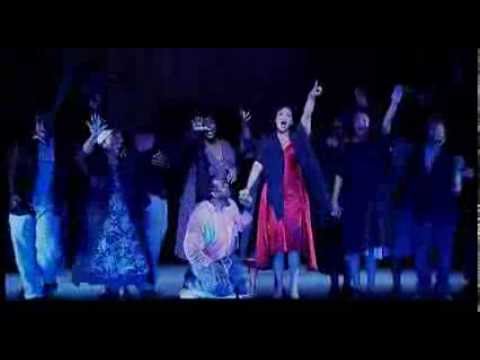
Review: what the words are doing
If you only know “Summertime,” you know the soft-focus version. The full piece is tougher: street talk, prayer language, vendor cries, and sales pitches collide inside one neighborhood. The lyric craft is its own kind of staging. Characters announce themselves by how they handle language: who repeats, who riffs, who prays, who performs. The result can feel like community portraiture, then like caricature, sometimes in the same scene. That instability is baked into the work’s history and into how audiences argue about it now.
For the 2013 “Original Soundtrack” album that circulates on streaming services, the main thing to know is what it is and what it is not. It plays like a highlights reel tied to the 1959 film-era program: 19 tracks, about 51 minutes, structured as a narrative sampler rather than the full operatic architecture. That makes it an efficient introduction to the big arias and set pieces, but it also flattens the score’s long-game irony. In the theater, motifs return with consequences. On the 2013 package, you often get the punchline without the setup.
Listening tip that saves time: go in sequence until “It Ain’t Necessarily So,” then jump back to “My Man’s Gone Now.” If the first is charm weaponized, the second is grief refusing to be charming. That contrast is the piece in miniature.
How it was made
The source chain matters. It starts with DuBose Heyward’s novel and play world, then George Gershwin’s decision to treat the material as a hybrid, not a Broadway evening with arias sprinkled on top. While composing, Gershwin spent weeks in the South Carolina Sea Islands region studying local music-making, attending prayer meetings, and listening closely to Gullah Geechee cultural sources. The work is often described as a fusion of opera and American vernacular styles, but the more precise description is that it is a negotiation: European forms pressed up against living American sound.
One of the most revealing “how it’s built” facts is a musical one that becomes a lyric one. Scholars and commentators have pointed to the opening gestures of “It Ain’t Necessarily So” echoing a Torah blessing melody. In plain terms: a sacred musical contour gets repurposed for a number where a hustler pokes holes in Bible stories. That is not a trivia garnish. It tells you how Gershwin thinks: quotation, collision, and irony as structure.
By the time you reach the 2013 “Original Soundtrack” streaming release, you are hearing the work filtered again, this time through a mid-century film soundtrack format and a modern reissue wrapper. The album’s job is speed and accessibility. It is not trying to be a complete dramatic document. If you want the piece’s full moral and musical argument, you will need a complete opera recording or a recent full staging capture.
Key tracks & scenes
"Overture" (Orchestra)
- The Scene:
- Before Catfish Row speaks, the orchestra does. House lights fade. The sound previews what the neighborhood will hold: lullaby warmth, brass bite, dance rhythms that can turn predatory fast.
- Lyrical Meaning:
- There are no words, but it is already about language. Themes attached to people and temptations arrive as if they are gossip traveling ahead of the story.
"Summertime" (Clara)
- The Scene:
- Act I, Catfish Row on a summer evening. Heat hangs in the air. Clara rocks her baby while the men drift toward a dice game. The lighting is amber, almost forgiving, until you notice how close danger already is.
- Lyrical Meaning:
- It is a lullaby that advertises safety in a place where safety is temporary. The lyric promises ease, then the plot spends the next two acts interrogating that promise.
"A Woman Is a Sometime Thing" (Jake)
- The Scene:
- Act I, still in the opening neighborhood flow. Jake tries his own cradle song. It lands like a shrug, not a prayer, with the community listening and half-laughing.
- Lyrical Meaning:
- Men define women in couplets. The show later makes the women pay the bill for those definitions. The number is early foreshadowing disguised as casual talk.
"The Wake / Gone, Gone, Gone / Porgy's Prayer" (Ensemble and Porgy)
- The Scene:
- After a killing at the craps game, Catfish Row gathers. Candlelight, cramped rooms, bodies too close. The chorus functions like the town’s nervous system, transmitting shock.
- Lyrical Meaning:
- This is communal narration turning into ritual. The words are doing two jobs at once: mourning the dead and warning the living about what comes next.
"My Man's Gone Now" (Serena)
- The Scene:
- The wake becomes Serena’s courtroom. Everyone freezes around her. Even the air feels judged. She sings into a silence that will not answer back.
- Lyrical Meaning:
- The lyric is grief with theology inside it. She does not just say she hurts. She argues with the universe, then collapses back into raw loss.
"I Got Plenty o' Nuttin'" (Porgy)
- The Scene:
- Act II, Catfish Row in the morning. Nets and chores. Sunlight is brighter, almost optimistic. Porgy emerges singing like the neighborhood is finally on his side.
- Lyrical Meaning:
- Porgy turns poverty into philosophy. The lyric sells contentment, but you can hear the defensive edge: he has to believe this to survive this.
"Bess, You Is My Woman Now" (Porgy and Bess)
- The Scene:
- Act II domestic calm that feels borrowed. The staging often pulls them into a small pool of light, isolating a private promise from the public pressure around them.
- Lyrical Meaning:
- Possession language becomes romance language. The duet is gorgeous and also quietly alarming: the words suggest love as claim, not just choice.
"It Ain't Necessarily So" (Sportin' Life)
- The Scene:
- Act II at the picnic on Kittiwah Island. The mood is festive until it is not. Sportin’ Life slides into the center like a preacher who is also selling something. The beat smiles; the message needles.
- Lyrical Meaning:
- This is skepticism dressed as entertainment. The lyric mocks certainty, especially religious certainty, and the character uses humor as a con. It is also a musical fingerprint: the number’s melody is associated with him like a calling card.
Live updates
Information current as of January 2026. The Metropolitan Opera has the work in its 2025-26 season in James Robinson’s production, with casting led by Alfred Walker and Brittany Renee, and published full-cast details available through the Met’s own listings. The company framed the run explicitly around the opera’s 90th anniversary in its public announcement.
Regionally, major American companies continue to program the piece with contextual framing, not as a museum object. Washington National Opera revived it in 2025 with a review that emphasized fidelity to the score and strong vocal performances, while also noting the long-running debates around representation. Houston Grand Opera opened its 2025-26 season with the work, tying the revival to the company’s historic relationship with the title.
For listeners, the practical update is simpler: the 2013 “Original Soundtrack” album remains an easy gateway, but it is not a substitute for the full dramatic arc. If you are planning to attend a live performance, listen to a complete recording for the hurricane sequence through the final scene. That stretch is where the work’s rhetoric turns into consequence.
Notes & trivia
- The 2013 “Porgy and Bess (Original Soundtrack)” streaming package runs 19 tracks at roughly 51 minutes, functioning as a condensed program.
- Gershwin spent weeks in the South Carolina Sea Islands region studying local culture and music practices while composing, including attending prayer meetings.
- Commentators and scholars have pointed to a Torah blessing contour echoed in the opening of “It Ain’t Necessarily So,” a deliberate sacred-to-profane musical irony.
- The Metropolitan Opera’s study materials describe the score as a blend of jazz, operatic technique, and regional source material, emphasizing how the fusion is central to the work’s identity.
- Synopsis guides consistently place “Summertime” at the very start, against the sound of the neighborhood moving toward the craps game, which sharpens its foreshadowing.
- Modern reviews often praise productions that “stick to the script” musically, while arguing about how much a staging should interrogate the work’s racial and historical baggage.
Reception
The reception story is a loop: rapture about the music, anxiety about what the piece is saying, then a new generation restaging it and re-arguing both points. In recent years, the most persuasive productions tend to be the ones that present the drama clearly while also providing context around representation, dialect, and stereotype.
“A revival that takes the reviving part seriously.”
“A wrongheaded starting point for a production…”
“If you’re going to stage Gershwin’s opera, this is how to do it.”
My takeaway, with mild skepticism intact: the lyrics succeed when they let characters contradict themselves. They struggle when they reduce a person to a type. Great performances can widen that gap into something you feel, not just something you debate.
Quick facts
- Title: Porgy and Bess (Original Soundtrack) [2013 streaming release]
- Underlying work: Porgy and Bess (1935 “folk opera”)
- Year (album): 2013 (digital reissue package)
- Tracks / duration (album): 19 tracks, about 51 minutes
- Rights line (album listing): ? 2013 Entertain Me Europe LTD
- Composer (work): George Gershwin
- Primary lyricists/librettists (work): Ira Gershwin and DuBose Heyward (with additional libretto contributions commonly credited in program materials)
- Setting (story): Catfish Row, Charleston, South Carolina; early 20th century (production-dependent)
- Selected notable placements: “Summertime” (Act I opening), “My Man’s Gone Now” (wake lament), “I Got Plenty o’ Nuttin’” (Act II morning), “It Ain’t Necessarily So” (Kittiwah Island picnic)
- Live performance note: The work appears in major opera houses’ repertory, including the Met’s 2025-26 season listings
Frequently asked questions
- Is the 2013 “Original Soundtrack” the full opera?
- No. It is a condensed, highlights-style program (19 tracks, about 51 minutes). For the full dramatic arc, use a complete opera recording or a full staging capture.
- Where do the famous songs sit in the story?
- “Summertime” opens Act I in Catfish Row. “I Got Plenty o’ Nuttin’” arrives in Act II as Porgy’s new optimism. “It Ain’t Necessarily So” is sung by Sportin’ Life at the Act II picnic on Kittiwah Island.
- Why is “It Ain’t Necessarily So” such a big deal lyrically?
- It turns biblical references into a sales routine. The character uses wit to destabilize certainty, and the number functions as both entertainment and manipulation.
- Is the piece still performed in 2025-26?
- Yes. The Metropolitan Opera lists it in its 2025-26 season, and major American companies continue to revive it with prominent casts and contextual framing.
- What should I listen for if I’m new to the score?
- Listen for how the work moves between lullaby, hymn, and hustle. The same neighborhood chorus can sound like comfort in one scene and like accusation in the next.
Key contributors
| Name | Role | Contribution |
|---|---|---|
| George Gershwin | Composer | Wrote the score, shaping recurring themes that attach to characters and temptations. |
| Ira Gershwin | Lyricist | Wrote lyrics for many songs, balancing vernacular snap with formal musical structures. |
| DuBose Heyward | Librettist / lyric contributor | Adapted his story world into libretto language and contributed lyric text commonly credited in program materials. |
| The Metropolitan Opera | Producing organization | Presented the work in its 2025-26 season and published official synopsis, cast, and educator materials. |
| Entertain Me Europe LTD | Rights line on 2013 album listing | Appears as the ? holder for the 2013 “Original Soundtrack” streaming release listings. |
Sources: Metropolitan Opera (synopsis, educator guide, season listing, press release), Apple Music, Spotify, Muziekweb, Library of Congress blog, The Washington Post, Variety, The Guardian, University of Michigan SMTD, Masterworks Broadway.