Pocahontas Lyrics – All Songs from the Musical
Pocahontas Lyrics: Song List
- The Virginia Company
- Ship at Sea
- The Virginia Company (Reprise)
- Steady As The Beating Drum
- Steady as the Beating Drum (Reprise)
- Just Around The River Bend
- Grandmother Willow
- Listen With Your Heart I
- Mine, Mine, Mine
- Listen With Your Heart II
- Colors Of The Wind
- Savages (Part 1)
- Savages (Part 2)
- I'll Never See Him Again
- Pocahontas
- Council Meeting
- Percy's Bath
- River's Edge
- Skirmish
- Getting Acquainted
- Ratcliffe's Plan
- Picking Corn
- The Warriors Arrive
- John Smith Sneaks Out
- Execution
- Farewell
- Colors of the Wind (End Title)
- If I Never Knew You (End Title)
About the "Pocahontas" Stage Show
Musical is an excellent combination of the image and music. Skill of the composer Alan Menken on merits has been rewarded by two Oscars – for the best music and the best song. It is remarkable that the movie and the animated film based on a love story of princess and English seafarer have been shot in America already before. But Disney's version of historical plot had bigger success of viewer in spite of the fact that the outcome is tragic: John and Pocahontas leave forever. However, very few people know that the similar final is more reliable in relation to real events: the princess married, left the New World and died at very early age.Historians and specialists-archeologists on culture and life of represented times were involved in work on the animated film to reach bigger reliability. The role of Pocahontas’ father is sounded by indigenous Indian. John speaks by the voice of well-known actor Mel Gibson. Premiere display of animated film took place in the New York’s Central Park. The sequel of the musical – 'Pocahontas 2: Travel to the new world' narrates about difficulties, which waited for the brave princess in foreign land where she has moved in a hope to find Captain John.
Release date: 1995
"Pocahontas" – The Musical Guide & Song Meanings
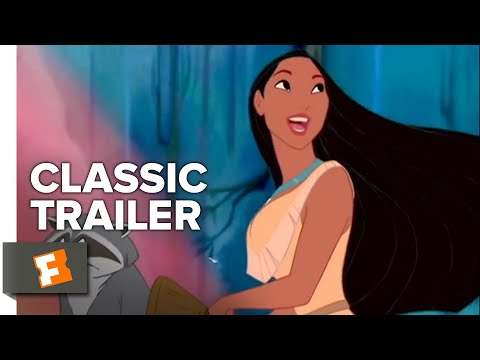
Review: what the songs are doing
Here’s the trick "Pocahontas" tries to pull: it wants romance, fable, and a moral lecture about conquest all at once. The plot wobbles under that weight, but the lyric writing is unusually direct about its thesis. Stephen Schwartz’s best lines do not decorate the story. They argue with it. When Pocahontas sings, the movie turns into a debate club with a drumline, and that is the point.
Musically, Alan Menken builds a score that plays tourist and judge in the same breath: English material leans into martial fife-and-drum energy and work-song swagger, while the Powhatan material is framed with circular, grounded phrases and chant textures. The effect is intentionally schematic. You can hear the movie drawing borders, then daring the characters to cross them. The score’s smartest move is that the big “understanding” anthem is not isolated; its melodic DNA bleeds into later conflict writing, especially the climactic ensemble material, so the film’s plea for empathy is forced to compete with its own war music.
Listener tip, if you are here for lyrics: start with the film version of “Colors of the Wind,” then jump to “Savages.” If the first is persuasion, the second is what persuasion is up against. That pairing explains the whole album’s worldview in under seven minutes.
How it was made
Schwartz has said he researched both period history and Native American poetry and sources to shape the film’s language, aiming to echo specific locution and imagery rather than write generic “nature” platitudes. He also confirms that “Colors of the Wind” was the first song he and Menken wrote for the project, and that it influenced the film’s development even though a storyboard outline already existed.
The most revealing origin story is also the most mechanical: “If I Never Knew You” began as a block of imagined dialogue, and Menken reportedly pulled the title phrase from inside that text. Then the song got cut after preview screenings because the creative team felt it was losing younger viewers and slowing the narrative. That is not a moral judgment. It is dramaturgy by stopwatch. In later releases, the song was restored, and you can feel why both decisions were defensible: it is emotionally clarifying, and it is a speed bump.
Another Schwartz confession is the kind that makes lyricists wince in solidarity. “Blue corn moon” sounds ancient. It is not. He has said he invented it because he liked the resonance, adapting the month-naming idea he encountered in reading while acknowledging the phrase is not authentic to the film’s specific tribal and regional context. If you want a single example of how pop-poetic language can outrun cultural specificity, there it is.
Key tracks & scenes
"The Virginia Company" (Ensemble)
- The Scene:
- Opening voyage. Ropes, timber, and rough choreography on a rolling ship, with the camera treating the ocean like a stage floor that won’t sit still. The men sing forward into fog and profit.
- Lyrical Meaning:
- It is a mission statement in chorus form: extraction dressed as destiny. The lyric sells “New World” hope while Ratcliffe’s worldview leaks through as entitlement, not curiosity. The number plants the album’s central conflict: desire versus ownership.
"Steady as the Beating Drum" (Powhatan ensemble)
- The Scene:
- Early village life, framed as ritual and routine. The visuals move in circles: crops, river, seasons, repeated gestures, communal rhythm.
- Lyrical Meaning:
- Where the English opening chases a horizon, this song insists on continuity. Its lyric logic is cyclical, not conquering: identity is kept, not taken. Schwartz has indicated the chant material was researched rather than invented, which matters because the number is doing anthropological theater in under two minutes.
"Just Around the Riverbend" (Pocahontas)
- The Scene:
- Pocahontas alone with the river, motion as argument. She runs, leaps, and tests gravity like she is testing her future, sunlight flashing through leaves like stage gobos.
- Lyrical Meaning:
- This is the “I want” song with teeth. The lyric does not ask for love or status. It asks for an unknown that is hers to choose. The river metaphor is not subtle, but it is dramaturgically clean: tradition is the shore, agency is the current.
"Mine, Mine, Mine" (Ratcliffe, Wiggins, Smith)
- The Scene:
- Jamestown turns into a demolition site. Trees drop, pits widen, and Ratcliffe conducts the chaos like a vaudeville villain with a pickaxe chorus.
- Lyrical Meaning:
- Schwartz writes greed as singable self-incrimination. The repetition is the point: possession as a nervous tic. John Smith’s brief interjection about adventure is the lone attempt to rebrand colonization as exploration, and the song laughs it off.
"Colors of the Wind" (Pocahontas)
- The Scene:
- A mid-film conversion sequence staged as a moving gallery: cliffs, water, animals, sky. Pocahontas physically redirects Smith’s gaze, and the animation turns her argument into a literal panorama.
- Lyrical Meaning:
- Schwartz has described it as a consciousness-raising address to Eurocentrism, inspired in part by the widely circulated “Chief Seattle” letter tradition. The lyric’s core move is rhetorical: it reframes “nature” from scenery into kinship, then traps Smith inside that reframing until he either changes or admits he will not.
"Savages" (Ensemble, with Pocahontas counterlines)
- The Scene:
- Cross-cut preparation for violence. Torches, weapons, marching lines. The staging becomes symmetrical: both groups mirror each other while insisting they are nothing alike.
- Lyrical Meaning:
- The song is an accusation sung in stereo. Schwartz and Menken make the ugliest word in the score do thematic work: othering as a singalong. Analysts note the counterpoint includes melodic material that echoes earlier motifs, forcing the “understanding” theme to fight for air inside a war chorus.
"If I Never Knew You" (Pocahontas and John Smith, restored sequence)
- The Scene:
- A quiet pause before the plot sprints to its cliff. Two characters in near-stillness, the lighting and framing softening into a private bubble while the world outside sharpens into conflict.
- Lyrical Meaning:
- It is the album’s only straightforward romantic contract: vows without marriage talk, intimacy without conquest language. The cut explains the film’s pacing; the restoration explains the characters. If you have ever felt their relationship jumps from curiosity to destiny too fast, this song is the missing bridge.
Live updates
Information current as of January 2026. In 2025, Disney marked the film’s 30th anniversary with official retrospective coverage focused on its Central Park premiere and archival materials. Around the same anniversary window, corporate social posts continued to position the film as available to stream on Disney+.
On the music side, the album remains widely available on major streaming services, and the expanded archival lane is still the clearest way to hear the score in narrative order: Walt Disney Records’ “Legacy Collection” edition (released for the film’s 20th anniversary) includes more complete, chronological material than the 1995 commercial album. For collectors, Disney 100-era vinyl pressings have kept the core song program in circulation without requiring a full box-set commitment.
Ticket trends are not the story here because "Pocahontas" is not a stage title with a current Broadway run. The relevant “live” conversation is cultural: the songs are still praised for craft, while the film is routinely re-litigated for historical distortions and stereotyping. The score has outlasted the plot, and it keeps getting asked to defend it.
Notes & trivia
- “Colors of the Wind” was the first song Menken and Schwartz wrote for the film, and it influenced subsequent development even though an outline existed.
- Schwartz has said the lyric concept drew inspiration from the famous, widely reprinted “Chief Seattle” letter tradition, with an explicit goal of confronting Eurocentrism.
- “Blue corn moon” is not a traditional term; Schwartz has said he invented it for sound and resonance, adapting the “moon” month-naming idea he encountered in research reading.
- “If I Never Knew You” was removed after preview screenings because the team felt it strained younger viewers’ attention and slowed the story; it was later restored for home-video contexts.
- The “Savages” sequence is structured as mirrored ensemble writing, and analysis notes it weaves in melodic echoes of earlier thematic material.
- The film’s runtime is 81 minutes, which makes the album’s pacing choices feel even more editorial: songs often have to establish ideology quickly, not just character.
Reception
In 1995, critics tended to split their verdict: admiration for the animation and music, skepticism about the screenplay’s simplifications. That split has basically held, except the modern debate is louder because the subject matter is not a fairy tale in the abstract. It is a real history used as a genre engine.
“The best-looking of the modern Disney animated features, and one of the more thoughtful.”
“Virtually everything in the movie … every song … is as generic as the two hygienic lovers.”
“World’s largest film premiere.”
My skeptical read: the lyrics are often smarter than the narrative container they are poured into. When the film is uncertain, the songs become the conscience. When the film is confident, the songs can feel like they are smoothing over sharp edges that should stay sharp.
Quick facts
- Title: Pocahontas: An Original Walt Disney Records Soundtrack
- Film year: 1995
- Type: Animated musical film soundtrack album
- Composer: Alan Menken
- Lyricist: Stephen Schwartz
- Release date (original album): May 30, 1995
- Label: Walt Disney Records
- Length: about 55 minutes (varies slightly by platform listing)
- Chart note: The soundtrack hit No. 1 on the Billboard 200 (week of July 22, 1995)
- Major awards: The film won Oscars for Best Original Score and Best Original Song (“Colors of the Wind”)
- Selected notable placements: “The Virginia Company” (opening voyage), “Just Around the Riverbend” (Pocahontas’ early choice crisis), “Colors of the Wind” (bonding and worldview pivot), “Savages” (pre-battle ensemble)
- Expanded edition: Walt Disney Records “Legacy Collection” edition released in 2015 with more complete, chronological material
- Availability: Commonly streaming on Disney+ (film) and major music services (album)
Copyright note: This guide discusses lyrical meaning and context but does not reproduce full lyrics.
Frequently asked questions
- Who wrote the lyrics and music for "Pocahontas"?
- Alan Menken wrote the music and Stephen Schwartz wrote the lyrics for the songs.
- Why was “If I Never Knew You” removed from the theatrical release?
- Schwartz has said the creative team cut it after previews because it was slowing the story and losing younger viewers. It was later restored for home releases.
- Is “Colors of the Wind” based on a real historical document?
- Schwartz has said the song drew inspiration from the famous “Chief Seattle” letter tradition, which has circulated in many versions over time, and he used it to confront Eurocentric thinking in the story.
- Is there a newer, more complete version of the soundtrack?
- Yes. Walt Disney Records’ “Legacy Collection” edition (2015) expands the material and presents the score more comprehensively than the 1995 commercial album.
- Where does “Savages” sit in the story?
- It plays as both sides prepare for battle, with mirrored ensemble writing that underlines how fear can sound identical even when the targets differ.
Key contributors
| Name | Role | Contribution |
|---|---|---|
| Alan Menken | Composer, producer | Wrote the songs and score; shaped recurring motifs that reappear in conflict cues. |
| Stephen Schwartz | Lyricist, producer | Wrote lyrics; documented research and writing decisions, including “Colors of the Wind” and cut-song history. |
| Judy Kuhn | Vocal performer | Singing voice of Pocahontas on key tracks including “Just Around the Riverbend” and “Colors of the Wind” (film version). |
| Mel Gibson | Vocal performer | Sang as John Smith on the soundtrack program, including ensemble and duet material across releases. |
| Vanessa Williams | Vocal performer | Performed the pop end-title single version of “Colors of the Wind,” a major charting driver. |
| David Ogden Stiers | Vocal performer | Performed Ratcliffe’s featured material, anchoring the greed and conquest numbers. |
| Linda Hunt | Vocal performer | Voiced Grandmother Willow and performed guidance sequences that frame Pocahontas’ moral choices. |
| Walt Disney Records | Label | Released the 1995 soundtrack and later archival expansions, including the “Legacy Collection” edition. |
Sources: D23, RogerEbert.com, Entertainment Weekly, StephenSchwartz.com (PDF comments), AllMusic, Billboard, Wikipedia (film and soundtrack entries), Movie Music UK.