Play On! Lyrics – All Songs from the Musical
Play On! Lyrics: Song List
- Act 1
- Take the "A" Train
- Drop Me off in Harlem
- I've Got to Be a Rug Cutter
- I Let a Song Go Out of My Heart
- C Jam Blues
- Mood Indigo
- Don't Get Around Much Anymore
- Don't You Know I Care
- It Don't Mean a Thing
- I Got It Bad (And That Ain't Good)
- Hit Me With a Hot Note (And Watch Me Bounce)
- I'm Just a Lucky So and So
- Everything But You
- Solitude
- Act 2
- Black Butterfly
- I Ain't Got Nothin' But the Blues
- I'm Beginning to See the Light
- I Got It Bad and That Ain't Good (Reprise)
- I Didn't Know About You
- Rocks in My Bed
- Something to Live For
- Love You Madly
- Prelude to a Kiss
- In a Mellow Tone
About the "Play On!" Stage Show
The musical was staged based on motifs of Twelfth Night by Shakespeare. The original production was directed by Sheldon Epps. 19 previews were held in September 1996 in Old Globe Theatre. In March 1997 in Broadway, premiere started in Brooks Atkinson Theatre. In general, the musical was produced for 80 times. Acting troupe included such artists as C. Anderson, T. Pinkins & A. D. Shields. In the second half of May 1997, label Varèse Sarabande released a collection of songs from this spectacular.The script, written by C. L. West, leaves alone the classic situation of the play Twelfth Night by Shakespeare. The author has transferred characters and action in the 1940s, in the era of swing in Harlem.
Release date: 1997
"Play On!" – The Musical Guide & Song Meanings
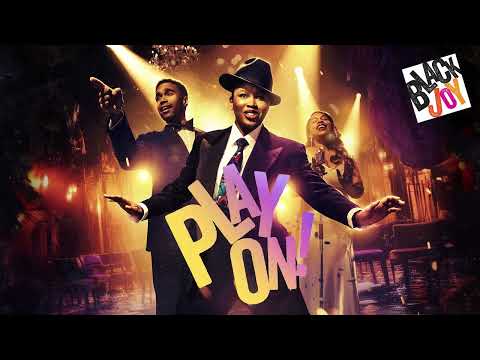
Review
“If music be the food of love, play on” is either a charming invitation or a warning label. This musical treats it as both. “Play On!” takes the romantic confusion of Shakespeare’s “Twelfth Night” and re-sets it in swing-era Harlem, where identity is not just a comic device but a career strategy. The show wants you to enjoy the jokes, then notice the price of the jokes.
The engine is lyrical recontextualization. These are Duke Ellington standards, written long before this plot existed, often with lyrics by different collaborators across decades. The show’s trick is to make familiar love songs behave like dialogue. A line that once sounded like pure moonlight becomes a power play when it’s sung in a club office, a rehearsal room, or a contract negotiation. That is the smartest part of the writing: “Play On!” turns the Great American Songbook into a script supervisor. The second-smartest part is that it never pretends the transformation is seamless. It’s collage on purpose.
Musically, the style is jazz and swing with a theatrical spine. That matters because the characters speak in syncopation. The Duke’s heartbreak is built from elegant restraint, Lady Liv’s star power is an instrument, and Vy’s ambition moves in quick, nimble phrases because she cannot afford to linger. In the strongest stagings, the band is visible, not hidden, so the score reads as a living environment rather than background. The Guardian notes the onstage band in the UK production, which makes the music feel like a social force inside the room, not a soundtrack outside it.
One practical note: I can’t provide full song lyrics here. What I can do is explain what the songs are doing dramatically, what the titles are “saying” in context, and why certain numbers land like plot twists.
How it was made
Conception first, then the archaeology. “Play On!” was conceived by director Sheldon Epps, with a book by playwright Cheryl L. West, and it premiered at San Diego’s Old Globe before moving to Broadway in 1997. IBDB pins the Broadway run at 19 previews and 61 performances at the Brooks Atkinson Theatre, a short life for a show built on big-band glamour. Still, the concept kept resurfacing regionally and internationally, which is often the real career of a title like this.
The origin story gets repeated because it is tidy and true to the show’s thesis: the title is pulled straight from “Twelfth Night,” and the line itself gives the adaptation permission to treat music as narrative. Recent UK coverage keeps pointing back to that opening line as the seed of the project, which is fitting because the show is basically a sustained argument that songs are how people tell the truth when polite conversation fails.
Ellington’s catalogue is the other half of the DNA. Since the score is built from existing songs, the “new writing” happens in the seams: which number goes where, who gets it, and what the staging implies while the lyric stays the same. That is why different productions can subtly shift the setting decade (1930s vs 1940s) and still keep the dramatic logic intact. A good production treats the songs like assignments: each character has to earn the right to sing that particular standard at that particular moment.
For viewers who like receipts: the cast album was released in May 1997, and the show later reached PBS via a filmed Pasadena Playhouse production, documented for “Great Performances.” That version matters historically because it helped keep the title in circulation even when Broadway had moved on.
Key tracks & scenes
"Take the 'A' Train" (Vy, Ensemble)
- The Scene:
- Arrival as overture. The city feels like it’s moving faster than she is. In some productions, the band is already visible, so Vy steps into an economy of sound that has rules.
- Lyrical Meaning:
- The lyric sells Harlem as a destination, but the subtext is audition. Vy isn’t just getting off a train. She’s testing whether this town will let her write.
"I’ve Got to Be a Rug Cutter" (Vy)
- The Scene:
- The gender switch becomes choreography. London Theatre explicitly clocks this as the moment of Vy’s makeover into “Vy-Man,” set against the song’s jazzy propulsion.
- Lyrical Meaning:
- In a club context, “cutting a rug” stops being cute. It becomes code for passing, performing, surviving. The lyric reads like confidence; the scene reads like necessity.
"Mood Indigo" (Lady Liv)
- The Scene:
- Spotlight, stillness, and a star who knows how to ration vulnerability. The Guardian calls out standout vocals on this number in the UK production, which tracks: it’s a song that rewards control.
- Lyrical Meaning:
- It isn’t just sadness. It’s a public-facing version of sadness. Liv’s pain is a brand, and the lyric becomes a way to make the brand feel intimate without surrendering power.
"Don’t Get Around Much Anymore" (Lady Liv, Vy-Man)
- The Scene:
- Two people circling each other in a room where everyone is listening. London Theatre notes this as the song that musically binds Liv and Vy-Man, while the plot keeps complicating what “together” even means.
- Lyrical Meaning:
- In the original life of the song, it’s wistful distance. Here it becomes a flirtation that is also a lie, because the “distance” is partly identity fraud.
"(In My) Solitude" (Vy-Man)
- The Scene:
- After the bravado, the bill arrives. London Theatre describes Vy-Man plumbing real pain here, the kind that can’t be danced away.
- Lyrical Meaning:
- The lyric is plain, almost embarrassingly direct. That’s why it works. Vy is living two lives, and the song finally lets the audience hear the private one.
"It Don’t Mean a Thing (If It Ain’t Got That Swing)" (Company)
- The Scene:
- Club as community. The rhythm is a dare: keep up or get out of the way. In the best stagings, the number is staged less like a “big finish” and more like the house rules being sung aloud.
- Lyrical Meaning:
- It’s a slogan, but also a verdict. Talent alone doesn’t buy entry. You need style, timing, and a mask that fits.
"Rocks in My Bed" (Sweets, Jester)
- The Scene:
- A comedic duet with real sting underneath. London Theatre highlights it as a standout: two men turning romantic failure into rhythm and complaints into punchlines.
- Lyrical Meaning:
- The song is funny until it isn’t. The lyric becomes a mirror for the show’s larger pattern: people talk big, then lose control, then try to laugh their way back into dignity.
Live updates (2025/2026)
Information current as of January 31, 2026.
“Play On!” is not on Broadway right now, but it is very much alive in the ecosystem that actually sustains repertory musicals: high-profile regional runs and international revivals.
In the UK, Talawa Theatre Company’s revival toured in late 2024 and early 2025 and played the Lyric Hammersmith from January 28 to February 22, 2025. The Lyric listing put tickets “from £10” and a running time of 150 minutes, which signals a production positioned for access as much as prestige.
In the U.S., Signature Theatre in Arlington, Virginia mounted “Play On!” August 12 through October 5, 2025, with tickets starting at $47, directed by Lili-Anne Brown. That is a meaningful data point: a major regional house betting late-summer real estate on this title suggests the show is trending as a “rarely staged gem” rather than a nostalgia item. Signature’s own page also lists the 2025 cast, which matters for searchers looking for who actually played these roles most recently.
What’s next in 2026? As of today, there is no confirmed Broadway transfer or national tour announcement in the major trade coverage I reviewed. The more realistic near-term path is continued licensing and regional programming. If you want to track momentum, watch for two indicators: (1) whether more theaters stage it with a full onstage band, and (2) whether directors lean harder into the gender-politics premise, which modern audiences tend to read as the plot, not just the setup.
Listener tip: before you see the show, listen to “Take the ‘A’ Train,” “Mood Indigo,” and “(In My) Solitude” back-to-back. You’ll hear the dramatic range the score needs: swagger, star power, and private cost. In the theatre, those three modes keep rotating among different bodies.
Notes & trivia
- Broadway run: opened March 20, 1997 and closed May 11, 1997, at the Brooks Atkinson Theatre (19 previews, 61 performances).
- The Broadway setting is explicitly “The Magical Kingdom of Harlem. The Swingin’ 40s.”
- The cast recording release date is May 20, 1997; AllMusic lists the recording location as The Hit Factory (New York) and a total duration just over 67 minutes.
- Producer credit on the cast album includes Bruce Kimmel (per Discogs).
- The Pasadena Playhouse production was documented for PBS “Great Performances,” with choreographer Mercedes Ellington (Duke’s granddaughter) attached to that staging.
- The 2025 UK revival’s creative team lists Liam Godwin (musical supervisor/arranger) and ULTZ (production design), with Johanna Town on lighting.
- Signature Theatre’s 2025 run framed the setting as 1930s Harlem and explicitly pitched the show as a romantic comedy powered by a woman writing under a male persona.
Reception
Then: critics admired the concept and argued about the execution. Now: critics tend to review it as a repertory title whose best-case scenario is a production that treats Ellington’s songs as dramatic text, not as a parade of hits.
“A musical has to work pretty hard to let such an inspired idea slip through the floorboards, and ‘Play On!’ does nothing if not work hard.”
“If it is unfaithful, it is very winning… [an] exuberant all-Black production.”
“What better cue could there be for a stage musical adaptation… that both swings – and sings.”
My read: the show’s critical fate depends on whether the book is staged as connective tissue or treated as a thesis about authorship. When productions commit to Vy’s dilemma as the dramatic center, the standards stop feeling imported and start feeling chosen.
Quick facts
- Title: Play On!
- Year (Broadway): 1997
- Type: Jukebox-style jazz musical built from Duke Ellington standards
- Conceived by: Sheldon Epps
- Book: Cheryl L. West
- Music: Duke Ellington (lyrics by multiple lyricists across the catalogue)
- Broadway venue: Brooks Atkinson Theatre
- Broadway run: 19 previews, 61 performances (Mar 20 to May 11, 1997)
- Cast recording: Varèse Sarabande; released May 20, 1997; recorded at The Hit Factory (NYC)
- Notable filmed version: Pasadena Playhouse production on PBS “Great Performances” (broadcast June 21, 2000)
- Selected notable placements (recent): Lyric Hammersmith (Jan 28 to Feb 22, 2025); Signature Theatre (Aug 12 to Oct 5, 2025)
Frequently asked questions
- Is “Play On!” an adaptation of Shakespeare?
- Yes. It reshapes “Twelfth Night” into a swing-era Harlem story, keeping the disguise-and-desire skeleton while changing the social stakes around authorship and power.
- Who wrote the lyrics in the musical?
- The show uses Duke Ellington’s song catalogue, which includes lyrics by multiple collaborators depending on the song. The “new writing” is mainly the book (Cheryl L. West) and the way songs are assigned and staged.
- What’s the single most important plot device?
- Vy writing under the male persona “Vy-Man.” It’s the show’s romance engine and its commentary on who gets credited.
- Is there a cast recording?
- Yes. The Original Broadway Cast Recording was released May 20, 1997 on Varèse Sarabande.
- Was “Play On!” filmed?
- A Pasadena Playhouse production was documented for PBS “Great Performances,” which helped the show reach audiences beyond Broadway.
- Is it touring now?
- The most recent major runs were the UK tour (late 2024 to early 2025) and Signature Theatre’s 2025 production in Virginia. As of January 31, 2026, there is no confirmed Broadway transfer announcement in the major coverage reviewed.
Key contributors
| Name | Role | Contribution |
|---|---|---|
| Duke Ellington | Composer | Song catalogue used as the score. |
| Sheldon Epps | Conceiver / Director (original concept) | Conceived the musical concept and shaped its Shakespeare-to-Harlem translation. |
| Cheryl L. West | Book writer | Wrote the book that reframes “Twelfth Night” around authorship and disguise. |
| Bruce Kimmel | Cast album producer | Produced the 1997 Original Broadway Cast Recording. |
| Mercedes Ellington | Choreographer (Pasadena / PBS version) | Choreographed the Pasadena Playhouse staging documented for “Great Performances.” |
| Michael Buffong | Director (UK revival) | Directed the Talawa-led UK tour and Lyric Hammersmith run. |
| Lili-Anne Brown | Director (Signature Theatre 2025) | Directed the Arlington, VA production (Aug to Oct 2025). |
| Liam Godwin | Musical supervisor / arranger (UK revival) | Supervised and arranged music for the 2024–2025 UK production. |
Sources: IBDB; Playbill; AllMusic; Discogs; The Guardian; London Theatre; Lyric Hammersmith Theatre; Talawa Theatre Company; DC Theater Arts; Signature Theatre; YouTube (Talawa trailer).