People vs. Mona Lyrics – All Songs from the Musical
People vs. Mona Lyrics: Song List
- Act 1
- Tippo
- Keep The Frog Pad Alive
- Hear Ye/Who Wears The Robe/Glad Glad Glad-Clerk
- Euple R. Pugh
- Do You
- The Big Meow
- Officer Bell's Turn
- Work With Me
- Lockdown Blues
- Does The Prosecution Rest
- Riverboat Casino Gambling
- Riverboat Casino Gambling (Reprise)
- Act 2
- Euple R. Pugh (Reprise)
- Legendary Litigator
- Blind Willy-Blind Willy
- Marching Thru Tippo
- You Done Forgot Your Bible
- Partner
- A Real Defense
- The Confession
- Come On Down To Tippo
About the "People vs. Mona" Stage Show
Composer and poet was J. Wann. Libretto wrote E. Chambers, P. Miller & J. Wann. Previews began in March 2000 in California, Pasadena Playhouse. The musical was held from March to April 2000, directed by P. Lazarus. In the histrionics acted: S. Waara, K. Maguire, M. Hollenbeck, W. Thomas Jr., R. Henn, J. Joyce & M. Mais. In September 2002, the premiere of the musical was in Chattanooga Theatre Centre. This show had cast: S. Alderman, M. Burks, M. Robinson, J. Harkleroad, H. Malone, M. Mitchell & J. Dever. In the 2005-2006 season, performance took place in Reedley Opera House.Off-Broadway tryouts began in July 2007 on the stage of Manhattan Abingdon June Havoc Theatre. Show was there from July to August 2007, under the direction of K. Middleton, choreographed by J. Gorrie. The performance had cast: R. Binder, M. Torres, K. Culp, N. Douglas, M. Henderson, O. Schein, D. J. Wilson & R. Henn. In March 2008, the musical was featured in The York Theatre at Saint Peter's. Director was A. Jolles. In the show were involved: C. Noll, M. Henderson, M. Kudisch, L. White, R. Raines, O. Schein & N. Toro. The next day, the production was recorded for the London studio Jay Records. CDs were in sale in May 2009.
In 2013, the musical was held at Reedley Opera House. Completion of the show took place in October 2013, directed by S. Jones. The show had cast: J. Nuckels, D. Applegate, T. Gill, M. Westpy, J. Ham & M. McFarlin. In April 2015, Florence High School students made it on the stage of Fremont Civic Theater. In the show was such cast: S. Gillentine, T. Burke, M. Knapp, Z. Bilbrey, A. Dick, B. Burke, P. Sandoval, J. Patch, J. O'Shea, J. Valentine, E. Carpenter & I. Abalos.
Release date: 2009
“The People vs. Mona” – The Musical Guide & Song Meanings
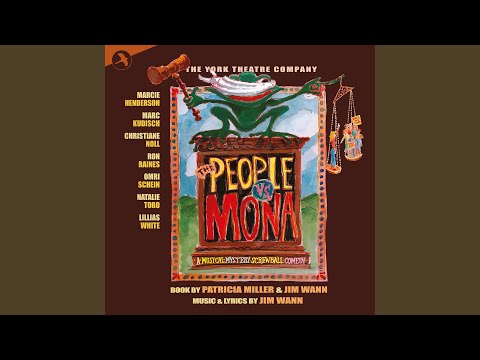
Information current as of January 2026. This guide focuses on lyrical function and album listening, not reproducing lyrics.
Review: a courtroom comedy that keeps changing its musical alibi
“The People vs. Mona” is built like a friendly con. It invites you into Tippo, a small Southern town orbiting a music bar called the Frog Pad, then keeps handing you new suspects, new styles, and new punchlines until the audience starts acting like a jury that has already made up its mind. The ambition is clear: use song as testimony. The question is whether the score’s charm can carry a book that sometimes treats plot like a speed bump.
At its best, the lyric writing behaves like cross-examination. Characters do not simply “express feelings”; they try to win the room. The prosecutor’s numbers lean into rhetoric and pressure, the defense leans into narrative and romance, and the town’s witnesses lean into tall tales. In the 2023 Masquers Playhouse production, one reviewer clocked jokes landing with near-metronomic regularity, which is exactly what this show needs when the mystery mechanics get busy.
Musically, it is a buffet by design: country-rock, blues, gospel, marching-band satire, and jazz touches that let Mona’s private self peek through the public circus. The show’s central tension is also its thesis: a town’s cultural identity (the Frog Pad) is on trial alongside Mona, and the score keeps insisting those two verdicts are linked.
Listener tip: If you are coming to the cast album cold, start with the opening town-number and then jump to the big ballad before you let the comic witnesses pile up. You will hear the show’s emotional argument earlier, and the jokes will feel like strategy rather than noise.
How it was made
The show’s DNA is very Jim Wann: a songwriter comfortable in American roots idioms, with a track record for small-town musical portraits. “The People vs. Mona” had a world premiere at Pasadena Playhouse in 2000, then a New York run off-Broadway at the Abingdon in 2007, and later a York Theatre Company concert staging in 2008 that fed the eventual cast recording on JAY Records.
One useful clue about the writing is how openly the creators describe the piece: love story, murder mystery, courtroom shenanigans, and the fate of a town hanging on a verdict. That is not marketing fluff; it is the blueprint. The score has to change clothes constantly because each witness is a new mini-genre, and because the show wants Tippo to feel like a living playlist rather than a single style statement.
For an origin-story glimpse that feels less polished than a press release, there is a BroadwayWorld “Broadway Bullet” interview where Wann frames the final number as a post-trial tourism pitch for Tippo that plays under bows, with lyrical “items” that double as clues. That is a writer telling you how the trick works: the show wants its audience leaving on a hooky civic jingle, even if they do not remember every detail of the case.
Key tracks & scenes
“Tippo” (Jim, Company)
- The Scene:
- House lights settle into a concert-like glow. The ensemble sells Tippo as a place you can smell: heat, dust, and a bar that doubles as community center. The song functions like opening statements delivered with a grin.
- Lyrical Meaning:
- This is the show’s contract with you. The lyrics do world-building fast, and they plant the core motive: the Frog Pad is not just a business, it is the town’s memory bank. The mystery will keep trying to distract you; this number tells you what really matters.
“Keep the Frog Pad Alive” (Mona, Company)
- The Scene:
- We are in the honky-tonk heart of the show. The chorus can play like a rally, with a bright, communal wash that makes the Frog Pad feel bigger than the room. In at least one staging, the moment is punctuated by a “Ribbit” refrain that makes the bar feel like a mascot and a mission.
- Lyrical Meaning:
- Mona’s public platform is disguised as a bar anthem. She is not pleading innocence yet; she is pleading value. The lyric’s job is to make the audience care about what is at stake if the verdict goes bad.
“Lockdown Blues” (Mona, Jim, Company)
- The Scene:
- The temperature drops. Staging often shifts to isolate Mona, letting a tighter spotlight do the work of a jail cell. This is the piece’s emotional pause button, the moment the comedy admits consequences.
- Lyrical Meaning:
- Multiple reviewers single this out as the number that lingers, and you can hear why. The lyric turns “trial” into “trap,” and it gives Mona a private vocabulary that is less jokey and more bruised. It is also where the romance plot stops being cute and starts being risky.
“Riverboat Casino Gambling” (Mavis, Company)
- The Scene:
- Lighting turns slicker, glossier, more commercial, as if the stage itself is being rezoned. The choreography can sharpen into showroom angles. This is Tippo’s future as a sales pitch, delivered like a campaign event.
- Lyrical Meaning:
- Mavis is not only prosecuting Mona; she is prosecuting nostalgia. The lyric frames development as inevitability, and it dares the town to prefer heritage over cash. The song is political theater inside musical theater, and it gives the villainy a ledger.
“You Done Forgot Your Bible” (Company)
- The Scene:
- A gospel-flavored showdown that can play like competing testimonies. Directors often stage it as a call-and-response argument where the courtroom becomes a sanctuary and then snaps back into procedure.
- Lyrical Meaning:
- The lyric weaponizes morality. It is less about faith than about who gets to claim righteousness in public. The number also shows the score’s craft: when the show needs stakes, it pulls a form (gospel debate) that already carries authority.
“Partner” (Mona, Jim)
- The Scene:
- Everything narrows: fewer bodies onstage, more air in the music. A warmer, jazz-leaning palette gives the romance room to breathe. This is where the show risks sincerity.
- Lyrical Meaning:
- The lyric is a negotiation. It asks whether intimacy is possible under surveillance, and whether Jim’s attraction is ethics or escape. In a musical that loves community, this duet is the quiet insistence that private choices still matter.
“The Confession” (Company)
- The Scene:
- A classic “assemble the facts” sequence. One production write-up describes it as the company running through key lines so Jim can piece together the truth, which suggests staging that feels like a rewind button pressed in public.
- Lyrical Meaning:
- This is where the lyric behaves like editing. Repetition becomes evidence. The show’s biggest structural challenge is clarity in a clown car of witnesses; this number is the score doing triage.
“Come On Down to Tippo” (Company)
- The Scene:
- Post-verdict, with the energy of bows and a civic pep rally. Wann has described this as the final song, playing as Tippo spins up a tourism campaign, with some lyrical details doubling as mystery clues.
- Lyrical Meaning:
- The lyric reframes the whole show as local mythmaking. The town sells itself, cleans up its own mess, and turns scandal into branding. It is funny, and it is also a little unsettling if you listen closely.
Live updates (2025/2026)
There is no current Broadway or national tour ecosystem for “The People vs. Mona,” and that is part of its identity. The title’s real life is in licensing and regional/community production, where its small-cast flexibility and onstage-musician energy are features, not compromises. Concord Theatricals continues to license the show, describing configurations that can scale from a tight professional model to an expanded community or school version.
The most recent high-profile “proof of life” is the 2023 run at Masquers Playhouse in Point Richmond, California. Reviews highlighted how well the physical comedy and rapid-fire lyric punchlines translate in an intimate room, and the production drew local attention for its ensemble versatility and live music presence onstage.
For listening in 2025/2026, the 2009 cast recording remains widely available on major platforms (Spotify and Apple Music listings are active). If you are shopping physical media, the JAY Records CD continues to circulate via retailers and secondhand marketplaces.
Notes & trivia
- The show premiered at Pasadena Playhouse in March 2000 before later New York outings.
- The York Theatre Company presented a one-night concert staging in March 2008 that helped preserve the score for a JAY Records release.
- The cast recording’s release date is commonly listed as May 12, 2009, with a roughly 57-minute runtime.
- At least one major review emphasizes the show’s “concert-musical” feel, with performers playing instruments as part of the storytelling.
- One reviewer singled out “Lockdown Blues” as the number most likely to stick after the curtain, which is a polite way of saying it carries the emotional load.
- The show’s genre-hopping score is not random: productions and reviews consistently describe it moving through country-rock, gospel, jazz, blues, and marching-band flavors.
- The licensing description frames the Frog Pad as a cultural battleground, with development pressures (a casino) tied directly to the trial’s outcome.
Reception: then vs. now
Early responses tended to treat “The People vs. Mona” as pleasant, lightweight entertainment with a capable score and a book that could feel thin. Over time, the show’s reputation has shifted toward “it plays,” especially in smaller venues where the instrument-switching, joke density, and audience rapport register as strengths rather than distractions.
“The People vs. Mona” is a 15-minute “Prairie Home Companion” sketch that got away from its makers and became an 85-minute affair.
Like 99 percent of all current Off-Broadway musicals, the songs in The People Vs. Mona will evaporate within 10 minutes; the one that slightly lingers is “Lockdown Blues.”
“Mona’s” winning ingredients include exaggerated physical comedy and lyrics that evoke laughter almost every third line.
Quick facts
- Title: The People vs. Mona
- Cast recording year: 2009
- Show type: Full-length book musical comedy with mystery/courtroom structure
- Book, music & lyrics: Jim Wann and Patricia Miller (with earlier book credit variations in premiere-era materials)
- Premiere: Pasadena Playhouse (world premiere, March 2000)
- Key New York outing: Abingdon Theatre (New York run in 2007); York Theatre Company concert staging (March 2008)
- Label: JAY Records (cast recording)
- Album duration: about 57 minutes; 23 tracks on major platform listings
- Selected notable placements (story locations): Tippo, Georgia; the Frog Pad; a courtroom that keeps turning into a jam session
- Availability: Streaming on Spotify and Apple Music; CD widely listed by retailers and collectors
Frequently asked questions
- Is “The People vs. Mona” based on a true story?
- No. It is an original Southern-set murder-mystery musical. Productions lean into genre pastiche and small-town caricature rather than realism.
- Who wrote the lyrics?
- Jim Wann and Patricia Miller are credited for book, music, and lyrics in licensing and recording-era materials.
- What should I listen to first on the cast album?
- Start with the opening town number to learn the show’s vocabulary, then jump to “Lockdown Blues” to hear Mona’s emotional center. After that, the comic witness sequence will make more sense.
- Is there an official Broadway cast album?
- There is a York Theatre Company concert-production cast recording released on JAY Records (2009). The show has not had a Broadway run.
- Can my theatre produce it?
- Licensing is available through Concord Theatricals, and the show is designed to work with small casts and onstage musicians, with options to expand for larger groups.
- What is the show really “about” underneath the jokes?
- It is a story about cultural survival. The trial is the engine, but the underlying argument is whether a town can keep its artistic identity when money and development come calling.
Key contributors
| Name | Role | Contribution |
|---|---|---|
| Jim Wann | Composer, lyricist, co-book writer | Wrote the score’s roots-driven, genre-switching framework; public interviews clarify how finale material plays under bows. |
| Patricia Miller | Co-writer (book, music & lyrics) | Co-built the mystery/courtroom structure and character voices that let songs operate as testimony. |
| Paul Lazarus | Director (Pasadena Playhouse premiere) | Staged the premiere as an intermissionless, performer-driven piece emphasizing musical versatility. |
| Kate Middleton | Director (later New York production era) | Associated with the Off-Broadway New York run in production histories and company materials. |
| John Yap | Producer (cast recording) | Produced the JAY Records release tied to the York Theatre Company concert-production performance. |
| Rob Milulski | Musical director (York Theatre concert) | Music-directed the York concert staging referenced in pre-recording publicity. |
| Marc Kudisch | Performer (York concert / recording) | Featured performer in the York Theatre concert cast highlighted in press coverage and recording listings. |
| Natalie Toro | Performer (York concert / recording) | Featured performer; closely associated with key Frog Pad material on track lists and coverage. |
| Christiane Noll | Performer (York concert / recording) | Featured performer in the York concert ensemble; part of the recording’s marquee lineup. |
| Ron Raines | Performer (York concert / recording) | Featured performer in York concert and associated photo coverage. |
| Lillias White | Performer (York concert / recording) | Joined the York Theatre concert staging cast, adding vocal firepower to the concert lineup. |
Sources: Concord Theatricals, Playbill, TheaterMania, Los Angeles Times, Local News Matters, BroadwayWorld, AllMusic, Spotify, Apple Music, JAY Records.