Passing Strange Lyrics – All Songs from the Musical
Passing Strange Lyrics: Song List
- Act 1
- We Might Play All Night
- Baptist Fashion Show
- Church Blues Revelation/Freight Train
- Arlington Hill
- Sole Brother
- Must Have Been High
- Mom Song
- Merci Beaucoup, M. Godard
- Amsterdam
- Keys (Marianna) / Keys (It's Alright)
- We Just Had Sex
- Stoned
- Act 2
- Berlin: A Black Hole with Taxis
- There's a Riot Goin' Down
- Are You Ready to Explode?
- What's Inside Is Just a Lie/And Now I'm Ready to Explode
- The System Does All Kinds of Damage
- Identity
- Black One
- Come Down Now
- Youth's Unfinished Song
- Work the Wound
- Passing Phase
- Cue Music
- Love Like That
About the "Passing Strange" Stage Show
Musical was composed by M. ‘Stew’ Stewart. Co-author of music and orchestration was H. Rodewald. Premiere took place in October 2006 in California, in Berkeley Repertory Theatre. Off-Broadway show was held from May to June 2007 on the stage of NY Public Theater. Trial performances on Broadway began in February 2008 in the Belasco Theatre. The musical was staged there from February to July 2008 with 20 preliminaries and 165 regular performances. Director was A. Dorsen. Choreographer – K. Armitage. The histrionics involved: D. Breaker, M. Stewart, A. de'Adre, E. Davis, C. Domingo, C. Goodridge, R. N. Jones, B. E. Jones, K. McCreary, L. Stallings, D. R. Smith & K. Pittman. The musical was held in Washington, D.C. in the Studio Theatre from July to August 2010. Director was K. A. Baker. Choreographer – H. Wilkins. In the cast participated: J. A. Kearse, A. Reeder, D. L. Starnes, L. N. Fall, S. L. Feemster, C. Gatson, B. Harrell, T. Homer, D. Lubega & S. M. Lynch.In May 2014, the musical was held in The Beacon School. Director – J. A. Cimato. Choreographer – K. Jansen. The performance had cast: D. Burnett, J. Armstrong, M. Ventura, S. Samuel, N. Esquilin, W. G. Moore, S. K. Vasquez, C. Gambino, J. G. Cohen & C. Featherstone. From June to July 2014, the show was presented in Seattle in the ACT Theatre. Director S. Lee has recorded the Broadway production, which was held in the Belasco Theatre. In January 2009 at the Sundance Film Festival has been presented the world premiere of the film based on this theatrical. Opening rolled on August 2009 at IFC Center, located in NY’s West Village. The musical was an award-winning of several awards: Tony, Theatre World, Drama Critics' Circle, Drama Desk, Audelco, Obie.
Release date: 2008
"Passing Strange" – The Musical Guide & Song Meanings
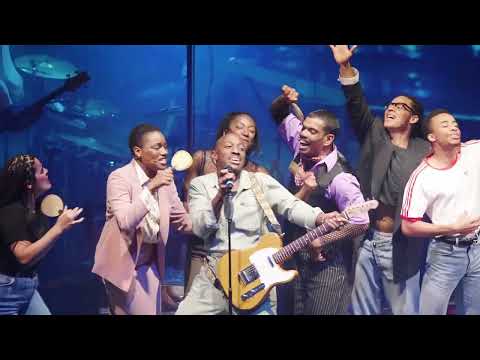
Review: the rock musical that refuses to behave
Here’s the trick: “Passing Strange” sells you a quest for “the real,” then spends two hours proving that “the real” is mostly a pose you do for other people. The lyrics are the engine of that argument. They are chatty, funny, impatient with themselves, and constantly aware of the audience sitting right there. Stew’s narrator voice does not narrate gently. He heckles his own story, revises it midstream, and treats sincerity like a suspicious package.
Lyrically, the show keeps returning to a few big verbs: leave, want, make, pretend. “Youth” wants authenticity the way a teenager wants a band t-shirt. He thinks it will fit him into a tribe. The text keeps catching him in the act of performing it. That’s why the funniest lines often arrive just as the story threatens to turn noble. The songs do not let the plot “learn a lesson” in peace. They keep asking: whose lesson, and for whom?
Musically, Rodewald and Stew build a score that changes costume as often as the characters do. Gospel, punk, blues, cabaret, club rock, then back again. It matters because the style shifts are not decoration. They are the show’s argument about identity: genres are communities, and Youth keeps borrowing passports. When the music turns gospel, he tries on salvation. When it turns punk, he tries on rupture. When it slides into Berlin art-scene noise, the lyric turns into a performance of politics. The score is a map, and the lyrics are the petty, human commentary scribbled in the margins.
Viewer tip: If you’re coming in cold, listen to three tracks first: the opening prologue, “Keys,” and “Passing Phase.” You’ll catch the show’s basic triangle: storyteller vs. younger self vs. the mother he cannot outgrow.
How it was made
“Passing Strange” did not arrive on Broadway fully formed. It was hammered into shape through workshop development and long pre-Broadway runs, with Stew and Heidi Rodewald building a theatre piece that still behaves like a gig. That hybrid was the point, not a compromise. Stew has described being drawn to the rowdy, audience-forward energy of early popular theatre and wanting to graft that electricity onto musical storytelling. The result is a book-and-lyrics voice that talks like a bandleader and thinks like a playwright.
The collaboration is baked into the text. The show keeps naming the people making it, then turning those names into jokes, then turning the jokes into emotional traps. That is a director’s rhythm as much as a lyricist’s. It is also why the album matters: the original cast recording was captured live, with audience reactions intact, so the soundtrack preserves the social friction the piece feeds on.
What to watch for: the narrator’s interruptions are not “breaks” from the story. They are the story. The lyrics are written to argue with themselves, and that argument is the drama.
Key tracks & scenes
"Prologue (We Might Play All Night)" (Narrator)
- The Scene:
- The band is onstage. The room is hazy at the start of Act I. The narrator announces himself like a frontman and dares the audience to keep up.
- Lyrical Meaning:
- This is the mission statement: a memoir that admits it is a performance while it performs. The lyric plants the show’s core tension, control versus confession.
"Baptist Fashion Show" (Mother / Ensemble)
- The Scene:
- Sunday morning. Mother stands in a doorway, Youth half-asleep. The lyric plays as family banter with a blade under it.
- Lyrical Meaning:
- The words establish a household where love and pressure are inseparable. Youth’s rebellion is not only against religion. It is against being known.
"Arlington Hill" (Mr. Franklin / Narrator)
- The Scene:
- Mr. Franklin, Youth, and friends share a joint. The talk slips from aspiration to escape. A fantasy of leaving America hangs in the air.
- Lyrical Meaning:
- The lyric makes “elsewhere” sound like an ideology. Europe becomes less a place than a projection screen for Youth’s unfinished self.
"Must Have Been High" (Narrator / Ensemble)
- The Scene:
- After LSD is passed around, bright colors hit the back screen. The narrator moves into the audience and speaks directly to people as the high intensifies.
- Lyrical Meaning:
- The lyric mocks the fantasy of staying young forever. It also foreshadows the show’s thesis: you can chase sensation for “truth” and still miss your life.
"Amsterdam" (Band / Ensemble)
- The Scene:
- Arrival in Amsterdam. A rush of permissiveness. The score turns into a travel montage with heat and swagger.
- Lyrical Meaning:
- Amsterdam is “freedom” as consumer choice. The lyrics flirt with liberation, then quietly suggest how fast liberation becomes routine.
"Keys" (Marianna / Youth)
- The Scene:
- In an Amsterdam squat, Marianna offers Youth literal keys to stay. Hospitality arrives without paperwork, and Youth cannot quite believe it.
- Lyrical Meaning:
- “Keys” is the show’s cleanest metaphor: intimacy as entry, belonging as permission. The lyric is tender, and that tenderness scares Youth more than chaos does.
"May Day (There’s a Riot Goin’ Down)" (Ensemble)
- The Scene:
- Berlin. A riot erupts. Strobe lights and haze, loud music, bodies in motion. Youth is at the border and suddenly inside a spectacle.
- Lyrical Meaning:
- The lyric turns politics into adrenaline. Youth is drawn to the theater of revolt, and the show asks what happens when identity becomes a costume you wear for credibility.
"Identity" (Youth / Narrator)
- The Scene:
- Youth throws cotton balls at the audience while screens multiply his image across the back wall. Mother interjects, demanding answers he refuses to give.
- Lyrical Meaning:
- This is the lyric’s indictment: Youth edits himself to fit the room. The song shows identity as both mask and mirror, and the chorus becomes a courtroom.
"Passing Phase" and "Love Like That" (Narrator / Mother)
- The Scene:
- We are at a funeral. Youth stands alone at a podium. The narrator interrupts, then sings himself. Mother appears, and the ending becomes a call-and-response.
- Lyrical Meaning:
- The lyric finally admits grief without irony. The show does not reward Youth’s quest for “the real.” It reframes value as love, the one thing not improved by performance.
Live updates (2024–2026)
Current as of 31 January 2026. “Passing Strange” has been moving again, which suits it. The European premiere ran at London’s Young Vic in 2024, directed by Liesl Tommy, with Giles Terera as Narrator and Keenan Munn-Francis as Youth. Reviews in the UK leaned into the show’s gig-theatre DNA, praising the swagger and the self-aware bite.
The same production is scheduled for a North American run at American Repertory Theater in Cambridge, Massachusetts in 2025, with Terera reprising Narrator and Liesl Tommy directing. Casting beyond the lead has been announced in stages, so check the producing theater for the latest company details before you buy.
Ticket and listener reality check: this show tends to surge in demand when a major revival lands, then disappear into licensing and regional runs. If you want it “as written,” the live cast album is still the quickest way to hear the pacing, the audience laughter, and the narrator’s timing.
Where to watch the filmed version: availability changes by region and month. Aggregators currently list the Spike Lee film version as streaming for free (with ads) on some services and rentable on major digital platforms. Always confirm in your territory the day you plan to watch.
Notes & trivia
- The show was developed through Sundance Institute theatre labs before its major regional and New York runs.
- The title “Passing Strange” is drawn from Shakespeare’s “Othello,” and the phrase also plays on the American history of racial “passing.”
- The original Broadway cast album was recorded live onstage at the Belasco Theatre, capturing audience reactions as part of the sound.
- The live album contains 24 tracks and preserves the narrator’s crowd-work rhythms better than a clean studio take would.
- The Broadway production earned major recognition for its writing, including a Tony Award for Best Book and awards for lyrics and music.
- Spike Lee filmed the Broadway production near the end of its run, creating a filmed record later broadcast via PBS “Great Performances.”
- Staging can involve haze, strobes, and very loud music, which some venues document in accessibility notes and show warnings.
Reception: then vs. now
In 2007–2008, the critical story was simple: Broadway had a rock score that did not politely translate itself into “musical theatre voice.” It arrived with jokes, self-disgust, and very sharp tenderness toward its own contradictions. Later writing about the show has increasingly treated it as a blueprint for how memoir can behave on a musical stage without turning into a lecture.
“A brilliant work about migration … beyond the tenets of ‘blackness’ and toward selfhood.”
The achievement of the rock musical is “even more exciting” because its creators were not typical theatre lifers.
A “joyous, … shape-shifting show” that splices gig, theatre, cabaret, and wicked pastiche.
What has changed in the reception is the frame. Early reviews treated the meta commentary as a novelty. Recent revivals treat it as the point: identity is performed, art is performed, even rebellion is performed. The lyrics were already ahead of that conversation. They just had better guitar tone.
Quick facts (album + show)
- Title: Passing Strange
- Broadway year: 2008
- Type: Rock musical (memoir-style, self-aware narrator)
- Book & lyrics: Stew
- Music / orchestrations: Stew and Heidi Rodewald
- Created in collaboration with: Annie Dorsen
- Notable musical motifs: gospel-to-rock “freight train” metaphor; belonging-as-access (“Keys”); identity-as-performance (“Identity”)
- Selected notable placements (story locations): church in Los Angeles; Amsterdam squat; Berlin May Day riot; final funeral sequence
- Original cast album: “Original Broadway Cast Recording (Live)”
- Label / imprint: Sh-K-Boom / Ghostlight Records
- Album status: Recorded live on Broadway; widely available on major streaming services
- Filmed version: Spike Lee filmed the Broadway production; later aired via PBS “Great Performances” and released on home video
Frequently asked questions
- Is there a movie version of “Passing Strange”?
- Yes. Spike Lee filmed the Broadway production as a concert-theatre film, preserving the onstage band and the narrator’s direct address.
- Do I need to know the lyrics in advance to follow the plot?
- No. But hearing the prologue, “Keys,” and “Passing Phase” first helps you track the narrator’s relationship to Youth and to Mother.
- Why does the narrator keep interrupting the story?
- Because the interruptions are the point. The show argues that memory is edited, identity is staged, and art is a negotiation with the room you are in.
- What does “passing” mean here?
- It is a cluster of meanings: a Shakespearean phrase, the passing of time, and the American history of racial passing. The lyrics keep all three in play.
- Is the cast album studio-clean?
- No. The Broadway album was recorded live, so you hear applause, laughter, and the friction of performance. That texture matches the writing.
- Where can I watch it right now?
- Availability shifts by region. Streaming guides currently list a mix of free-with-ads options and rentals on major digital stores. Check a current listing for your country before planning a watch night.
Key contributors
| Name | Role | Contribution |
|---|---|---|
| Stew | Book, lyrics, music; original Narrator | Wrote the voice of the show: comic interruptions, confessions, and the central argument about “the real.” |
| Heidi Rodewald | Music, orchestrations; band | Built the score’s genre-hopping engine, shifting from gospel to punk to cabaret without losing narrative clarity. |
| Annie Dorsen | Co-creator / director (collaboration) | Helped shape the hybrid form where theatre structure and concert behavior collide on purpose. |
| Liesl Tommy | Director (major revival) | Led the Young Vic staging and its transfer plans, leaning into gig-theatre propulsion and direct address. |
| Spike Lee | Film director | Filmed the Broadway production, creating the best “you had to be there” substitute this show will ever allow. |
| Sh-K-Boom / Ghostlight Records | Label | Released the live Broadway cast album and kept the score circulating beyond the original run. |
Sources: Young Vic (show page + pre-show information PDF), Playbill, The Guardian, Financial Times, The New Yorker, Variety, Ghostlight Records, Concord Theatricals, Harvard Gazette, TheaterMania, PBS, JustWatch.