Parade Lyrics – All Songs from the Musical
Parade Lyrics: Song List
- Act 1
- The Old Red Hills of Home
- The Dream of Atlanta
- How Can I Call This Home
- The Picture Show
- Leo at Work/What Am I Waiting For?
- I Am Trying to Remember...
- Big News!
- Funeral: There Is a Fountain/It Don't Make Sense
- Lullaby
- Somethin' Ain't Right
- Real Big News
- You Don't Know This Man
- People of Atlanta
- Twenty Miles from Marietta
- Frankie's Testimony
- The Factory Girls/Come up to My Office
- My Child Will Forgive Me
- That's What He Said
- It's Hard To Speak My Heart
- Summation and Cakewalk
- Act 2
- A Rumblin' and a Rollin'
- Do it Alone
- Pretty Music
- Letter to the Governor
- This Is Not Over Yet
- Blues: Feel the Rain Fall
- Where Will You Stand When the Flood Comes
- All the Wasted Time
- Abduction
- Sh'ma
- Finale
About the "Parade" Stage Show
Composer and lyricist was J. R. Brown. Screenwriter – A. Uhry. Try-outs before Broadway began in Vivian Beaumont Theater in November 1998. The musical was in operation from December 1998 to February 1999 with almost 40 preliminaries & 85 regular performances under direction of H. Prince. Choreographer was P. Birch. The histrionics had such cast: B. Carver, C. Carmello, C. C. Romano, R. Aranha & H. Lackey. In June 2000, has been launched a national US tour – the first performance took place in Fox Theatre in Atlanta. Director was again H. Prince. The tour had cast: D. Pittu, A. Burns, K. B. Kirk, K. Bowden, R. Redd, R. Hilsabeck, C. Hargrove, D. Grody, D. Vosburgh, E. Brownlee, S. Howard & S. Denise.From September 2007, the previews of London’s version of the play began in Warehouse Donmar Theater. The musical was held from September to November 2007. The director & choreographer was R. Ashford. In the show was such cast: L. Pulver, B. Carvel, J. Wisener, H. Anker, M. Bonnar, S. Escoffery, S. Webb & S. Page. In July 2008, the original version of the theatrical was featured in the LA’s Neighborhood Playhouse. Director was B. Schwind. Choreographer – I. Quinonez. The performance had cast: C. D'Amico, E. Olson & A. Anderegg. The London production was moved to LA’s Mark Taper Forum, where it was held from September to November 2009 with such actors: L. Pulver, T. R. Knight, B. Anderson, M. Berresse, W. Collyer, C. d'Amboise & K. Foreman. In February 2015, production was held in A. Fisher Hall, Lincoln Center. Director – G. Griffin. The cast involved: J. Jordan, L. Benanti, L. Frank, J. Henry, E. Steele, J. E. Conlee, D. Gaines & A. Campbell.
Release date: 1998
"Parade" – The Musical Guide & Song Meanings
Review: the score weaponizes Americana, and the lyric refuses to comfort you
"Parade" is often described as a historical tragedy. Accurate, but incomplete. It is also a musical about how a community learns a melody called certainty, then harmonizes its way into violence. Jason Robert Brown’s lyrics are rarely interested in quoting lofty ideals. They prefer a more dangerous move: they let ordinary language turn into a crowd. The show keeps asking the same question in different costumes. Who gets to be “from here,” and who is permanently auditioning for citizenship?
The writing works on two tracks. In public numbers, the lyric is civic pageantry: flags, slogans, easy pride, and the seductive grammar of “we.” In private numbers, the lyric narrows into marriage and fear, where every sentence is a negotiation over belonging. That contrast is not decoration. It is the dramaturgy. Leo Frank’s isolation is not just legal. It is linguistic: he cannot speak “South” fluently, and everyone hears the accent.
Musically, Brown borrows like a historian and cuts like a prosecutor. Ragtime snap, hymnlike weight, blues grit, parlor sweetness. The point is not variety. The point is collision. Every time the show turns pretty, it tests whether prettiness can be trusted. The best lyrics do the same. They land as song, then return as evidence.
How it was made
Alfred Uhry did not come to the Leo Frank story as an abstract research assignment. He grew up in Atlanta with the case as a family shadow, and he has said that people would not even say Frank’s name out loud. In a 2025 interview, Uhry describes how the story sat inside his community history, tangled up with shame and assimilation. That personal proximity matters because the show’s most incisive writing is not about villains twirling mustaches. It is about neighbors, and the stories they tell themselves when they want to feel pure.
Harold Prince commissioned Brown and Uhry to build what Prince called “an American opera,” and Brown’s own project notes that the original Lincoln Center run got mixed notices even as the writers later won Tony Awards for book and score. The show’s long arc has been a slow conversion story: not of the plot, but of its reputation. The 2023 revival turned “respect” into something closer to urgency.
The closest thing to a “napkin story” here is a kitchen table. Brown recalls sitting in Uhry’s kitchen listening to him talk about growing up Jewish in the South, then using many of Uhry’s exact words while writing the opening material. That is why the lyric of the show’s framing songs feels less like a thesis statement and more like inherited speech.
Key tracks & scenes
"The Old Red Hills of Home" (Young Soldier, Old Soldier, Townspeople)
- The Scene:
- Marietta, Georgia, 1862, then a jump to Confederate Memorial Day in 1913. A farewell, then a commemoration. Many productions light it like a ritual, bright and proud, with the chill arriving a beat too late.
- Lyrical Meaning:
- The lyric is nostalgia doing recruitment. It teaches the audience how “home” can become a weaponized word, and it frames the show with a melody that the town will keep humming even when it is wrong.
"The Dream of Atlanta" (Townspeople)
- The Scene:
- Streets alive with a holiday pulse. The ensemble sells a civic self-image, polished like a parade float. The sound is buoyant, the subtext is brittle.
- Lyrical Meaning:
- This is community branding. The lyric sketches an identity that cannot tolerate contradiction, which is why it later cannot tolerate Leo.
"How Can I Call This Home?" (Leo Frank)
- The Scene:
- Leo, alone inside a crowd. He is educated, Jewish, Northern, and exhausted by the daily performance of fitting in. The lighting often narrows, as if the town itself is squeezing him.
- Lyrical Meaning:
- The lyric is a grievance turned into an aria. It is not just “I dislike this place.” It is “this place will never let me belong,” which becomes a prophecy the plot makes real.
"You Don't Know This Man" (Lucille Frank)
- The Scene:
- Lucille is harassed by townspeople and pressed by the press. She plants her feet, holds her ground, and defends her husband in the open air of public accusation.
- Lyrical Meaning:
- The lyric is love as rebuttal. It is also Lucille’s first step from polite Southern wifehood into something fiercer: advocacy that does not ask permission.
"Do It Alone" (Lucille Frank)
- The Scene:
- Jail visitation, late and frayed. Leo feels betrayed by Lucille’s choice to engage the reporter. The room is small. The marriage feels smaller.
- Lyrical Meaning:
- Brown writes the argument in clean, cutting phrases. The lyric’s sting is that both are partly right. Survival requires strategy, and strategy can look like disloyalty.
"This Is Not Over Yet" (Leo Frank, Lucille Frank)
- The Scene:
- A phone call that reintroduces oxygen. After the governor reopens the case, Leo celebrates in his prison cell, hope arriving like sunlight through bars.
- Lyrical Meaning:
- The lyric is insistence. It is also dramatic irony, because the audience knows that “hope” in this story comes with a price tag and a fuse.
"All the Wasted Time" (Leo Frank, Lucille Frank)
- The Scene:
- A prison farm picnic, the first lunch together in two years. The staging often softens, not to sentimentalize, but to show what the machine of history is about to crush.
- Lyrical Meaning:
- This is the show’s emotional thesis: intimacy rescued from disaster. The lyric does not pretend the marriage was easy. It mourns the time stolen by public hysteria.
"Sh'ma" & Finale (Lucille, Company)
- The Scene:
- After the lynching, Lucille stands with Leo’s ring, and the show flashes back to the factory moment that began it all as the town cheers its parade again. The lights thin out until only memory remains.
- Lyrical Meaning:
- A prayer placed against noise. The lyric is both faith and refusal: the insistence that identity survives even when the crowd tries to erase it.
Notes & trivia
- The licensed “Revised Version (2009)” is the standard version for many productions and comes with a published full synopsis and materials through MTI.
- Brown has said he used many of Uhry’s exact words when writing the opening material, drawn from conversations about growing up Jewish in the South.
- The original Broadway production opened at Lincoln Center’s Vivian Beaumont Theatre on December 17, 1998 and later won Tony Awards for Best Book and Best Original Score.
- The 2023 Broadway cast recording was released March 23, 2023 by Interscope Records, conducted by Brown.
- The original Broadway cast album was released April 27, 1999, and Playbill reported it was recorded independently and distributed by RCA.
- The 2025 national tour of the Tony-winning revival opened January 11, 2025 and closed September 7, 2025, ending at the Kennedy Center.
- Modern stagings often foreground the ending from the start with projections and documentary framing, tightening the show’s “no suspense, all reckoning” approach.
Reception
The 1998 Lincoln Center premiere arrived with a strange handicap: a tragedy with a big, inviting title, presented in a house associated with prestige, during a season hungry for lighter narratives. Brown’s own project page is frank that the run drew mixed reviews, even as the material won major awards and later built a second life through recordings and revivals. In other words, the score got the respect quickly. The show earned love slowly.
By 2023, the critical frame had shifted. Reviewers heard the same music as a warning siren for the present day. They focused less on whether the story “belongs” in a musical and more on how the musical form makes the crowd psychology legible, and disturbing.
“With the fates established from the jump, it’s remarkable that Parade feels as dynamic and moving as it does.”
“Brown’s spectacular score is also a crazy quilt, a tour of Americana forms.”
“It’s really a human story about how people ... can’t escape the prejudice of their present.”
Live updates (2025-2026)
Information current as of January 29, 2026. The North American tour of the 2023 Tony-winning revival has ended. IBDB lists the tour as opening January 11, 2025 and closing September 7, 2025, with the final engagement at the Kennedy Center running August 19 to September 7, 2025.
What is “current” now is availability, not a single marquee run. "Parade" is firmly in circulation through licensing (MTI’s revised version), and the 2023 cast album remains the modern audio reference point for audiences who discovered the show through that revival. If you are tracking cast continuity, note that the tour was led by Max Chernin and Talia Suskauer as Leo and Lucille, announced ahead of the January 2025 launch.
Ticket behavior in the post-revival ecosystem has been consistent: limited engagements sell on urgency, while the show’s longer-term reach happens through regional theatres and institutions programming it as a civic event. That is not marketing language. It is how this material tends to land when it is staged well.
Quick facts
- Title: Parade
- Year: 1998 (Broadway premiere)
- Type: Musical drama (historical tragedy)
- Book: Alfred Uhry
- Music and Lyrics: Jason Robert Brown
- Original Broadway venue: Vivian Beaumont Theater (Lincoln Center)
- Core setting: Georgia, 1862 framing; main action 1913 to 1915
- Notable musical forms in the score: hymn, ragtime, blues, patriotic chorus, chamberlike ballad writing
- Album anchor (original): Original Broadway Cast Recording, released April 27, 1999 (Playbill reported independent recording, distributed by RCA)
- Album anchor (modern): Parade (2023 Broadway Cast Recording), released March 23, 2023 (Interscope)
- Latest major staging cycle: 2023 Broadway revival (limited run through August 6, 2023); 2025 tour (January 11 to September 7, 2025)
Frequently asked questions
- Who wrote the lyrics to "Parade"?
- Jason Robert Brown wrote both the music and the lyrics, with the book by Alfred Uhry.
- Is "Parade" based on a true story?
- Yes. It dramatizes the 1913 trial of Leo Frank in Georgia and the events leading to his 1915 lynching, with the show framing how public prejudice shapes “truth.”
- Where does “This Is Not Over Yet” happen in the story?
- After the governor decides to re-examine the case, Lucille calls Leo in prison and he responds with a surge of hope from inside his cell.
- What songs best explain the show’s themes without hearing the full score?
- Start with “The Old Red Hills of Home” (public myth), then “How Can I Call This Home?” (outsider friction), then “All the Wasted Time” (private cost).
- Is the 2025 tour still running in 2026?
- No. IBDB lists the tour as closing September 7, 2025. As of January 29, 2026, the show’s main availability is through licensed productions and recordings.
- Which cast recording should I listen to first?
- If you want the original Broadway voices, start with the 1999 album. If you want the revival’s orchestral detail and current performance style, start with the 2023 Broadway cast recording.
Key contributors
| Name | Role | Contribution |
|---|---|---|
| Jason Robert Brown | Composer, Lyricist | Writes lyric-driven scenes that toggle between civic chorus and intimate confession, using Americana forms as dramatic pressure. |
| Alfred Uhry | Book | Builds a community portrait from personal and regional history, centering how prejudice becomes a social habit. |
| Harold Prince | Original Director | Commissioned and shaped the project as a large-scale American historical musical with public spectacle and private consequence. |
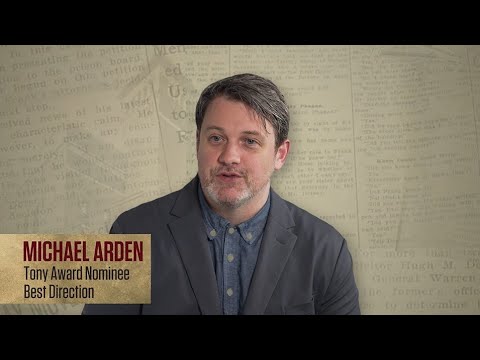
| Michael Arden | Director (2023 revival; 2025 tour production) | Reframed the story with documentary elements and pared-back staging that foregrounds the crowd’s role in the tragedy. |
| Alfred Uhry & Jason Robert Brown | Writers’ collaboration | Shared language and memory, including Brown’s noted use of Uhry’s lived phrasing in the opening material. |
| Max Chernin | Performer | Led the 2025 national tour as Leo Frank. |
| Talia Suskauer | Performer | Led the 2025 national tour as Lucille Frank. |
Sources: Music Theatre International (MTI); JasonRobertBrown.com; IBDB; Playbill; Broadway.com; The Guardian; The New Yorker; Associated Press; Kennedy Center.