
Pacific Overtures Lyrics: Song List
About the "Pacific Overtures" Stage Show
Screenwriter is J. Weidman. Songwriter is S. Sondheim. The first show of the play took place in November 1975 in Boston's Shubert Theatre. In December 1975, production took place in the Kennedy Center Opera House. Broadway’s preliminaries began in the last day of 1975. This spectacular took place from Jan. to June 1976 with almost 200 regular exhibitions. Director was H. Prince. Choreographer – P. Birch. The cast was: Y. Shimoda, H. Fujimoto & I. Sato. In 1984, production took place from March to April with 20 exhibitions. The histrionics has been in the Promenade Theater from Oct. 1984 to Jan. 1985 with 109 performances, directed by F. Soeder, choreographed by J. Watson. This show had such actors: E. Abuba, T. Fujii & J. Bantay.
The premiere in Europe took place in Manchester in 1986, headed by H. Lloyd-Lewis & choreographed by P. Kerryson. The musical has been held in London Coliseum from September to November 1987 with 27 performances, headed by J. Holmes & choreographed by D. Toguri with such cast: J. Kitchiner, M. Rivers & R. Angas. In October 2000, the show went on stage of Tokyo Pit, directed & choreographed by A. Miyamoto. H. Sayama, A. Haruta & S. Honda were involved in the play. This histrionics was held in Chicago Shakespeare Theater from October 2001 to January 2002, directed by G. Griffin. In 2002, in the USA was staged the Japan version of the production. From June to September 2003, the musical was in London's Donmar Warehouse. The new version of the Broadway show on the stage of Studio 54 was from December 2004 to January 2005, directed & choreographed by A. Miyamoto. The show had cast: M. K. Lee, P. Montalban & H. Lee.
Release date of the musical: 1976
"Pacific Overtures" – The Musical Guide & Song Meanings
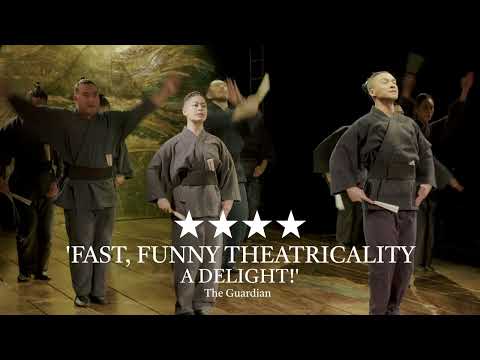
Review: the lyrics are a history lesson that does not trust your memory
"Pacific Overtures" (1976) is often sold as “Sondheim does Kabuki,” which is the kind of shorthand that keeps the show rare. The deeper point is sharper and more uncomfortable: it stages national change as a series of tidy explanations, then shows you how wrong tidy explanations can be. The score is full of narrators, witnesses, emissaries, and “reliable” observers. The lyrics keep asking a single nagging question. Who gets to say what happened?
That skepticism is not academic. It is dramatic fuel. In Act I, words are rituals: coded diplomacy, public prayers, polite refusals. Then the Americans arrive and language becomes commerce, branding, and salesmanship. The lyric writing mirrors that switch. It moves from restraint to pitch, from communal storytelling to individual desire, from “we” to “me.” Even the comic numbers have teeth. When "Please Hello!" turns imperial intrusion into a jaunty procession of national caricatures, it is funny, then it sits there like a bruise.
Musically, Sondheim builds contrast as argument. You can hear Japan’s self-containment in spare textures, then hear “modernity” as busy, imported noise. The famous trick is that the show does not end with catharsis. It ends with momentum. "Next" is not an ending so much as a machine revving, which is why the lyrics feel prophetic instead of nostalgic.
Viewer tip: if you are seeing it live, sit where you can read faces and hands. This show communicates politics through small physical choices: how an object is held, how a gesture becomes a habit, how a “foreign” pose turns into a personal one. If you are listening first, start with "Someone in a Tree" and "A Bowler Hat." They teach you how the show thinks.
How it was made: Prince provided the lens, Sondheim provided the trapdoor
The premise comes from a real historical jolt: Commodore Perry’s arrival in 1853, and Japan’s rapid shift after isolation. Producer-director Harold Prince pushed for the story to be told from the Japanese point of view. That single choice explains the show’s tone. It is not a victory lap. It is a chronicle narrated by people watching their world get rewritten.
The original Broadway production opened January 11, 1976 at the Winter Garden Theatre, set in “Japan. July, 1853 and on.” It was staged with a mix of Japanese theatrical conventions and Broadway mechanics: a Reciter, visible scene changes, stylized makeup and wigs, and traditional instruments threaded into the pit. These choices were never decorative. They were a form of argument about perspective.
The most persuasive “origin story” evidence is archival, not anecdotal. The Library of Congress finding aid for the Stephen Sondheim Papers lists drafts and sketch materials for key numbers, including "Someone in a Tree," "Please Hello," "A Bowler Hat," "Four Black Dragons," and "The Advantages of Floating in the Middle of the Sea." The NYPL’s Harold Prince scores inventory also documents alternate and unused materials, including a separate listing for "Four Black Dragons (Alarms)" and an alternate "Chrysanthemum Tea," plus “Prayer” cues marked as not used. In other words, the show’s precision is the result of pressure, revision, and selection.
If you want one craft clue that unlocks the score, consider "Someone in a Tree." Critics and scholars keep returning to it because it is the show in miniature: two witnesses, each missing half the truth, constructing “history” anyway. The lyric is structured like testimony, which is why it lands as both beautiful and unsettling.
Key tracks & scenes: 8 lyrical moments that carry the plot
"The Advantages of Floating in the Middle of the Sea" (Reciter, Company)
- The Scene:
- Act I begins as a ceremonial display. Japan is presented as self-contained, a “floating” world. Lighting is typically clear and formal, like a museum exhibit that knows it is being watched.
- Lyrical Meaning:
- The lyric sells isolation as safety, then plants the irony. “Advantages” becomes a word you can feel slipping, because the song is also tempting fate.
"There Is No Other Way" (Tamate, Observers)
- The Scene:
- Tamate appears in a domestic space that still carries ritual weight. The mood drops into inwardness. In many productions, the stage picture tightens and the music feels like thought.
- Lyrical Meaning:
- The lyric frames resignation as virtue. It is a private philosophy that becomes a national reflex, which is why the song feels gentle and dangerous at the same time.
"Four Black Dragons" (Fisherman, Thief, Reciter, Townspeople)
- The Scene:
- The “dragons” arrive offshore. The stage becomes a shoreline of rumor, panic, and news travel. Percussion and ensemble rhythm do the work of distant cannons.
- Lyrical Meaning:
- The lyric is eyewitness hysteria. It shows how a nation meets the unfamiliar: first as myth, then as alarm, then as policy.
"Poems" (Kayama, Manjiro)
- The Scene:
- A friendship forms in quiet daylight. Kayama and Manjiro share a tone that is less public, more personal, often staged with stillness that feels earned.
- Lyrical Meaning:
- This is diplomacy as intimacy. The lyric is simple on purpose. It contrasts with the bureaucratic language around them, suggesting connection is the one thing not easily imported.
"Someone in a Tree" (Old Man, Reciter, Boy, Warrior)
- The Scene:
- Two witnesses recount the first treaty meeting. One boy watched from a tree and could see but not hear. A warrior hid under the floor and could hear but not see. In strong stagings, the set becomes a memory machine: layered perspectives occupying the same stage-time.
- Lyrical Meaning:
- The lyric is about history as a collage of partial truths. It makes “accuracy” sound impossible without turning the song into a lecture. That’s the trick: the number is thrilling because it is an epistemology lesson disguised as theatre.
"Please Hello!" (Abe, Reciter, visiting Admirals)
- The Scene:
- The foreign emissaries parade in. Many productions heighten the satire with masks, stylization, and deliberate “otherness” in costuming. The tempo is bright, the tone is polite, the pressure is unmistakable.
- Lyrical Meaning:
- The lyric turns gunboat diplomacy into showbiz. Each greeting is a transaction. Every “please” is leverage. The song’s cheerfulness is the cruelty.
"A Bowler Hat" (Kayama, Manjiro)
- The Scene:
- Years pass in a few minutes. One staging highlight described in reviews places Kayama and Manjiro opposite each other as a turntable rotates and time slides forward, while Kayama gradually adopts Western habits and objects.
- Lyrical Meaning:
- The lyric is assimilation written as inventory. It is funny, then chilling, because each object is a small surrender that adds up to identity change.
"Next" (Reciter, Company)
- The Scene:
- Act II accelerates. Scenes compress into headlines. Light often becomes harsher, more modern, less ritual, as if the stage itself has been industrialized.
- Lyrical Meaning:
- The lyric refuses reflection. It is progress as compulsion. “Next” becomes the show’s bleakest punchline: history does not pause to ask if you’re ready.
Live updates (2025–2026): where the show lives now
Information current as of January 29, 2026.
"Pacific Overtures" is not in a long-running commercial revival cycle, but it is actively alive in high-profile regional and international productions, plus licensing. MTI lists the title for licensing and provides show essentials, billing requirements, and the core song list. That matters because the show’s afterlife is often educational and community-driven, where staging choices become the real “new” content.
Recent evidence of that life is specific. East West Players mounted the show in Los Angeles in late 2024, led by Jon Jon Briones and Gedde Watanabe, and public listings note an extension into December. In San Francisco, Brava hosted a Kunoichi Productions run from May 30 through June 15, 2025, explicitly framing the production through diaspora identity and traditional theatrical forms alongside contemporary movement. London’s Menier Chocolate Factory ran a major revival from late November 2023 into February 2024, widely reviewed and treated as an event production.
Listening-wise, you have options that shape interpretation. The 1976 Original Broadway Cast Recording (RCA) remains the baseline document for the show’s first sound-world. The 2005 “new Broadway cast recording” (PS Classics), tied to the Roundabout revival, adds a different sonic profile and a bonus track, which is useful if you want a cleaner modern capture and a sense of how orchestrations and pacing can shift across revivals.
Notes & trivia
- The original Broadway production opened January 11, 1976 and closed June 27, 1976 after 193 performances, with previews beginning December 31, 1975.
- IBDB lists the setting as “Japan. July, 1853 and on.” That “and on” is the show warning you it will not stop at the treaty.
- The original Broadway production won Tony Awards for Scenic Design (Boris Aronson) and Costume Design (Florence Klotz), and was nominated in multiple major categories including Best Musical and Best Score.
- Masterworks Broadway’s album notes emphasize Kabuki-influenced conventions in the original staging, including a Reciter, visible scene changes by black-clad stagehands, and traditional instruments supplementing the orchestra.
- The Stephen Sondheim Papers finding aid at the Library of Congress lists lyric sheets, sketches, and script pages for "Someone in a Tree," plus multiple folders of sketch material for "Please Hello" and "A Bowler Hat."
- The NYPL Harold Prince scores inventory references an alternate "Chrysanthemum Tea" and lists “Prayer” cues marked as not used in production.
- A documented concert and archival afterlife exists: at least one reference site notes the Broadway production was filmed live on June 9, 1976 at the Winter Garden.
Reception: critics keep returning to the craft, not the comfort
Reviews of modern productions tend to praise two things even when they argue about clarity: the score’s formal daring and the show’s relevance to contemporary debates about nationalism, globalization, and cultural “purity.” The 2023–24 Menier revival drew major UK coverage that framed the musical as both historical and universal in its themes of assimilation and outsider status. A 2025 review in the San Francisco Chronicle, responding to a Brava run, read the show through today’s geopolitical tensions and highlighted how Sondheim’s lyrics can stay “light and jagged” while documenting a way of life vanishing in real time.
“It is thrilling to see this lesser-performed Sondheim piece staged with such zest and imagination.”
“Stephen Sondheim's lyrics stay light and jagged, and his music sounds like waves heaving back and forth, thrashing the passage of time.”
“The most impressive production I’ve seen anywhere all year.”
Quick facts
- Title: Pacific Overtures
- Year: 1976 (Original Broadway opening)
- Type: Historical musical with stylized theatrical forms
- Book: John Weidman (additional material credited to Hugh Wheeler)
- Music & lyrics: Stephen Sondheim
- Original Broadway director: Harold Prince
- Original Broadway choreography: Patricia Birch
- Orchestrations (IBDB/MTI): Jonathan Tunick (with Paul Gemignani listed as musical director for the original Broadway production)
- Selected notable placements: "Someone in a Tree" as the “how history gets written” centerpiece; "Please Hello!" as the satire of foreign courtship; "A Bowler Hat" as the assimilation montage; "Next" as the accelerating finale
- Cast albums: 1976 Original Broadway Cast Recording (RCA; Masterworks reissue page); 2005 New Broadway Cast Recording (PS Classics) tied to the Roundabout revival
- Licensing: Available via Music Theatre International (MTI), which also provides required billing language and production resources
Frequently asked questions
- What is "Pacific Overtures" about, in plain terms?
- It dramatizes Japan’s forced opening to Western trade beginning in 1853 and traces the cultural and political consequences over generations, using stylized storytelling to question how history is narrated.
- Who wrote the lyrics?
- Stephen Sondheim wrote both music and lyrics, with a book by John Weidman and additional material credited to Hugh Wheeler.
- Which song best explains the show’s point?
- "Someone in a Tree." It demonstrates the show’s obsession with partial evidence, competing testimony, and the way “official” history is assembled from blind spots.
- Is there a recommended recording to start with?
- Start with the 1976 Original Broadway Cast Recording to hear the score in its first theatrical ecosystem, then try the 2005 PS Classics recording for a modern capture and a glimpse of how revivals reshape sound and pacing.
- Is the show being produced now?
- Yes, but most often in major regional and company productions rather than a standing commercial run. Recent examples include East West Players (Los Angeles, late 2024) and Kunoichi Productions at Brava (San Francisco, May–June 2025), alongside the Menier Chocolate Factory revival in London (late 2023 to early 2024).
- Is it “problematic” to stage this show today?
- It can be, depending on how caricature and “otherness” are handled in "Please Hello!" and how Western viewpoints are framed. Strong productions lean into stylization as critique, not as endorsement, and are explicit about the satire.
Key contributors
| Name | Role | Contribution |
|---|---|---|
| Stephen Sondheim | Music & Lyrics | Wrote a score built on contrast, satire, and recurring musical ideas tied to modernization and power. |
| John Weidman | Book | Structured the narrative as a chronicle with stylized vignettes and a guiding Reciter. |
| Hugh Wheeler | Additional material | Credited for additional material in licensing and production records. |
| Harold Prince | Original Broadway producer-director | Helped define the point of view and theatrical frame, emphasizing Japanese perspective. |
| Jonathan Tunick | Orchestrations | Shaped the orchestral palette that supports traditional instruments and Broadway architecture. |
| Paul Gemignani | Original Broadway musical director | Conducted and guided the original production’s musical execution. |
| Music Theatre International (MTI) | Licensing | Current licensing home, billing requirements, and production resources for new stagings. |
| Library of Congress / NYPL | Archives | Hold documented sketch, lyric, and score materials that map the show’s development and revisions. |
Sources: IBDB; Masterworks Broadway; Music Theatre International (MTI); The Guardian; San Francisco Chronicle; American Theatre; East West Players; Brava Theater Center; DC Theater Arts; Stage and Cinema; Playbill; Library of Congress (Stephen Sondheim Papers); New York Public Library (Harold Prince scores).