Out Of This World Lyrics – All Songs from the Musical
Out Of This World Lyrics: Song List
- Act 1
- Prologue
- I Jupiter, I Rex
- Use Your Imagination
- Hail, Hail, Hail
- I Got Beauty
- Maiden Fair
- Where, Oh, Where?
- I Am Loved
- They Couldn't Compare To You
- From This Moment On
- What Do You Think About Men?
- You Don't Remind Me
- I Sleep Easier Now
- Act 2
- Climb Up The Mountain
- No Lover (For Me)
- Cherry Pies Ought To Be You
- Hark To The Song Of The Night
- Nobody's Chasing Me
- Finale (Company)
About the "Out Of This World" Stage Show
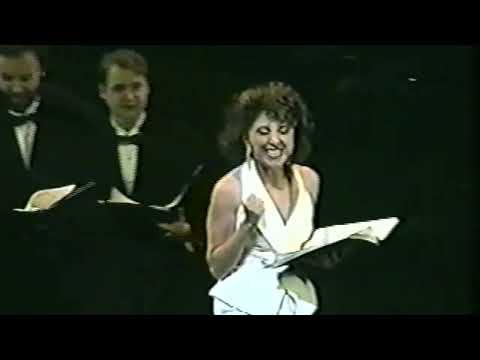
Writers – R. Lawrence & D. Taylor. Songs composed by C. Porter. The first show took place in November 1950 in Philadelphia. On Nov. 1950, production was held in Boston. The histrionics was on Broadway from December 1950 to May 1951 with 157 plays, directed by G. Abbott & choreographed by H. Holm. The cast involved: G. Gaynes, C. Greenwood, P. Gillette, D. Burns, W. Eythe, W. Redfield, B. Ashley, J. Collins, R. Harrison & P. Rea. From March to April 1995, the musical was shown as part of Encores! in NY with 4 presentations. Director – M. Brokaw. Choreographer – J. Carrafa. The histrionics involved such cast: P. Scolari, La Chanze, K. Page, E. Walsh, D. Spare, M. Heller, A. Green, A. Martin, G. Edelman, M. Mazzie, E. Sabella, R. Coloff, M. Shafer & J. Baer.Musical went to the Eureka Theatre from July 2000, directed by G. MacKellan & choreographed by J. Zaban. In the show were present such actors: S. Rhyne, A. Magdalen, D. Miailovich, K. Price, L. Peers, C. Altman, J. Elliot-Kirk, M. Riutta, E. Simonick, S. Rhoads & D. Popovic. In May 2015, show was held in California, directed by S. Lodick. Adapting the script – G. MacKellan. Choreographer – M. Dayley. The show had such cast: M. Suarez, A. Claybaugh, D. Joves, J. Alvarado & J. Gough. The London production was held on the stage of Ye Olde Rose & Crown Theatre. Next try-outs were in April 2016 and the full-fledged play was held in April 2016, directed by R. Smartnick, choreographed by K. McPhee with such cast: C. B. Jones, R. Moushall, H. J. Catton, R. Betteridge, M. Gilmartin, D. Becker, K. Deacon, A. Buckley, C. Tait & A. Garrett. In 1951, the musical won the Theatre World Award.
Release date: 1950
"Out of This World" – The Musical Guide & Song Meanings
Review: a divine farce held together by human lyrics
How do you stage a romantic comedy where the male lead is literally cheating with himself? "Out of This World" (1950) tries to get away with it by treating myth as a nightclub gag and marriage as a headline. The book swerves. The score does not. Porter writes like he is arguing with the premise, then winning the argument line by line. When the story gets busy, the lyrics get precise. When the plot gets smudgy, the rhymes snap into focus and push the scene forward anyway.
The lyrical themes are less about Olympus and more about consent, appetite, and the old American question: do you want the fantasy, or do you want the person? Helen’s material keeps insisting on clarity. She is not a mythic prize, she is a reporter’s wife who notices when the “husband” in the room suddenly speaks in polished couplets. Mercury’s songs sell seduction as playacting, a trickster’s workshop where words are costumes. Juno’s numbers are the opposite. She performs fury as physical comedy, using lyric punchlines to turn humiliation into control. Even the title is a dodge. The show is not about space. It is about distance: between spouses, between gods and mortals, between what is said and what is meant.
Musically, this is late Porter leaning into bright verse architecture, dance-driven setups, and sly conversational melody. The style matters because the characters are basically rhetorical positions. Mercury is persuasion, Juno is retaliation, Helen is discernment. That is why the best songs here feel like arguments you can tap-dance to. Listen to the 1951 cast album and the 1995 Encores! recording back to back and you hear the same trick from two angles: the original leans on period bounce and comic timing; Encores! tends to sharpen the lyric clarity and trim the fog around the book.
How it was made: Porter updates Plautus, Broadway updates Porter
The source is ancient: Plautus’ "Amphitryon," with mistaken identity and divine interference baked into the structure. The adaptation chooses a mid-century frame, bouncing from New York to Mount Olympus, and adds a Chicago gangster for extra zigzag. That “anything can happen” logic is the show’s oxygen and its problem. You can feel the creative team betting that spectacle and dance will distract from coherence. Sometimes it does. Sometimes it just spotlights the seams.
The most famous behind-the-scenes story is also the most useful lens on the lyrics: “From This Moment On” was written for this show, worked during tryouts, and then got cut before Broadway. Later it turned into a standard via the "Kiss Me, Kate" film, plus revivals and jazz recordings. The anecdote is usually told as Broadway cruelty, but it is also a diagnostic: "Out of This World" could not afford a number that stopped the farce engine, even if the song was gold. Concert versions love restoring it because concerts can admit what the original production could not: the lyric is better than the plot it was serving.
There is also a quieter kind of authority around this score. The Library of Congress holds Porter’s manuscript and working materials for songs from the show, including “Use Your Imagination” and even paperwork connected to “From This Moment On.” That matters for interpretation because it anchors the show’s lyric choices in drafts and revisions, not just nostalgia. This is a piece that was worked on, argued over, and altered under pressure. You can hear the pressure in how hard the lyrics hustle to justify the scenario.
Key tracks & scenes: the lyrical moments that do the heavy lifting
"Use Your Imagination" (Mercury, with Helen)
- The Scene:
- Mercury appears as the trip’s “helpful guide,” silver sandals giving him away to anyone paying attention. The road-to-Athens travel sequence plays like a bright postcard under theatrical daylight, movement always forward.
- Lyrical Meaning:
- This is seduction by grammar. Mercury asks Helen to suspend logic, then gives her language that makes surrender sound like intelligence. The lyric’s key move is permission: it invites fantasy while pretending it is only a game.
"I Got Beauty" (Juno)
- The Scene:
- Juno arrives with the energy of a wronged spouse who refuses to be dignified about it. The staging is typically all angles and entrances, comedy built from indignation and a body in motion.
- Lyrical Meaning:
- Juno turns jealousy into a sales pitch. The lyric weaponizes self-description: she lists assets like an invoice, then dares the universe to disagree. It is funny because it is true, and sharp because it is wounded.
"I Am Loved" (Helen)
- The Scene:
- A rare pause. Helen steps out of the swirl, often under cleaner light, less scenic clutter. The sound world narrows to her certainty.
- Lyrical Meaning:
- This song is the show’s moral spine. It refuses the divine proposition and makes fidelity sound like a chosen luxury, not a limitation. Porter’s lyric gives Helen adult agency. The melody can be sweet; the point is steel.
"What Do You Think About Men?" (Helen, Chloe, Juno)
- The Scene:
- A conversational trio that plays like a cocktail debate in myth drag. The scene usually lands in a social space, with women orbiting the same subject from different angles.
- Lyrical Meaning:
- The lyric is sociology disguised as flirtation. The women compare notes, undercut the male gaze, and turn “romance” into data. The comedy comes from how calmly the truth is spoken.
"Climb Up the Mountain" (Juno, with company and Niki)
- The Scene:
- Processional chaos: a shrine, a climb, a crowd. Juno uses the ensemble like a megaphone, pushing the action into ritual.
- Lyrical Meaning:
- Juno recasts vengeance as spiritual instruction. The lyric is full of imperatives, a marching rhythm that turns anger into doctrine. It is also a brilliant disguise: she is doing plot.
"Nobody’s Chasing Me" (Juno)
- The Scene:
- This is where comic performance becomes choreography. Juno, often in a mortal disguise, plays rejection as a physical gag, kicking against the humiliation.
- Lyrical Meaning:
- The lyric flips the usual lament. Instead of “why won’t he love me,” it’s “why won’t anyone try?” That twist exposes the character’s vanity and loneliness in the same breath.
"Hark to the Song of the Night" (Jupiter)
- The Scene:
- Jupiter claims the stage with nocturnal atmosphere, usually darker lighting and a more formal musical posture. The farce slows just enough to let him sound sincere.
- Lyrical Meaning:
- This is the god trying on poetry as an alibi. The lyric suggests profundity, but it is also manipulation: aesthetic mood as cover for desire. Porter keeps the line elegant and slightly suspect.
"From This Moment On" (Art and Helen, restored in later versions)
- The Scene:
- In restorations, it often lands as the romantic claim the original production did not make room for: a clear duet statement that stops the machinery and lets the couple be a couple.
- Lyrical Meaning:
- The lyric is a contract, not a flirtation. That is exactly why it is famous and exactly why it was vulnerable inside this particular show. It asks the audience to believe in steady love, not comic chase.
Live updates (2025-2026): where "Out of This World" lives now
In 2025-2026, "Out of This World" functions more like a cult title with a famous orphaned song than a repertory staple. Rights and materials are actively handled through Concord Theatricals, and the show is positioned for colleges and community theatres that want a Porter score with dance and comedy built in. There is no evidence in major public listings of an ongoing commercial tour or a Broadway-level revival announcement during this window, but the title remains easy to resurrect in concert form, which is how it keeps reintroducing itself to new listeners.
On the audio side, the path is clearer than the stage path. The original Broadway cast album is widely available on modern platforms, and the Encores! 1995 cast recording remains the go-to alternative when you want cleaner narrative context and a concert-first sound. If you are “meeting” the show for the first time, start with the 1951 album for period flavor, then switch to Encores! for lyric intelligibility. That pairing gives you the closest thing to an interpretive map without needing a full production.
Notes & trivia
- The Broadway run opened at the New Century Theatre in December 1950 and closed in May 1951 after 157 performances.
- Concord’s current licensing listing frames the setting as various 1950s locations, from NYC to Mount Olympus, and even notes optional doubling of Jupiter and Art.
- IBDB credits include Robert Russell Bennett for orchestration, with Agnes de Mille credited for staging and Hanya Holm for choreography.
- “From This Moment On” was written for this show, cut before Broadway, and then rehomed into the "Kiss Me, Kate" film, where it became a durable standard.
- The 1995 Encores! production generated a commercial cast recording (often associated with DRG), giving the score a second life beyond the 1951 album.
- The Library of Congress finding aid for the Cole Porter Collection lists manuscript materials tied to "Out of This World" songs, including “Use Your Imagination,” and references to “From This Moment On.”
- Barbara Ashley received a 1951 Theatre World Award recognition connected to the original production.
Reception: the book took the hit, the lyrics took the notes
Contemporary response tended to admire the surface and distrust the engine. That split is still the cleanest summary: the score is respected, the book is tolerated, and the best productions treat the show as a delivery system for Porter plus dance. Modern listeners are often kinder than 1950 critics because they experience the material as an album first, where lyric craft is the main event.
“Although it is difficult to make sex a tiresome subject, OUT OF THIS WORLD has very nearly succeeded.”
“The enchanting things in Out of This World are beside the point. . . . [It] does not get far outside the Broadway library of second-rate operetta routines.”
“George Abbott removed this from Out of This World in Boston, ‘apparently because William Eythe, a non-singer, was killing his half of the whirlwind love duet.’”
Quick facts
- Title: Out of This World
- Year: 1950 (Broadway premiere)
- Type: Full-length musical comedy (myth-based farce)
- Music & lyrics: Cole Porter
- Book: Dwight Taylor and Reginald Lawrence
- Orchestration (original): Robert Russell Bennett
- Staging / choreography credits (original): Agnes de Mille (staging), Hanya Holm (choreography), with additional direction credited to George Abbott in production records
- Selected notable placements: “Use Your Imagination” functions as the travel seduction setup; “I Am Loved” is the emotional argument song; “Nobody’s Chasing Me” is the comic breakdown number
- Album status: Original Broadway Cast Recording (released 1951 and still in circulation); Encores! 1995 cast recording also commercially released
- Availability: Both primary recordings are accessible through major digital music services, and licensing materials are distributed through Concord Theatricals
Frequently asked questions
- Is “From This Moment On” really from "Out of This World"?
- Yes. It was written for the show, cut before the Broadway opening, and later became widely known through other contexts, especially the "Kiss Me, Kate" film and subsequent stage use.
- What is the show’s story in one sentence?
- Jupiter disguises himself as a mortal husband to pursue Helen, while Mercury meddles, Juno retaliates, and the humans insist on real love over divine games.
- Which recording should I start with?
- Start with the 1951 original cast album for period style, then try the 1995 Encores! cast recording when you want tighter delivery and concert clarity.
- Is "Out of This World" touring in 2025-2026?
- There is no consistent public evidence of a major commercial tour in this period. The title appears most often via licensing and concert-style revivals rather than a standing tour model.
- Why do people call the score better than the book?
- The lyrics and melodies are sharply built and character-specific, while the plot’s farce mechanics can feel crowded, forcing songs to do extra narrative labor.
Key contributors
| Name | Role | Contribution |
|---|---|---|
| Cole Porter | Composer, Lyricist | Wrote music and lyrics; late-period Porter craft with dance-forward structure. |
| Dwight Taylor | Book writer | Co-wrote the libretto updating the Amphitryon myth into a mid-century farce. |
| Reginald Lawrence | Book writer | Co-wrote the libretto; helped shape the comedy framework and characters. |
| Robert Russell Bennett | Orchestrator | Orchestration credited in original Broadway production records. |
| Agnes de Mille | Staging | Credited with staging; production identity leaned on dance and theatrical spectacle. |
| Hanya Holm | Choreographer | Choreography credited; movement is central to the show’s pacing and comedy. |
| Concord Theatricals | Licensing / materials | Current rights listing, production details, and materials access for new stagings. |
| New York City Center Encores! | Concert revival platform | 1995 concert production and a key cast recording that recontextualized the show. |
Sources: Concord Theatricals; IBDB; Masterworks Broadway; Playbill; Sondheim Guide (Porter); OVRTUR; Cast Album Reviews; Library of Congress (Cole Porter Collection); Applause! Musicals in Concert.