On a Clear Day You Can See Forever Lyrics – All Songs from the Musical
On a Clear Day You Can See Forever Lyrics: Song List
About the "On a Clear Day You Can See Forever" Stage Show
At the heart of the musical is a play of John L. Balderston. Writer – A. J. Lerner. Composer – B. Lane. The premiere of the musical was held in October 1965 at Boston's Colonial Theatre. Preliminaries were in October 1965 in Mark Hellinger’s Theatre. Showing on Broadway was from October 1965 to June 1966 with 3 pre’s and 280 regular performances. Producer – R. Lewis. Choreographer – H. Ross. In the musical participated: J. Cullum, B. Harris, W. Daniels, C. David & T. Vandis.The London premiere of the play was held at the Bridewell Theatre stage in January 2000, Directed by C. Metcalfe. The setting had cast of J. Russell & H. Burton. In February 2000, the musical was held in NY in Center Encores!. The show had cast of K. Chenoweth & P. Friedman. Musical with reconsidered plot was shown in 2009 in Vineyard Theatre. Then, this version was held in August 2010 in the Powerhouse Theater, Vassar College.
Try-outs of new production on Broadway were held in November 2011 in St. James Theatre. The musical’s exhibitions took place between December 2011 & January 2012 with 29 pre’s & 57 regular performances. Director – M. Mayer. Choreographer – J. M. Hunter. The cast was: H. Connick, Jr., D. Turner, J. Mueller, K. O'Malley, D. Gehling. In September 2013, the original version of the histrionics was held at London's Union Theatre, directed by K. Jameson. Staging was nominated for Tony & Drama Desk Awards. Both versions of the musical were marked with Theatre World.
Release date: 1965
"On a Clear Day You Can See Forever" – The Musical Guide & Song Meanings
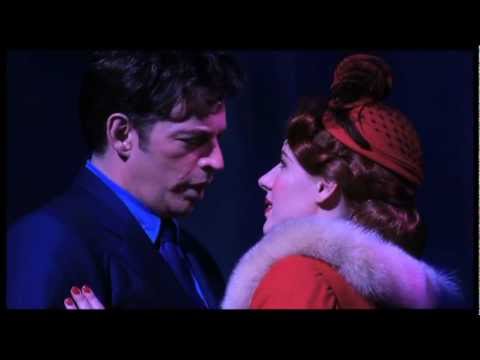
Review: what the lyrics are really doing
What’s the job of a love song when the lover might be an earlier version of your date? That is the exact mess that Alan Jay Lerner’s book-and-lyrics keep poking with a sharp pin. “On a Clear Day You Can See Forever” is often sold as a supernatural romantic comedy, but the lyrics keep insisting on something more awkward: identity is a moving target, and the people around Daisy (or, depending on the version, David) keep trying to name her into behaving.
Lerner writes with a clinician’s curiosity and a boulevardier’s timing. He loves a bright internal rhyme, then undercuts it with a nervous aside, the way a patient jokes to dodge the truth. That tonal wobble is not a bug. It is the musical’s subject. Daisy’s patter to her plants is funny, yes, but it is also a character using language as a control panel: if she can command azaleas, maybe she can command herself.
Burton Lane’s score meets those lyrics halfway, swinging between jaunty charm and long, unguarded melodic lines. When Lane opens the door for sustained lyricism, Lerner tends to answer with plainspoken yearning, not cleverness. The result is a show whose best songs feel like they are trying to outgrow the plot. That tension is why the score has endured better than the original Broadway run.
How it was made
The show began life under a different name: “I Picked a Daisy.” Lerner initially explored the premise with Richard Rodgers in the early 1960s, an unlikely pairing formed after Rodgers lost Oscar Hammerstein II and Lerner’s longtime partner Frederick Loewe stepped back. The collaboration did not hold, and Lerner eventually turned to Burton Lane, keeping the reincarnation and extrasensory hook but recalibrating the piece into a more Lane-friendly mix of romance and comedy.
Even the road to Broadway carried a reincarnation twist. During the Boston tryout, the leading man changed hands: Louis Jourdan was replaced by John Cullum before the show reached New York. In print history, the musical also exists in more than one stage-text shape, with notable differences between mid-1960s published materials. If you have ever argued with a cast album about what “should” be in Act I, you may both be right.
Key tracks & scenes
"Hurry! It’s Lovely Up Here" (Daisy)
- The Scene:
- A roof garden above Manhattan. She coaxes flowers like they are timid understudies. Light feels high and open, the kind that forgives odd behavior until it doesn’t.
- Lyrical Meaning:
- This is character exposition disguised as a charm song. Daisy’s language is performative: she believes words can change matter. That belief powers the plot and also signals her vulnerability when other people start using language on her.
"On a Clear Day (You Can See Forever)" (Mark)
- The Scene:
- In the psychiatrist’s office, a professional voice tries to sound casual and fails. The lighting tightens, turning confidence into a spotlighted confession.
- Lyrical Meaning:
- Mark sings self-help as seduction. The lyric promises clarity as destiny, but the subtext is control: if he can define her “true” self, he can steer the outcome. The beauty is that the melody sounds sincere even when the situation is ethically murky.
"On the S.S. Bernard Cohn" (Daisy and ensemble)
- The Scene:
- A public setting that moves, socially and physically. The staging often pops with period detail, then snaps back to the present like a rubber band.
- Lyrical Meaning:
- This number makes reincarnation feel like an event you can buy a ticket for. Lerner’s lyric treats memory as spectacle, which is funny until you notice Daisy is the spectacle.
"Melinda" (Mark)
- The Scene:
- Late Act I. The room is quieter now, the clinical furniture suddenly romantic. His fixation has stopped pretending to be research.
- Lyrical Meaning:
- The lyric is an admission that the “past life” persona is easier to love than the messy present-day patient. The song is a thesis statement for the show’s central moral problem.
"What Did I Have That I Don’t Have?" (Daisy)
- The Scene:
- A come-down moment where the comedy drains out. She is alone enough for the truth to land. Light often narrows to a single pool.
- Lyrical Meaning:
- One of Lerner’s sharpest heartbreak questions: the lyric interrogates loss without naming it, which makes it broadly relatable and painfully specific at once. The song is Daisy insisting she is not a gimmick.
"Wait Till We’re Sixty-Five" (Daisy, Warren, ensemble)
- The Scene:
- A comic negotiation with time itself. The staging usually leans bright and social, because the premise is ridiculous and that is the point.
- Lyrical Meaning:
- The lyric is a defense mechanism. If love can be postponed until retirement age, nobody has to risk anything now. In a reincarnation musical, postponement is both a joke and a philosophical dodge.
"Come Back to Me" (Mark)
- The Scene:
- Act II’s romantic pitch, often staged as a direct reach across the boundary between doctor and patient. The atmosphere goes soft, sometimes dangerously so.
- Lyrical Meaning:
- Lane provides a legato line that begs for surrender; Lerner answers with simple pleading. Depending on the production, the song can read as devotion or as entitlement. That ambiguity is why it still sparks argument in lobbies.
Live updates (2025/2026)
Information current as of January 29, 2026. “On a Clear Day You Can See Forever” is not currently running on Broadway; the most recent Broadway engagement remains the 2011 revival, which closed January 29, 2012. In practice, the title lives in regional and amateur licensing, where directors can choose between the original Daisy-forward version and later adaptations that respond to the story’s gender politics.
If you are tracking the score as a listening object, the cast recording and the film soundtrack continue to be the main entry points. The 2011 revival also generated widely shared performance clips online, which has quietly helped the material circulate even without a touring footprint. For stage rights and materials, the show is actively listed for licensing via Concord Theatricals.
Notes & trivia
- Working title: “I Picked a Daisy,” developed with Richard Rodgers before Lerner moved on to Burton Lane.
- The original Broadway production opened October 17, 1965 and ran 280 performances.
- John Cullum replaced Louis Jourdan during the Boston tryout period before Broadway.
- There are materially different published stage versions from the 1960s, affecting which songs appear and who sings them.
- The 1970 film version reshapes the story heavily and adds a new character (played by Jack Nicholson), while also altering song usage.
- The 2011 Broadway revival rethought the gender dynamics by re-centering the premise around a male protagonist, a choice that changed how certain lyrics land.
- The title song escaped the show and became a pop and jazz standard, recorded widely beyond the theatre world.
Reception
In 1965, the musical’s premise was a swing for the fences, and critics often treated the book as the wobbly part of the structure. Over time, the consensus has shifted: the score is the reason people return, while the libretto remains the puzzle producers keep trying to solve. Each revival becomes a negotiation between keeping Lerner’s verbal sparkle and addressing the power imbalance baked into the hypnosis setup.
“This problematic 1965 musical remains over-complicated in its first-ever Broadway revival.”
“The unsuccessful surgery weakens the score.”
“The outlook for this ‘Clear Day’ is stormy.”
Quick facts
- Title: On a Clear Day You Can See Forever
- Year: 1965
- Type: Musical comedy with supernatural elements
- Book & Lyrics: Alan Jay Lerner
- Music: Burton Lane
- Source inspiration: Loosely tied to John L. Balderston’s “Berkeley Square”
- Original Broadway run: Oct 17, 1965 to Jun 11, 1966
- Selected notable placements: Roof garden and psychiatrist’s office settings anchor the key songs; Act II includes an airport terminal sequence in many stage versions.
- Cast album: Original Broadway Cast Recording (released in 1965; issued on RCA and later reissues)
- Film soundtrack: 1970 motion picture soundtrack (Columbia), with multiple versions of the title song across performers
- Licensing: Available via Concord Theatricals (stage rights listing active)
Frequently asked questions
- Is there a movie version?
- Yes. A 1970 film adaptation reshapes the story significantly and uses the score differently than the stage versions.
- Who wrote the lyrics?
- Alan Jay Lerner wrote the book and lyrics; Burton Lane composed the music.
- Why are there different song lists?
- Because the show exists in multiple stage versions and was further altered for the film. Some published materials and revivals swap, cut, or reassigned numbers.
- What is the show actually “about” under the gimmick?
- Control versus consent. Daisy’s supposed “past life” becomes a mirror that reveals what the people around her want to see, and what they try to possess.
- What should I listen to first to follow the plot?
- Start with “Hurry! It’s Lovely Up Here,” then “On a Clear Day,” then “Melinda,” and finish with “What Did I Have That I Don’t Have?” You will understand the triangle even if you never memorize the reincarnation mechanics.
Key contributors
| Name | Role | Contribution |
|---|---|---|
| Alan Jay Lerner | Book & Lyrics | Created the central premise, wrote the lyric voice that swings between comedy and confession. |
| Burton Lane | Composer | Wrote the score, including the standard “On a Clear Day (You Can See Forever).” |
| Robert Lewis | Director (1965 Broadway) | Staged the original production’s tone: romantic comedy with psychological apparatus. |
| Herbert Ross | Choreographer (1965 Broadway) | Shaped the show’s larger production numbers and transitions. |
| John Cullum | Original leading man (Broadway) | Introduced the title song on Broadway after joining the production pre-opening. |
| Barbara Harris | Original Daisy/Melinda | Defined the role’s comic volatility and emotional snap, central to how the lyrics land. |
| Michael Mayer | Director (2011 Broadway revival) | Led the first Broadway revival and its re-conceived approach to character dynamics. |
Sources: IBDB; Playbill; Concord Theatricals; Masterworks Broadway; The Hollywood Reporter; Variety; New York Theatre Guide; Wikipedia; Library of Congress finding aid (Rodgers collection); onacleardaybroadway.com archive; selected production programs (PDF).