Oh, Kay! Lyrics – All Songs from the Musical
Oh, Kay! Lyrics: Song List
- Act 1
- Overture
- Moon Is on the Sea
- When Our Ship Comes Sailing In
- Don't Ask
- Someone to Watch over Me
- Woman's Touch
- Dear Little Girl
- Maybe
- Clap Yo' Hands
- Do Do Do
- Finale Act 1
- Act 2
- Bride and Groom
- Ain't It Romantic?
- Fidgety Feet
- Heaven on Earth
- Finale to Act 2, Scene 1
- Dance Specialty
- Oh, Kay!
- Finale Ultimo
About the "Oh, Kay!" Stage Show
Composer – G. Gershwin, lyrics by I. Gershwin. Writers – G. Bolton & P.G. Wodehouse. It premiered on November 1926 at the Imperial Theatre stage. Closure took place in June 1927 after 256 performances. Director – J. Harwood. Choreographer – S. Lee. The histrionics had such cast: G. O. Smith, G. Lawrence, O. Shaw, S. Beaumont, V. Moore, H. Dixon, F. Gardiner, H. Shannon & C. Carpenter. The London premiere took place in September 1927 at His Majesty's Theatre scene. 213 performances have been shown. Several years after, this show was re-considered, rearranged & renamed onto ‘Nice Work If You Can Get It’.Musical went in Century Theatre in two weeks of January 1928 with 16 performances. Director – H. Howell, choreographer – S. Lee. Cast: J. Sanderson, F. Crumit, C. D. Brown, B. Swanson, S. Camp, F. Gardiner, F. Harper, J. E. Young & H. Arden. The musical also was staged from April 1960 in East 74th Street Theatre for 89 exhibitions. The cast included: M. Stevens, D. Daniels & B. West amongst others. In 1978, the musical was staged in the Canadian Royal Alexandra Theatre.
The show took place in Richard Rodgers Theatre & Lunt-Fontanne from Nov. 1990 to Apr. 1991 with 77 plays. Only black actors were in the cast. The director & choreographer was D. Siretta. Adaptation of the script was made by J. Racheff. Cast: B. S. Mitchell, A. Teek, S. W. Mathis, A. Barton, T. Tunie, K. Ramsey, H. A. Cooper. In 1997, the show was hosted by the Barbican Centre. The spectacular with black actors won Theatre World aw., and was nominated for Drama Desk & Tony, but didn’t win these.
Release date: 1926
"Oh, Kay!" – The Musical Guide & Song Meanings
Review
Oh, Kay! is Prohibition farce with a champagne score and a plot that keeps slamming doors like it is paid per hinge. English bootleggers stash liquor in a Long Island mansion, a revenue officer keeps sniffing around, and Lady Kay keeps changing identities fast enough to qualify as a small business. What makes the piece more than a period curiosity is Ira Gershwin’s lyrical tone: light, chatty, and faintly predatory. These are words written for people who flirt as a form of misdirection.
The lyric writing does two jobs at once. It sells romance as a pose (“Maybe,” “Do, Do, Do”), and it sells cover stories as social performance (“The Woman’s Touch,” “Clap Yo’ Hands”). The show’s famous ballad is the outlier. “Someone to Watch Over Me” drops the hustle and admits the need underneath it. That contrast is the real dramatic arc: a world of masks, interrupted by a private sentence that refuses to be cute.
Musically, George Gershwin stays in the Jazz Age pocket: dance rhythms, smart ensemble propulsion, and melodies that can sound breezy while still carrying harmonic ache. The score is the reason revivals keep getting attempted. The book is the reason they keep getting rethought.
How It Was Made
The oddest and most useful fact about Oh, Kay! is structural: the Gershwins wrote the score before the librettists, Guy Bolton and P.G. Wodehouse, completed the book. That was common practice in the period, and it shows. The music is confident, while the story sometimes looks like it is jogging to catch the downbeat. By the time the book arrived, songs were cut and the Philadelphia tryout reportedly ran long enough to qualify as a civic project. The producers trimmed the prologue, reshuffled material, and leaned harder into farce, which pushed the title character’s entrance later than you would ever advise a modern writer to attempt.
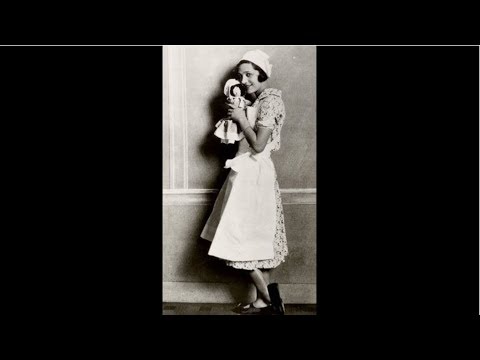
The most repeated origin story is also the most theatrical. During rehearsals, Gershwin bought a rag doll in a Philadelphia toy store and gave it to Gertrude Lawrence to hold while she sang “Someone to Watch Over Me,” a staging choice that sharpened the number’s vulnerability and became part of the show’s lore. It is a tidy example of craft over mythology: a prop, a posture, and suddenly the ballad lands.
For modern listeners, the “how it was made” story continues on record. Because the original Broadway era predates the cast-album boom, many people meet Oh, Kay! through later studio recordings, including a mid-century LP project conducted by Lehman Engel that aimed to preserve early Broadway scores in performance-ready sound.
Key Tracks & Scenes
"The Woman’s Touch" (Molly Morse, Mae, Ensemble)
- The Scene:
- Act I in Jimmy Winter’s Long Island living room. A small army of young women “improves” the space like it is a social campaign office. Bright, bustling lighting. Lots of dusting that reads as flirtation.
- Lyrical Meaning:
- The lyric sells domesticity as a kind of conquest. It establishes the show’s social rules: everything is cosmetic, and cosmetics are power.
"Clap Yo’ Hands" (Larry Potter, Molly, Daisy, Mae, Peggy, Ensemble)
- The Scene:
- The Duke panics because Lady Kay has vanished. Larry leads a minstrel-style cheer-up routine. Stage it as forced merriment, bright front light with a slightly aggressive smile.
- Lyrical Meaning:
- This is distraction as choreography. The lyric’s job is not emotional truth; it is crowd control, a party trick used to keep fear from speaking.
"Do, Do, Do" (Jimmy Winter, Kay)
- The Scene:
- Revenue Officer Jansen returns; Jimmy and Kay pretend to be newlyweds. Tight playing space, quick pivots, and the sense that one wrong glance triggers an arrest.
- Lyrical Meaning:
- The song treats romance like an alibi. Repetition becomes camouflage: the more they sing it, the more they try to convince the room, and themselves.
"Maybe" (Jimmy, Kay)
- The Scene:
- Act I, after Kay’s sudden reappearance and the first wave of mutual recognition. Softer light, fewer bodies onstage, and a pause in the farce machinery.
- Lyrical Meaning:
- “Maybe” is the show’s most honest form of flirting: plausible deniability. Ira’s lyric keeps the door open for desire while refusing to sign anything in ink.
"Someone to Watch Over Me" (Kay)
- The Scene:
- Act II, wedding photographs underway. Kay is disguised as a maid and talks to her rag doll, alone enough to admit what the rest of the show keeps dodging. One warm spotlight, the room suddenly quiet.
- Lyrical Meaning:
- The lyric flips the usual Jazz Age confidence into need. The metaphors are small on purpose: watch, over, me. Protection, not fireworks.
"Fidgety Feet" (Larry, Phyllis, Ensemble)
- The Scene:
- Act II, when Larry should be removing booze but instead demonstrates dance skills. Make it kinetic and slightly reckless, like the body confessing what the mouth refuses to do.
- Lyrical Meaning:
- This number is plot procrastination turned into pleasure. The lyric and rhythm embody the show’s worldview: movement beats responsibility.
"Heaven on Earth" (Jimmy, Molly, Mae, Ensemble)
- The Scene:
- Act II after the luncheon chaos drives Constance and the Judge away. Jimmy leans into the fantasy of being surrounded by beautiful trouble. Open the stage, widen the light, let it feel like a release valve.
- Lyrical Meaning:
- Jimmy sings desire as entitlement. The lyric is charming until you notice it treats people as atmosphere, which is exactly his problem.
"Oh, Kay!" (Kay, Boys)
- The Scene:
- Late Act II, when identities have been tried on and discarded, and Kay is no longer content to be a rumor in someone else’s house. Snappy lighting, direct address energy, a sense of the title finally taking ownership of itself.
- Lyrical Meaning:
- The title number is a claim. After all the disguises, the lyric works as self-definition: she is not just the plot device, she is the driver.
Notes & Trivia
- Broadway opening: November 8, 1926 at the Imperial Theatre, running 256 performances, with Gertrude Lawrence and Victor Moore in the original cast.
- Song placement clarity: “Do, Do, Do” occurs when Jimmy and Kay pretend to be newlyweds to fool the revenue officer.
- The doll story: Gershwin bought a rag doll in Philadelphia to help Lawrence land “Someone to Watch Over Me,” and it stayed in the staging.
- Act II context: “Someone to Watch Over Me” is framed during wedding-photo business, with Kay disguised as a maid speaking to the doll.
- Creative process detail: The score was written before the book, and previews were cut heavily, including a prologue and other material.
- Later Broadway afterlife: The 1990 revival reset the piece in Jazz Age Harlem with an all-Black cast, a bold concept that drew sharp debate in reviews.
- Licensing: The show is available for performance licensing through Concord Theatricals.
Reception
In 1926, Oh, Kay! sold what Broadway wanted to buy: a glamorous mess, an attractive star, and songs that could live beyond the plot. Over time, the plot became the thing people keep “fixing” and the score became the thing nobody wants touched. That tension shows up in later commentary on revivals, especially when productions try to modernize the framing without losing the breezy swing that made the material popular in the first place.
“This season brought revivals of Oh, Kay! (1926) …”
“Rich said the production struck him as a ‘minstrel show’ …”
“the all-black cast version of Oh, Kay! failed to find an audience in 1990.”
Live Updates (2025-2026)
Current as of January 29, 2026. There is no active Broadway or West End run of Oh, Kay! to track, and the title’s present-tense life is mostly two things: licensing and standards. Concord Theatricals continues to offer performance rights, which is where contemporary productions most commonly originate, particularly at universities and regional houses that want a Gershwin score without mounting a mega-title.
In concert programming, individual songs keep surfacing as evergreen repertoire, with “Someone to Watch Over Me” and “Clap Yo’ Hands” appearing in gala and festival contexts. That is the show’s real 2025-2026 footprint: the score circulates widely, while the full book shows up in selective, text-forward revivals that can handle farce mechanics and period baggage with clear-eyed staging choices.
Quick Facts
- Title: Oh, Kay!
- Year: 1926
- Type: Musical comedy; Prohibition farce
- Music: George Gershwin
- Lyrics: Ira Gershwin
- Book: Guy Bolton, P.G. Wodehouse
- Original Broadway venue: Imperial Theatre
- Original Broadway run: Opened November 8, 1926; 256 performances
- Core setting: A Long Island mansion in the Jazz Age, with bootlegging chaos and a persistent revenue officer
- Selected notable placements: “The Woman’s Touch” (women overhaul Jimmy’s living room); “Clap Yo’ Hands” (Larry distracts the Duke); “Do, Do, Do” (fake newlyweds); “Someone to Watch Over Me” (Kay’s private confession to the doll); “Fidgety Feet” (dance derailment); “Heaven on Earth” (Jimmy’s fantasy); “Oh, Kay!” (title claims center stage)
- Recording baseline: A studio cast LP conducted by Lehman Engel was first released November 11, 1957 (Columbia, now under Masterworks Broadway catalog presentation)
- Performance rights: Licensed through Concord Theatricals
Frequently Asked Questions
- Who is Kay, exactly?
- Lady Kay is an English bootlegger in disguise who repeatedly reframes herself to stay ahead of the law and ahead of the romance, often doing both at the same time.
- Where does “Someone to Watch Over Me” happen in the story?
- In Act II, during wedding-photo business, Kay (still disguised as a maid) sings the ballad while addressing a rag doll, letting the farce pause for something personal.
- Is the show a straight romance?
- It is romance tangled inside farce. The love story is real, but the engine is deception, mistaken identity, and constant pressure from a revenue officer who will not take a hint.
- Was there a notable Broadway revival?
- Yes. A 1990 Broadway revival reset the story in Jazz Age Harlem with an all-Black cast, a concept that drew strong reactions and became part of the show’s modern critical conversation.
- Is Oh, Kay! performed today?
- Not as a standard commercial run, but it remains available for licensing through Concord Theatricals, and the songs continue to appear frequently in concert repertoire.
- What should I listen to first if I only know the standards?
- Pair “Someone to Watch Over Me” with “Do, Do, Do.” You will hear the show’s two faces: vulnerability, then performance-as-alibi.
Key Contributors
| Name | Role | Contribution |
|---|---|---|
| George Gershwin | Composer | Jazz Age score built around dance-drive and melodic precision, including several long-lived standards. |
| Ira Gershwin | Lyricist | Literate, conversational lyrics that treat flirting and lying as neighboring skills. |
| Guy Bolton | Book writer | Co-wrote the farcical structure that stitches bootlegging, romance, and mistaken identity into one machine. |
| P.G. Wodehouse | Book writer | Co-wrote the book’s comic logic and social satire, shaping the show’s upper-class skewering. |
| Gertrude Lawrence | Original star (Kay) | Introduced the title role and helped define the staging legacy of “Someone to Watch Over Me.” |
| Victor Moore | Original cast (Shorty McGee) | Key comic performer in the original Broadway production’s farce mechanics. |
| Lehman Engel | Conductor (studio cast recording) | Led the mid-century studio cast recording project that preserved the score for modern listeners. |
| Concord Theatricals | Licensing | Current performance-licensing home for the show. |
Sources: Gershwin (official site); Concord Theatricals; Wikipedia (synopsis and song placement overview); Masterworks Broadway (album notes); The Atlantic (archive feature); Los Angeles Times (1990 revival coverage); IBDB and Playbill Vault (production records); Cambridge Companion to Gershwin (scholarly context); Overtur (score listings).