Narnia Lyrics – All Songs from the Musical
Narnia Lyrics: Song List
About the "Narnia" Stage Show
The musical is based on the well-known works of C. S. Lewis. The script is designed by J. Tasca. Lyrics by T. Drachman, music by T. Tierney. The first show of the play took place in early December 1986 at the PCPA Theaterfest’s stage during the California Theatre Fest. From August 8th to 17th, 2008, the show was presented in the Arlington Theatre. The musical was held at Springfield’s Little Theatre stage in December of 2008. Director and choreographer was one person – L. Dunn. The cast involved: B. Cain, K. Vaughan, A. McCormick, E. McClain, S. Cummings, A. Jarvis, A. Willadsen & S. Judkins among others.From March to April 2011, the musical was held on the stage of Julia Morgan Center with the participation of Berkeley Playhouse. Directed by J. Tracy, musical director was A. Dalton. The performance had such cast: A. Rollins-Mullens, C. Loriaux, A. Franklin, D. Dry, W. Reicher, M. Bach, M. B. Austin, R. Davis, M. Gibboney & T. Rucker among others. The next performance was shown in December 2014 on the stage of the Canadian Central Studio Theatre. The musical casted: G. Lalonde, D. Coburn, T. Charlebois & M. Speer amongst others.
Release date: 2008
"Narnia" (2008) – The Musical Guide & Song Meanings
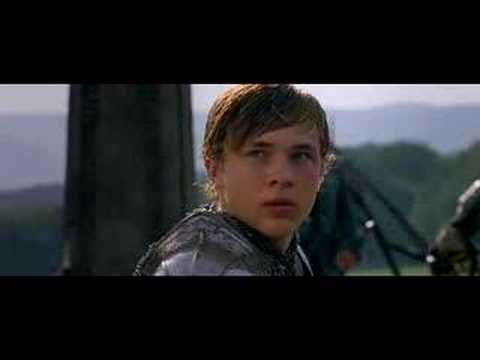
Review: when “Narnia” stops being fantasy and starts being farewell
Why does Prince Caspian wait until the end to hand you the lyrics? Because that’s where the film’s real argument lives: the ache of going home, and the suspicion that “home” is never one place. Harry Gregson-Williams spends most of the runtime in orchestral muscle and choral blaze, then the soundtrack album pivots into four vocal tracks that translate battle into memory. It’s a smart bait-and-switch. The score sells scale. The songs sell consequence.
Lyrically, the album’s strongest writing circles one theme with obsessive patience: longing. Regina Spektor’s “The Call” turns the Pevensies’ goodbye into a private vow, less prophecy than a promise you repeat because you’re scared you’ll forget it. Switchfoot’s “This Is Home” pushes the same feeling toward theology, framing Narnia as the place you recognize more than the place you inhabit. Oren Lavie’s “A Dance ’Round the Memory Tree” gives the emotion a folk-tale image: you can’t return to the moment, but you can return to its music. Even “Lucy” (Hanne Hukkelberg) plays like a soft epilogue, a character portrait painted in breath and distance.
As a listening experience, this soundtrack is two albums stitched together: a fantasy war-score, then an indie-pop coda. That split is the point. Prince Caspian is darker than its predecessor, and critics noticed how the music follows suit, leaning harder into orchestral and choral tradition before letting contemporary songwriting do the final emotional accounting.
How it was made
Gregson-Williams composed the score and anchored the album’s identity, but the lyrical “signature” of the record belongs to the artists recruited for the closing stretch. Spektor has described being contacted directly by director Andrew Adamson and Gregson-Williams, watching the film, then going straight to the keyboard while the feeling was still hot, a practical lesson in protecting creative momentum. She later recorded in London at Abbey Road and watched Gregson-Williams conduct a huge choir, which helps explain why “The Call” sounds intimate even when the arrangement is cathedral-sized.
Switchfoot’s involvement was positioned as a direct bridge between C.S. Lewis’s themes and pop songwriting. Contemporary press around the release emphasized that “This Is Home” was created for the film and placed in the end credits, with Jon Foreman explicitly tying the song’s tone to Lewis’s “bittersweet beauty” and the idea of longing for a truer home.
If you want the cleanest way to “hear” the collaboration on one listen: play the last major score cue (“The Door in the Air”) and then let “The Call” begin without touching the volume. That handoff is where film language turns into lyric language.
Key tracks & scenes
"The Call" (Regina Spektor)
- The Scene:
- The film exhales. After the climactic clash, the lighting cools and the staging narrows into faces, embraces, and the slow mechanics of separation. The song arrives as the goodbye becomes inevitable, then carries into the credits like a note you keep rereading.
- Lyrical Meaning:
- It’s a vow made in lowercase. The writing treats belief as something you practice, not something you win. The repeated sense of return functions like a spell you whisper so you don’t lose the door in your own mind.
"A Dance 'Round the Memory Tree" (Oren Lavie)
- The Scene:
- As credits roll, the mood shifts from cinematic to campfire. The orchestral warfare has ended; now you get a folk-image in dimmer light, as if the story is being told again, smaller, by someone who misses it.
- Lyrical Meaning:
- The “memory tree” is a perfect Narnia metaphor: a magical object that isn’t magical at all. The lyric frames nostalgia as motion, not stasis. You dance because you can’t go back, and dancing is the closest thing to time travel we’re allowed.
"This Is Home" (Switchfoot)
- The Scene:
- Late credits, brighter energy. The drum-forward rock shape feels like the outside world returning: modern, forward-moving, a little defiant. It’s the soundtrack insisting the story doesn’t end when the wardrobe closes.
- Lyrical Meaning:
- The lyric is a thesis statement about longing. It treats “home” as destiny rather than address, aligning neatly with Lewis’s spiritual subtext and with the Pevensies’ particular heartbreak: they know exactly what they’re missing.
"Lucy" (Hanne Hukkelberg)
- The Scene:
- A soft afterglow, often encountered via the album rather than the theatrical credits experience. It plays like a lone figure in a darkened theater, letting the last image fade before standing up.
- Lyrical Meaning:
- Less narrative, more atmosphere: innocence that has learned something painful. The voice feels slightly removed, which suits Lucy as the character who believes hardest and therefore loses hardest.
"The Door in the Air" (Harry Gregson-Williams)
- The Scene:
- The title says it all: a threshold cue. You can picture a single beam of light, a doorway where there shouldn’t be one, and characters realizing that passage always has a price.
- Lyrical Meaning:
- Even without words, it “speaks” in unresolved yearning. It’s the album’s hinge: the moment the score hands emotional authority to the vocal tracks.
"The Kings and Queens of Old" (Harry Gregson-Williams)
- The Scene:
- Regal memory music. This is the soundtrack looking backward while the plot pushes forward, like portraits watching you leave the room.
- Lyrical Meaning:
- The melodic material treats history as identity. It underlines the series’ recurring discomfort: growing up means being asked to betray the person you once were, even when that person was true.
"Return of the Lion" (Harry Gregson-Williams)
- The Scene:
- Full choral lift, ritualized grandeur. If you see it, you see it lit like revelation: the kind of cue staged to feel larger than plot.
- Lyrical Meaning:
- It’s belief rendered as sound. The score leans into quasi-religious vocabulary, setting up why the end-credits lyrics land so well: the music has already taught you what to feel.
Live updates (2025/2026)
Information current as of January 29, 2026. Narnia is gearing up for a very loud return: Netflix has announced Greta Gerwig’s Narnia will debut in IMAX in November 2026 ahead of a Netflix release in December 2026, framing the reboot as both theatrical event and streaming tentpole. Variety has reported that Mark Ronson will score Gerwig’s Narnia adaptation, reuniting a key piece of the Barbie music brain trust, with Andrew Wyatt also discussed publicly as a collaborator on the project’s music. For soundtrack-watchers, that combination signals a likely shift: more pop-forward “song moments” alongside score, and more deliberate album strategy than the Walden era’s end-credit trio.
Practical listening tip before the reboot: revisit the 2008 album’s final run, because it’s an early example of the franchise using contemporary songwriting to translate Lewis’s themes for the mainstream. If Gerwig leans into that same emotional infrastructure, the “Narnia song” won’t be an accessory. It’ll be the closing argument.
Notes & trivia
- The Walt Disney Records soundtrack album for Prince Caspian was released May 13, 2008 in the U.S., with the film opening May 16, 2008.
- “This Is Home” was publicized as an end-credits placement and a purpose-written track for the film, not a library add-on.
- Regina Spektor has described writing “The Call” immediately after a private screening, then recording at Abbey Road while observing Gregson-Williams conduct a massive choir.
- Contemporary soundtrack coverage identified the credits-song cluster as a deliberate closer, featuring Spektor, Lavie, and Switchfoot as the main vocal “signature” of the release.
- Critics who were mixed on the first film’s score often highlighted Prince Caspian’s shift toward more traditional orchestral-and-choral fantasy scoring.
- The album tracklist ends with four vocal tracks, a structure that essentially turns the record into “score first, epilogue second.”
Reception
Back in 2008, the score’s critical conversation frequently centered on coherence and thematic clarity: did Gregson-Williams solve the first film’s tonal sprawl, and did the sequel’s darker palette help? Many reviewers said yes, and they tended to treat the end-credits songs as bonus perspective rather than distraction. Over time, the pop tracks have arguably outlasted the battle cues in cultural memory, because they’re portable: you can leave Narnia and still take the feeling with you.
“Buy it... if you were disappointed by the lack of consistency in thematic development... for this sequel score solves all those ills.”
“It largely dispenses with... electronica... and instead concentrates on old-fashioned orchestral and choral fantasy scoring.”
“The place you live now is not the place you are really meant to be... This song has a longing to go to that place.”
Quick facts
- Title: The Chronicles of Narnia: Prince Caspian (An Original Walt Disney Records Soundtrack)
- Year: 2008
- Type: Film soundtrack album (score + songs)
- Composer (score): Harry Gregson-Williams
- Featured songs (end-of-album vocal run): “The Call” (Regina Spektor), “A Dance ’Round the Memory Tree” (Oren Lavie), “This Is Home” (Switchfoot), “Lucy” (Hanne Hukkelberg)
- Selected notable placements: “The Call” and “This Is Home” highlighted as end-credits songs; vocal cluster functions as the film’s emotional epilogue
- Label: Walt Disney Records
- Release context: Album released May 13, 2008; film released May 16, 2008
- Availability: Major digital platforms list the complete track sequence (score cues through the four-song close)
Frequently asked questions
- Which “Narnia” does 2008 refer to here?
- The 2008 release is the film The Chronicles of Narnia: Prince Caspian, and this guide focuses on the soundtrack album’s lyric-driven tracks and how they function as an epilogue.
- Where do “The Call” and “This Is Home” appear in the movie?
- They’re widely documented as end-of-film / end-credits songs tied to the goodbye and the credits run, with “This Is Home” explicitly described that way in period coverage.
- Who wrote the lyrics to “The Call”?
- Regina Spektor wrote the song for the film and has described the writing process as immediate and feeling-driven, followed by recording sessions in London.
- Why do these songs feel so nostalgic compared to the score?
- The score is built to externalize conflict. The lyric tracks are built to internalize consequence: memory, separation, and the idea of a home you can’t quite locate on a map.
- Is there a new Narnia adaptation coming soon?
- Yes. Netflix has announced Greta Gerwig’s Narnia will arrive in IMAX in November 2026 before a Netflix release in December 2026, with reporting indicating Mark Ronson will score the project.
- How should I listen to the album if I only care about the songs?
- Start at “The Door in the Air” and let the final four tracks play straight through. That sequence is the album’s emotional arc in miniature.
Key contributors
| Name | Role | Contribution |
|---|---|---|
| Harry Gregson-Williams | Composer / Producer | Composed the score and shaped the album’s transition into the end-credits songs. |
| Regina Spektor | Songwriter / Performer | Wrote and performed “The Call,” designed as the film’s lyrical farewell. |
| Oren Lavie | Songwriter / Performer | Wrote and performed “A Dance ’Round the Memory Tree,” a folk-memory coda. |
| Switchfoot (Jon Foreman, Adam Watts, Andy Dodd) | Performers / Songwriters | Recorded “This Is Home,” promoted as a purpose-written end-credits track. |
| Hanne Hukkelberg | Performer | Performed “Lucy,” the album’s final hush of character-focused reflection. |
| Andrew Adamson | Director | Key creative voice behind the film’s tone and the recruitment of featured song artists. |
Sources: Netflix Tudum, Variety, Filmtracks, Movie Music UK, The Christian Post, Stereogum, MusoScribe, antiMusic, Wikipedia (soundtrack/track data).