Mystery Of Edwin Drood, The Lyrics – All Songs from the Musical
Mystery Of Edwin Drood, The Lyrics: Song List
- Act 1
- There You Are
- A Man Could Go Quite Mad
- Two Kinsmen
- Moonfall
- Moonfall Quartet
- Wages of Sin
- Ceylon
- Both Sides of the Coin
- Perfect Strangers
- No Good Can Come From Bad
- Never the Luck
- The Name of Love - Moonfall (Reprise)
- Act 2
- Settling Up the Score
- Off to the Races
- Don't Quit While You're Ahead
- The Garden Path to Hell
- Out on a Limerick
- Jasper's Confession
- Rosa's Confession
- Puffer's Confession
- The Writing on the Wall
About the "Mystery Of Edwin Drood, The" Stage Show
R. Holmes became the author of original project. Duration of this version was 3.5 hours. Then J. Papp has suggested making show as part of a festival. After that, there was an idea to make long performance on Broadway, but the first original spectacular took place in Delacorte in 1985. Actors rehearsed only 3 weeks. The composer has thought over the majority of scenes of performance.After festival work, the Broadway version was created. The same actors participated in it. In total, musical included 32 songs. The show was opened in December, 1985. Its name has been reduced. Since then the musical is called simply – ‘Drood’. This version of performance has been shown within two years. G. Daniele became responsible for choreography. Actors were the following: G. Rose, C. Laine, J. Herrera, H. McGillin, P. Cohenour, and J. Schneider.
In 1988, the musical began the first North America tour. It consisted of corrected version of the show. R. Marshall became the creator. During a break in tour, one of actors, G. Rose, was killed. C. Revill has replaced him. Earlier he played in West End versions. In 2007, the audience saw the new version of the show created by T. Craig. Display lasted 1 year. In 2012 in West End Theater, there was one more play, with participation of such actors: W. Peters, N. Day, D. Robinson and V. Farley. The production was directed by M. Gould. The latest version of the musical has been remade in Studio 54. C. Rivera, S. Block, W. Chase, J. Norton & G. Edelmann took part in it.
The performance received 5 Tony Awards & 10 Drama Desks. In total, it was nominated for 22 Drama Desk Awards and 19 Tonies.
Release date: 1985
"The Mystery of Edwin Drood" – The Musical Guide & Song Meanings
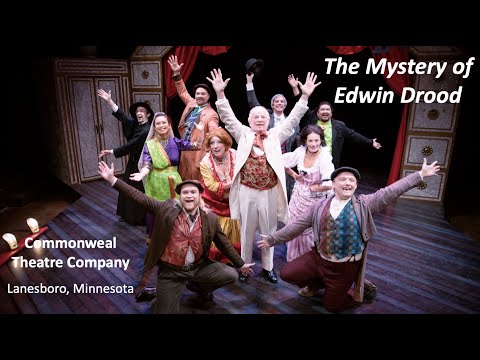
Review: why the lyrics matter more than the mystery
The show sells itself as a whodunit, but “Drood” is really a whospeaks. Rupert Holmes writes lyrics that behave like stage directions: they point, misdirect, flirt with the audience, and then admit the whole enterprise is a con job in sequins. The “mystery” is an engine, not the point. The point is watching a troupe perform Dickens through the cracked lens of English music hall, where sincerity is always one joke away from collapse.
Holmes’ smartest move is structural. He builds a play-within-a-play where characters exist in two registers at once: the Cloisterham suspects and the Music Hall Royale performers portraying them. That doubles the lyric meaning. A line can be character confession and performer wink at the same time. When it works, it feels like the score is in on your suspicion, and a little amused by it.
Musically, the style is knowingly retro, fast on its feet, and allergic to reverence. The lyric approach matches: internal rhymes that snap, patter that hides motive, ballads that glide in like perfume and leave fingerprints behind. Viewer tip, if you want the cleanest read: sit where you can watch the “Chairman” manage the room. “Drood” is one of those musicals where the audience’s attention is literally part of the orchestration.
How it was made: Rupert Holmes vs. Dickens’ unfinished ending
Dickens left the novel unfinished, which is both the problem and the invitation. Holmes’ solution was to stop pretending there is a single correct answer. He makes the audience vote on the killer (and other variables), turning literary uncertainty into theatrical policy. Holmes has described the audience-vote mechanic as the defining feature of the adaptation, and it is more than a trick. It is the show’s argument about storytelling: certainty is optional, participation is not.
The creation story has the kind of bravado that “Drood” itself adores. Accounts of the show’s development note that Holmes first wrote an overlong draft and even performed it solo for producer Joseph Papp and colleagues before the New York Shakespeare Festival premiere in Central Park, with a rapid rehearsal period. He also conceived much of the orchestration himself, which is an unusual level of authorship for a Broadway-scale musical. The result feels authored in one voice because it is, even when it is pretending to be a rowdy troupe’s collective act.
Key tracks & scenes: 8 lyrical moments that steer the night
"There You Are" (Chairman)
- The Scene:
- The house lights are still emotionally on. Performers circulate like hosts at a dubious holiday party. A bright, welcoming wash, then the Chairman claims the room.
- Lyrical Meaning:
- This opener teaches the contract: you are not watching “a story,” you are attending an event. The lyric flatters the audience into complicity, then makes that complicity feel necessary.
"A Man Could Go Quite Mad" (Jasper)
- The Scene:
- Minor Canon Corner, morning. The stage narrows into a private cage even as we remain in “performance” mode. Jasper’s charm turns predatory in real time.
- Lyrical Meaning:
- Holmes writes obsession as self-myth. Jasper’s lyric logic is the first major clue: he narrates his own decline like a reasonable thesis, which is exactly why it is alarming.
"Two Kinsmen" (Jasper, Drood)
- The Scene:
- A cordial duet with a faint chill under the manners. In production, this often plays under warm light that does not quite match the subtext.
- Lyrical Meaning:
- The lyric performs affection while quietly inventorying power. It is a handshake that lasts a beat too long.
"Moonfall" (Rosa)
- The Scene:
- The Nun’s House conservatory, later that morning. Romantic lighting, soft edges, a song that looks like a ballad until it starts sounding like a trap.
- Lyrical Meaning:
- “Moonfall” is written as a love song Jasper “composed,” and that framing matters. The lyric is beautiful, and invasive. The show uses its prettiest language to signal danger.
"Perfect Strangers" (Rosa, Drood)
- The Scene:
- In the graveyard, late December. A gentle duet staged with physical distance, two people realizing they were promised to each other before they knew what wanting meant.
- Lyrical Meaning:
- The lyric is mature without being cynical. It turns a breakup into clarity, which also raises the stakes of whatever comes next: Drood’s disappearance stops being melodrama and becomes interruption.
"No Good Can Come from Bad" (Company)
- The Scene:
- Christmas Eve dinner, storm outside. Blocking tightens as tempers flare. The ensemble writing feels like a parlor argument scored as a chain reaction.
- Lyrical Meaning:
- This is Holmes’ social-engine number. The lyric braids rivalry, reputation, and repressed history into one public scene. Everyone is speaking, and nobody is confessing.
"Settling Up the Score" (Puffer, Datchery, Company)
- The Scene:
- Act II, six months later, near Cloisterham Station. A smoky, suspicious duet that feels like two alley cats circling the same garbage can, with the town watching.
- Lyrical Meaning:
- The lyric is investigative banter, but it is also about narrative control. Puffer wants revenge. Datchery wants answers. The show wants you to start choosing.
"Don't Quit While You're Ahead" (Company)
- The Scene:
- A staged pep talk to the audience, often with brighter footlights and direct address. The cast becomes a chorus of cautionary gremlins.
- Lyrical Meaning:
- This is the score admitting its own mechanics. The lyric warns against assumptions while simultaneously planting them. It is a “fair” mystery in the way a carnival game is fair.
"Out on a Limerick" (Voted Detective)
- The Scene:
- After voting, the room turns into a celebration of improvisational inevitability. A spotlight isolates the chosen detective as the company frames the moment like a prize ceremony.
- Lyrical Meaning:
- The lyric is a reward for participation, and a reminder that identity in this show is theatrical casting. The detective exists because the audience insisted someone must.
Live updates (2025-2026): where Drood is playing now
Information current as of January 29, 2026. “Drood” is not in a single, centralized commercial run right now. It is thriving the way a flexible, license-friendly crowd-pleaser thrives: in regional houses, community theatres, and smaller pro companies, often using the “Broadway Revival Version” materials.
Here are concrete, dated examples across late 2025 and early 2026. Santa Fe Playhouse scheduled “Drood” for December 4 to December 28, 2025. TheatreLab Dayton booked it for January 22 to January 25, 2026 at the PNC Arts Annex, with at least one performance later rescheduled to January 27, 2026. Several other January 2026 runs appear in venue calendars, including a January 16 to January 25, 2026 engagement listed by a Schenectady-area theatre guide and a matching schedule for a New Jersey venue listing.
Looking further ahead in 2026, at least one community-theatre listing posts “Drood” for June 5 to June 21, 2026 in North Carolina. The pattern is consistent: the show’s interactive hook and modular ending keep it attractive for producers who want audience energy without a massive physical production. Practical viewer tip, if you have a choice of nights: pick a date late in the run. By then, the company’s “vote night” muscle memory is usually sharper, and the improv stitching is cleaner.
Notes & trivia
- “Drood” is often cited as the first Broadway musical to build multiple endings into the nightly performance via audience vote.
- Original Broadway production opened December 2, 1985 and closed May 16, 1987 at the Imperial Theatre.
- The show began at the Delacorte Theatre in Central Park in August 1985 before transferring to Broadway.
- The “Music Hall Royale” framing lets performers play both Dickens characters and their fictional music-hall counterparts, which is why the lyric tone can pivot from melodrama to vaudeville in a heartbeat.
- Some cast recordings and releases include alternate “confessions” and alternate detective outcomes, reflecting the variable ending structure.
- Concord Theatricals publishes both the standard licensing version and a “Broadway Revival Version” track architecture, with added underscores and fanfares.
Reception: critics then, critics in the revival era
In 1985, the critical story quickly centered on virtuosity and invention: a star turn (Jim Dale), a clever theatrical frame, and a score that knew how to charm without losing the plot. In the revival era, reviewers tend to emphasize craft and casting depth, praising the evening as “fun” when the production treats the audience vote as a theatrical celebration rather than a gimmick to rush through.
“Is there anything that Jim Dale can’t do?”
“A perfectly diverting evening.”
“An uncommonly fine assemblage of stage talents.”
Quick facts: album, credits, placements
- Title: The Mystery of Edwin Drood
- Year: 1985 (Broadway opening December 2, 1985)
- Type: Musical comedy / interactive mystery; play-within-a-play
- Book, music, lyrics: Rupert Holmes
- Based on: Charles Dickens’ unfinished novel “The Mystery of Edwin Drood”
- Primary setting (story): Cloisterham (England), late December; Act II jumps six months
- Selected notable placements (story moments): Nun’s House conservatory (“Moonfall”); Christmas Eve dinner (“No Good Can Come from Bad”); Cloisterham Station (“Settling Up the Score”); the audience vote sequence after “Don’t Quit While You’re Ahead”
- Original Broadway run: 608 performances (IBDB)
- Cast recording: Original Broadway Cast Recording released in 1986; multiple releases include alternate outcomes reflecting the show’s variable ending
- Licensing: Available via Concord Theatricals (standard and Broadway revival version materials)
Frequently asked questions
- Who wrote the lyrics to “The Mystery of Edwin Drood”?
- Rupert Holmes wrote the book, music, and lyrics.
- How does the audience voting work?
- Near the end of Act II, the audience votes on the murderer and other variables (often including the detective and a romantic pairing), and the final scenes and confessions shift accordingly.
- Is Edwin Drood definitely dead?
- The show keeps that uncertain until the chosen ending. Different vote outcomes can change what is revealed and by whom.
- Is there a “best” seat to see the show?
- Pick a seat with a clear view of the full ensemble and the Chairman’s direct address moments. Much of the comedy is staged to include audience reaction as part of the rhythm.
- Are there different licensed versions?
- Yes. Concord offers a standard licensing version and a “Broadway Revival Version” with expanded musical transitions and additional score architecture.
Key contributors
| Name | Role | Contribution |
|---|---|---|
| Rupert Holmes | Book, Music, Lyrics | Created the music-hall frame, wrote the lyric voice, and built the vote-driven ending system into the score. |
| Charles Dickens | Source author | Wrote the unfinished novel that the musical adapts and theatrically “finishes.” |
| Joseph Papp | Producer (development path) | Supported the New York Shakespeare Festival premiere that preceded the Broadway transfer. |
| Concord Theatricals | Licensing | Publishes the licensed materials, including the Broadway revival version structure and musical components. |
Sources: IBDB, Concord Theatricals, RupertHolmes.com, Playbill, The Hollywood Reporter, Vulture, College of DuPage / Playhouse Theatre study guide PDF, Santa Fe Playhouse, Dayton Live, Visit Winston-Salem, Discogs.