My Name will always be Alice Lyrics – All Songs from the Musical
My Name will always be Alice Lyrics: Song List
- All Girl Band
- A...My Name Is Alice Poems
-
At My Age
-
Trash
- Sensitive New Age Guys
-
Welcome to Kindergarten, Mrs. Johnson
-
Watching All the Pretty Young Men
-
Portrait
- I'm Bluer Than You
-
Painted Ladies Scene
-
Wheels
- French Monologue
-
French Song
-
Once and Only Thing
-
Honeypot
-
Friends
-
Lifelines
About the "My Name will always be Alice" Stage Show
This musical is A revue. Creators are J. Micklin Silver and J. Boyd. For the first time the show was staged in 1983 in New York. It lasted from November to March 1984. L. Godfrey, R. Graff, P. Pen, and G. Roberts became the first actors who have played in this theatrical. The following actors’ structure included R. Brown, M. Graff, G. Murray & C. Woodard. Such composers as D. Zippel, D. Katsaros, W. Holzman, took part in creation of this show. In total, 21 songs sounded here. Y. Adrian became the choreographer. The musical was awarded with Outer Critics Circle as the best revue.A format of the show represents various scenes of women. They all are several ages old. One of them is a little girl and other – old woman. Usually the names of heroines aren't told. Instead, number names, for example, the 'actress 1' is used. Often they list names of their friends and relatives in format of alphabet and tell about their life.
Release date: 1995
"A...My Name Will Always Be Alice" – The Musical Guide & Song Meanings
Review
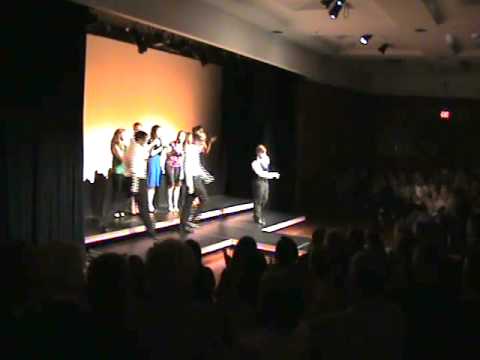
If you came looking for a plot, “A...My Name Will Always Be Alice” has a polite suggestion: try the next theatre over. This is a five-women revue built from songs and sketches, a highlights cut that splices together the sharpest material from “A...My Name Is Alice” (1984) and “A...My Name Is Still Alice” (1992). The writing’s core move is simple and durable: take a social script women are expected to perform (age, romance, motherhood, manners) and let the lyrics speak the subtext out loud. Some numbers are outright comic traps for the audience’s assumptions; others land as confessionals that happen to rhyme.
What makes the text work is the unapologetic specificity. A joke about “new age guys” is still, fundamentally, a lyric about emotional labor. A strip-club ogle becomes a small act of agency. Even the softest ballads refuse to flatter. The musical style follows that editorial mission: it ricochets between pop, rock, country, and gospel so the evening can change its mind in real time, the way people do. When the show is staged well, you feel the structure: laughter as a pressure valve, then a turn to something honest enough to sting.
How It Was Made
The origin story is less “a visionary composer had a dream” and more “someone hosted a very productive living-room salon.” Joan Micklin Silver and Julianne Boyd developed “Alice” by auditioning writers and material in Silver’s apartment, then shaping it through readings and rewrites with a wide pool of contributors. The point was not to build a single authorial voice; it was to curate a chorus of them, and then direct the evening like a film editor: pace, contrast, release.
There’s also a political seed under the comedy. An early version of “A...My Name Is Alice” grew out of an abortion-rights benefit in the early 1980s, and the DNA shows in how the material argues without turning into a lecture. “A...My Name Will Always Be Alice” is the pragmatic third act to that whole enterprise: songs from the first two revues were woven into a new composite edition, built to travel and to fit on a bare stage with minimal set pieces. It’s a smart survival tactic, and frankly, a very theatre-kid one.
Key Tracks & Scenes
"At My Age" (Ensemble)
- The Scene:
- A single performer steps into a clean spotlight, like someone testing a microphone before telling the truth. The rest of the cast becomes a listening wall: still, present, not rescuing her from the punchlines.
- Lyrical Meaning:
- This is the show’s thesis in miniature: the lyric refuses the polite lie that aging is either tragedy or punchline. It’s both, plus paperwork. The humor is a defense mechanism, and the rhyme scheme is the proof of life.
"Trash" (Solo)
- The Scene:
- Kitchen energy. Fast entrances. Props that look harmless until they start accusing you. The actor plays it like a stand-up set that keeps tipping into rage.
- Lyrical Meaning:
- A domestic detail becomes a moral referendum. The lyric turns “stuff” into a metaphor for what women are expected to carry, manage, and silently forgive. The jokes land because the anger is earned.
"Sensitive New Age Guys" (Ensemble)
- The Scene:
- The cast leans into caricature: a parade of enlightened vocabulary, earnest nodding, and performative empathy. The lighting stays bright, almost clinical, like a workshop you didn’t sign up for.
- Lyrical Meaning:
- The lyric skewers a specific type of male self-branding: sensitivity as a costume. Underneath, it’s a song about power that learned new manners, not new ethics.
"I Sure Like The Boys" (Ensemble)
- The Scene:
- A quick pivot into flirtation, with the cast trading lines like co-conspirators. The staging often plays as a semi-choreographed “confessional” to the front row.
- Lyrical Meaning:
- This number keeps the revue from turning into a scold. Desire is allowed to be funny and real at the same time, without apologizing for itself or pretending it’s always wise.
"Welcome To Kindergarten, Mrs. Johnson" (Solo)
- The Scene:
- School-night nerves. A performer narrates like she’s reading a note she found in a pocket. The set can be nothing more than a chair, because the panic does the scenery.
- Lyrical Meaning:
- A sweet premise becomes a lyric about first-day terror and how women are trained to smile through being evaluated. The song’s wit comes from overheard truth, not punchlines.
"Watching All The Pretty Young Men" (Ensemble)
- The Scene:
- A group of women on a night out, turning the gaze outward with delighted precision. The lighting turns nightclub-warm, and the tempo suggests mischief with boundaries.
- Lyrical Meaning:
- The lyric flips the usual objectification script, then complicates it. It’s not revenge; it’s permission. The number plays best when it’s performed with joy rather than cruelty.
"I'm Bluer Than You" (Solo)
- The Scene:
- A blues posture, but with comedic timing that refuses to let the sadness win the room. The accompaniment should feel like it’s teasing the singer, gently.
- Lyrical Meaning:
- The lyric treats melancholy like a competitive sport, which is funny until you realize it’s also a portrait of loneliness. The song weaponizes exaggeration to confess something small and private.
"Lifelines" (Ensemble)
- The Scene:
- The air changes. The cast stops “playing scenes” and starts simply standing with each other. The lighting narrows, and the room gets quiet enough to hear the audience breathe.
- Lyrical Meaning:
- This is the show’s emotional receipt. The lyric traces the threads between women across time: who held you up, who failed you, who taught you the vocabulary for survival. It’s not sentimental; it’s specific.
Live Updates
Information current as of January 2026. “A...My Name Will Always Be Alice” is not “running” in the commercial sense, but it is very much alive in the licensing ecosystem. Concord Theatricals continues to license the title as a five-women revue designed for a bare stage and simple set pieces, which keeps production costs low and allows the material to travel well.
Recent examples underline that point. The University of Wisconsin–Stevens Point at Marshfield mounted the show in February 2024, with a published cast list, director credit, and live musicians noted in the university announcement. That kind of transparent, campus-forward documentation is exactly where “Alice” thrives right now: colleges, community theatres, and small pro houses that want an ensemble evening with flexible casting and a strong audience hook.
If you are programming for 2025-2026, the show’s practical advantage is also its artistic one: the evening can be staged lean, but it doesn’t feel small if the performers commit to the lyric’s point of view. If you are listening before seeing it live, start with “At My Age” and “Lifelines” to understand the emotional floor and ceiling, then use the comedy tracks as the connective tissue.
Notes & Trivia
- The “Always” edition is a composite: it draws material from the 1984 original “Alice” revue and the 1992 sequel “Still Alice,” shaped into a new combined program.
- The show is built for five women and is commonly staged with minimal scenery, emphasizing performance and lyric clarity over spectacle.
- Development was workshop-heavy: readings, rewrites, and contributor feedback were part of the core method, not an afterthought.
- “Watching All The Pretty Young Men” is frequently cited as a crowd-pleaser because it turns the audience’s expectations about who gets to look into the joke.
- The original cast recording track list for the “Always” album runs 17 tracks, mixing full songs with short scene pieces (including “Painted Ladies Scene”).
- The cast recording is commonly listed with a mid-1990s release date (often 1996), with later digital availability expanding access for new audiences.
Reception
The critical conversation around “Alice” has always been tied to its tone control. Reviews tend to praise the evening when it balances its sharpness with warmth, and to bristle when a production plays the satire too broadly. The best notices recognize the revue’s tactic: attack the myth, keep the humans.
“...would rather tickle a male chauvinist pig to death than hack him to pieces.”
“Retains the energy and desire to entertain that marked the first...”
“It’s a simple show, done with minimal backdrops and props.”
Quick Facts
- Title: A...My Name Will Always Be Alice
- Year: 1995 (composite edition first staged in the mid-1990s)
- Type: Musical revue / cabaret-style sketch-and-song evening
- Conceived by: Joan Micklin Silver, Julianne Boyd
- Additional credited writer: June Siegel (licensing listing)
- Cast size: 5 women
- Staging model: Bare stage or minimal set pieces; flexible, tour-friendly format
- Selected notable placements (within the show): “At My Age,” “Sensitive New Age Guys,” “Watching All The Pretty Young Men,” “Lifelines”
- Cast recording: Original Cast Recording commonly listed with a 1996 release date; later digital storefront availability
- Label/album status: Released as an Original Cast Records title; available via major digital retailers and specialty theatre-music outlets
Frequently Asked Questions
- Is “A...My Name Will Always Be Alice” a plot-driven musical?
- No. It’s a revue: a curated sequence of songs and sketches about women at different ages, rather than a single continuous story.
- Who wrote the lyrics and music?
- There isn’t just one songwriting team. Silver and Boyd conceived the evening, and the material was created by multiple contributors across the two “Alice” revues, then combined into the “Always” edition.
- How many performers are typically used?
- The licensed format is written for five women, which is part of why the show is popular for colleges and small theatres.
- Is there a cast recording?
- Yes. There is an original cast recording with a 17-track program that mixes full songs with brief scene pieces, and it’s available through digital retailers and theatre-music specialists.
- Is it appropriate for teens?
- It depends on the production and your standards. The humor can be bawdy, and the material deals with adult relationships and social topics. Many schools stage it with clear content notes.
- How do you license the show?
- Licensing is available through Concord Theatricals, which provides the current rights and materials request process.
Key Contributors
| Name | Role | Contribution |
|---|---|---|
| Joan Micklin Silver | Conceiver / director (development) | Co-created the “Alice” revue format; shaped the composite “Always” edition through curation and revision. |
| Julianne Boyd | Conceiver / director (development) | Co-created the series and helped assemble the composite edition for production-ready flexibility. |
| June Siegel | Writer (credited in licensing listing) | Contributor credited in the licensed “Always” edition materials. |
| Doug Katsaros | Composer (contributing writer) | Contributed musical material to the broader “Alice” ecosystem referenced in development histories. |
| David Zippel | Lyricist (contributing writer) | Contributed lyric material referenced in development histories and related documentation. |
| Susan Birkenhead | Lyricist (song contributor) | Credited (with Lucy Simon) for “Pretty Young Men” in reporting on the “Alice” repertoire. |
| Lucy Simon | Composer (song contributor) | Credited (with Susan Birkenhead) for “Pretty Young Men” in reporting on the “Alice” repertoire. |
Sources: Concord Theatricals, Footlight Records, TheaterMania, University of Wisconsin–Stevens Point News, Playbill, The Washington Post, TheaterMania show listings, YouTube (performance clips).