Mr. Mark Twain Lyrics – All Songs from the Musical
Mr. Mark Twain Lyrics: Song List
- Act 1
- Orchestral Prelude: "When Out on the River"
- We're Goin' Fishin'
- A Pilot on the Mississippi
- Welcome to Paris
- The Can-Can
- Roughing It
- National Lecture Tour
- The Skating Madrigal
- I Know There's a Place
- The House on the Hill
- Act 2
- The Camelot Rag
- Round the World Lecture Tour
- Russian Dance
- When Out on the River
- Let's Give the Folks a Taste of Royalty
-
Swing Low, Sweet Chariot
- Men of Oxford
- Finale: I Know There's a Place; Homeward Bound
About the "Mr. Mark Twain" Stage Show
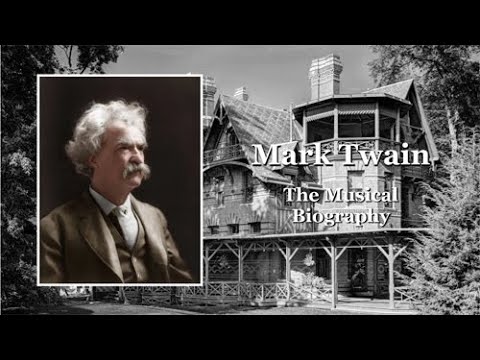
The project is a musical biography of the famous American writer Mark Twain, who had a decade of working experience in Elmira, New York State & Hartford, Connecticut, as well as he was engaged in broadcasting on a number of public television stations. In 1988, the company Premier Recordings had released the original CD, which included all the songs of the musical, a number of dialogues & monologues. Video & DVD productions are currently in development. The basis of the production is a book written by J. Iredale. Music & lyrics created by composer W. P. Perry.The director & choreographer of the show was selected D. Rosa, musical arrangement did W. D. Brohn. The creators wanted to create in every sense the volumetric musical. The cast has included more than 60 artists. In order to emphasize the greatness of the project, designers headed by W. Groom, built large-scale decorations, some elements of which reached 40 feet. Throughout all show, the unchanged leading actor was W. Perley. The most singing character went to actor J. Waddell.
In this creation harmoniously combined scenes of life of Mark Twain & the numbers of excerpts from his most popular books. With the creation of the musical linked very interesting fact. In 1989, William P. Perry went to Russia & selected 24 dancers from Great Ballet. The director took them all with him to America & eventually they became an integral part of this creation. It was a significant event during the Cold War, which greatly contributed to the development of cooperation between the two countries in the cultural sphere.
Release date: 2009
"Mr. Mark Twain" – The Musical Guide & Song Meanings
Review: Twain as ringmaster, not saint
Most Mark Twain stage pieces worship the writer’s one-liners and call it an evening. Mr. Mark Twain tries something riskier. It makes the jokes earn their keep by setting them beside the costs: debt, touring exhaustion, and the family losses that sharpened Twain’s public persona into something defensive and performative. The lyrics by William P. Perry are built less like pop hooks and more like scene-writing. They summarize, pivot, and frame, often the way a seasoned lecturer frames a story for an audience that needs steering.
The show’s central lyrical trick is perspective. Twain speaks from Quarry Farm in Elmira, then the score throws us into his remembered episodes: boyhood mischief, the Mississippi apprenticeship, the Innocents Abroad travel glow, and later the world-lecture grind. The musical language is broadly American theater writing with occasional “travelogue” pastiche, plus a recurring river idea that functions like a moral yardstick. When the music returns to water, it is rarely about scenery. It is about freedom, and then about regret for how hard that freedom became to hold.
Listener tip, because this is not a book you can skim: if you want the story without watching the full video, start with “We’re Goin’ Fishin’,” jump to “I Know There’s a Place,” then “The House on the Hill,” then “Swing Low, Sweet Chariot,” and finally “Finale: I Know There’s a Place; Homeward Bound.” You will hear the show’s arc tighten from youthful bravado into something quietly bruised.
How it was made: big-venue ambition, later resized for normal theaters
Mr. Mark Twain began life as Mark Twain: The Musical, a large-scale summer production that played in Elmira, New York and Hartford, Connecticut, with an unusually massive design footprint. Contemporary descriptions emphasize the size of the staging, including a large cast and a riverboat spectacle, which made sense for the venues it used. That origin matters when you listen to the 2009 recording: it is written to fill space, and to move quickly between episodes without apologizing for its own theatricality.
Two behind-the-scenes details explain the show’s specific flavor. First, the “biography” format is constantly interrupted by Twain’s own fictional creations. That is not a gimmick. It is the piece’s thesis: Twain processed his life through characters, so the stage version does the same. Second, the material was later rewritten in reduced scale for proscenium production and retitled in circulation as “Mr. Mark Twain,” while the complete original cast score was issued in a newly mastered edition in 2009. That 2009 release is the reason most people are encountering the show now, as an album first and a staging second.
Key tracks & scenes: the lyrical moments that carry the plot
"We’re Goin’ Fishin’" (Tom Sawyer & Company)
- The Scene:
- Quarry Farm, evening. Twain narrates, and the stage flips into boyhood. Aunt Polly drags Tom by the ear; the fence becomes a playground and a hustle. Bright lighting, fast footwork, and a chorus that sounds like peer pressure with a melody.
- Lyrical Meaning:
- The lyric sells Tom’s mischief as charm, then quietly sets up Twain’s lifelong habit: turning trouble into performance. It is the first hint that the show is less “about events” than about Twain’s talent for converting embarrassment into applause.
"A Pilot on the Mississippi" (Young Sam Clemens)
- The Scene:
- A steamboat world in motion. The staging usually treats the river like a living map: railings, ropes, and bodies moving on diagonals. Cooler light, a sense of industry, and a young man who thinks he has found the exact shape of his future.
- Lyrical Meaning:
- This is “vocation” writing. The lyric frames the river as education and identity, long before it becomes nostalgia. In the show’s language, the river is competence, not romance. That distinction matters later.
"Welcome to Paris" (Twain & Charlie Langdon)
- The Scene:
- French soil, tourist amazement, and a new kind of confidence. The tempo brightens; the stage becomes postcards. The number plays like a grin you can hear.
- Lyrical Meaning:
- The lyric treats travel as permission. Twain is no longer just escaping; he is collecting material. The show uses this to underline a career truth: Twain’s “voice” is built from watching, then reframing what he watched as story.
"The Can-Can" (Ensemble)
- The Scene:
- A Paris nightclub set-piece, all high kicks and speed. Lighting turns warmer, brasher. It is spectacle with a knowing wink.
- Lyrical Meaning:
- On paper, this is an entertainment break. In context, it is temptation. The show uses it to show Twain discovering how easily audiences are distracted, and how useful distraction can be.
"Roughing It" (Twain, Livy, Ensemble)
- The Scene:
- Twain courts Livy by recounting western adventures. The staging often shifts between “storytelling mode” and “story becomes real” mode, with the ensemble embodying the exaggerations.
- Lyrical Meaning:
- The lyric is persuasion disguised as autobiography. Twain is trying to be irresistible by being outrageous. The show lets you enjoy the swagger while also clocking the need underneath it.
"The Skating Madrigal" (Twain & Company)
- The Scene:
- Hartford’s Nook Farm neighborhood, winter. A pond freezes; the community gathers; the music turns courtly. The lighting goes pale and clean, as if the world has briefly behaved.
- Lyrical Meaning:
- This is domestic lyric-writing with a quiet edge: beauty as proof that life can be orderly. Because the show later dismantles that order, the song reads like a photograph you do not know is about to crack.
"I Know There’s a Place" (Jim)
- The Scene:
- Twain reads to his family on the porch at Quarry Farm, and the Huck Finn world materializes. A raft appears; the stage simplifies; the lighting narrows to water and sky. Jim sings toward freedom as if the river is a promise with a pulse.
- Lyrical Meaning:
- The lyric is the show’s moral center. It is not Twain describing freedom; it is Jim claiming it. The score positions this number as the moment Twain’s fiction becomes an ethical argument, not just a good yarn.
"The House on the Hill" (Susy Clemens)
- The Scene:
- Twain’s finances collapse. The family leaves to cut costs; Susy stays behind for college. The staging usually isolates her upstage, waving as the carriage exits, with a long fade that refuses sentimentality.
- Lyrical Meaning:
- The lyric is separation written as architecture. “Home” becomes something you look at from a distance. It is also the show’s warning: Twain’s public success is now linked to private absence.
"The Camelot Rag" (Twain, Livy, Ensemble)
- The Scene:
- London, courtly spectacle, and Twain’s Connecticut Yankee material. The scene plays as fame made visible: royalty, attention, and a writer watching his own imagination turned into pageantry.
- Lyrical Meaning:
- The lyric uses humor to show status without worshipping it. It is a reminder that Twain’s gift is not reverence; it is puncturing reverence while still enjoying the party.
"When Out on the River" (Twain & Jim)
- The Scene:
- Later life. Twain, older, free of debt, sits with Livy, then drifts into a memory where Huck and Jim return on the raft. Lighting softens into twilight tones; the show briefly stops rushing.
- Lyrical Meaning:
- This is the river motif transformed. It is no longer “becoming” (like the pilot song) and no longer “escape” (like Jim’s aria). It becomes remembrance, and a kind of plea that the best part of him might still be reachable.
"Swing Low, Sweet Chariot" (Twain)
- The Scene:
- Florence, Italy. Livy’s health fails; she dies in Twain’s arms. The staging typically pulls the world away until there is only the body and the voice, with darkness closing in like a curtain that will not negotiate.
- Lyrical Meaning:
- Using a spiritual here is a blunt choice, and it lands because the show has earned bluntness by this point. The lyric becomes prayer, but also confession: Twain cannot out-joke grief.
"Finale: I Know There’s a Place; Homeward Bound" (Company)
- The Scene:
- Oxford honors Twain; the characters from his books reappear; Quarry Farm returns; Livy waits with open arms. Then the stage image resolves into the riverboat: the ultimate theatrical full-circle.
- Lyrical Meaning:
- The finale braids the show’s two “homes”: the real home (family) and the invented home (fiction). Reprising Jim’s number matters because it argues that Twain’s legacy is not only wit, but the human stakes he gave to other people’s freedom.
Live updates (2025-2026)
As of January 2026, Mr. Mark Twain is best described as “available” rather than “active.” The complete original cast recording remains sold directly through Trobriand Music Company, which also describes itself as publisher and licensor of the stage musical now entitled Mr. Mark Twain. On the listening side, the 2009 album continues to circulate on major platforms, and the full album playlist on YouTube shows recent platform maintenance activity (a practical sign the recording is still being distributed).
Update note: Information current as of January 29, 2026 (Europe/Athens).
Notes & trivia
- The 2009 release is positioned as the first time the complete score appears with original cast and full symphony orchestra accompaniment in a newly mastered edition.
- The show’s long summer life in Elmira and Hartford is repeatedly cited as a multi-season run, unusual for a large-format musical biography.
- Production scale is part of its legend: accounts describe a very large cast and a riverboat spectacle built for oversized venues.
- The piece mixes biography with “live” scenes from Twain’s books, including Tom Sawyer, Huckleberry Finn, The Innocents Abroad, Roughing It, and A Connecticut Yankee in King Arthur’s Court.
- In 1989, William P. Perry recruited Russian dancers from major companies to join the American cast, an attention-getting collaboration for the period, later noted as being acknowledged publicly by Mikhail Gorbachev.
- The musical was later rewritten in reduced scale for standard theaters and circulated under the title “Mr. Mark Twain.”
- The 2009 album’s listed release date is September 7, 2009, with an approximately 71-minute running time and an 18-track program.
Reception
Critical pull-quotes frame the show as old-school spectacle with serious resources behind it. That praise is believable when you look at how the writing behaves: it is built to keep a huge stage busy while still landing personal turns. The skeptical note, and it is fair, is that the format can feel episodic, because Twain’s life is episodic and the show refuses to shrink it into a tidy two-act morality play.
“An extravaganza of singing, acting, and dancing.”
“A treat to look at and hear, Mark Twain is a stirring reminder, both of a great American and a great American musical tradition.”
“Mark Twain — The Musical!” is a special breed of theatrical animal.
Quick facts
- Title: Mr. Mark Twain (also known as Mark Twain: The Musical)
- Recording year: 2009 (complete original cast recording release)
- Earlier production run: Summer seasons in Elmira, NY and Hartford, CT (late 1980s through mid-1990s, per published accounts)
- Type: Musical biography with staged episodes from Twain’s books
- Book: Jane Iredale
- Music & lyrics: William P. Perry
- Musical arranger / music director (original production): William David Brohn
- Album program highlights: “We’re Goin’ Fishin’,” “I Know There’s a Place,” “The House on the Hill,” “When Out on the River,” “Finale: I Know There’s a Place; Homeward Bound”
- Label context: Released by LML Music in 2009; sold directly via Trobriand Music Company
- Album length / track count: About 71 minutes; 18 tracks
Frequently asked questions
- Is Mr. Mark Twain a Broadway musical?
- No confirmed Broadway run is associated with this title in its commonly cited history. The show is primarily documented as a long-running summer production in Elmira and Hartford, with later revisions for proscenium theaters.
- Why do I see both “Mark Twain: The Musical” and “Mr. Mark Twain”?
- Published descriptions note the work was later rewritten in reduced scale and circulated under the title “Mr. Mark Twain,” while the earlier large-format version is often referenced as “Mark Twain: The Musical.”
- Who wrote the lyrics?
- William P. Perry is credited with the music and lyrics, with a book by Jane Iredale.
- Is there a video version?
- Published accounts describe television and home-video availability, and a full performance video is publicly visible online, although availability can vary by platform and region.
- Where can I listen to the 2009 complete score?
- The album circulates on major streaming platforms and is also sold directly by Trobriand Music Company as the complete original cast recording.
- Can theaters license it in 2025-2026?
- Trobriand describes itself as the publisher and licensor of the stage musical now entitled Mr. Mark Twain. Availability, materials, and terms are handled through the rights-holder’s channels.
Key contributors
| Name | Role | Contribution |
|---|---|---|
| Jane Iredale | Book | Structures Twain’s life as a frame narrative that can admit characters from the novels without losing the biographical thread. |
| William P. Perry | Composer / Lyricist | Writes scene-forward songs that bridge biography and literary adaptation; credited with music and lyrics. |
| William David Brohn | Musical arranger / music director (original production) | Credited in published histories for shaping the score’s theatrical execution in the original production era. |
| Dennis Rosa | Director / choreographer (original production) | Credited in published histories with staging a large-scale biography in oversized venues. |
| William Perley | Performer | Associated in published histories with performing the title role of Twain across the run. |
| Jack Waddell | Performer | Associated in published histories with the primary singing role of Jim. |
| Trobriand Music Company | Publisher / licensor | Rights-holder storefront for the complete cast recording; describes licensing status for the stage musical. |
Sources: Trobriand Music Company, Presto Music, Variety, Wikipedia, BroadwayWorld, YouTube (album playlist).