Motown Lyrics – All Songs from the Musical
Motown Lyrics: Song List
- ABC
- Ain't No Mountain High Enough
- Ain't Too Proud to Beg
- All Night Long (All Night)
- Baby I Need Your Loving
- Ball of Confusion (That's What the World Is Today)
- A Breathtaking Guy
- Brick House
- Buttered Popcorn
- Bye Bye Baby
- Can I Close the Door
- Come See About Me
- Cruisin'
- Dancing in the Street
- Do You Love Me
- Fingertips, Part 2
- For Once in My Life
- Get Ready
- Give It to Me Baby
- Good Morning Heartache
- Got a Job
- Hail to the Beat
- The Happening
- Happy Birthday
-
Hey Joe (Black Like Me)
- How High the Moon
- I Can't Get Next to You
- I Can't Help Myself (Sugar Pie Honey Bunch)
- I Got a Feeling
- I Hear a Symphony
- I Heard It Through the Grapevine
- (I Know) I'm Losing You
- I Want You Back
- I'll Be There
-
It's What's in the Grooves That Counts
- Lonely Teardrops
- Love Child
- Love Is Here and Now You're Gone
- The Love You Save
- Mercy Mercy Me (The Ecology)
- My Girl
- My Guy
-
My Mama Done Told Me
- Please Mr. Postman
- Reach Out and Touch (Somebody's Hand)
- Reach Out I'll Be There
- Reet Petite
- Remember Me
- Shop Around
- Shotgun
- Signed, Sealed, Delivered I'm Yours
- Square Biz
- Stop! In the Name of Love
- Stubborn Kind of Fellow
- Super Freak
- The Tears of a Clown
- To Be Loved
- Two Lovers
- War
- What's Going On
- Where Did Our Love Go
- Who's Lovin' You
- You Are You
- You're All I Need to Get By
- You're Nobody till Somebody Loves You
- You've Really Got a Hold on Me
About the "Motown" Stage Show
The show is one of those, which apply already well-known songs. It is usually called a jukebox musical. It is based on both life and an autobiographic book written by the founder of Motown Records – Berry Gordy. All the songs for the production were taken from the catalog of this company. The most outstanding hits were added. The Broadway version was created in 2013. It was staged at Lunt-Fontanne Theatre in April. The first previews started a bit earlier – in March. Charles Randolph-Wright became a director of the musical, Patricia Wilcox made her best in choreography, David Korins made the design, while Natasha Katz was responsible for lightning and Peter Hylenski – for sound. The first run ended in 2015. There were more than 730 performances along with more than 30 previews. In July of 2016, the show is planned to be back on Broadway. This time, it is going to last for 18 weeks and to be displayed at Nederlander Theatre.West End production has started in Februar, 2016. Ch. Randolph-Wright was chosen as a director again. The cast included C. Neal & L. S. Louis playing the main roles. He also became a director for the tour version of the performance. It was created in 2014. The tour started in April. C. Oliver and A. Semmes were among the leading actors. This staging was nominated for several Tony Awards. Theatre World Award was obtained by V. LeKae in 2013 for the Outstanding Broadway or Off-Broadway Debut Performance.
Release date: 2013
"Motown: The Musical" – The Musical Guide & Song Meanings
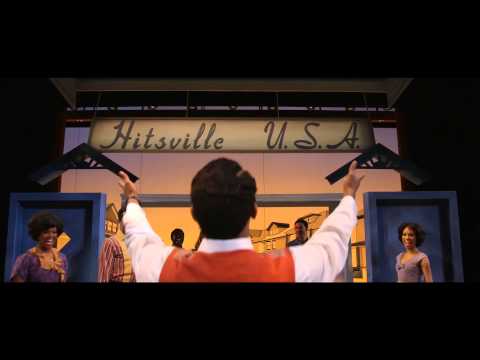
Review: the jukebox that wants to be a memoir
Here’s the dare at the center of Motown: The Musical: can a catalog built for radios and car speakers carry a biographical plot without sounding like a greatest-hits slideshow? Sometimes, yes. When the show treats songs as social proof, the storytelling clicks. The minute it forces a classic to behave like exposition, you can feel the strain, like watching a dancer count steps.
The lyrics in this show are famous, but they are not written for these characters. That is the central technical problem and the central pleasure. The production solves it with framing. We begin in 1983 at Motown 25, a high-gloss public event, then fall backward into Detroit and Hitsville memories. That structure turns the musical into an argument about legacy. When a Motown standard lands, it lands because the moment is already emotionally legible: a new act needs a breakthrough, a star wants control, a label owner is trying to sell confidence as a business plan.
Musically, the show leans on contrast. Early numbers tend to be tight, rhythmic, “let’s sell this,” with quick lighting changes and the feeling of an assembly line. Later sequences open up into longer, more reflective statements, often paired with broader stage pictures that nod to televised performance. The book is Berry Gordy’s, so the lyrical meaning often becomes less “what does this song say” and more “why does this song exist right now.” That is the show at its best: a pop lyric re-contextualized as evidence in a career narrative.
Listener tip for first-timers: play the cast album like a map, not a substitute. It is built around medleys that replicate the show’s pacing, which helps you track eras and rivalries, but it also means the album can feel breathless compared with the full stage event.
How it was made
Motown: The Musical is adapted from Gordy’s autobiography, and that matters because the piece behaves like a controlled recollection. The writing is not trying to be objective history. It is trying to explain how a small Detroit operation learned to sound inevitable. On Broadway, the production leaned on a specialist creative team built for speed and spectacle: director Charles Randolph-Wright, choreography by Patricia Wilcox (with Warren Adams credited in the production’s choreography), and a modern Broadway music engine led by Ethan Popp, whose supervision, arrangements, and orchestrations help the show shift between studio-style polish and arena-sized theatricality.
The canniest “new writing” choice is that there actually is some new writing. The Broadway cast album includes two new songs, co-written by Gordy and Michael Lovesmith, which function like bespoke narration in a world where most of the lyrics are inherited from the Motown catalog. Those originals are where the show most clearly admits its agenda, and why it needs theatre to tell this story rather than a documentary montage.
Key tracks & scenes
"Battle Of The Stars" (The Four Tops, The Temptations, ensemble)
- The Scene:
- Backstage at Motown 25, 1983. Bright rehearsal light, microphone checks, quick jokes that cover nerves. Two superstar groups turn warm-up into competition.
- Lyrical Meaning:
- The “lyrics” here are a flex. The medley turns love songs into athletic stats, proof that Motown’s brand is consistency under pressure. It also sets up the show’s core question: who owns the story, the label or the artists?
"Get Ready/Dancing In The Street" (Company)
- The Scene:
- The Motortown Revue energy arrives like a moving spotlight. The stage picture widens, choreography sharpens, and the crowd-response is baked into the staging. It feels like a label inventing its own public.
- Lyrical Meaning:
- “Get ready” becomes business strategy, and “dancing in the street” becomes community messaging. This is where a party lyric starts carrying cultural weight because the show frames it as an invitation across lines the industry preferred to keep in place.
"My Girl" (Smokey Robinson and/or The Temptations in the show’s framing)
- The Scene:
- Studio-success glow. Warm amber lighting, a bit of choreography that suggests smoothness without turning it into parody. The sound is classic, the confidence new.
- Lyrical Meaning:
- This is the show’s cleanest example of a Motown lyric doing what it was born to do: convert personal feeling into something singable by millions. Dramaturgically, it plays as the label’s “we can do this on purpose” moment.
"I Heard It Through The Grapevine" (Marvin Gaye)
- The Scene:
- Lights narrow, the stage quiets, and the room shifts from showroom sheen to something more private. Marvin stands in a pocket of intensity that the choreography wisely does not over-decorate.
- Lyrical Meaning:
- Gossip becomes fate. The lyric’s paranoia reads as romantic pain, but in context it also foreshadows an artist pushing against packaging. The show uses Marvin’s material to hint that “the Motown sound” could become a cage.
"War/What's Going On" (Company)
- The Scene:
- A fast montage of public events colliding with backstage life. Cooler lighting, sharper transitions, projections and headlines doing some of the narrative lifting.
- Lyrical Meaning:
- These lyrics were built for the street and the conscience, not the boardroom. Placing them in the show turns Motown’s output into a moral timeline, and forces Gordy’s story to share air with the country’s.
"I Want You Back/ABC/The Love You Save" (Young Michael Jackson and The Jackson 5)
- The Scene:
- Television-bright lighting and choreography that foregrounds precision. The staging sells the sensation of a prodigy being introduced as a product and a miracle at once.
- Lyrical Meaning:
- The lyrics are youthful and direct, and the dramatic irony is brutal: the show frames this joy as the start of a machine that will keep asking for more. These songs work because their surface happiness is the story’s point.
"Can I Close The Door (On Love)" (Diana Ross, Berry Gordy)
- The Scene:
- A quieter confrontation staged with space between bodies. The light isolates faces, not dance lines. The moment plays like a dressing-room truth that finally makes it onto the record.
- Lyrical Meaning:
- Because this number was written for the show, it behaves like theatre: it asks a question, not just a hook. It gives Diana language the catalog cannot, the cost of being both muse and employee.
"Ain't No Mountain High Enough" (Company)
- The Scene:
- A big, communal closing build, staged like a victory lap that still knows the party ends. Lights bloom, the company returns, and the night becomes a finale on purpose.
- Lyrical Meaning:
- In this context, the lyric stops being purely romantic and becomes institutional mythology. The show uses it as a mission statement: obstacles are branding opportunities if you can sing them loudly enough.
Live updates 2025/2026
Information current as of January 2026. There is no active Broadway or West End run announced for Motown: The Musical, and major ticketing pages for the title show no upcoming events. Some UK presenters list the show page as closed, with no tour venues currently on sale. If you see “Motown” in 2025 or 2026, it is often a separate concert or tribute brand rather than the Berry Gordy stage musical, so check the billing carefully.
What is alive right now is the afterlife: the cast album remains widely available on major streaming platforms, and the show’s medley-forward structure keeps it attractive for concert-style presentations and nostalgia-driven programming. If a new licensed production is announced, expect marketing to lean hard on the Motown 25 framing and the “over 50 hits” promise, because that remains the cleanest sell.
Notes & trivia
- The Broadway production is officially credited as a book by Berry Gordy, with music and lyrics drawn from the Motown catalog rather than a single composing team.
- The original Broadway cast album was released June 4, 2013 by Universal Music Enterprises, and it is structured around medleys that mirror the show’s pace.
- The cast album includes two new songs, co-written by Gordy and Michael Lovesmith, created specifically to serve the stage narrative.
- The Playbill track list labels the opening rehearsal sequence “Battle Of The Stars,” a nod to the show’s 1983 Motown 25 framing and its built-in group rivalry.
- The Broadway production’s music supervision and arrangements are credited to Ethan Popp, with orchestrations by Popp and Bryan Crook, and music direction by Joseph Joubert.
- The show’s production history includes an original Broadway run (2013–2015) and a short 2016 Broadway return engagement, followed by international life including a West End production.
- Several critics noted the same tension: the music is bulletproof, while the biography can feel like fast narration designed to reach the next number.
Reception then vs. now
In 2013, reviews largely agreed on the headline: the songs can cause near-automatic audience euphoria, and the book has to sprint to keep up. Some critics admired the sheer entertainment engineering, others wanted a more shaded portrait of Gordy and the artists. That split has aged into a useful lens for watching the show now. If you go in expecting a clean, curated memoir with a live soundtrack, the piece plays better. If you want investigative biography, the structure is not built for that.
“Motown the Musical left my eyes tired.”
“The worst jukebox (with the best tunes) I’ve ever encountered.”
“You can't hurry love, but apparently you can hurtle through 25 years of pop history...”
Quick facts
- Title: Motown: The Musical
- Year: 2013 (Broadway premiere)
- Type: Jukebox musical, biographical framing
- Book: Berry Gordy
- Music & lyrics: The Motown catalog (various writers and artists)
- Based on: To Be Loved: The Music, the Magic, the Memories of Motown (Berry Gordy autobiography)
- Director: Charles Randolph-Wright
- Choreography: Patricia Wilcox (with Warren Adams credited in Broadway production materials)
- Music supervision / arrangements: Ethan Popp
- Orchestrations: Ethan Popp and Bryan Crook
- Music direction (Broadway): Joseph Joubert
- Selected notable placements: “Battle Of The Stars” (Motown 25 rehearsal framing), “War/What’s Going On” (social-context montage), “I Want You Back/ABC/The Love You Save” (Jackson 5 breakthrough staging), “Ain’t No Mountain High Enough” (finale statement)
- Original Broadway Cast Recording: Released June 4, 2013 by Universal Music Enterprises, built around 14 tracks and multiple medleys
Frequently asked questions
- Is Motown: The Musical a concert or a book musical?
- It is a book musical with a biographical frame, but it often plays like a concert because it moves through dozens of hit songs quickly and uses medleys as storytelling engines.
- Who wrote the lyrics?
- The lyrics come from the Motown catalog, so they are written by many songwriters across decades. The show credits “various artists” for music and lyrics, with Berry Gordy credited for the book.
- Does the cast album match the onstage song order?
- Not exactly. The album is organized into big medleys and set pieces that capture the show’s shape, but it is not a strict scene-by-scene document.
- Are there any songs written specifically for the musical?
- Yes. The original Broadway cast album includes “Hey Joe (Black Like Me)” and “Can I Close The Door (On Love),” co-written by Berry Gordy and Michael Lovesmith.
- Is the show running anywhere in 2025 or 2026?
- As of January 2026, there is no announced Broadway or West End run and major ticketing pages list no upcoming performances for the title. If you see “Motown” touring, confirm it is this specific stage musical and not a separate tribute show.
- Is there a movie version of the stage musical?
- No official feature-film adaptation of the stage musical has been released. There are documentaries and filmed concert materials about Motown as a label, which is a different category.
Key contributors
| Name | Role | Contribution |
|---|---|---|
| Berry Gordy | Book, producer | Biographical framing, authorial point of view, and the show’s guiding narrative voice. |
| Charles Randolph-Wright | Director | Staged the story as legacy theatre, built around Motown 25 framing and quick era transitions. |
| Patricia Wilcox (with Warren Adams credited) | Choreography | Dance vocabulary that shifts from studio-era polish to televised-performance spectacle. |
| Ethan Popp | Music supervision, arrangements, orchestrations | Modernized theatrical arrangements while keeping the Motown feel legible to audiences. |
| Bryan Crook | Co-orchestrations, additional arrangements | Helped scale the sound for Broadway without flattening stylistic differences across eras. |
| Joseph Joubert | Music director (Broadway) | Musical leadership for a score that behaves like a live anthology with tight pacing demands. |
| Michael Lovesmith | Co-writer (new songs) | Co-wrote original material created for the stage narrative and cast album. |
Sources: Playbill; IBDB; Time Out New York; Vulture; The Hollywood Reporter; LondonTheatre.co.uk; Official London Theatre; BroadwayWorld; ATG Tickets; Apple Music.