
Me and My Girl Lyrics: Song List
- Act 1
- A Weekend At Hareford
- Thinking Of No-One But Me
- The Family Solicitor
- Me And My Girl
- An English Gentleman
- You Would If You Could
- Hold My Hand
- Once You Lose Your Heart
- Preparation Fugue / The Lambeth Walk
- Act 2
- The Sun Has Got His Hat On
- Take It On The Chin
- Song Of Hareford
- Love Makes The World Go Round
- Leaning On A Lamppost
- Finale
About the "Me and My Girl" Stage Show
This is histrionics, where original screenplay & score have been done by N. Gay. Lyrics belong to D. Furber & L. A. Rose. Creation takes viewers in the 30 years of the 20th century and tells them the story of loutish cockney named Bill Snibson, which becomes a contender for the title of Count. Actions take place in different parts of London.
The initial opening of the production was in December 1937 in the Victoria Palace Theatre, which is West End. The main role in the musical performed L. Lane. The latter was previously seen in the comedy play Twenty to One in 1935. The first shows attracted little attention, but in time, the interest of spectators to this spectacular greatly increased. In May 1939 for the first time in the history of the theater, a live broadcast on national television was held. During the stay in the West End, musical has been performed 1646 times. After such a successful conquest of the scene, in 1939 the filmmakers made the decision to shoot a motion picture based on the performance. The latter received the name The Lambeth Walk, which is a reference to the eponymous composition of this theatrical.
Release date of the musical: 1937
"Me and My Girl" – The Musical Guide & Song Meanings
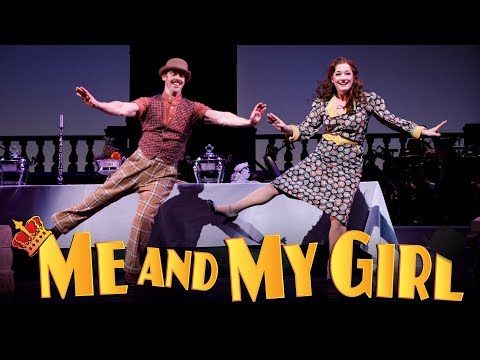
Review: the lyrics as social choreography
Why does Me and My Girl still work when its plot is proudly preposterous? Because the lyric writing treats class as a physical act, not an essay topic. Rose and Furber keep handing characters tiny verbal tests: who gets to be fluent, who has to be corrected, and who weaponizes charm to dodge the correction. The show’s big trick is that Bill does not “learn” sophistication so much as he exposes how performative sophistication already is. That is why the songs keep circling manners, titles, and public behavior: the score is basically etiquette, set to rhythm.
Musically, Noel Gay’s writing sits in that sweet spot between music-hall snap and romantic sentiment. The peppy numbers are not just comic relief; they are crowd-control. When the show wants Bill to win a room, it gives him a tune that behaves like a handshake. When it wants Sally to lose her footing, it gives her melody long enough to make loneliness audible. In other words, the score does not “stop” the story. It stages the story, then tells the dialogue to catch up.
If you are reading this for lyric meaning, here’s the actionable takeaway: in this show, rhymes are status, and refrains are community. The aristocrats love precision and the Cockneys love momentum. When those worlds collide, the lyrics become the battleground, and then, famously, the dance floor becomes the peace treaty.
How it was made
Me and My Girl began life in 1937 as a West End vehicle built around Lupino Lane’s cockney persona, and it reportedly caught fire after an emergency BBC radio broadcast of a matinee, when a sporting event was cancelled and airtime needed filling. That one piece of timing matters because it fits the show’s DNA: it is engineered for immediacy. The jokes land fast, the rhymes are clean, and the big numbers are written to travel beyond the theatre as public entertainment, not precious artifacts.
The 1980s revival story is the other half of its modern identity. Stephen Fry revised the book, with contributions from director Mike Ockrent, smoothing the structure for contemporary pacing while keeping the score’s grin intact. The result is the version most people mean today when they say “Me and My Girl,” and it is also the version that turned the property into a licensing staple. You can feel the retrofit in how the second act tightens around Sally’s emotional throughline and how the show leans harder into Bill’s refusal to be “improved” out of love.
Key tracks & scenes
"A Weekend at Hareford" (Ensemble)
- The Scene:
- Mayfair sliding into a countryside departure, a summer evening, luggage piled into a car like a moving monument to privilege. Bright, polite lighting, faces already bored by their own choices.
- Lyrical Meaning:
- The lyric is social satire in postcard form. Every rhyme is a tiny admission that the upper crust is addicted to ritual, not joy. This is the show telling you its villains are not evil, they are tedious.
"Me and My Girl" (Bill, Sally)
- The Scene:
- Bill and Sally plant a relationship in the middle of genteel surroundings that do not want it. The mood is bright on the surface, tense underneath, like smiling through a photograph.
- Lyrical Meaning:
- It sounds like a simple love song because it is a simple love song, and that is the point. The lyric refuses fancy language as a sign of “upgrade.” Bill’s devotion is stated in plain terms, which makes it harder for the aristocrats to argue against without sounding cruel.
"Once You Lose Your Heart" (Sally)
- The Scene:
- At the Hareford Arms, warmth and wood and noise, then Sally’s stillness. Lighting narrows, the crowd becomes distant, and she sings as if she is trying not to be overheard.
- Lyrical Meaning:
- This is the show’s emotional receipt. The lyric admits that love is not a contract you can renegotiate when status changes. “Lose” does the heavy lifting here: she is not talking about a breakup, she is talking about disorientation, the feeling of misplacing your own center.
"The Lambeth Walk" (Company)
- The Scene:
- Outside Hareford Hall, the party spills outward. The sound becomes percussive, bodies multiply, and the stage picture turns communal. The lighting goes festive, then almost feverish as the number refuses to end.
- Lyrical Meaning:
- The lyric is community as choreography. It is not “look at us,” it is “join us.” The number’s genius is its insistence that culture can be taught through pleasure. The aristocrats do not get persuaded by argument, they get converted by rhythm.
"The Sun Has Got His Hat On" (Gerald, Jaquie, Guests, Servants)
- The Scene:
- Act II opens in the garden, sunlight as a thesis statement. Tap energy takes over, and the mood is champagne with a pulse.
- Lyrical Meaning:
- On paper it’s weather optimism. In context it’s denial with great legs. The lyric turns “everything’s fine” into a dance, which is exactly how this world survives discomfort: speed, polish, and a wink.
"Take It on the Chin" (Sally)
- The Scene:
- Still in the garden, Sally tries to will herself into resilience. The orchestration bounces, but the acting moment is grit, not cuteness.
- Lyrical Meaning:
- The lyric is self-instruction. It’s a working-class ethic expressed as melody: swallow the bruise, keep moving, do not give them the satisfaction. That toughness makes her later tenderness feel earned, not decorative.
"Love Makes the World Go Round" (Bill, Sir John, Ancestors)
- The Scene:
- In the library, portraits and ancestors become a surreal chorus, like tradition literally watching. The light shifts to something older, sepia-toned, with a soft theatrical glow.
- Lyrical Meaning:
- This is the show briefly lifting its chin from comedy and asking for belief. The lyric argues that love is the only “title” worth holding, and it gives Bill a moral vocabulary that outclasses the upper class.
"Leaning on a Lamppost" (Bill)
- The Scene:
- Capstan Street, Lambeth. A streetlamp, a pause, a man thinking. The lighting does the work: one pool of glow, everything else dim.
- Lyrical Meaning:
- Bill’s public bravado quiets into private longing. The lyric uses everyday objects to dodge sentimentality. That choice is character logic: he can admit feelings, but only sideways.
Live updates (2025–2026)
Me and My Girl is not sitting on the commercial touring circuit right now in the way a contemporary megamusical does. Its current life is healthier and more scattered: revivals, community and society productions, and the occasional high-profile house that wants a classic British crowd-pleaser with real dance pedigree.
In the UK and Ireland, multiple 2025–2026 bookings point to exactly what the licensing market looks like for the title: reliable, family-friendly, and built for companies with strong movers. Examples include a March 2025 run at The Radlett Centre, an October 2025 production listed for Stoke-on-Trent, and several spring 2026 bookings such as Knowle Musical Society at The Core Theatre Solihull and Pocket Theatre at Hanger Farm. If you want a snapshot of how the piece is being programmed, it is getting placed as a “big classic” rather than a novelty pick.
Internationally, the most intriguing 2026 datapoint is Oper Leipzig’s scheduled run (Musikalische Komödie). A municipal opera house programming Me and My Girl is a reminder that the score’s construction is sturdier than its reputation: if you stage it with musical discipline, it can play as craft, not kitsch.
Notes & trivia
- The published licensing version credits book and lyrics to L. Arthur Rose and Douglas Furber, with book revisions by Stephen Fry and contributions by Mike Ockrent, and music by Noel Gay.
- The script’s scene synopsis pins the action to “the later 1930s” across Hareford Hall (Hampshire), Mayfair, and Lambeth, which is why the lyric writing keeps toggling between manners and streetwise immediacy.
- "The Lambeth Walk" was not just a showstopper; it escaped into popular culture as a real dance craze in the late 1930s.
- The Act I finale placement is explicit in the published musical-number synopsis: Scene Five, Hareford Hall exterior.
- Two signature hits often associated with the show come with their own publishing histories, and the licensing materials list separate copyright notices for several songs, reflecting how the revival repurposed Noel Gay material.
- The 1986 Broadway run logged 1,420 performances, and the production’s awards footprint helped cement the revival version as the default reference point in the U.S.
- Modern reviews still point to the same structural truth: if the choreography and comic timing are not elite, the book can feel long. When they are elite, the material reads as intentional lightness rather than thinness.
Reception then vs. now
Historically, the show’s reputation has swung with performance style. In 1937, it hit as a star-driven West End entertainment that could broadcast well, then "The Lambeth Walk" took on a parallel life as a cultural artifact. In the 1980s, the revised version arrived with enough dramaturgical polish to travel, and Broadway embraced it as an old-fashioned musical comedy that did not apologize for trying to make you feel good.
Contemporary reception tends to be more conditional: critics often praise the score’s infectious construction while side-eyeing the book’s longueurs. That is fair, and it also misses the point a little. This show is a machine designed to produce shared pleasure. When the performers can drive it, the lyric writing feels sharp, and when they cannot, it feels like a period piece asking for patience.
Frank Rich wrote of the show’s “sheer happiness.”
“A delight from start to finish.”
“A simply stupendous” Encores! mounting.
Quick facts
- Title: Me and My Girl
- Year: 1937 (West End premiere)
- Type: Musical comedy
- Music: Noel Gay
- Book & lyrics: L. Arthur Rose and Douglas Furber
- Revision (commonly performed version): Book revised by Stephen Fry, with contributions by Mike Ockrent
- Primary settings: Hareford Hall (Hampshire), Mayfair, Lambeth, late 1930s
- Selected notable placements: "The Lambeth Walk" (Act I finale, Hareford Hall exterior); "The Sun Has Got His Hat On" (Act II opener, garden)
- Broadway run (revival version): Marquis Theatre, 1986–1989, 1,420 performances
- Album anchor for listeners: 1986 Original Broadway Cast Recording (widely available on streaming; label listed as Verve on Apple Music)
- Licensing/publisher: Concord Theatricals (title listing and materials)
Frequently asked questions
- Is “The Lambeth Walk” actually part of the plot, or just a detachable hit?
- It is plot. The number lands as an Act I finale in the Hareford setting, and it dramatizes the show’s core collision: culture transfer by joy, not by lecture.
- Who wrote the lyrics, and why do they feel so “performable”?
- L. Arthur Rose and Douglas Furber wrote book and lyrics. The lyric writing is built for comic landing and communal singing, with rhyme schemes that prioritize clarity and momentum.
- What version do most productions use today?
- The licensing standard is the revised book credited to Stephen Fry, with contributions by Mike Ockrent, paired with Noel Gay’s score.
- Is there a movie version?
- There is a 1939 film titled The Lambeth Walk, tied to the show’s breakout song and its cultural afterlife.
- Why does Sally get the most emotionally direct songs?
- The show’s comedy engine belongs to Bill, but the stakes belong to Sally. Her lyrics tend to speak plainly about loss and endurance so the romance does not float away on charm alone.
- Is the show touring in 2025–2026?
- Not as a single dominant commercial tour, based on publicly listed schedules. Instead, it is appearing in multiple regional and community bookings, plus at least one notable 2026 European house engagement.
Key contributors
| Name | Role | Contribution |
|---|---|---|
| Noel Gay | Composer | Wrote the score, including the hit architecture that makes the dance numbers travel beyond the plot. |
| L. Arthur Rose | Book and lyricist | Co-wrote the narrative and lyric framework that treats class as language and behavior. |
| Douglas Furber | Book and lyricist | Co-wrote the show’s lyric voice, balancing music-hall punch with romantic sincerity. |
| Stephen Fry | Book reviser | Re-shaped the book for the modern revival version commonly performed today. |
| Mike Ockrent | Contributor to revisions, director (notable revival) | Helped steer the revival-era storytelling approach that made the piece exportable. |
| Warren Carlyle | Director-choreographer (NYCC Encores! 2018) | Demonstrated how elite staging can make the lyric jokes land and the dances feel inevitable. |
| John Weidman | Concert adaptation (NYCC Encores! 2018) | Adaptation credit for the Encores! concert presentation. |
Sources: Concord Theatricals; Samuel French/Concord perusal script PDF; IBDB; Playbill; TheaterMania; Musical Theatre Review; Wikipedia; Apple Music; Operabase; The Core Theatre Solihull; Hanger Farm; The Radlett Centre local listing.