
Me and Juliet Lyrics: Song List
- Act 1
-
A Very Special Day

-
That's the Way It Happens
- Dance Impromptu
- Overture to Me and Juliet
- Opening of Me and Juliet
-
Marriage Type Love
-
Keep It Gay
-
The Big Black Giant
- No Other Love
- Dance
-
It's Me
- First Act Finale
- Act 2
- Intermission Talk
- It Feels Good
-
We Deserve Each Other
- I'm Your Girl
- Second Act Finale
- Finale
About the "Me and Juliet" Stage Show
This musical comedy has been created in 1953 by two authors: R. Rodgers & O. Hammerstein II, who produced all libretto & lyrics. Premiere took place on May of mentioned year in the Majestic Theatre. A large number of tickets were sold in advance. This ensured the well funding of performance. By November, the musical fully paid off. On April 1954 after 358 performances, the play was removed from the display. This spectacle made a little profit, so it was attributed to unsuccessful productions.
Director is G. Abbott. The cast involved: I. Bigley – Jeanie, B. Hayes – Larry, M. Dawson – Bob, R. Walston – Mac, J. McCracken – Betty, J. Lautner – Ruby, H. Scott – Lily (Juliet), E. Philips – Sidney. In 1954, a musical during a half month was shown in Chicago. In 1955, the show was at the Starlight Theatre’s stage. In 1970, it was shown in the New York’s Equity Library Theatre. Resurrection occurred in 2002, when the musical was staged at the York Theatre’s scene. As chorus girls of 1953-1954, were involved the S. MacLaine – in a New York production, and S. Jones – in Chicago’s one.
The London’s production was set in 2010 at the Finborough Theatre.
Release date of the musical: 1953
"Me and Juliet" – The Musical Guide & Song Meanings
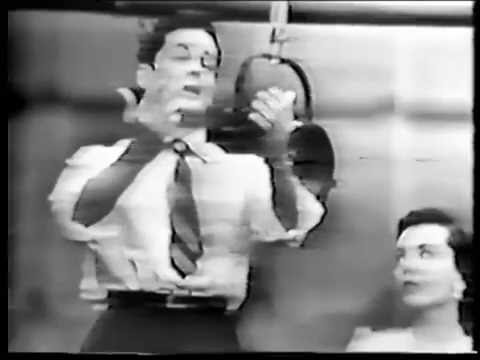
A backstage musical that keeps checking the audience
“Me and Juliet” has a sly premise and an anxious personality. Rodgers and Hammerstein write a show about a Broadway show, then spend most of the night asking whether show business romance is an art form or just bad timing with better lighting. The result is half valentine, half stage-door warning label.
The lyrics are built around observation more than revelation. Hammerstein gives Jeanie the language of self-explanation (“That’s the Way It Happens”), then traps her in other people’s commentary: Bob’s possessive threats, Mac’s workplace rules, and the audience’s own chatter in “Intermission Talk.” If you want a big destiny engine, this is the wrong station. The book prefers the small humiliations that accumulate in a theatre: an understudy audition, a bad note, a late electrician, a kiss that feels public even when it is hidden.
Musically, Rodgers leans into contemporary dance flavors for 1953, and the score’s bounce is sometimes sharper than the plot’s spine. That contrast is the point. When the show is “onstage,” it’s parody and pattern. When it’s backstage, the same kinds of romantic claims land with consequences. The lyrics keep switching between performance language and private language, and the seams are visible on purpose.
How it was made
Rodgers had wanted a backstage comedy, and “Me and Juliet” is the team’s most direct piece of theatre-about-theatre, complete with catwalks, bridges, and shifting viewpoints that let staging do narrative work. One critic at the time basically admitted the scenic design was carrying the clarity load, praising the moving bridges and the backstage reveal as the plot ricocheted between “show” and “real life.”
The most famous “origin story” in the score is also a reminder that Rodgers was never precious about reuse. “No Other Love” repurposes a melody he had written for the television documentary series “Victory at Sea,” with Hammerstein fitting new words to a tune that already knew how to swell. The cast recording landed quickly, and the song’s afterlife was turbocharged by pop recordings, including Perry Como’s hit version.
If you want a practical listening tip: play the cast album straight through once, then replay it focusing on where the physical space changes. “Keep It Gay” is staged from a light bridge before the action drops down to the stage, and “Intermission Talk” turns the lobby into a chorus of amateur critics. This show is obsessed with where sound comes from.
Key tracks & scenes
"A Very Special Day" (Jeanie)
- The Scene:
- Backstage before curtain. Tools, cables, impatience. Jeanie waits for Bob, and the theatre feels like a workplace, not a dream factory.
- Lyrical Meaning:
- Hammerstein frames romance as routine interrupted: a “special day” that is special mostly because it fails to arrive. The lyric sets Jeanie up as a realist who is tired of excusing men.
"That’s the Way It Happens" (Jeanie)
- The Scene:
- Still backstage, still pre-show. Jeanie narrates how she and Bob began, as if giving testimony to herself.
- Lyrical Meaning:
- The title is a defense mechanism. The words normalize what should be questioned. That’s the dramatic engine: Jeanie learning that “happens” is not the same as “has to.”
"Keep It Gay" (Bob, then Ensemble)
- The Scene:
- On the light bridge above the stage, Bob sings down into the theatre, then the number blooms into the “show-within-the-show,” with blackouts and resets that make the staging itself a punchline.
- Lyrical Meaning:
- The lyric performs cheer as a tactic. In a story full of jealousy and rules, the number sells buoyancy as discipline: keep it bright, keep it moving, don’t let the audience smell the machinery.
"The Big Black Giant" (Larry)
- The Scene:
- Larry coaches Jeanie through an understudy audition and names the enemy: the audience, a shifting shadow you can’t rehearse.
- Lyrical Meaning:
- It is one of Hammerstein’s clearest metaphors in the late period: fear is not a villain onstage, it is the crowd outside the footlights. The lyric is theatre craft disguised as character advice.
"No Other Love" (Jeanie and Larry; later reprises)
- The Scene:
- Jeanie tries the Juliet balcony song during her understudy work. Bob watches, mocks, and the room’s temperature drops. Later, the show uses reprises as emotional bookkeeping, not just applause bait.
- Lyrical Meaning:
- The lyric is absolute on purpose. “No other” is the fantasy Jeanie wants to believe, and the danger she is walking into. Because the melody is so assured, the words read like a dare.
"It’s Me" (Betty, with Jeanie; plus reprise)
- The Scene:
- Dressing room glamour meets five-minute call. Betty treats identity like a spotlight she can aim, while Jeanie watches and learns a different kind of confidence.
- Lyrical Meaning:
- Hammerstein writes “me” as performance. Betty’s lyric isn’t therapy; it’s branding. In a backstage show, that distinction matters, and it makes Jeanie’s quieter self-knowledge feel earned.
"Intermission Talk" (Herbie and Ensemble)
- The Scene:
- Act II opens in the lobby, where the audience becomes a character, gossiping, misremembering, and debating whether theatre is finished as an art form.
- Lyrical Meaning:
- This is the score’s sharpest piece of self-critique. The lyric turns spectators into collaborators in the show’s reputation, and it anticipates modern fandom brain: half review, half rumor.
"I’m Your Girl" (Jeanie and Larry)
- The Scene:
- Offstage hiding becomes its own kind of stage. The lovers try to turn a crisis into commitment while the theatre keeps moving around them.
- Lyrical Meaning:
- The words are deliberately plain, almost contractual. Jeanie’s arc is not “learn to sing,” it’s “learn to choose,” and the lyric lands as a decision made under pressure.
Live updates (2025/2026)
As of January 2026, “Me and Juliet” is not a title with an active Broadway, West End, or major commercial tour footprint. Its practical “now” is licensing and listening. Concord Theatricals continues to license the full-length show and materials, and the Rodgers & Hammerstein organization keeps an official trail for the score and recordings.
If you are tracking the piece in the current ecosystem, the most concrete movement is around the album’s accessibility and catalog life. The 1953 cast recording remains the easiest entry point, and it has been reissued on CD in the modern era. For production history beyond the original run, documented revivals are scattered and small, which is part of the show’s reputation: intriguing craft, difficult sell.
Viewer tip for a future revival: pick seats for sightlines, not closeness. This is a show designed around vertical space (light bridges, catwalks, shifting stage pictures). “Good seats” are the ones that let you watch the theatre watching itself.
Notes & trivia
- “No Other Love” reuses a Rodgers melody written for “Victory at Sea,” then reborn with Hammerstein lyrics.
- “Keep It Gay” is staged to begin on a light bridge before the number relocates to the stage below, using blackouts as scene cuts.
- The Act II opener “Intermission Talk” explicitly turns the lobby into a chorus of opinion and misremembered details, a rare structural joke in a Rodgers & Hammerstein book.
- The original Broadway run opened May 28, 1953 and closed April 3, 1954, totaling 358 performances.
- IBDB credits George Abbott as director, Robert Alton for staging dances and musical numbers, and Jo Mielziner for scenic design and lighting, with Irene Sharaff on costumes.
- The official Rodgers & Hammerstein recording note lists the cast album’s RCA release date as June 9, 1953.
- Concord’s licensing listing specifies a very large orchestra on the original materials, with an expanded reed and brass lineup plus harp and substantial strings.
Reception then vs. now
In 1953, reviewers admired the craftsmanship of the theatre mechanics while side-eyeing the story’s coherence. A Harvard Crimson notice, written during the out-of-town period, liked the staging and design while calling the piece lightweight and melodramatic. Later commentary often treats the show as a “minor” Rodgers & Hammerstein, but recent scholarship argues that its metatheatrical structure is more intentional than its reputation suggests.
“The one way to enjoy Me and Juliet is to forget Oklahoma, South Pacific, and The King and I.”
“Even in the happiest of circumstances the play-within-a-play poses a difficult problem in craftsmanship.”
“A fascinating sequence that opens Act II … serves to illuminate prevailing receptions of Broadway musicals.”
Quick facts
- Title: Me and Juliet
- Year: 1953 (Broadway opening: May 28, 1953)
- Type: Musical comedy; backstage “show-within-a-show”
- Music: Richard Rodgers
- Book & Lyrics: Oscar Hammerstein II
- Director: George Abbott
- Choreography / musical numbers staged: Robert Alton
- Scenic design & lighting: Jo Mielziner
- Costumes: Irene Sharaff
- Orchestrations / vocal arrangements: Don Walker
- Notable song placements: “Keep It Gay” begins on the light bridge; “Intermission Talk” opens Act II in the lobby; “No Other Love” is tied to the Juliet understudy work.
- Cast album: Original Broadway cast recording released on RCA on June 9, 1953
- Availability: Licensed for productions via Concord Theatricals; album widely available on major streaming platforms
Frequently asked questions
- Is “Me and Juliet” based on Shakespeare?
- Indirectly. The Shakespeare tie is in the fictional “show-within-the-show,” where characters play Juliet and the romantic plot is filtered through rehearsal and performance.
- Why does “No Other Love” sound familiar?
- Because Rodgers repurposed the melody from his work on “Victory at Sea,” then Hammerstein supplied new lyrics for the stage context.
- What is the show’s smartest structural idea?
- “Intermission Talk.” It makes the audience part of the narrative, letting the lobby’s chatter become a musical number and a critique.
- Is there a definitive modern revival to watch?
- No single production has become a mainstream reference point. The most consistent “text” in circulation is the 1953 cast recording and the licensed materials.
- What should I listen for if I only have time for three tracks?
- Try “The Big Black Giant” (theatre fear as metaphor), “No Other Love” (the score’s famous tune in context), and “Intermission Talk” (the show’s self-awareness on full display).
Key contributors
| Name | Role | Contribution |
|---|---|---|
| Richard Rodgers | Composer; Producer | Score that blends contemporary dance idioms with classic Broadway structure; repurposed “Victory at Sea” melody for “No Other Love.” |
| Oscar Hammerstein II | Lyricist; Book writer; Producer | Backstage lyric-writing that treats theatre as a workplace; built Act II’s “Intermission Talk” as meta-commentary. |
| George Abbott | Director | Shaped the show’s pacing and the complicated traffic between backstage action and the internal musical. |
| Jo Mielziner | Scenic design; Lighting design | Physicalized the concept with bridges, moving stage pictures, and backstage visibility that critics repeatedly highlighted. |
| Robert Alton | Dances and musical numbers staged | Handled the show’s dual-world choreography, including numbers designed to jump between “performance” and “real life.” |
| Irene Sharaff | Costume design | Period theatrical costumes that help differentiate backstage reality from the internal romance spectacle. |
| Don Walker | Orchestrations; Vocal arrangements | Architected a large, color-rich Broadway orchestra palette, including expanded reeds and brass. |
Sources: Rodgers & Hammerstein Organization, Concord Theatricals, IBDB, Playbill, The Harvard Crimson, University of Portsmouth Research Portal, American Music Research Center Journal (University of Colorado), Masterworks Broadway, Apple Music.