Man of La Mancha Lyrics – All Songs from the Musical
Man of La Mancha Lyrics: Song List
- Overture
- Man of la Mancha (I, Don Quixote)
- It's All the Same
- Dulcinea
- I'm Only Thinking of Him
- I Really Like Him
- What Do You Want of Me
- Little Bird, Little Bird
- Barber's Song
- Golden Helmet of Mambrino
- To Each His Dulcinea
- Impossible Dream
- Dubbing
- Knight of the Woeful Countenance
- Aldonza
- Little Gossip
- Dulcinea (Reprise)
- Finale (The Impossible Dream)
- The Impossible Dream (Reprise)
- Man of La Mancha (I, Don Quixote) (Reprise)
- Finale
About the "Man of La Mancha" Stage Show
Release date: 1965
"Man of La Mancha" – The Musical Guide & Song Meanings
Review: the lyrics as moral argument
“Man of La Mancha” is often sold as a single inspirational anthem. That is convenient marketing and incomplete criticism. Joe Darion’s lyrics are less greeting-card idealism than courtroom strategy: Cervantes is on trial, and every song is a piece of testimony about why imagination deserves to survive brutality. Dale Wasserman’s book makes the mechanism explicit. The show does not begin in a quaint Spain of windmills. It begins in a dungeon, where art is literally at risk of being confiscated.
Darion writes in vows and imperatives. “I, Don Quixote” is a self-invention sung as if the singer is fastening armor; it is language doing physical labor. “Dulcinea” is not romance, it is renaming. He looks at a woman the world has flattened and insists she deserves better grammar. That choice is the lyric thesis: dignity can be spoken into being, even if the room laughs. Mitch Leigh’s score, with its Spanish-inflected bite, supports that tension between pageantry and peril. The music can sound celebratory while the staging stays cramped and hostile, which is the point. The story is a performance built to keep despair from winning the room.
Viewer tip: sit where you can read faces during the dungeon scenes. This piece lives in quick shifts between role-play and reality. When the “play” cracks and the prisoners reappear, the lyrics land harder than any scenic effect.
How it was made
The musical’s origin is not a straight line from novel to stage. Wasserman first wrote the material as a 1959 television drama, “I, Don Quixote,” then reworked it for theatre and finally shaped it into a “musical play” with Leigh and Darion. A study guide quoting Wasserman’s own preface describes the collaboration as creating a kind of theatre “without precedent” within their experience, and notes early producer hesitation before audiences made the case for them.
The show’s framing device is the real invention. It protects the piece from becoming a tidy “classic adaptation” and keeps the lyrics honest. Every noble line has to coexist with a world that can punish you for singing it. Even the big anthem is staged as an explanation, not a victory lap: Quixote sings because Aldonza demands to know what he thinks he is doing.
Key tracks & scenes
"Man of La Mancha (I, Don Quixote)" (Cervantes/Quixote, Sancho)
- The Scene:
- The dungeon becomes a makeshift stage. Prisoners drag props out of scrap and necessity. Light is often harsh and directional, like torches that do not care about romance. Cervantes transforms into Quixote in full view, as if selfhood is a costume you earn.
- Lyrical Meaning:
- This is identity as construction. The lyric is a manifesto that dares the room to accept the premise: a man can choose the story he lives inside.
"It’s All the Same" (Aldonza)
- The Scene:
- At the inn, where cruelty passes for entertainment. Aldonza is surrounded by men who treat her as a utility. The staging typically gives her little space, so the song feels cornered.
- Lyrical Meaning:
- Darion writes nihilism with blunt efficiency. Aldonza’s rhyme is a self-defense system: if nothing matters, nothing can hurt her. The show spends two acts proving this logic is a lie she learned to survive.
"Dulcinea" (Quixote)
- The Scene:
- Quixote looks at Aldonza and speaks to an imagined “lady” inside her. The contrast between his tenderness and the inn’s grime is the staging gag and the moral question.
- Lyrical Meaning:
- He is not describing the woman in front of him. He is insisting on a possibility the world has refused to grant. The lyric is an act of naming, which is power in this story.
"I Really Like Him" (Sancho)
- The Scene:
- Sancho tries to justify loyalty to the skeptical adults watching this “madman.” The number often plays in a looser pool of light, a brief softening in the show’s textures.
- Lyrical Meaning:
- It is a song about choosing a leader who makes you better. The lyric’s simplicity is the point: devotion does not need philosophy, it needs recognition.
"Little Bird, Little Bird" (Muleteers)
- The Scene:
- The inn’s courtyard becomes a trap. The song is staged as taunting and predation, usually with bodies closing in and laughter that lands like a threat.
- Lyrical Meaning:
- The lyric weaponizes sweetness. It is a reminder that this show’s danger is not abstract. Idealism here is not a mood. It is something you attempt while people are watching, waiting to punish you.
"The Impossible Dream (The Quest)" (Quixote)
- The Scene:
- Quixote stands vigil over his armor in the courtyard, answering Aldonza’s challenge about what his “quest” even means. The scene often isolates him in a tight light, turning the anthem into testimony.
- Lyrical Meaning:
- These lyrics are a code of conduct. The power is not in optimism, it is in stubborn ethical clarity. He is not promising success. He is promising effort.
"Knight of the Woeful Countenance" (Innkeeper, Company)
- The Scene:
- The innkeeper, half amused and half moved, agrees to dub Quixote a knight. The staging usually plays as a mock ceremony that gradually becomes sincere, the ensemble realizing they are part of something larger than ridicule.
- Lyrical Meaning:
- The lyric is social permission. A title, even a joking one, can legitimize a dream long enough for it to change people’s behavior.
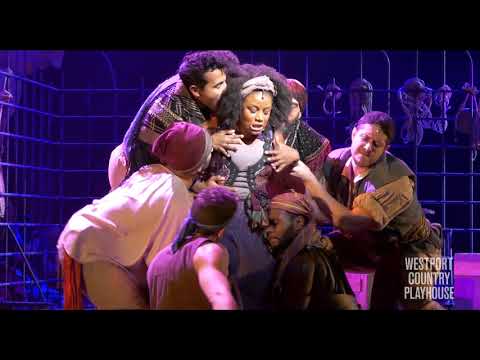
"Aldonza" (Aldonza)
- The Scene:
- After violence, after humiliation, Aldonza erupts. The air is different now. Directors often strip the stage picture back to bodies and breath, because this is a reckoning, not a set piece.
- Lyrical Meaning:
- This is the lyric climax: she rejects the names the world has stamped on her, then wrestles with the name Quixote offered. The song is rage turning into agency in real time.
Live updates (2025/2026)
Information current as of January 29, 2026. “Man of La Mancha” is thriving in the way classics actually thrive in 2026: through regional companies, anniversary programming, and productions that use the dungeon frame as a mirror for contemporary confinement.
In Florida, Actors’ Playhouse at the Miracle Theatre is mounting a “newly reimagined” staging as part of its 30th anniversary season, running November 19 through December 21, 2025, with E.L. Losada billed as Cervantes/Don Quixote. In Southern California, Musical Theatre West lists a full production running February 13 through March 1, 2026, with casting posted publicly. In Ireland, Carrick-on-Suir Musical Society announced its 2026 staging at the Strand Theatre from March 22 to 28, including principal casting and creative leadership.
Programming trend worth noticing: directors keep experimenting with who the “prisoners” are. A 2019 London review described an update that hinted at refugees in the framing scenes, and even critics skeptical of the revival admitted the dungeon idea remains theatrically potent. That is the show’s advantage. The lyrics do not require a museum. They require a room where hope has a price.
Notes & trivia
- The original New York run began at the ANTA Washington Square Theatre on November 22, 1965 and ultimately totaled 2,328 performances across venue moves.
- IBDB lists the setting as a dungeon in Seville and “various places in the imagination” of Cervantes, which is the whole structural trick in one sentence.
- Wasserman repeatedly warned that the musical is not trying to be a faithful version of either Cervantes’ biography or the novel. It is a theatrical argument inspired by both.
- “The Impossible Dream” is first sung while Quixote keeps vigil over his armor, and the song returns as a reprise and finale in the dungeon as Cervantes is led to trial.
- The show began life as a 1959 television drama (“I, Don Quixote”) and kept much of its dialogue and framing device as it evolved.
- Concord Theatricals highlights the score’s “Spanish-inflected” sound and spotlights “I, Don Quixote,” “Dulcinea,” “I Really Like Him,” and “Little Bird” as core numbers.
- Musical Theatre West flags the show for mature themes, including depictions of violence and sexual assault, which matters for modern audiences approaching it via the famous anthem.
Reception
Contemporary reaction understood the show’s gambit: it makes idealism defensible by staging it under threat. A 1965 TIME review quotes the mock indictment thrown at Cervantes and treats the piece as a sharp, modern argument about faith and honesty, not just romance. Later criticism has been less forgiving about the anthem’s halo effect. In 2019, The Guardian called out what it saw as “fuzzy idealism” in Darion’s lyric attitude, and Time Out questioned whether a revival made a convincing case for relevance.
“I charge you with being an idealist, a bad poet and an honest man.”
“the fuzzy idealism of Joe Darion’s lyrics”
“contemporary relevance, like chivalry, really is an impossible dream.”
All three views can coexist. The show is earnest, sometimes bluntly so, and that earnestness is exactly why “Man of La Mancha” keeps returning when companies want theatre that argues for the value of art itself.
Quick facts
- Title: Man of La Mancha
- Year: 1965
- Type: Musical play
- Book: Dale Wasserman
- Music: Mitch Leigh
- Lyrics: Joe Darion
- Original New York opening: November 22, 1965 (ANTA Washington Square Theatre)
- Original run length: 2,328 performances
- Original staging: Staged by Albert Marre
- Selected notable placements: “The Impossible Dream” occurs during Quixote’s vigil over his armor; final chorus returns in the dungeon as Cervantes is led to trial
- Original cast recording: Kapp Records (often dated 1966 for the LP release)
- Song afterlife: A 1966 pop recording by Jack Jones charted in the U.S., helping the anthem escape the show’s plot and take on a general-purpose life
- Licensing: Available through Concord Theatricals
Frequently asked questions
- Is “Man of La Mancha” a faithful musical version of the novel?
- No. The show uses a play-within-a-play in an Inquisition dungeon and borrows selected incidents and ideas to make a point about imagination, dignity, and endurance.
- When does “The Impossible Dream” happen in the story?
- In the stage musical it is sung when Quixote stands vigil over his armor, answering Aldonza’s demand for what his “quest” means. It returns later as reprises and a dungeon finale.
- Who is Dulcinea, really?
- She is Aldonza, a working woman at the inn whom Quixote insists on seeing as a lady. The lyric function is deliberate: naming becomes the first act of respect.
- Is the show family-friendly?
- Not automatically. Many productions flag mature themes, including violence and sexual assault. Check a specific company’s advisories before buying tickets.
- Is there active production life in 2025/2026?
- Yes. The title is being produced regionally and by societies, with publicly posted runs in late 2025 and early 2026 in multiple markets.
Key contributors
| Name | Role | Contribution |
|---|---|---|
| Dale Wasserman | Book | Created the Cervantes-in-dungeon frame and adapted his earlier teleplay into the stage structure. |
| Mitch Leigh | Composer | Wrote a Spanish-inflected score built for theatrical transformation and anthem-scale melody. |
| Joe Darion | Lyricist | Wrote vow-driven lyrics that turn idealism into a set of actions, not slogans. |
| Albert Marre | Original staging | Shaped the show’s blend of meta-theatre and storybook adventure in the original production. |
| Richard Kiley | Original star | Originated Cervantes/Quixote and anchored the anthem’s early public identity. |
| Concord Theatricals | Licensing | Ongoing licensing and production support that keeps the work circulating worldwide. |
Sources: IBDB, TIME, The Guardian, Time Out, Concord Theatricals, Actors’ Playhouse (via BroadwayWorld), Musical Theatre West, A Noise Within study guide, “The Impossible Dream” reference notes, YouTube (Westport Country Playhouse trailer).