Mamma Mia! Lyrics – All Songs from the Musical
Mamma Mia! Lyrics: Song List
- Act 1
- Overture/Prologue
- Honey, Honey
- Money, Money, Money
- Thank You for the Music
- Mamma Mia
- Chiquitita
- Dancing Queen
- Lay All Your Love on Me
- Super Trouper
- Gimme! Gimme! Gimme!
- The Name of the Game
- Voulez-Vous
- Act 2
- Under Attack
- One of Us
- S.O.S.
- Does Your Mother Know
- Knowing Me, Knowing You
- Our Last Summer
- Slipping Through My Fingers
- The Winner Takes It All
- Take a Chance on Me
- I Do, I Do, I Do, I Do, I Do
- I Have A Dream
- Additional songs
- Angel Eyes
- Gimme! Gimme!
About the "Mamma Mia!" Stage Show
Release date: 1999
"Mamma Mia!" – The Musical Guide & Song Meanings
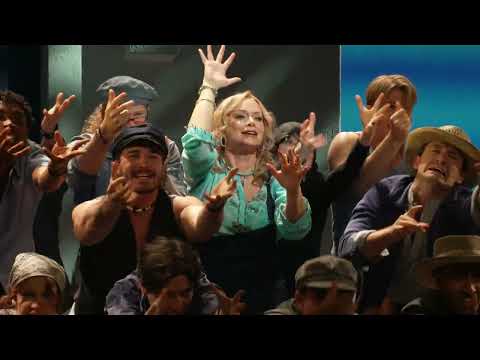
Review: what the lyrics are doing
“Mamma Mia!” runs on a premise that invites side-eye: take ABBA’s blunt, glittery pop lyrics and ask them to behave like dialogue. The surprise is how often they do. Andersson and Ulvaeus wrote in clean emotional headlines, the kind you can shout across a dancefloor. Catherine Johnson’s book treats those headlines as pressure points: “Money, Money, Money” becomes a tired adult’s confession, “SOS” turns into a late-life negotiation, and “The Winner Takes It All” lands as a mother’s last defense mechanism rather than a karaoke mic drop.
The lyrics work because they are direct and because the show leans into that directness as a style choice. People in “Mamma Mia!” do not talk around their feelings for long. They burst. They sing. They pivot. That speed is the musical’s storytelling engine, and it matches the score’s pop architecture: quick setups, hard choruses, and emotional clarity that arrives on the beat. The Greek-island setting adds permission to be bigger than real life, so the show can switch from romantic farce to family reckoning without pretending those gears are the same texture.
Experience tip for first-timers: if you want to follow the story with minimal cognitive load, listen to “Mamma Mia,” “The Name of the Game,” “Slipping Through My Fingers,” and “The Winner Takes It All” before you go. Those four numbers are the plot’s spine. Everything else is either oxygen or gasoline.
How it was made
The origin story is a producer’s story. Judy Craymer, who had worked with Andersson and Ulvaeus on “Chess,” kept hearing narrative potential in the ABBA catalogue and pushed for a stage piece that treated the songs as dramatic material rather than nostalgia packaging. She brought in playwright Catherine Johnson to build the book and Phyllida Lloyd to direct, forming the all-female leadership team that became part of the show’s public identity. Reuters later framed their approach as grounding the ABBA soundtrack in relatable, “kitchen sink” emotional realism, which is a useful phrase for a show that frequently plays like a sitcom until it suddenly does not.
Craymer has also been candid about wanting the songs to feel native to the story. In a Guardian interview, she flatly rejected the “jukebox musical” label and argued the point of the enterprise was to make the ABBA songs feel as if they were written for the show. That philosophy explains why the biggest emotional numbers are staged with relative restraint. The production knows the audience already has a relationship with these lyrics. It does not need to wallpaper them with extra explanation.
Key tracks & scenes
"Honey, Honey" (Sophie, Ali, Lisa)
- The Scene:
- The beach, early on. The light is usually bright and open, like a postcard that cannot keep a secret. Sophie and her friends play-act Donna’s diary entries, half gossip, half rehearsal for adulthood.
- Lyrical Meaning:
- The lyric is flirtation, but in context it becomes investigation. Sophie is not celebrating her mother’s past so much as turning it into evidence, which gives the bubbly wording a slightly nosy edge.
"Mamma Mia" (Donna, Sam, Company)
- The Scene:
- The courtyard at the taverna, with the three men newly arrived. Donna clocks Sam and the air changes. The staging often tightens the space, as if the sun has suddenly gotten personal.
- Lyrical Meaning:
- ABBA’s title lyric is about being pulled back into an old pattern. Here it plays as Donna’s argument with herself: anger, attraction, history, all competing in the same chorus.
"Dancing Queen" (Donna, Tanya, Rosie)
- The Scene:
- Donna’s room. Tanya and Rosie attempt triage by makeover. Lighting tends to warm and soften, the opposite of the public courtyard, because this number is private pep talk disguised as a hit.
- Lyrical Meaning:
- The lyric is youth worship on paper. In the show it becomes permission. Donna is not being told she is young; she is being told she is allowed to feel alive.
"Gimme! Gimme! Gimme!" (Sophie, Ensemble)
- The Scene:
- The courtyard at night. This is a lighting number: dark sky, sharp silhouettes, a pulse that feels like pre-wedding panic. Sophie’s fantasy of answers turns into choreography.
- Lyrical Meaning:
- The lyric’s hungry repetition becomes narrative urgency. Sophie is not asking for romance. She is asking for certainty, which is a more dangerous request.
"Under Attack" (Sophie, Nightmare Chorus)
- The Scene:
- Act II opens inside Sophie’s nightmare. The staging often goes surreal: bodies appear and vanish, the wedding becomes a chase scene, and the island’s cheerful geometry turns claustrophobic.
- Lyrical Meaning:
- The lyric dramatizes the cost of the show’s central scheme. Sophie has invited chaos and now her brain is doing the math. This song matters because the stage version admits the anxiety that the movie trims away.
"Slipping Through My Fingers" (Donna, Sophie)
- The Scene:
- Donna’s room again, but older in feeling. A wedding dress. A mother adjusting straps with hands that are trying to memorize their last job. The light typically narrows to something gentle and almost domestic.
- Lyrical Meaning:
- ABBA’s lyric is about time moving faster than love can file it away. In this context it becomes Donna’s maternal self-portrait: pride and grief arriving together, with no intermission.
"The Winner Takes It All" (Donna, Sam)
- The Scene:
- Donna’s room, now stripped of comfort. Sam pushes for a role in Sophie’s life, and Donna refuses to rewrite history for his benefit. The staging is often still; the fight is in the phrasing.
- Lyrical Meaning:
- This lyric is famously public. The show makes it private. Donna uses the song like a closing argument: she names the emotional costs, then chooses not to beg for empathy.
"Take a Chance on Me" (Rosie, Bill)
- The Scene:
- The courtyard, later Act II. Rosie corners Bill with a comic determination that keeps slipping into sincerity. The lighting often shifts toward party mode again, because the show needs laughter to keep the heartbeats from getting too loud.
- Lyrical Meaning:
- The lyric is flirtation by persistence. Here it becomes Rosie’s declaration that she is done being the sidekick. She is asking for her own plotline.
Live updates (2025/2026)
Information current as of January 29, 2026. Broadway, here we go again: “Mamma Mia!” returned to the Winter Garden Theatre for a limited engagement running August 2, 2025 through February 1, 2026, officially opening August 14. The current Broadway cast is led by Christine Sherrill (Donna) and Amy Weaver (Sophie), with Carly Sakolove (Rosie) and Jalynn Steele (Tanya) among the principals listed on the production’s official site.
Ticket heat is real. An Associated Press report pegged the revival’s opening week of previews at $1.57 million in grosses, and Deadline reported the revival selling out its first preview. That kind of early velocity is less about reviews and more about the show’s function as an event: a three-generation night out where the audience arrives with their own lyrics already memorized.
In London, the show remains a West End institution at the Novello Theatre, with the official site listing Sara Poyzer as Donna and Ellie Kingdon as Sophie in the current-era company. The global brand also continues to feed touring and international productions, with the official “UK & International Tour” hub posting ongoing announcements and casting updates.
Seat-and-sound advice, based on how this production is built: sit far enough back to see the full ensemble geometry during “Voulez Vous,” but not so far that Donna’s Act II phrasing turns into mush. The show is loud when it wants to be. The best moments are when it suddenly is not.
Notes & trivia
- The West End premiere opened April 6, 1999 at the Prince Edward Theatre, after an earlier first paying audience date in late March 1999 cited in the show’s official history.
- The West End production later transferred to the Novello Theatre, where it continues to run, and it celebrated its 25th anniversary in 2024.
- Act I places “Mamma Mia” in the taverna courtyard and “Dancing Queen” in Donna’s room, a smart staging contrast between public shock and private rescue.
- Act II opens with “Under Attack” as a nightmare sequence. It is in the stage musical and was cut from the first film, which is why some audiences only discover it live.
- Time Out notes that “Fernando” was removed from early stage drafts even though it appears on ABBA Gold, a reminder that the song list was curated for story function as well as fame.
- The original London cast recording was released in 1999 and produced by Benny Andersson and Björn Ulvaeus.
- The official West End cast list and the official Broadway cast list currently function as the cleanest public record of who is playing Donna and Sophie in each major market.
Reception
“Mamma Mia!” has always generated two kinds of criticism: the snob’s complaint that pop songs cannot carry drama, and the craft complaint that a pre-existing catalogue can bully a plot. The show survives both because it is honest about what it is. It does not pretend to be subtle, and it does not apologize for using pleasure as a delivery system for family stuff.
“It’s not a great musical.”
“Comfort has always been central to this show’s appeal.”
“I’m anti the term ‘jukebox musical’.”
Those three lines map the whole argument: critics can shrug, audiences keep showing up, and the producer’s intent was always to make the catalogue feel dramatically native. The lyric-level truth is that ABBA wrote heartbreak and yearning with unusually plain language. Plain language travels well. It also turns into theatre faster than people like to admit.
Quick facts
- Title: Mamma Mia!
- Year: 1999 (West End premiere)
- Type: Jukebox musical
- Book: Catherine Johnson
- Music & Lyrics: Benny Andersson & Björn Ulvaeus (some songs with Stig Anderson)
- Original director/choreographer: Phyllida Lloyd; Anthony Van Laast
- Where songs land (selected placements): “Mamma Mia” (courtyard), “Dancing Queen” (Donna’s room), “The Name of the Game” (dock), “Under Attack” (nightmare), “The Winner Takes It All” (Donna’s room)
- Original London cast album: Released November 1, 1999; label credited to Polydor (UK) and Decca (US); produced by Andersson & Ulvaeus
- UK chart note: The original cast recording charted on the Official Charts “Physical Albums” listings, with later catalogue reappearances documented by Official Charts
- 2025 Broadway run: Limited engagement at the Winter Garden Theatre through February 1, 2026
Frequently asked questions
- What order do the biggest songs appear in on stage?
- Act I builds from “Honey, Honey” into “Mamma Mia” and “Dancing Queen,” then ends the act on party fuel. Act II opens with “Under Attack,” then eventually funnels into “Slipping Through My Fingers” and “The Winner Takes It All” before the finale.
- Is “Under Attack” in the movie?
- No. It is a stage-musical number that was cut from the 2008 film, which is why it can feel like a bonus track for audiences who only know the movie soundtrack.
- Why do ABBA’s lyrics work so well as theatre dialogue?
- Because they are emotionally blunt. When a character sings “SOS” or “The Winner Takes It All,” the language already sounds like a confession. The book simply gives the confession a reason to happen in front of us.
- Who is in the current Broadway cast for the 2025 return?
- The official Broadway site lists Christine Sherrill as Donna and Amy Weaver as Sophie, with Carly Sakolove as Rosie and Jalynn Steele as Tanya among the principals.
- Is the West End production still running?
- Yes. The official London site continues to list the show at the Novello Theatre, with Sara Poyzer named as Donna and Ellie Kingdon as Sophie in the current company listing.
- Is there a third “Mamma Mia!” movie coming?
- There has been public talk from the producer side about wanting another film, but a confirmed release plan is separate from enthusiasm. Treat it as in-development until studios announce dates.
Key contributors
| Name | Role | Contribution |
|---|---|---|
| Judy Craymer | Producer / Creator | Originated the stage concept and built the production infrastructure through Littlestar. |
| Catherine Johnson | Book | Wove ABBA songs into a mother-daughter farce that can pivot into genuine family drama. |
| Benny Andersson | Music & Lyrics | Co-wrote the ABBA catalogue used in the show; co-produced the original cast recording. |
| Björn Ulvaeus | Music & Lyrics | Co-wrote the ABBA catalogue used in the show; co-produced the original cast recording. |
| Phyllida Lloyd | Director | Shaped the staging language that balances sitcom speed with emotional stillness. |
| Anthony Van Laast | Choreographer | Built the dance vocabulary that makes the island feel like a community, not a backdrop. |
| Mark Thompson | Production Designer | Created the iconic white-and-blue environment that reads instantly as “holiday freedom.” |
| Howard Harrison | Lighting Designer | Uses sharp night/day shifts to separate fantasy, party, and confrontation. |
| Andrew Bruce; Bobby Aitken | Sound Designers | Keep pop clarity in a theatre mix, which is essential when lyrics carry plot information. |
| Martin Koch | Musical Supervisor / Arrangements | Additional material and arrangements that translate ABBA tracks into stage dramaturgy. |
Sources: Official MAMMA MIA! sites (Broadway; London; Tour), MTI (Full Synopsis; Song List), IBDB, Official Charts Company, The Guardian, Time Out New York, Associated Press, Reuters, Discogs.