
Mame Lyrics: Song List

About the "Mame" Stage Show
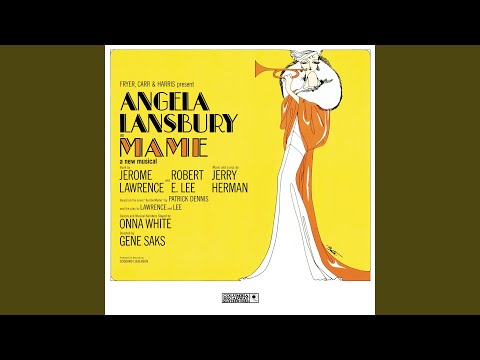
This theatrical is classic musical of 60s, which basis served Patrick Dennis’ novel called Auntie Mame. On setting’s script worked Jerome Lawrence & Robert Edwin Lee. Music & lyrics belong to J. Herman. The first Broadway’s play show took place in May 1966 in the Winter Garden Theatre. Only 3 years later, it finally made it to The Broadway Theatre. Creation stayed there right up to its closure in winter of 1970. During all this time, 1508 performances & 5 previews of this piece were delivered.
G. Saks directed most of productions. The main role went to Angela Lansbury, known to the world thanks to her work in the movie The Picture of Dorian Gray. The actress broke the stereotype that says that in to the movie industry people come from the theater, not vice versa. Critics praised her acting, noting the incredible ease with which Lansbury performed complex character of Mame Dennis. Afterwards, due to release of Angela, a major role has passed to the young actress Celeste Holm. Despite unfavorable forecasts, musical only gained in popularity. The situation repeated exactly in 1968, when the character of Mame Dennis has been entrusted to yet another little-known actress Janis Paige. Both girls brilliantly coped with their work, closing the mouth to millions of skeptics.
The musical has won many prestigious awards, including Tony & Theatre World. In particular, A. Lansbury, F. Michaels & B. Arthur were awarded.
Release date of the musical: 1966
"Mame" – The Musical Guide & Song Meanings
Review: what the lyrics are actually selling
“Mame” is a musical comedy with an unusually sharp business plan: it turns a personality into a worldview, then asks the audience to live inside it for three decades of American mood swings. Jerry Herman’s lyrics do not simply “sound cheerful.” They engineer cheerfulness as a rebuttal to control, to money, to class panic, to the small polite cruelties that pass for good taste. The score keeps insisting on openness as an ethic. Not a vibe. An ethic. That is why “Open a New Window” matters more than any one joke. It is the libretto’s argument in four minutes.
The show also knows the trap in its own premise. A free spirit can become a nuisance if the lyric cannot admit cost. “Mame” does admit cost, but usually sideways: a rhyme that snaps from champagne to rent, an internal pivot where a laugh lands one beat too late. When the stock market crash hits and Mame is suddenly broke, Herman does not write “a sad song.” He writes a song that behaves like denial and bravery at the same time. That tension is the show’s real motor. The holiday standard that escaped the theatre, “We Need a Little Christmas,” works because it is essentially a coping mechanism set to a tune you can whistle while hanging ornaments.
Listener tip: if you want the emotional spine without tracking every plot twist, play “Open a New Window,” then “Bosom Buddies,” then “If He Walked Into My Life.” You will hear the thesis, the chosen family, and the bill that comes due.
How it was made
“Mame” opened on Broadway in 1966 at the Winter Garden Theatre and ran long enough to feel like a small era, not a season. The source material was already proven: Patrick Dennis’ novel, plus the earlier play by Jerome Lawrence and Robert E. Lee. The stage version was effectively sold before the first downbeat, and the production leaned into that confidence with a classic 1960s Broadway toolkit: star casting, big scenic pictures, and a score built for durable reprises.
Herman later described the 1960s period as a run of hits that “came pouring out” of him, which is a polite way of saying he wrote with terrifying momentum. That speed shows up in the lyric style: direct claims, quick jokes, no long philosophical throat-clearing. The craft is in the switchbacks. Under Gene Saks’ direction, with Onna White’s choreography and Tharon Musser’s lighting, the original production gave those switchbacks a glossy frame without sanding down the bite.
One useful myth-check: “Mame” is often remembered as pure sparkle, as if it is allergic to grief. The score is not allergic. It just refuses to let grief have the last line.
Key tracks & scenes
"It’s Today" (Mame, Ensemble)
- The Scene:
- December 1928. Beekman Place. A penthouse party that looks like it has been going on for weeks. Agnes Gooch arrives with young Patrick like two lost packages. Mame grabs the room and refuses to apologize for the noise.
- Lyrical Meaning:
- Herman writes celebration as urgency, not luxury. The lyric treats time as something you spend on purpose. It is also character exposition: Mame cannot stand waiting, because waiting feels like surrender.
"Open a New Window" (Mame, Patrick, Babcock, Ensemble)
- The Scene:
- Mame sparring with Dwight Babcock, the bank’s walking necktie. The number plays as a montage of “education” in action: art class, modern dance, civic chaos, a city that keeps interrupting manners. Staging often pops from vignette to vignette like pages turning.
- Lyrical Meaning:
- This is the show’s core slogan, but it is not inspirational poster talk. It is a direct attack on the idea that safety equals virtue. The lyric makes curiosity sound like moral hygiene.
"The Man in the Moon" (Mame, Vera, Company)
- The Scene:
- After the crash, Mame takes a humiliating theatre job as “Moon Lady” in Vera’s show. The staging hinges on a literal crescent moon effect that goes wrong. Comedy becomes physics. A wobbly rise. A very public failure.
- Lyrical Meaning:
- The lyric is theatrical inside theatre, which lets Herman write about performance as survival. The joke is broad. The subtext is sharp: when money disappears, Mame is still expected to entertain.
"My Best Girl" (Mame, Young Patrick)
- The Scene:
- Backstage in New Haven after the moon disaster. Patrick sneaks in to comfort Mame, who is trying to laugh off the collapse. The light tightens. The pace drops. The room becomes private.
- Lyrical Meaning:
- The lyric is parental love without sentimentality. Mame needs to hear she is still admired, and Patrick needs to say it before adulthood trains him out of it. The song makes mutual rescue feel ordinary.
"We Need a Little Christmas" (Mame, Ito, Gooch, Patrick)
- The Scene:
- Early December, and the household is broke. Mame declares “instant Christmas” as a mood intervention. Presents are small, practical, and strangely intimate. The staging usually turns the apartment into a warm island against a cold financial reality.
- Lyrical Meaning:
- The lyric is famously brisk. It is not about tradition. It is about stopping a spiral. The song’s brilliance is that it sounds like cheer while describing a problem that cheer cannot fix.
"Bosom Buddies" (Mame, Vera)
- The Scene:
- Mame is widowed, wealthy again, and being “organized” by Vera and friends who think structure equals healing. Mame and Vera retreat into friendship as a chosen-country where they can tell the truth with affection and claws.
- Lyrical Meaning:
- The lyric treats friendship as a contract: honesty, loyalty, and permission to be awful in the safest possible way. It is also Herman’s duet craft at peak efficiency: two voices, one shared appetite.
"If He Walked Into My Life" (Mame)
- The Scene:
- Patrick is grown and trying to prove he is “normal.” Mame realizes her influence may have pushed him toward conformity. The staging often strips away the party furniture. A single figure. A clear, direct address.
- Lyrical Meaning:
- Herman writes a mother’s self-audit without self-pity. The lyric measures love against outcome, and it lands because it is specific, not grand. It is the show’s quietest knife.
"Mame" (Company)
- The Scene:
- Peckerwood, the Burnside plantation. Mame wins over Southern aristocracy by sheer nerve, then the community erupts into a full-throated welcome. The staging is built for color, chorus patterns, and a wave of acceptance that feels both sincere and performative.
- Lyrical Meaning:
- The title song is a public branding moment: the world agrees to call her by one name and one energy. Underneath, it is about social permission. Mame is tolerated in Manhattan. In Dixie, she gets crowned.
Live updates (2025/2026)
Information current as of January 29, 2026. “Mame” is not sitting in a single, headline-making commercial run right now. Its life is regional, concert-based, and licensing-driven. Concord Theatricals continues to license the title, keeping it in rotation for professional theatres and schools.
The clearest recent “event” version was a pair of Florida concert performances in August 2024, starring Linda Purl as Mame, backed by a large orchestra and chorus. That is the current pattern: one-off celebrations that treat the score as the star, which makes sense for a Herman show where the lyric is the engine.
Programming trend to watch: “Mame” is increasingly sold through its songs, not its period manners. “We Need a Little Christmas” has a life outside the show, and that evergreen popularity is often what gets producers to read the script again.
Notes & trivia
- The original Broadway production opened May 24, 1966 and ran 1,508 performances, closing January 3, 1970.
- The show’s original title during development was “My Best Girl.”
- Frankie Michaels won a Tony for playing young Patrick, and is widely cited as the youngest Tony-winning performer.
- Masterworks’ cast-album liner note spells out the physical gag behind “The Man in the Moon”: Mame must straddle a rising crescent moon that turns into a “wobbly disaster.”
- “We Need a Little Christmas” is sung in the story right after Mame loses her money in the crash, which is why the lyric feels like emergency cheer, not holiday nostalgia.
- Concord’s current licensing description highlights the show’s best-known numbers, including “Open a New Window,” “If He Walked Into My Life,” and “Bosom Buddies.”
- Playbill’s archival coverage quotes a New York Times reviewer calling the original production “a splendidly splashy production,” which is still the cleanest summary of the original aesthetic.
Reception
“Mame” was treated as a hit almost immediately, and the contemporary writing about it tends to circle two ideas: the show is a star vehicle, and the show is a score-driven machine. Both can be true. When the star is right, the lyrics feel like personal speech. When the star is wrong, the lyrics feel like product. Herman knew the difference, which is why the material keeps returning in concerts and revivals that foreground the text and the punchline timing.
“a splendidly splashy production”
“Broadway’s top musical hit of the season”
“Herman’s terrific score and witty lyrics the main attraction.”
Quick facts
- Title: Mame
- Broadway year: 1966
- Type: Musical comedy
- Music & Lyrics: Jerry Herman
- Book: Jerome Lawrence & Robert E. Lee
- Based on: Patrick Dennis’ novel “Auntie Mame” and the Lawrence/Lee play
- Original Broadway run: May 24, 1966 to January 3, 1970; 1,508 performances
- Original Broadway theatre: Winter Garden Theatre (later transferred venues during the run)
- Original staging credits: Directed by Gene Saks; choreography by Onna White; lighting by Tharon Musser; orchestrations credited to Philip J. Lang
- Original cast recording: First LP release June 3, 1966 (Masterworks/Columbia Masterworks legacy catalog)
- Selected notable placements: “We Need a Little Christmas” has become a widely performed seasonal standard beyond the show
- Licensing: Available through Concord Theatricals
Frequently asked questions
- Is “Mame” the same story as the film “Auntie Mame”?
- They share the same core character and source novel, but the stage musical is its own adaptation with Jerry Herman’s songs and a different comic rhythm.
- Who wrote the lyrics?
- Jerry Herman wrote both the music and the lyrics.
- Why does “We Need a Little Christmas” happen so early in the story?
- Because it is a crisis response: Mame has lost her fortune and uses celebration to keep the household from collapsing emotionally.
- What is the show’s main lyrical theme?
- Openness as a way of living. “Open a New Window” is the clearest statement, but the idea echoes through the score as Mame resists being managed.
- Is “Mame” currently touring in 2025/2026?
- The most visible recent activity is regional and concert-based rather than a single national tour, with licensed productions continuing through Concord.
Key contributors
| Name | Role | Contribution |
|---|---|---|
| Jerry Herman | Composer-Lyricist | Wrote the music and lyrics, including “Open a New Window,” “Bosom Buddies,” and “If He Walked Into My Life.” |
| Jerome Lawrence | Book writer | Co-wrote the book, adapting the story for musical structure. |
| Robert E. Lee | Book writer | Co-wrote the book; shaped the show’s comic setups and reversals. |
| Gene Saks | Director | Directed the original Broadway production. |
| Onna White | Choreographer | Created choreography that supported the show’s social-world montage style. |
| Tharon Musser | Lighting designer | Helped define the original production’s glossy, high-contrast theatrical look. |
| Philip J. Lang | Orchestrator | Credited orchestrator for the original Broadway production and revival documentation. |
| Angela Lansbury | Original star | Originated Mame on Broadway and won a Tony for the role. |
| Bea Arthur | Original cast | Originated Vera Charles and won a Tony for featured performance. |
| Donald Pippin | Music director / vocal arranger | Credited on production documentation and associated with the original cast album’s musical leadership. |
Sources: IBDB; Playbill Vault; Playbill (archival articles and regional news); Masterworks Broadway (cast album liner note); Concord Theatricals; TIME archive; NPR affiliate archive; Variety.
Author note: Written in the voice of a Broadway journalist and SEO analyst. Focus: lyric function, scene mechanics, and how recordings preserve pacing.