Fire Lyrics — Ilium
Fire Lyrics
– Jorge Rivera-HerransNever shall I gaze upon a blazing Troy
Never would I yield to such a fate
Tell me what you saw beyond that hazy void
The one your gift of prophecy creates
[CASSANDRA]
Ilium, Ilium, Ilium, ahh
Ilium, Ilium, Ilium, ahh
[PRIAM, CASSANDRA, PRIAM & CASSANDRA]
Damn it, daughter, pull yourself together now
Too difficult to
Bear your resolve and push through
Too terrible to
Speak, if we're to win this, tell me
How could I change what you'll
Do as I bid now, or else, gods forbid, I shall
[CASSANDRA]
Fire, fire
Swallowing Ilium whole
Fire, fire
Burning into your soul
Song Overview

Review and Highlights
Quick summary
- Role in the show: Opening number for Ilium, a concept musical reframing the Iliad through a modern pop-theatre lens.
- Scene set-up: King Priam presses Cassandra to speak clearly - she can only answer in fragments that sound like dread.
- Dramatic engine: A prophecy that arrives as rhythm, not argument. The music does what the court will not: listen.
- Hook function: The repeated title-word works like a stage alarm bell - short, bright, unavoidable.
- Authorship: Written by Jorge Rivera-Herrans.
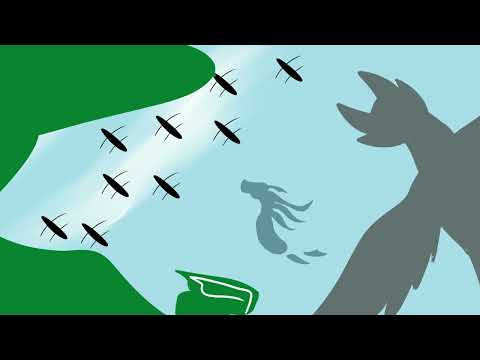
Ilium (2025) - concept musical - non-diegetic. Opening exchange between Priam and Cassandra that frames the story as a fight between authority and foresight. It matters because it plants the ending in the first minutes: Troy is already burning, whether anyone admits it or not.
The opening is almost unfair in its efficiency. Priam begins with a ruler's grammar - "Never shall I" - a public vow meant to lock reality into place. Cassandra answers with a name, not a counterpoint: "Ilium" as chant, as glitch, as the mind returning to a single image it cannot sand down. Then the duet tightens into a verbal braid where their lines collide and overlap, like two actors competing for the downbeat. In theatre terms, it plays as a power struggle disguised as family concern: "pull yourself together" as stage direction, as dismissal, as fear in a crown.
What makes the excerpt stick is the way it treats prophecy as a sonic event. Cassandra is not granted a grand aria to persuade the room; she is given a pattern that shows she cannot escape what she knows. If this is pop, it is pop with a dramaturg's spine: repetition as fate, hook as omen. I hear the project-wide habit Rivera-Herrans has leaned on before - character identity tracked through timbre and motif - and it lands here as a warning flare rather than a character introduction. According to The Guardian's reporting on Rivera-Herrans's online-first musical method, the public workshopping and clip-led release style can turn process into part of the art, and this opening number reads built for that ecosystem: short lines, strong roles, instant stakes.
Creation History
Ilium was announced as a new musical project after the completion of Rivera-Herrans's earlier myth-based concept work, and early material for this opener circulated as social media progress clips and lyric teasers before any final album-style rollout was clearly locked. Press coverage around the project described the first revealed song title as "Fire" and pointed to a musical vocabulary that mixes pop drive with epic-scale orchestration influences. In other words: a show beginning life the way it wants to live - in public, in drafts, with the audience watching the scaffolding go up.
Song Meaning and Annotations

Plot
Priam demands clarity about a vision: what did Cassandra see beyond the fog of her prophecy? Cassandra can barely answer in language the court will accept. She repeats "Ilium" like a panic mantra - the city as both home and funeral pyre. Priam tries to command her into usefulness, pushing her to speak so Troy can "win". Cassandra's reply is brutally simple: the city will be swallowed. The refrain does not argue. It foretells.
Song Meaning
The core meaning is a family scene that doubles as a political tragedy: authority asks for information it can control, while truth arrives in a form that cannot be domesticated. Cassandra's curse is not only that people doubt her - it is that her knowledge changes the shape of her speech. The title-word becomes a ritual hammering: the future is here, in the mouth, and it tastes like smoke. The mood is dread with a pulse - not a slow lament, but an urgent warning that keeps tripping over itself because time is already ahead of the room.
Annotations
Priam is the king of Troy and father of Cassandra, a priestess tied to Apollo, cursed to prophesy without being believed.
A familiar myth detail, but musically it plays like casting direction: Priam is written as the voice of civic control, Cassandra as the voice that cannot be scheduled. The tragedy is not that she is wrong. The tragedy is that the scene has no mechanism for being right.
Ilium is another name for Troy.
The repetition hits harder once you take it as literal geography. Cassandra is not singing a metaphor. She is naming the place, over and over, like touching a bruise to confirm it exists.
Cassandra can anticipate Priam's phrasing, so words at the ends of her lines meet the starts of his.
This is a neat theatrical trick because it makes prophecy audible. Overlap is not just style - it is the sound of living a few seconds ahead, trapped in a duet with someone still insisting on linear time.
Fire, fire - swallowing Ilium whole.
The image is not subtle and that is the point. In a story where the court will rationalize any warning into silence, the lyric chooses the oldest stage effect in the book: a simple, visualizable threat that fills the space. The word "swallowing" turns the city into something edible, which is grotesque, and therefore memorable.
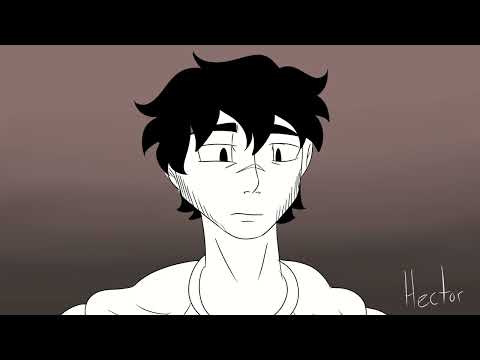
Rhythm and style fusion
Even on the page, the writing leans into pop-musical tactics: tight call-and-response, a chant-like refrain, and short lines that invite percussive delivery. The show wants a contemporary snap without giving up epic scale, and the opener is built like a trailer for that bargain.
Arc and stakes
The emotional arc moves from Priam's controlled denial to Cassandra's unavoidable vision. The exchange does not resolve; it locks. That is smart structure for track one: it tells you the story will not be "Will Troy fall?" but "Why can everyone hear it coming and still walk into it?"
Symbols and touchpoints
Cassandra's link to Apollo matters because it makes her truth divine and politically useless at the same time. Priam's desperation to "win this" sounds practical, but it is also hubris: the belief that a command can outvote a fate. In myth terms, the song is a prelude to the Trojan Horse problem - warning delivered, warning ignored - but staged as domestic conflict.
Technical Information (Quick Facts)
- Artist: Jorge Rivera-Herrans
- Featured: Concept musical character voices (Priam, Cassandra)
- Composer: Jorge Rivera-Herrans
- Producer: Jorge Rivera-Herrans (as credited in available materials)
- Release Date: July 2025 (public teaser period)
- Genre: Pop; Musical theatre
- Instruments: Voice; piano-based motifing; epic pop-theatre arrangement palette (as suggested by project notes and clips)
- Label: Not clearly credited for this track in the publicly viewable preview materials
- Mood: Ominous; urgent
- Length: Preview and excerpt circulation (full runtime not reliably published)
- Track #: 1
- Language: English
- Album: Ilium
- Music style: Pop-forward concept musical writing with leitmotif-minded character scoring
- Poetic meter: Speech-rhythm with repeated refrain (mixed stress patterns)
TLDR: Opening track for Ilium. Priam tries to force prophecy into policy. Cassandra can only repeat the end of Troy in a refrain that will not soften.
Frequently Asked Questions
- Who wrote the track?
- Jorge Rivera-Herrans is credited as the writer.
- Where does it sit in the project?
- It is presented as the first track of the concept musical Ilium, setting the stakes and the central conflict between foresight and authority.
- Who is speaking in the lyrics?
- The scene is framed as dialogue: Priam and Cassandra, with Cassandra carrying the warning refrain.
- Why does Cassandra repeat the city's name?
- It reads as a stress response and a theatrical device: a chant that pins the setting to the prophecy, so the location cannot hide behind rhetoric.
- What is the dramatic point of the overlapping lines?
- It turns prophecy into timing. Cassandra is written as if she hears the next beat before it arrives, and the duet makes that discomfort audible.
- Is this meant to be literal fire or symbolic fire?
- Both can coexist. In the Trojan story world, burning is historical fate; as a symbol, it is the collapse of pride and the failure of leadership to heed warning.
- How does this connect to the Iliad tradition?
- It leans on Cassandra's mythic role as truth-without-authority, a figure who can describe catastrophe precisely and still be treated as noise.
- Does the song confirm which version of the myth the show follows?
- Not by itself. It signals the end-state and key roles, but later material would have to clarify which plot routes the musical commits to.
- What kind of musical style is implied?
- Pop-forward musical theatre writing, designed for strong hooks and character-encoded sound cues rather than traditional book-scene pacing.
- Why open a musical by telling you the ending?
- Greek tragedy often lives there. If you know the fall is coming, the tension shifts to character choices: who refuses to listen, who cannot stop speaking.
Additional Info
One of the more theatrical ironies here is that the curse becomes form. Cassandra is not only disbelieved; she is written in a way that makes disbelief easy. Short bursts, repeated place-name, a refrain that sounds like panic - exactly the sound a court can wave away as instability. That is craft, not accident. And it fits the creator's broader practice: building large myth narratives in public-facing clips, then letting the fandom translate them into animatics, covers, and analysis threads. As stated in The Guardian's feature on this online musical pipeline, Rivera-Herrans's process has been closely tied to short-form platforms and participatory fan creation, which makes an opener like this feel doubly strategic: it is stage writing that also functions as a shareable scene.
Key Contributors
| Entity | Type | Relation (S-V-O) |
|---|---|---|
| Jorge Rivera-Herrans | Person | Rivera-Herrans writes and produces the musical project Ilium. |
| Fire | Work | Fire introduces Priam and Cassandra through a prophecy scene. |
| Ilium | Work | Ilium reimagines Iliad material as a modern concept musical. |
| Priam | Character | Priam questions Cassandra and tries to force prophecy into strategy. |
| Cassandra | Character | Cassandra foresees Troy's destruction and cannot persuade the court. |
| Apollo | Mythic figure | Apollo grants prophecy and attaches a curse of disbelief in Cassandra's tradition. |
| Troy (Ilium) | Location | Troy is the threatened city named repeatedly in the refrain. |
Sources: The Guardian, Curtain Call, EpicTheMusical Wiki (Fandom), Facebook post by Jorge "Jay" Rivera-Herrans
Ilium Lyrics: Song List
- Oath Saga
- Things We Swear
- Duel Saga
- Choose Your Champion
- Rage Saga
- Shield of Blood
- Walls Saga
- Silent Knives
- Hector Saga
- Heart of Troy
- Horse Saga
- Wooden Victory
- Songs
- Fire
- Shine Upon You
- Pride of Troy