Trim Up the Tree Lyrics — How the Grinch Stole Christmas
Trim Up the Tree Lyrics
Trim up the tree with Christmas stuff
Like bingle balls and Whofoo fluff
Trim up the town with goowho gums
And bizilbix and wums
Trim every blessed window
And trim every blessed door
Hang up whoboohoo bricks
Then run out and get some more
Hang pantookas on the ceiling
Pile pankunas on the floor
Trim every blessed needle
On the blessed Christmas tree
Christmas comes tomorrow
Trim you, trim me
Trim up your pets with fuzzle fuzz
And whiffer bloofs and wuzzle wuzz
Trim up your uncle and your aunt
With yards of whofut flant
Every house in Whoville
From the cellar to the roof
Hang up a mile of dafflers
And three miles of snaffer snoof!
Hang dang-donglers on the bathtub
Trim the occupant with floof!
To every home in Whoville
And to every blessed Who
Christmas comes tomorrow
Trim me! Trim you!
Trim up the tree with Christmas stuff
Like bingle balls and Whofoo fluff
Trim up the town with goowho gums
And bizilbix and wums!
Song Overview
Review and Highlights
Quick summary
- Written for the 1966 animated TV special "How the Grinch Stole Christmas!" and heard during the early Whoville decorating bustle.
- Music by Albert Hague with lyrics by Dr. Seuss, built on brisk choral call-and-response and a comic list-song structure.
- Commonly circulated via later soundtrack reissues and compilations, where its runtime can vary by configuration.
- Its hook is not a single slogan, but a pileup of invented Who-words that turn shopping-list detail into percussion.
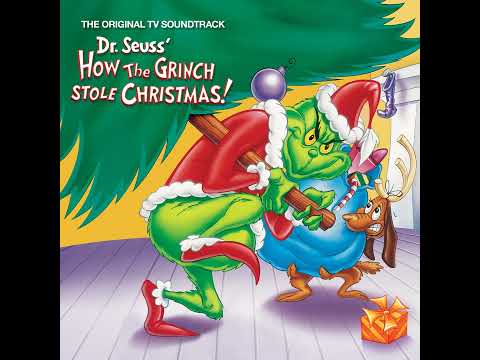
How the Grinch Stole Christmas! (1966) - TV special - diegetic-adjacent. A Whoville decorating montage in the opening stretch, with the town singing while trimming homes, pets, tubs, and anything else that can hold a ribbon. What it does: it establishes Whoville as cheerful to the point of absurdity, so the Grinch has something vivid to push against.
If you grew up on holiday TV, you can almost see the animation without trying: tiny hands, big ornaments, and a chorus that never pauses for breath. The number works like a musical sneeze - short, sharp, and over before you can argue with it. What I like is how the writing treats detail as rhythm: the Who-objects are not just cute nouns, they are drum hits. Hague sets it with a hustle that nods to light orchestral comedy, while the group vocal keeps it communal, almost like the town is one character with many mouths.
There is also a sly little tension under the tinsel. The Whos are trimming everything that stands still, and the lyric turns that urge into a chant. It can read as a wink at holiday excess, but the song does not moralize. It just shows a place where preparation is a kind of belonging - and that is why the Grinch, up on his mountain, feels so outnumbered.
Creation History
Albert Hague composed the songs for the 1966 animated TV special, with Dr. Seuss handling the lyric side of the Seussian wordplay, while the production itself is credited to Chuck Jones and Ted Geisel. The special first aired on December 18, 1966, and the track later circulated through soundtrack releases and reissues, including a digital-era soundtrack package promoted by WaterTower Music. According to Playbill, later stage versions leaned on the best-known songs from the TV special, which helps explain why this brisk ensemble vignette is often remembered more as a scene-setter than a standalone pop single.
Song Meaning and Annotations
Plot
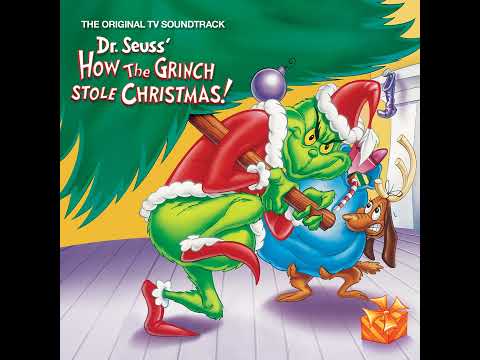
In the TV special, the town of Whoville prepares for Christmas with a kind of choreographed frenzy: trees, doors, windows, ceilings, floors, and even bathtubs get decorated. The number functions as a guided tour of the Whos' habits before the story swings toward the Grinch's plan to steal the holiday.
Song Meaning
The meaning is plain, but the method is sneaky. On paper, it is a decorating song. In motion, it is a portrait of group identity: everybody trims, everybody sings, and the individual disappears into the crowd. The lyric uses made-up words not just as whimsy, but as a device to make the town feel self-contained, like it has its own catalog, its own brands, its own private language. That matters because the Grinch is not merely anti-Christmas - he is anti-Whoville, and this is Whoville at maximum volume.
Annotations
Trim up the tree with Christmas stuff / Like bingle balls and Whofoo fluff
The first couplet is a thesis statement. The rhyme is tight, the syntax is direct, and then the nouns go sideways. The invented objects do two jobs: they keep the cadence bouncy, and they signal that Whoville does not import its cheer from anywhere else. This is their dialect of decoration.
Trim every blessed window / And trim every blessed door
Repetition turns the town into a machine. "Blessed" adds a mock-sermon flavor, like a holiday ritual delivered with a grin. The chorus is not describing one house - it is issuing instructions, as if decorating is civic duty.
Hang dang-donglers on the bathtub / Trim the occupant with floof
Here is the gag: the song refuses to draw a line between sensible and ridiculous targets. That is why it plays so well with animation. The lyric invites visual punchlines, and the music keeps sprinting so the listener accepts the nonsense before skepticism can arrive.
Christmas comes tomorrow / Trim you, trim me
This is the one moment that feels like a motto. The holiday is not a date on the calendar - it is a shared activity. The pronoun flip is important: the town is not just dressing the room, it is dressing each other, socially and musically.
Genre and rhythm
This is holiday soundtrack writing with a comedic engine: brisk tempo, choral unison, and orchestral punctuation that feels built for scene changes. The "list of objects" format is older than TV itself - a cousin of patter songs and novelty numbers - but the Seuss vocabulary makes it sound freshly minted every time.
Emotional arc
No slow build, no big release. The arc is velocity. The town rushes toward Christmas, and that rushing is the feeling. The number is a bright blast of collective anticipation, which sets up the contrast when the story cuts to the Grinch, alone and irritated by all that sound traveling up the mountain.
Cultural touchpoints
Dr. Seuss published his Grinch story in the postwar era, and the TV special arrived in 1966, right in the middle of American network holiday programming becoming tradition. The song captures that mid-century TV idea of Christmas as spectacle - not only celebration, but production.
Technical Information
- Artist: The MGM Studio Orchestra, The MGM Studio Chorus
- Featured: None
- Composer: Albert Hague
- Producer: Chuck Jones; Ted Geisel (TV special production credit)
- Release Date: December 18, 1966
- Genre: Soundtrack; holiday; children's music
- Instruments: Orchestra; chorus
- Label: WaterTower Music (digital soundtrack release)
- Mood: Bustling; communal; playful
- Length: 0:45 (common soundtrack configuration; other releases may run longer)
- Track #: 2 (commonly listed on the original TV soundtrack configuration)
- Language: English
- Album (if any): Dr. Seuss' How The Grinch Stole Christmas! (Original TV Soundtrack)
- Music style: Choral novelty with light orchestral comedy
- Poetic meter: Anapestic bounce (Seuss-style, built for singable lists)
Questions and Answers
- Who wrote the song?
- Albert Hague composed it, with lyrics credited to Dr. Seuss, matching the song list tied to the 1966 TV special.
- Why does it use so many made-up words?
- The invented nouns are not filler - they keep rhyme and rhythm moving while making Whoville feel like its own sealed-off culture.
- Is it meant to be funny or sincere?
- Both. The joke is in the extremity (decorate the bathtub, trim the occupant), but the underlying idea is sincere: the town bonds through shared preparation.
- Where does it sit in the story?
- Early, as a burst of Whoville life, before the narrative shifts to the Grinch's irritation and plan.
- Why does it feel so short?
- It is built as a montage driver. Many soundtrack listings place it under a minute, closer to a scene cue than a radio-length number.
- Does the song appear in the later stage musical?
- Many stage releases emphasize the better-known TV songs. Some cast-album materials highlight "Welcome Christmas" and "You're a Mean One, Mr. Grinch," while this ensemble vignette is less consistently foregrounded.
- What is the central message?
- The message is collective action: Christmas arrives because people make it together, not because a single hero declares it.
- What makes the hook memorable if the words are nonsense?
- The hook is the cadence. The chorus locks into a repeatable pattern, and the Who-words land like percussion.
- Is there a darker reading?
- A bit. The lyric can be heard as a parody of holiday over-decoration, the kind of frenzy that turns celebration into obligation. The song lets that interpretation hover without lecturing.
- What should a listener focus on musically?
- Listen for how the orchestral punctuation mirrors physical action: each new object sounds like a prop being hauled into frame.
Awards and Chart Positions
This track is rarely discussed in chart terms, but the larger Grinch audio world earned serious recognition. According to GRAMMY.com, Boris Karloff is listed as a winner at the 10th Annual GRAMMY Awards for Best Recording For Children for "Dr. Seuss: How The Grinch Stole Christmas." That award helps explain why the soundtrack remains a perennial reissue and playlist staple, even for the smaller scene-cues.
| Award body | Category | Recognized work | Result |
|---|---|---|---|
| The Recording Academy | Best Recording For Children | Dr. Seuss: How The Grinch Stole Christmas (Boris Karloff) | Win (10th Annual GRAMMY Awards) |
How to Sing Trim Up the Tree
If you want to perform it rather than just grin at the Who-words, the useful anchors are practical: a brisk tempo and a mid-range choral tessitura. Common performance-metric listings place it around 120 BPM in C major, with an indicated vocal span that can sit roughly from C4 to E5. Treat those figures as a rehearsal map, not a law.
- Tempo first: Set a metronome near 120 BPM and speak the lyric in rhythm before you sing it. The speed is the point.
- Diction: Make the invented words crisp. They are rhythmic devices, so land consonants like they are snare hits.
- Breath planning: Mark quick group breaths after couplets. The song is a sprint, so coordinated breathing keeps the chorus unified.
- Flow and rhythm: Lean into the list-song structure. Each new object is a cue to keep energy up, not a place to slow down for clarity.
- Accents: Stress the punch-words (the weird nouns) while keeping the connective words light. That keeps it comic without turning it into mush.
- Ensemble blend: Aim for clean unison on the fast passages, then widen vowels together on longer notes, so the sound feels like one town speaking.
- Mic approach: If amplified, do not over-sing. The charm is bustle, not belting.
- Pitfalls: Rushing ahead of the beat, dropping consonants, and treating nonsense syllables as optional. In this song, they are the hook.
Additional Info
The song has a life beyond the TV special, mostly through arrangements, medleys, and covers rather than headline remixes. SecondHandSongs lists the work as written by Hague and Dr. Seuss and traces early release and cover activity, while sheet-music vendors continue to circulate piano-vocal editions for performers who want to bring Whoville into a recital or school concert. There is also a steady stream of band and ensemble medleys that fold it alongside the better-known Grinch themes, a practical choice because its quick bursts of lyric make a terrific transition cue.
One small historical note I always enjoy: the best holiday numbers do not just describe Christmas, they describe labor - decorating, cooking, hauling, rehearsing. This one practically sweats through the tinsel. If you are looking for a tidy moral, you will not find it here. If you are looking for choreography disguised as language, you are in the right place.
Key Contributors
| Entity | Type | Relationship (S-V-O) |
|---|---|---|
| Albert Hague | Person | Albert Hague - composed - Trim Up the Tree |
| Dr. Seuss (Ted Geisel) | Person | Dr. Seuss - wrote lyrics for - Trim Up the Tree |
| Chuck Jones | Person | Chuck Jones - produced - How the Grinch Stole Christmas! (1966 TV special) |
| The MGM Studio Orchestra | Organization | The MGM Studio Orchestra - performed - Trim Up the Tree (soundtrack recording) |
| The MGM Studio Chorus | Organization | The MGM Studio Chorus - performed - Trim Up the Tree (soundtrack recording) |
| WaterTower Music | Organization | WaterTower Music - released - The Original TV Soundtrack (digital-era release) |
| How the Grinch Stole Christmas! | Work | The TV special - includes - Trim Up the Tree as an early Whoville montage cue |
Sources: WaterTower Music release page for the original TV soundtrack, Apple Music track listing for the original TV soundtrack, How the Grinch Stole Christmas! (TV special) reference entry, SecondHandSongs work entry for "Trim Up the Tree", Musicstax key and tempo listing, GRAMMY.com artist awards entry for Boris Karloff, SheetMusicNow piano-vocal listing for "Trim Up the Tree", Playbill cast album coverage for the stage musical
How the Grinch Stole Christmas Lyrics: Song List
- Overture
- Fah Who Foraze
- Who Likes Christmas?
- This Time of Year
- I Hate Christmas Eve
- Whatchamawho
- Welcome, Christmas
- I Hate Christmas Eve (Reprise)
- It's the Thought That Counts
-
One of a Kind
- Down The Mountain
- Now's the Time
- You're A Mean One, Mr. Grinch
- Santa for a Day
- You're a Mean One, Mr Grinch (Reprise)
- Who Likes Christmas? (Reprise)
- One of a Kind (Reprise)
- This Time of Year (Reprise)
- Welcome, Christmas (Reprise)
- Santa For a Day (Reprise)
- Stealing Christmas
- Finale
- Bows
- Other Songs
- How the Grinch Stole Christmas
- Trim Up the Tree
- Once in a Year
- Where are You, Christmas?